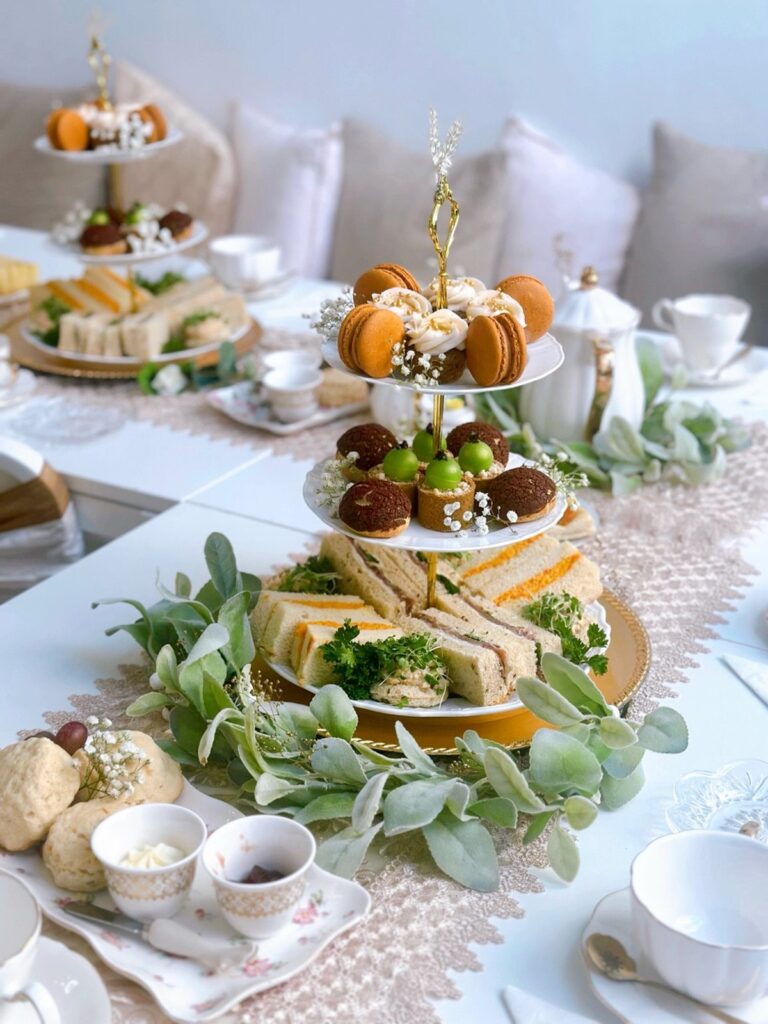
The ideas below run from tiered stands and vintage florals to a whimsical storybook table, and most of the difference comes down to dishes versus decor.
Mismatched floral china makes the vintage look nearly free, and if your plates are plain white, let the linens, fresh flowers or an autumn touch carry the theme.
1. Tiered Stands for Food
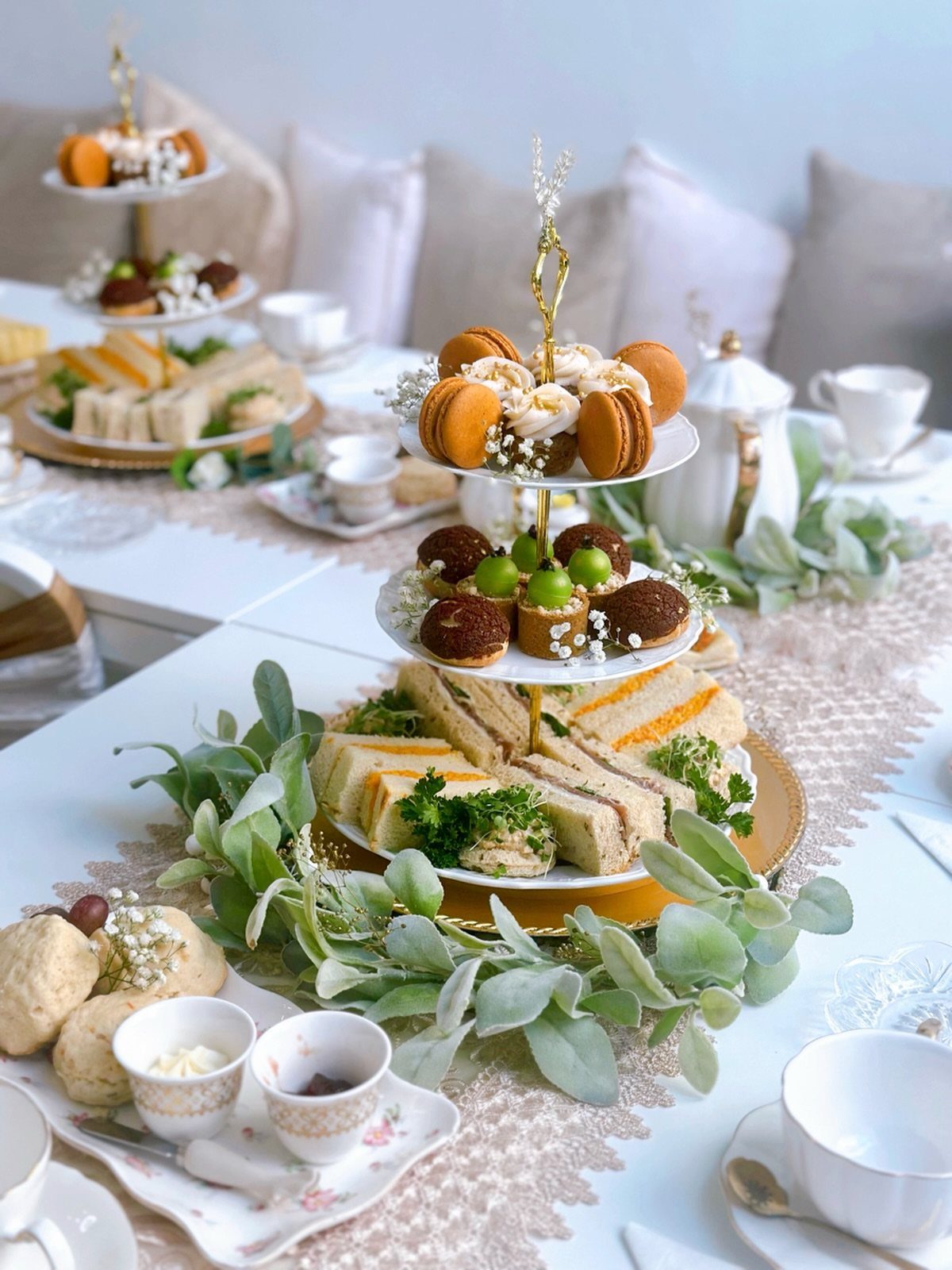
Height does the work on a tea table, and a three-tiered stand gives it to you without taking up more table.
Put the sandwiches on the bottom tier, where the heaviest food belongs, and keep the macarons and other small sweets higher up.
Scones can sit on a plate beside the stand, with teacups kept within easy reach of each guest. Leave a little gap between stands so hands can reach in without knocking anything.
A tall stand in the middle with a lower one on each side keeps the table balanced.
2. Vintage Florals Tea Party Table
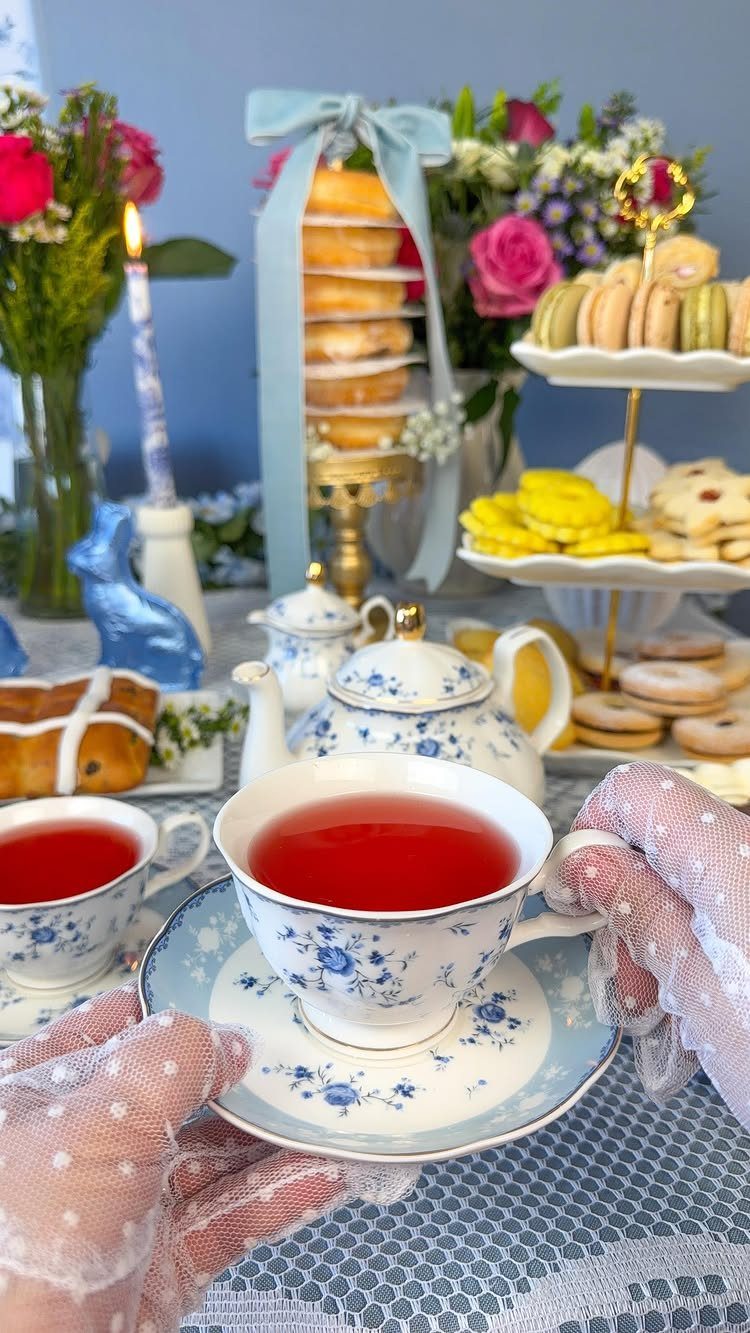
Mismatched floral china is the whole idea here, and it’s the cheapest way to get a vintage look.
Each cup can carry a different pattern as long as the colors stay in one family, such as pinks and blues, which is why odd cups and saucers work so well.
A lace cloth then ties the pieces together.
Mix patterns freely in cups, but keep the rest of the table quiet.
3. Seasonal Touches for Your Tea Party Table
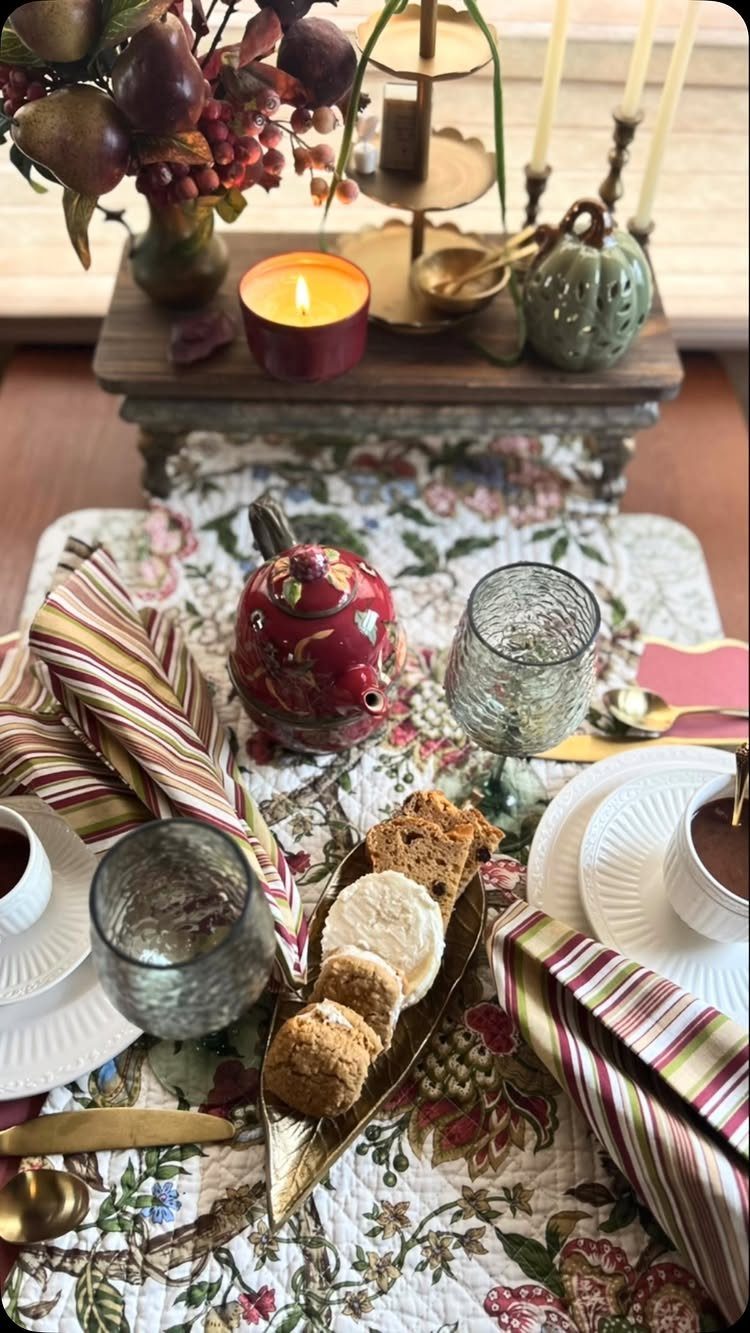
Pears, a small pumpkin and a candle can change a tea table’s mood without a single new dish. Seasonal pieces from your own kitchen or yard cost little, which suits a tight budget.
I like pairing a bold teapot, like a red one, with a patterned cloth, then letting the produce fill the gaps between plates. Keep decor low so guests can see each other over it.
Swap the fruit and gourds for what’s in season, and the same setup works any time of year.
4. Setting a Table
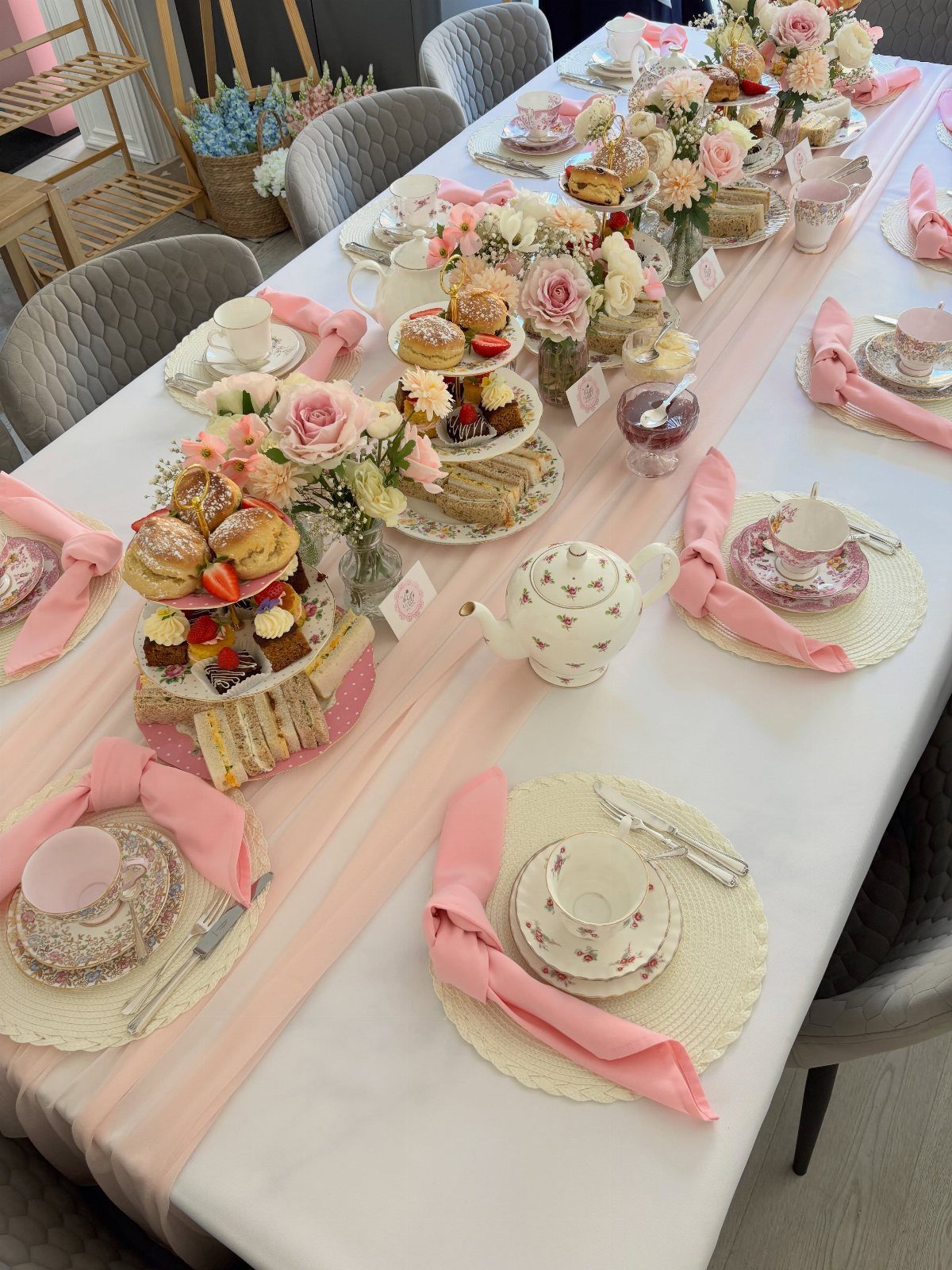
Set a long table in a rhythm: a runner down the center, then flowers and tiered stands spaced along it, with a teacup at each seat. Repeating the same few elements makes a big table look planned rather than crowded.
Place the teapot within easy reach of the guests who will be pouring most.
Keep the middle of the table for food and flowers, and leave each guest their own space at the edge.
5. Porcelain and Ceramic Plates Tableware
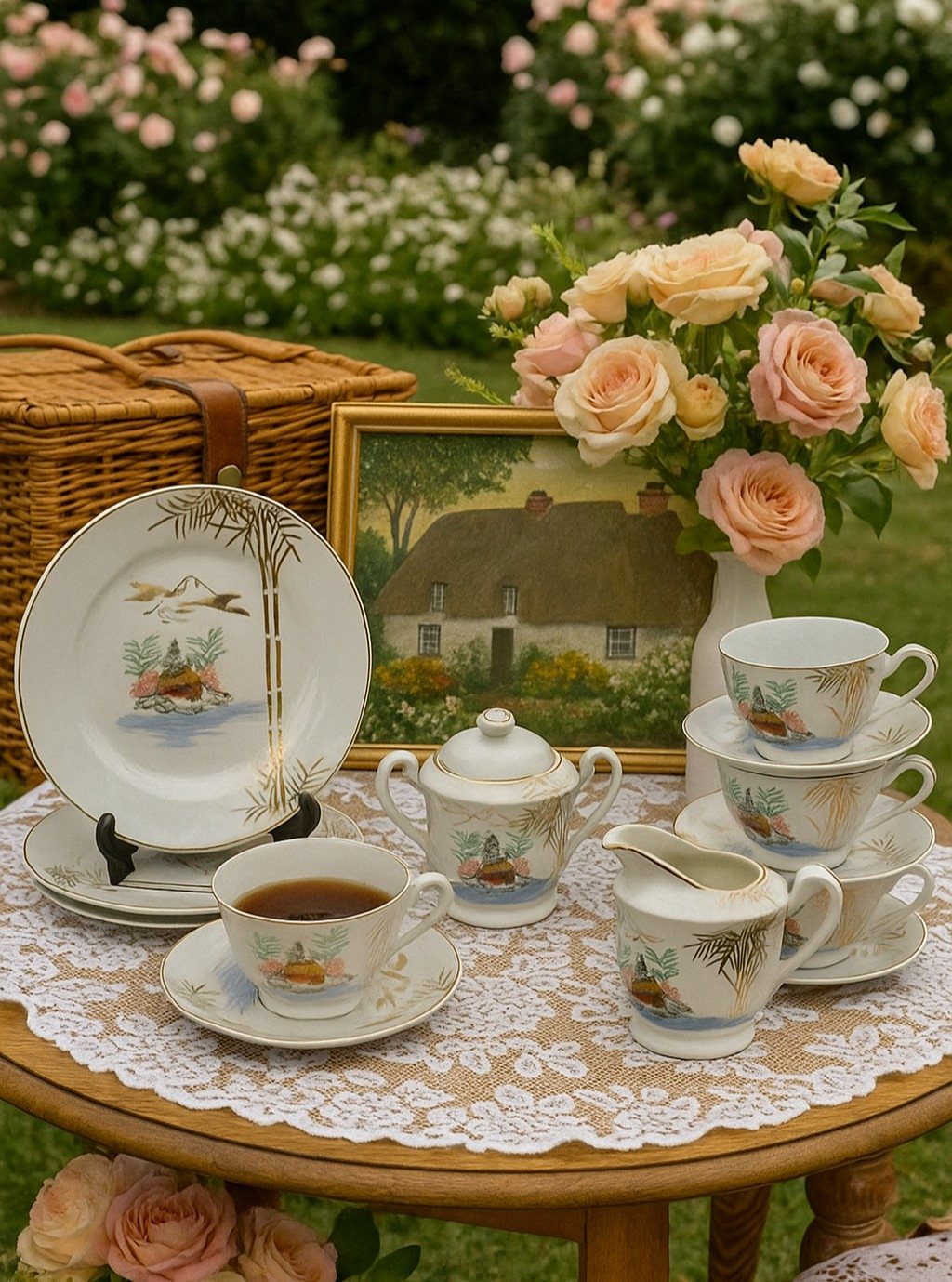
White porcelain with gold trim looks formal, but it sits easily on a rustic wooden table with a lace cover. That contrast is the appeal: delicate dishes against plain wood.
Choose a single color for the plates, cups and teapot so the set looks complete even if the pieces were bought one at a time.
Gold accents are pretty but need gentle washing by hand, which I’d plan for before the party.
A basket with some roses softens the setting.
6. Fresh Flowers Centerpiece
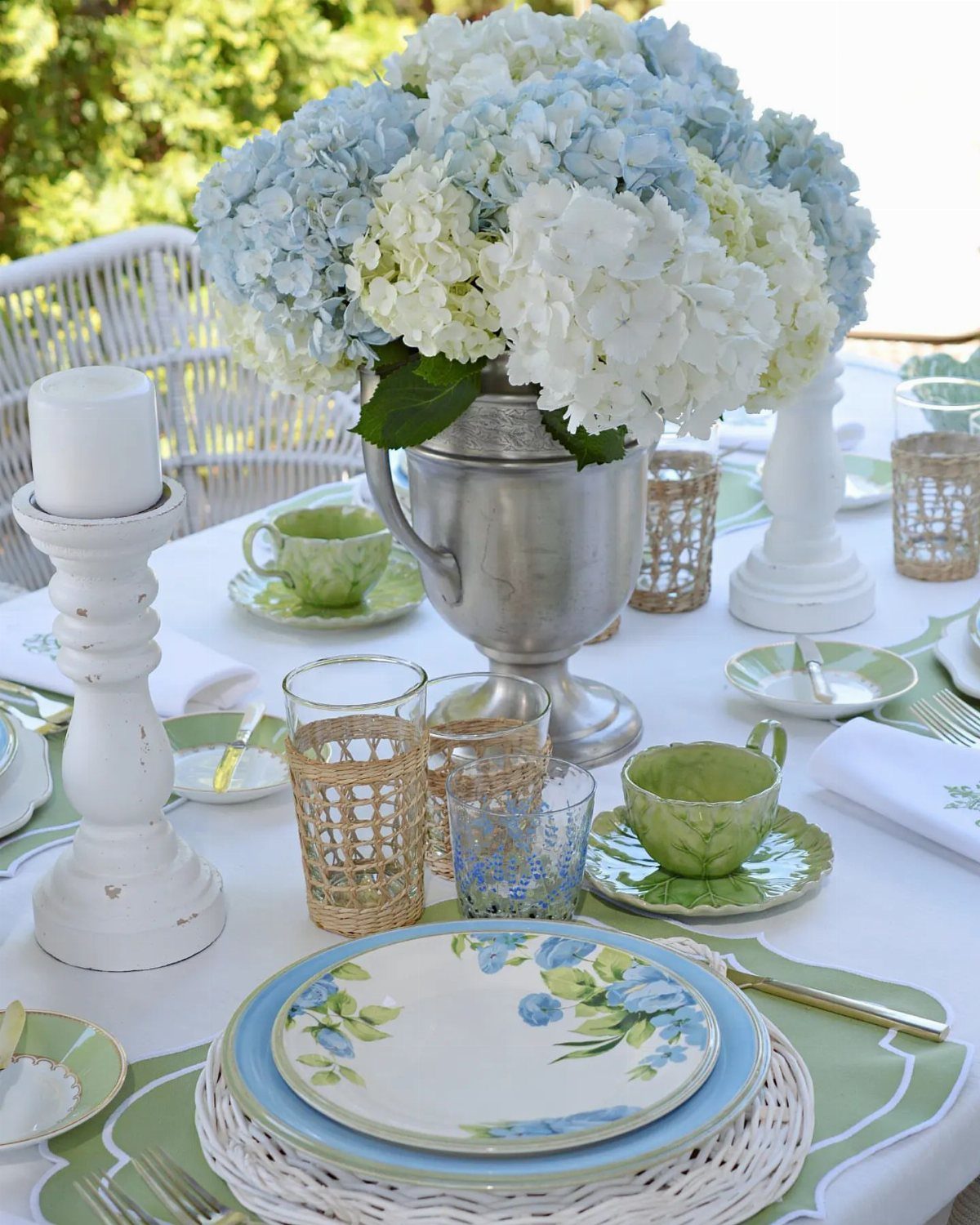
One large arrangement beats several small ones on a tea table.
Keep the vase low or slim enough that it doesn’t block anyone’s face. Use a flower color that echoes your teacups, here blue and white, so the look feels deliberate.
White candle holders on either side balance the height without crowding the food.
7. Soft Lighting and Candles
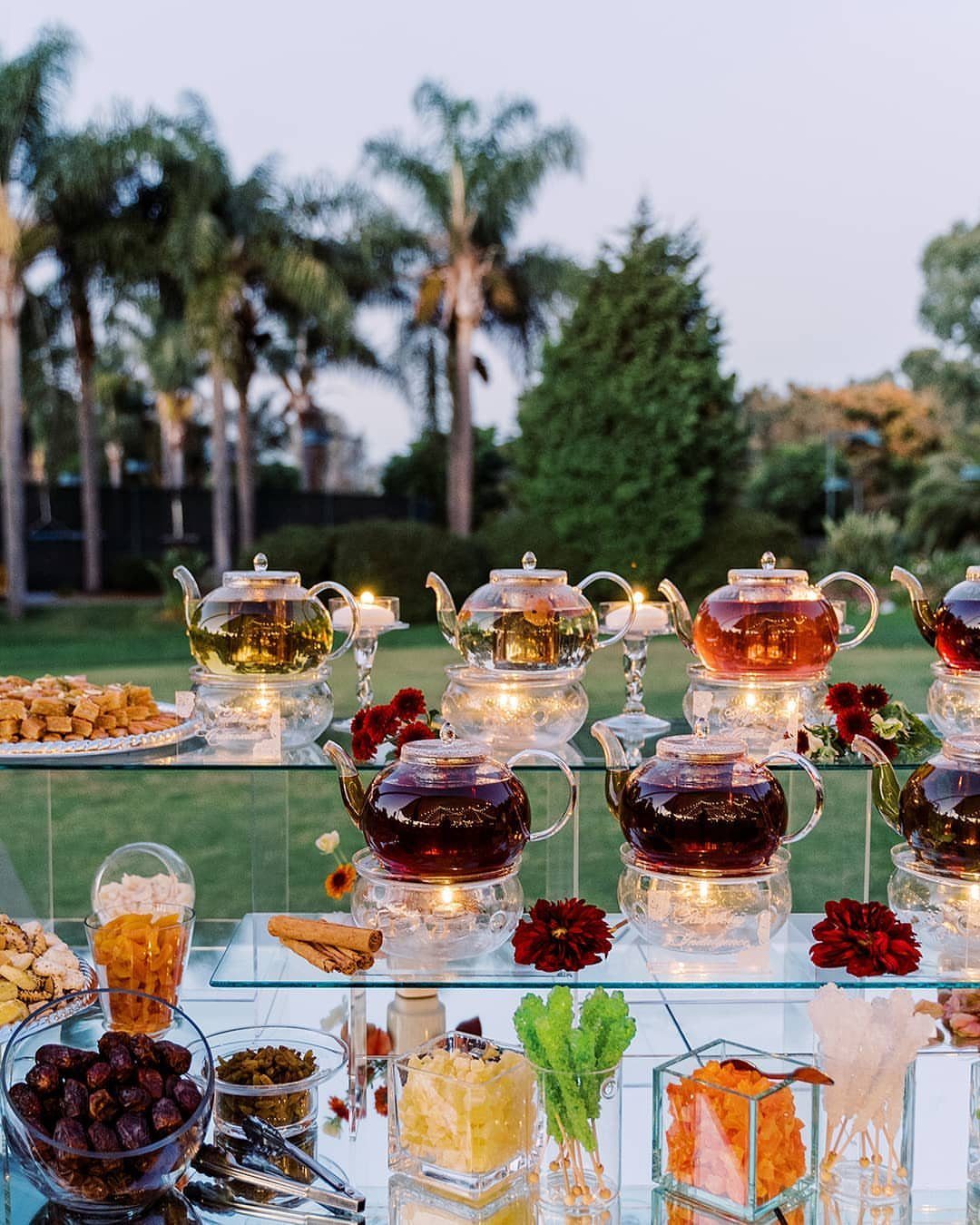
Glass teapots hold light well, and candles set among them make an outdoor tea table glow as the afternoon fades.
Cluster the pots and candles in the middle, then fill the gaps with small bowls of dates, dried fruit and sweets.
Glass keeps the table airy, so the food stays the color. Keep candles low enough that guests can see one another, and light them as the sun drops.
8. Pretty Pastels Tea Party Table
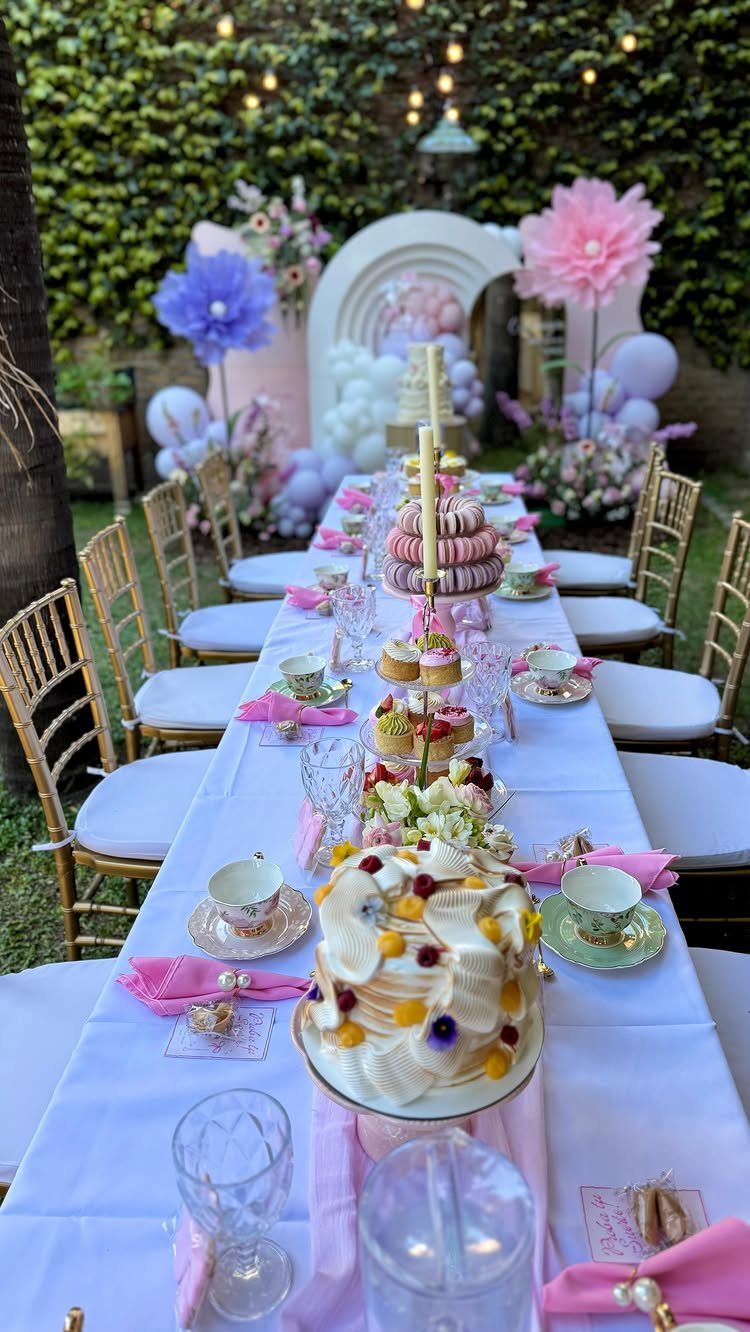
Pink and purple, kept soft, give a tea table a romantic mood without any fuss. Pick two pastel shades and repeat them in napkins, balloons and the cake, so the table reads as one plan.
A white cloth is my choice for the base because it lets the pastels stand out. Macarons on tiered stands already supply the color, so you can buy them instead of baking.
Gold chairs add warmth, but plain ones work if colors stay in the same family.
9. High Tea Style Tea Party Table
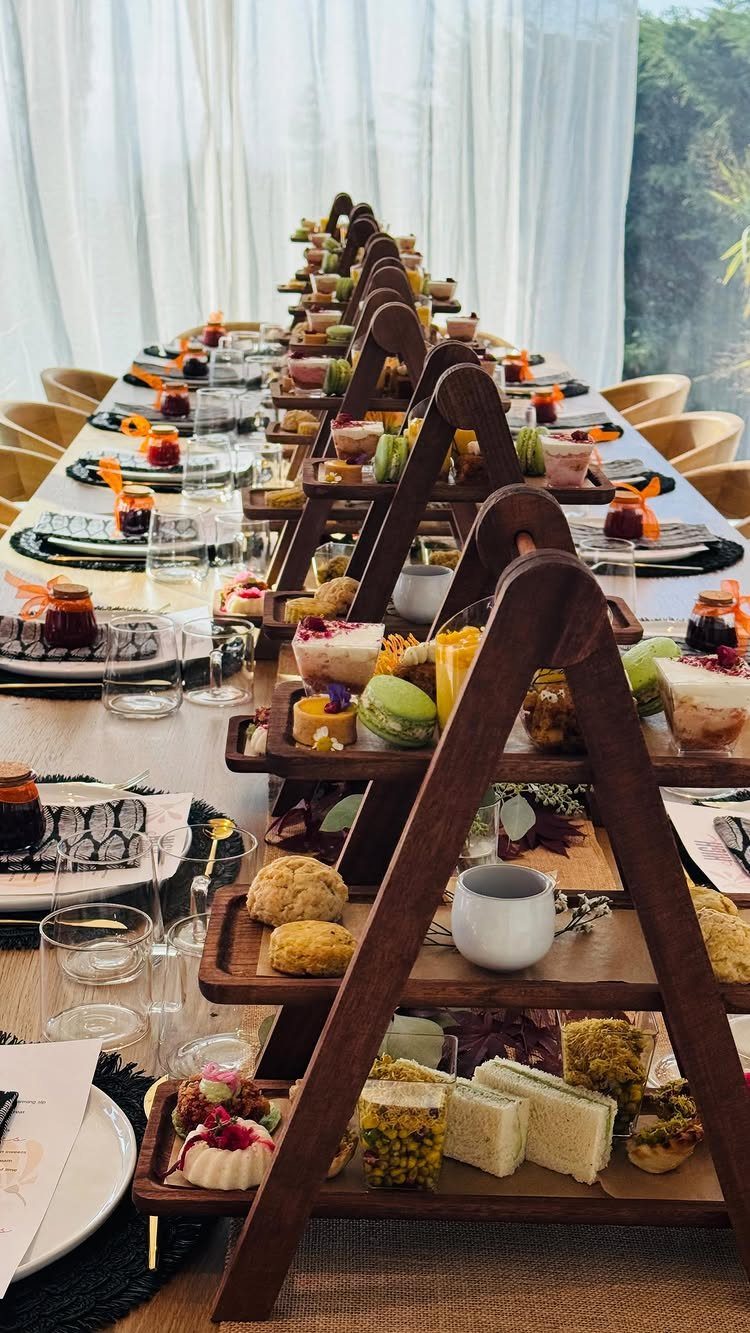
Formal here means order: wooden tiered stands spaced down a long table, each loaded with sandwiches and pastries, and white plates and glassware at every seat.
Wood warms up all that white, and I prefer it to silver for a home table. Repeat identical stands at even intervals so the table looks deliberate.
Keep the plates plain and let the food supply the color. Glassware set at each place completes the look.
10. Classic English Afternoon Tea
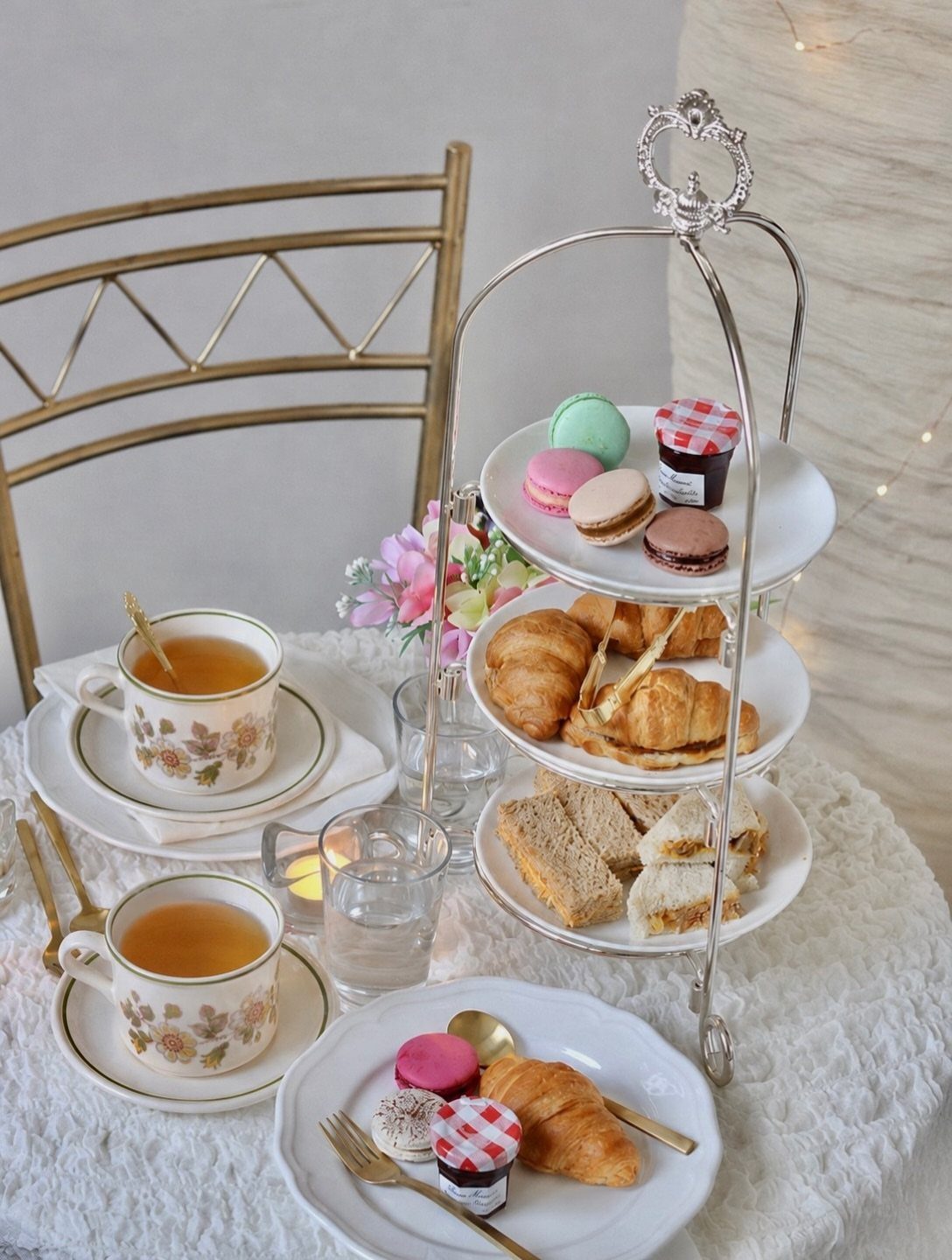
A three-tiered stand on white lace is the shortest route to a British-style tea table. Sandwiches go on the bottom tier, then croissants, with macarons on top, which follows the heavy-to-light order already described.
Floral teacups keep the look traditional.
Lace does the decorating here, so skip busy centerpieces.
11. High-Quality Table Linens
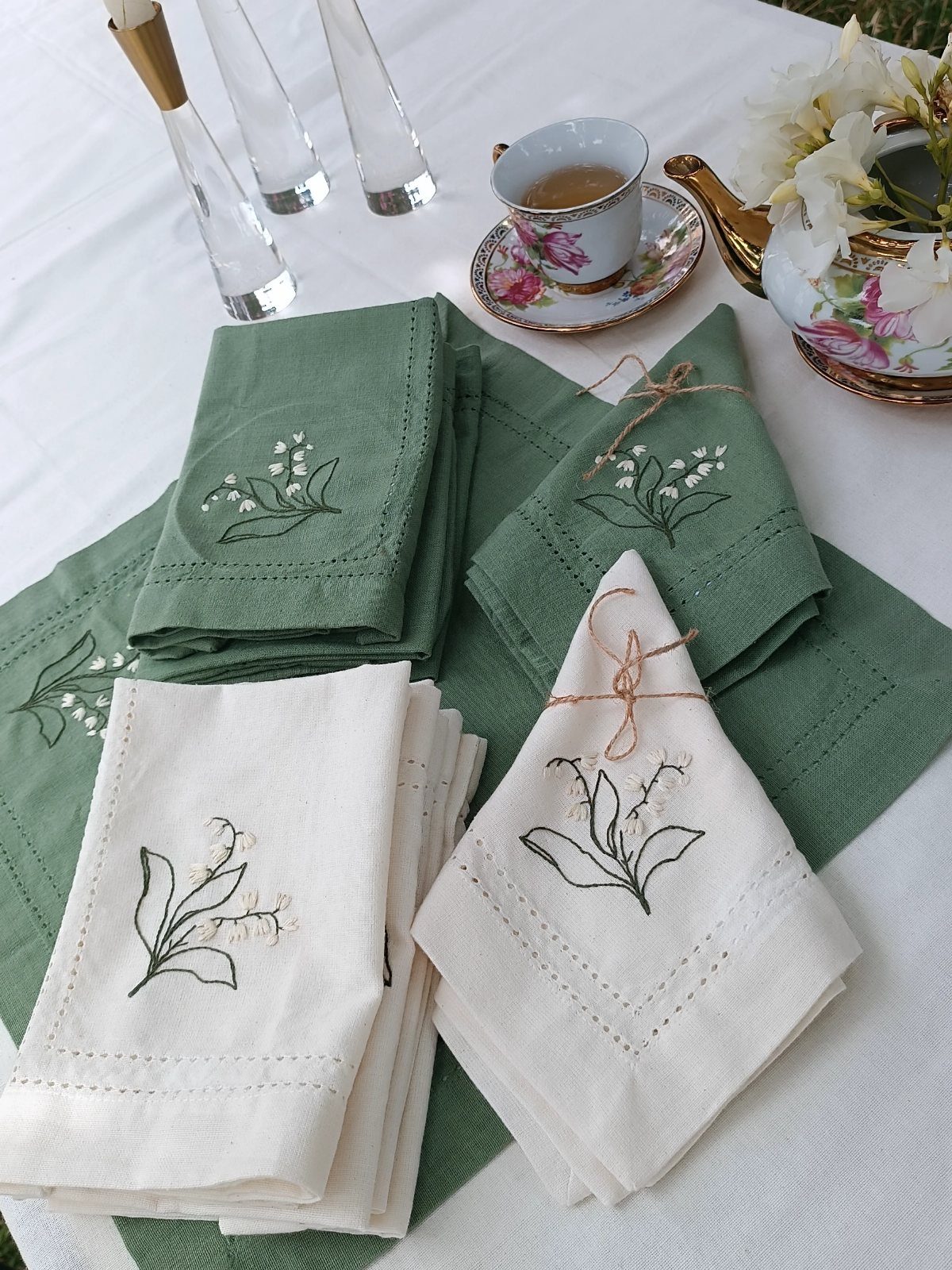
Cloth napkins are the small upgrade I would buy first. Embroidered sage green and cream ones on a white tablecloth add color and texture without a single extra dish.
Choose napkins that match the teapot and cups so the table looks coordinated. A set can be reused for every later party, which helps a tight budget.
Cloth needs washing after a tea, so keep a stain remover handy.
12. Garden Party
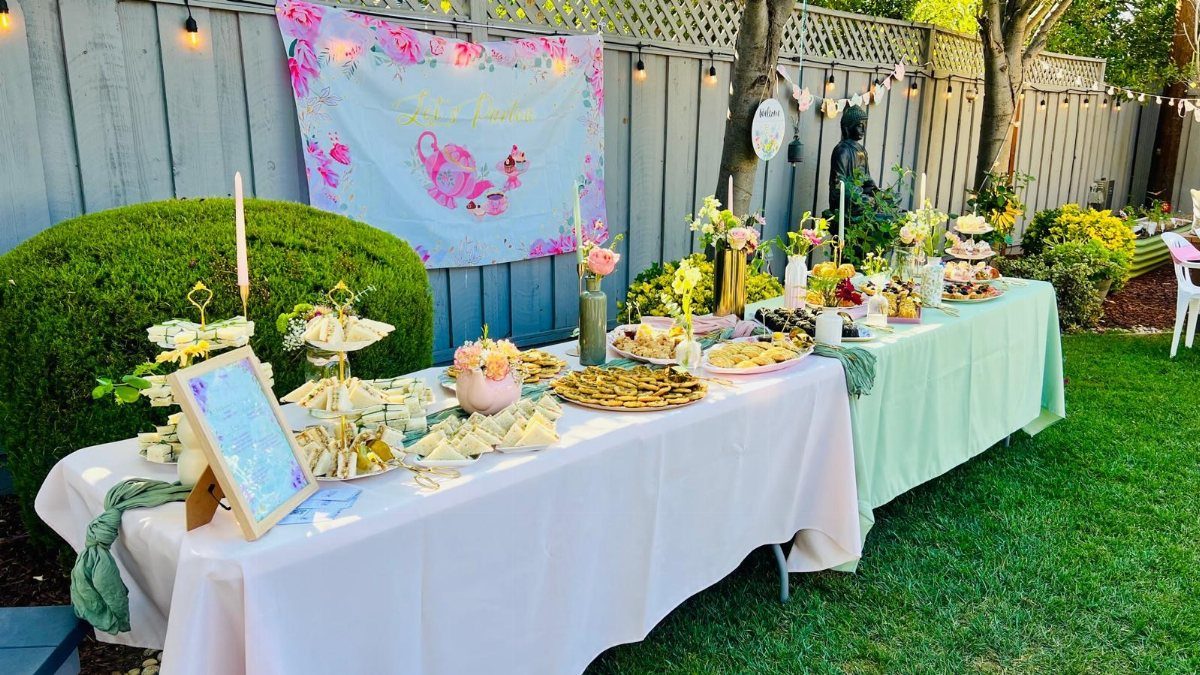
Mint and white linens make a garden tea table look fresh against a wooden fence. Set tea sandwiches and pastries along the cloth, with flowers between them, so the blooms are part of the spread rather than a separate centerpiece.
A banner such as "Let’s Party" marks the occasion cheaply and hangs on a fence. Botanical prints on napkins or plates carry the garden theme further.
Stick to one or two flower types so the table stays calm.
13. Whimsical Storybook Tea Party
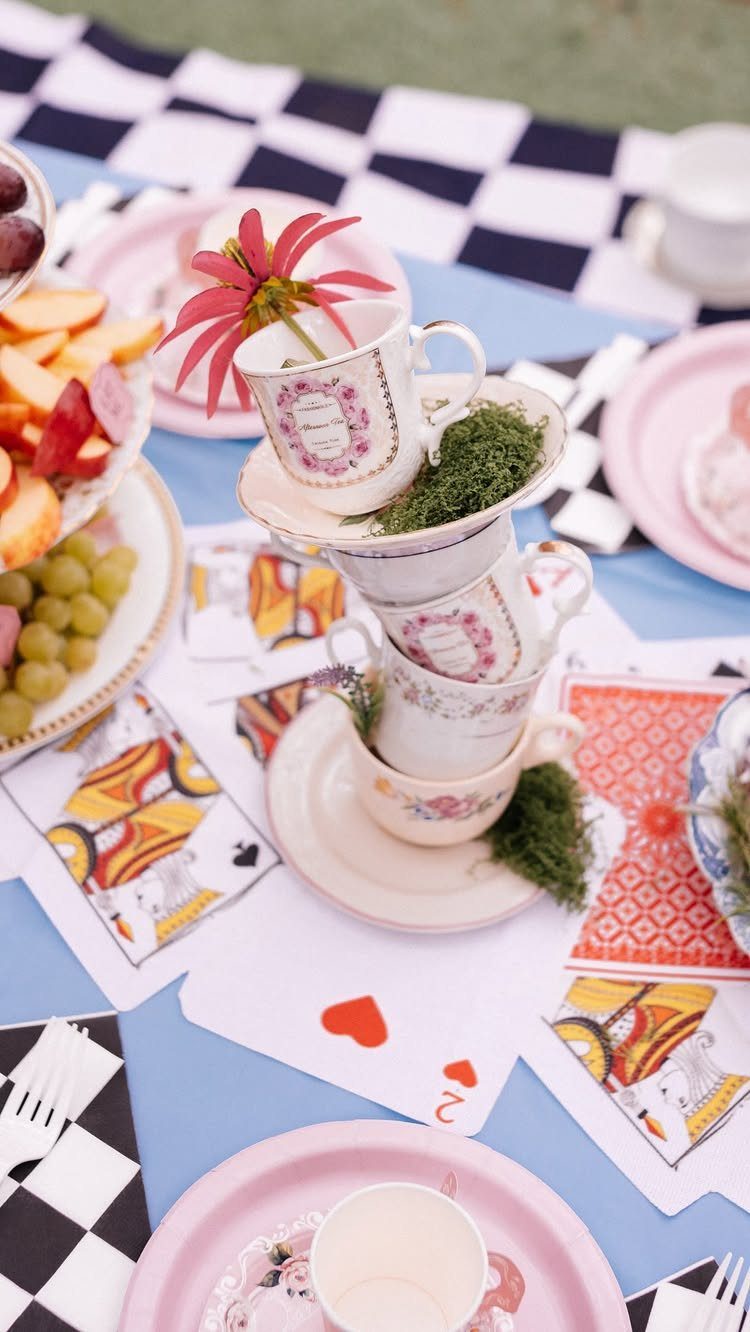
Oversized playing cards turn a plain checkered cloth into an Alice-in-Wonderland scene, and they cost far less than new dishes.
Stack a few mismatched floral teacups in the middle, then set the cards upright or leaning against fruit so they stand out from the table.
Checks keep the look playful without much work. I would keep the rest quiet: one fruit bowl, no extra props, so the cards and cups stay the point.
Skip the cards if children will be bumping the table.
14. Autumn Tea Party
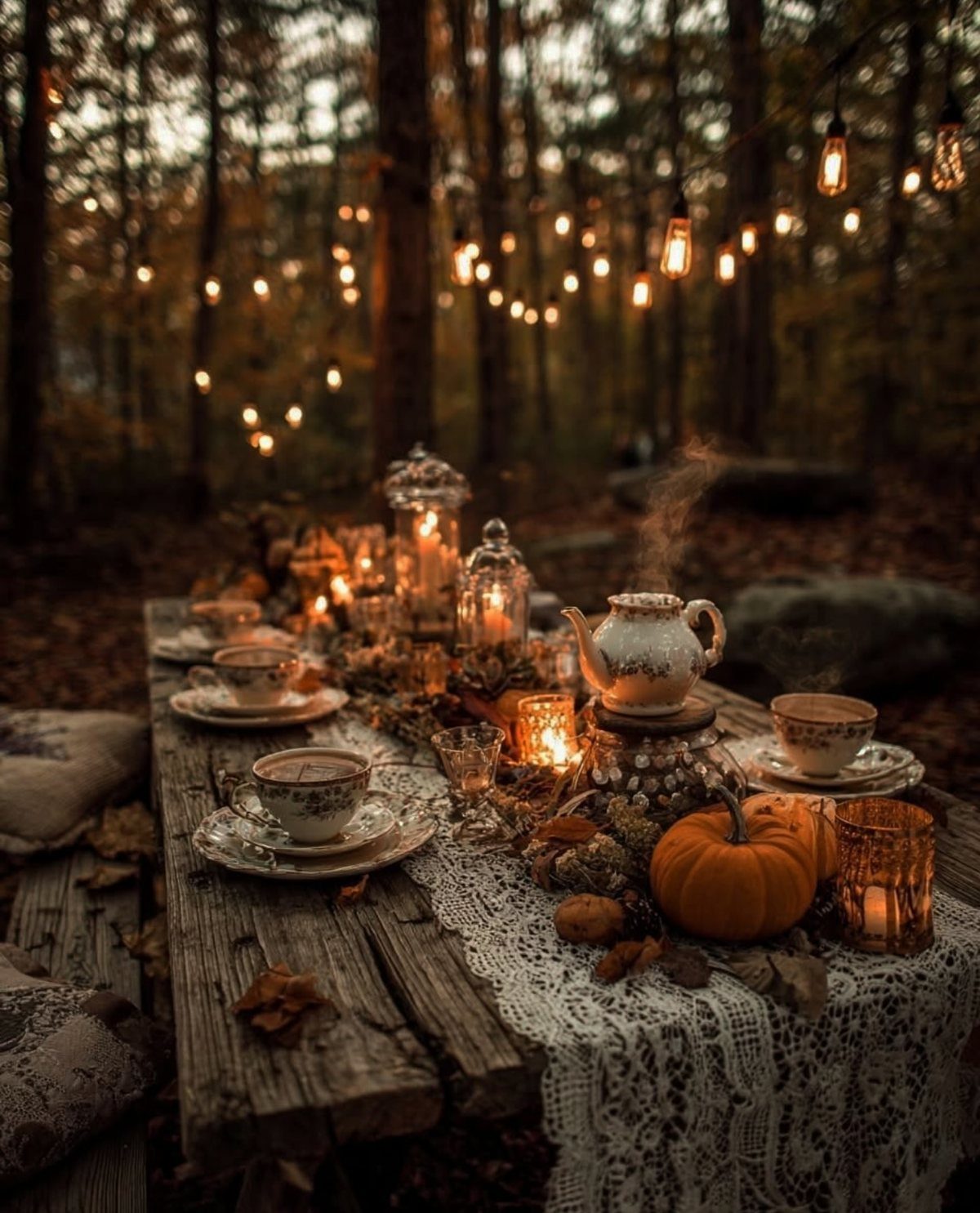
Mini pumpkins and apples carry an autumn tea table, and warm colors do most of the decorating. Set them around a teapot and teacups on a rustic wood table, with candles and lanterns clustered between the fruit.
String lights overhead are my pick for an evening tea, since they glow as daylight fades. Keep the pumpkins small so guests can still see one another.
Etiquette for Tea Parties
Set the knife with the blade facing inward, toward the plate.
Start with the tablecloth, then put the tea set in the center and arrange plates and cups around it. Cutlery and napkins go on last, kept neat and in line.
Name cards are a small personal touch that costs almost nothing. They also save you from directing guests to seats while the kettle is heating.
Planning the Menu
Finger food is the rule: anything a guest can’t pick up with one hand and eat in a couple of bites stays off the menu.
Savory items balance the sweets, so put sandwiches, quiches and savory scones next to the pastries.
Include at least one vegetarian choice. Mini quiches or spinach pastries work well because you can make them ahead and serve them warm.
A tiered tray keeps the savories off the table and within easy reach, and cutting each piece to a 2-bite size means nobody needs a knife or a plate balanced on one knee, so guests stay relaxed.
Choosing a Theme
Pick the theme first, before you buy a single plate. Pick the theme first, because it settles the decorations, the dishes and the menu in one move, and every choice after that takes less time.
Ask what mood you want. A whimsical fairy-tale tea and a refined Victorian one call for very different cups, linens and food.
Once you have an answer, test each purchase against it.
If a napkin, candle or dish doesn’t fit the theme, leave it in the store or in the cupboard. A theme that is followed all the way through makes a simple gathering feel planned, and guests notice that.
Frequently Asked Questions
What do you put on a tea party table?
Start with a tablecloth, the teapot and a cup at each seat, then add finger food: sandwiches, scones, macarons and other small sweets.
Put the food on tiered stands so the table gains height without losing space, and add one low arrangement of flowers.
Centerpieces work best under about 10 inches tall, so a bud vase or a low bowl of flowers keeps every face in view.
How do I set a table for afternoon tea?
Lay the tablecloth first, then put the tea set in the center and arrange plates and cups around it.
Forks, knives, and napkins finish the setting, lined up straight with the plate edges. Set the teapot near whoever will do most of the pouring, and give every guest a clear patch of table at their own edge.
How do you arrange food on a tiered stand?
Put sandwiches on the bottom tier, since the heaviest food belongs there, and keep macarons and other small sweets higher up.
Warm scones do better on their own plate next to the stand, with jam and cream beside them. Leave about 3–4 inches between stands so an arm can reach in without tipping a cup or a tier.
What is a tea table called?
A tea table setup is usually called a tea service or a tea setting.
That covers the teapot, cups, plates and food arranged together on the table. A tea party table is simply that setting laid out for guests, often with tiered stands and flowers added.





