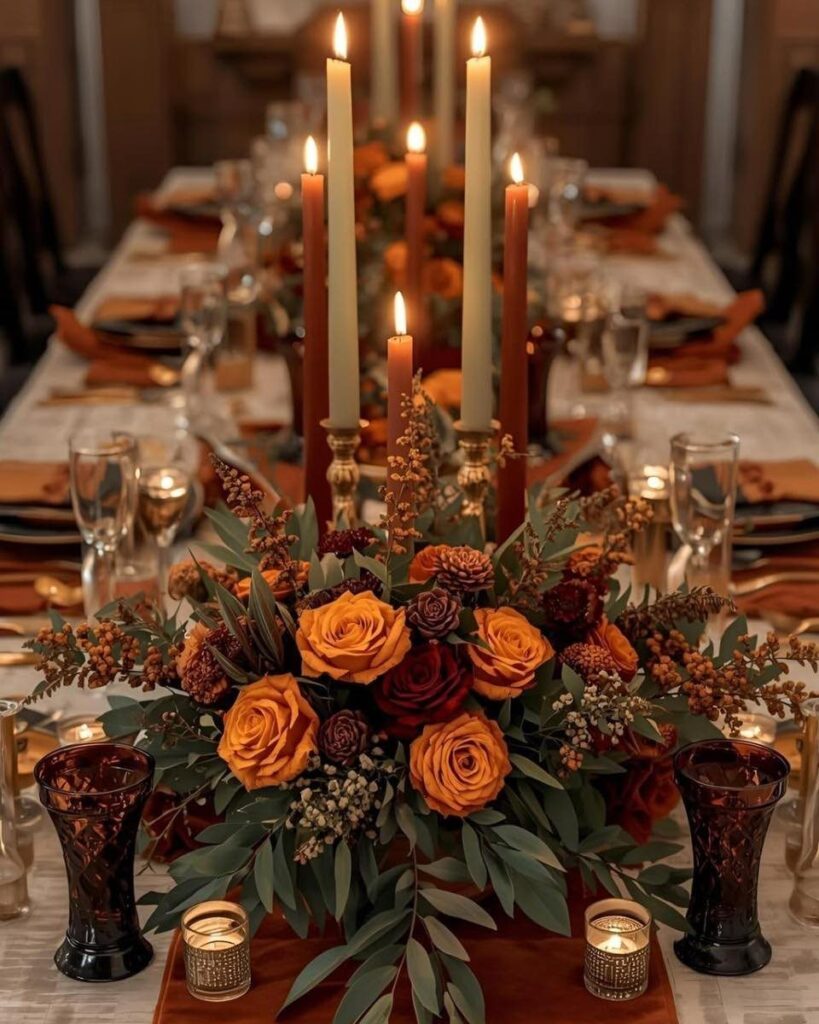
The 22 settings run from a few foraged twigs, moss and 2 or 3 little birds to a green velvet tablecloth with amber stemware, so cost and effort swing widely.
What decides your pick is the table you’re working with: a crowded one needs low, compact arrangements that guests can talk over, while a bare, long table can carry candles, runners and height.
If dishes will crowd most of the table, pick a low setting like the Velvet Pumpkin Runner or the Pumpkin Bowl Place Settings, and skip anything tall in the center.
1. Incorporate Rich Colors and Natural Textures
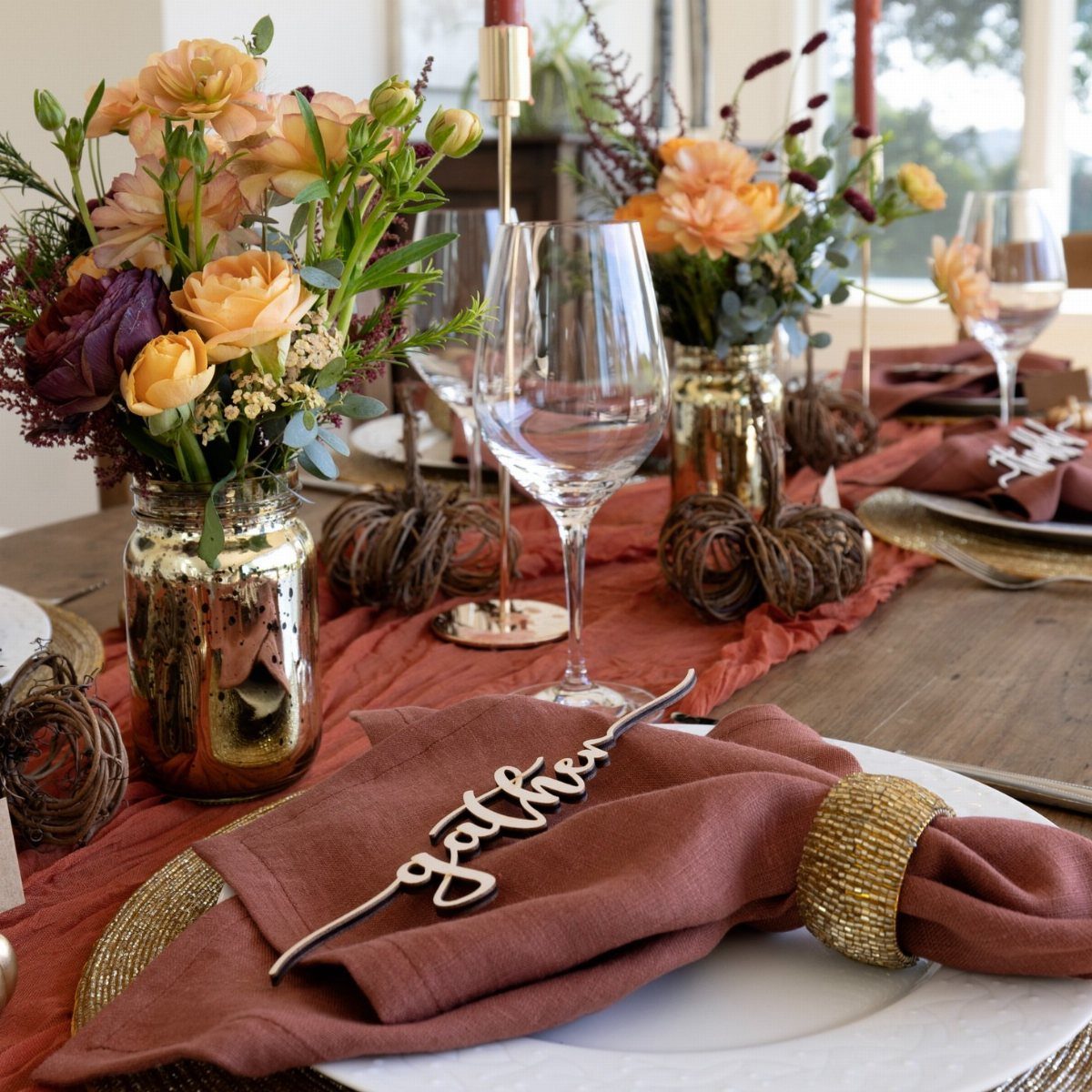
Terracotta, burnt orange and plum read as warm because they sit close together on the color wheel, and a runner in one of them does most of the work.
Choose one deep color for the runner, repeat it in the flowers, and take the napkins a shade darker.
Handwritten tags like the "gather" ones here cost almost nothing and give each napkin a small finish.
2. Metallic Gold Pumpkins
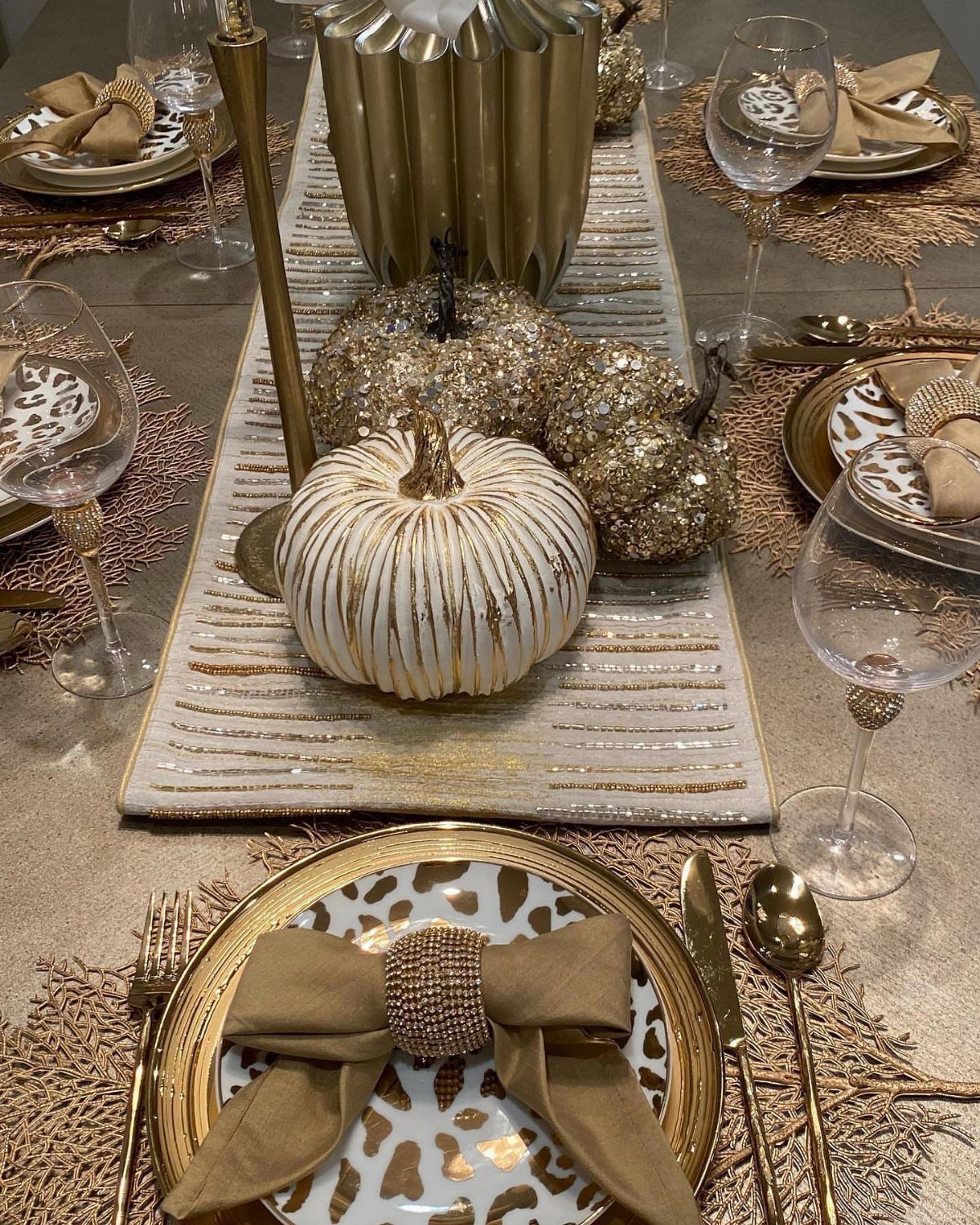
Gold paint turns ordinary pumpkins into a centerpiece that catches candlelight. Spray paint in a metallic gold is the fastest route, and a glittery finish is the bolder choice if the table can handle it.
Leopard print is a daring pairing, so I would limit it to one element, such as the plates, and keep the rest solid.
3. Layer Seasonal Florals
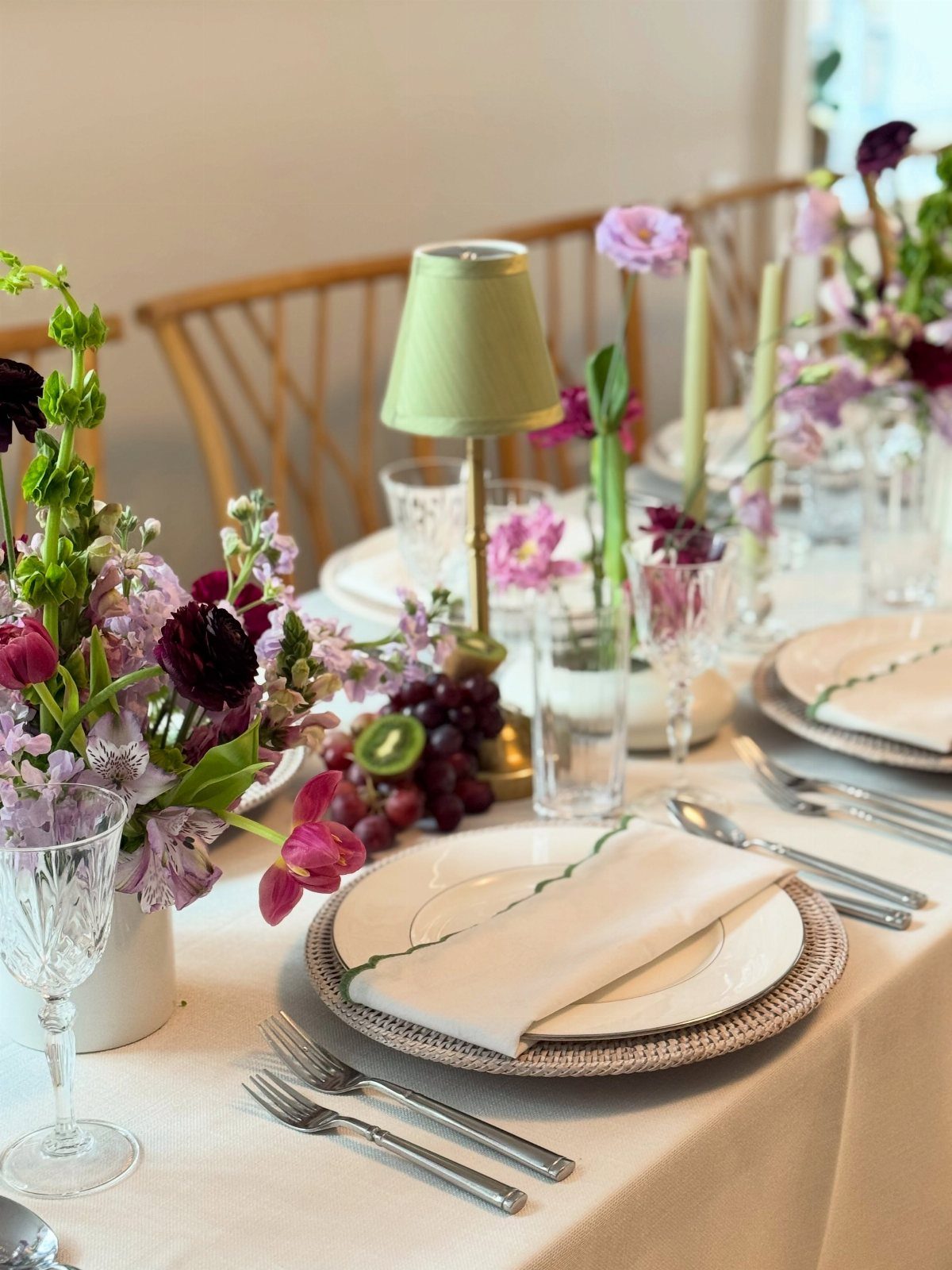
Several small arrangements beat one big bouquet when the table is crowded with dishes. Purple and pink blooms in a few low vessels let guests see each other across the table, and they spread color along the whole length.
White linens and plain white plates keep the flowers in charge. A bunch of red grapes set among them adds a fruit note for free.
Keep every arrangement low enough to talk over.
4. Use Your Thanksgiving Feast as Inspiration
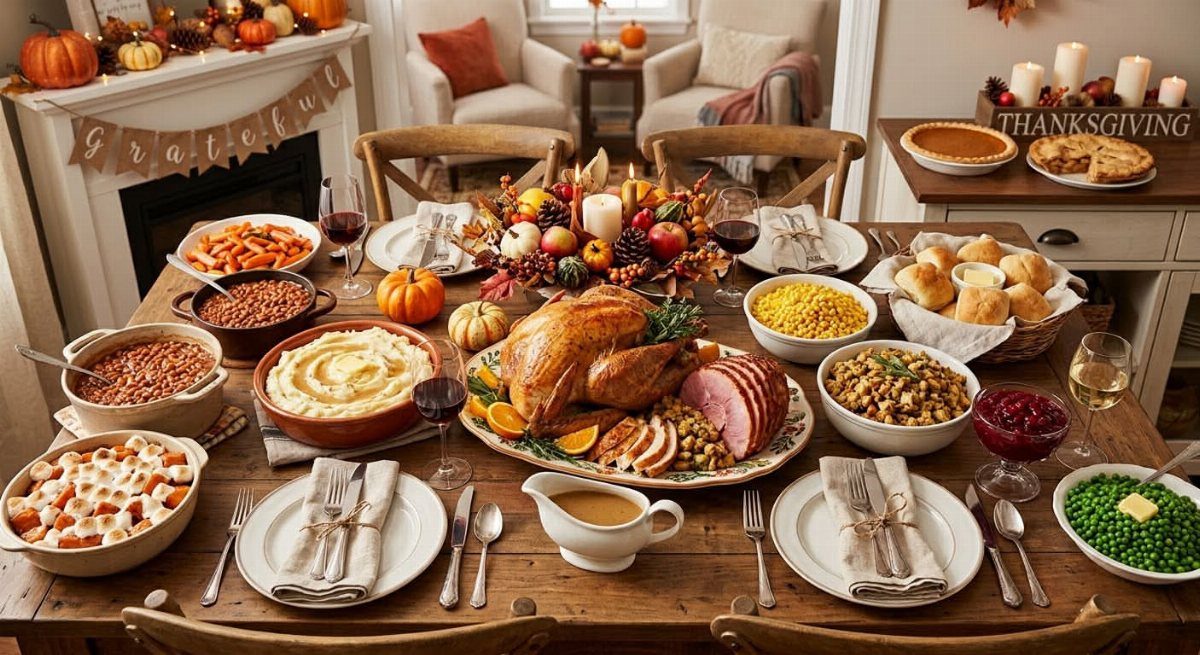
Let the menu pick the decor. Roasted turkey, golden sides and autumn vegetables already supply the colors, so echo them in napkins and candles rather than buying a separate scheme.
A simple banner or sign, like the "Grateful" one here, works best when it hangs on a wall or sideboard instead of the table.
Platters and place settings need the room, and a table that looks eaten from, not just styled, is the goal.
Should you wish to maintain a comfortable distance from your opinionated aunt at the dining table or add a note of elegance to your Thanksgiving table decor, a cleverly placed monogrammed linen napkin might be just the solution.
— Vogue
5. Cornucopia Centerpiece
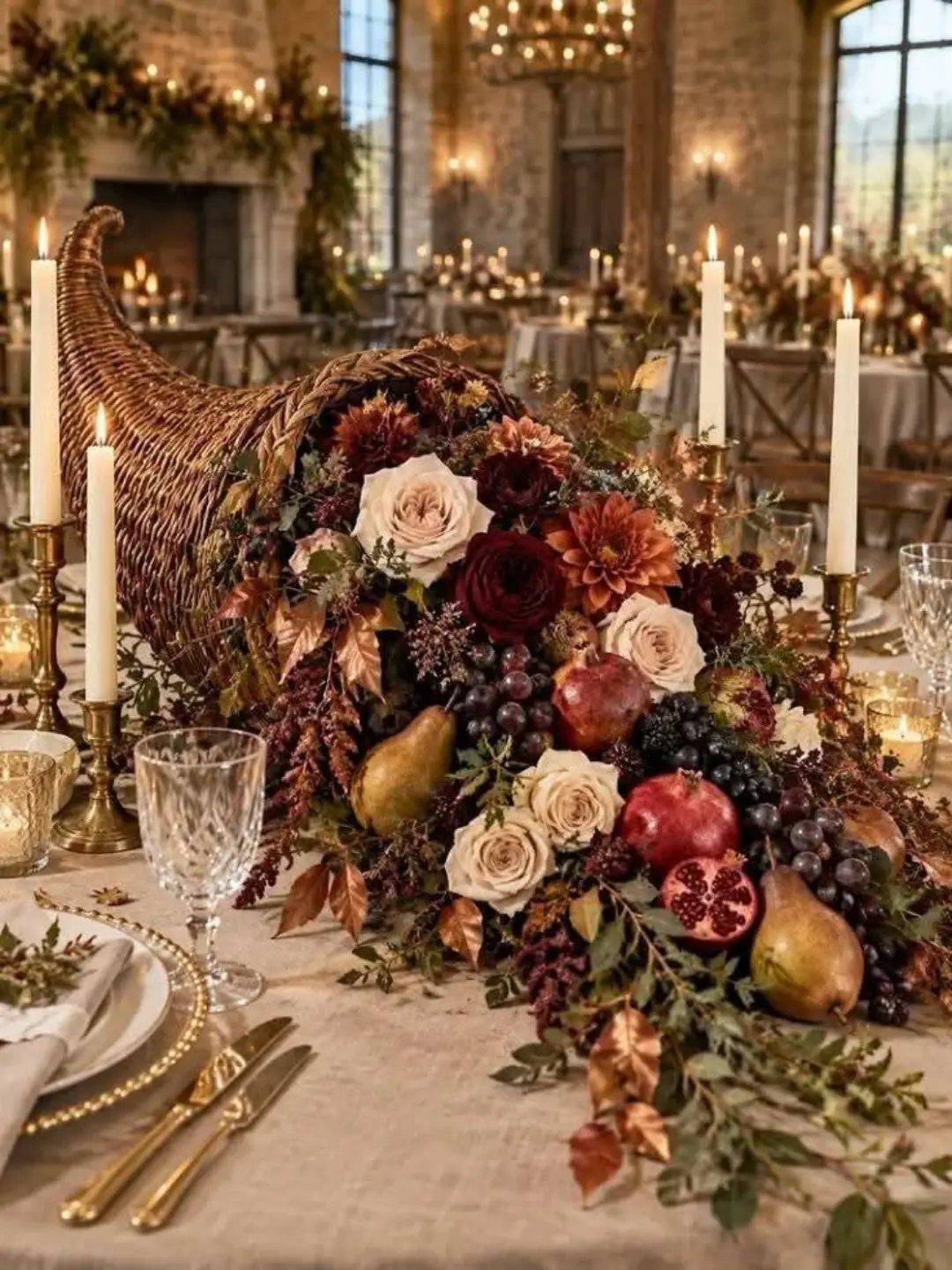
A woven cornucopia works as a centerpiece because the basket itself is decor before anything goes in it. Fill it with fall flowers, pears and pomegranates, and let a few spill onto the linen tablecloth.
Fruit is cheaper than a florist arrangement and doubles as a color source. Candlelight beside it softens the look, and I would pick one basket over several small accents.
6. Vintage Dishes and Decor
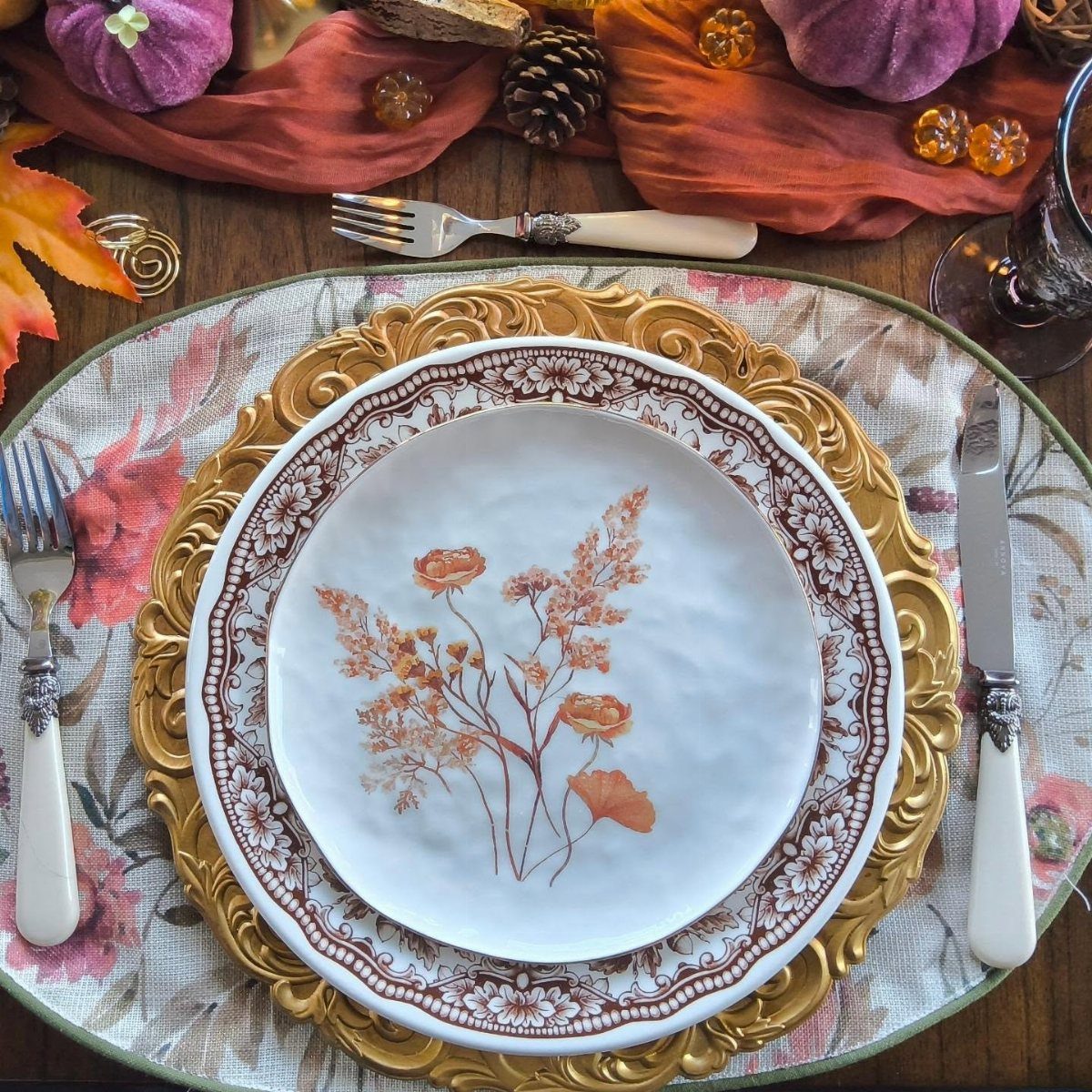
Mismatched vintage plates with a floral pattern add a character to the table that new sets rarely match.
Small pumpkins, pinecones and a bit of fabric on a wooden table keep the decor quiet so the plates stay the focus. Secondhand shops are the budget route.
7. Achieve Modern Elegance with Indigo Accents
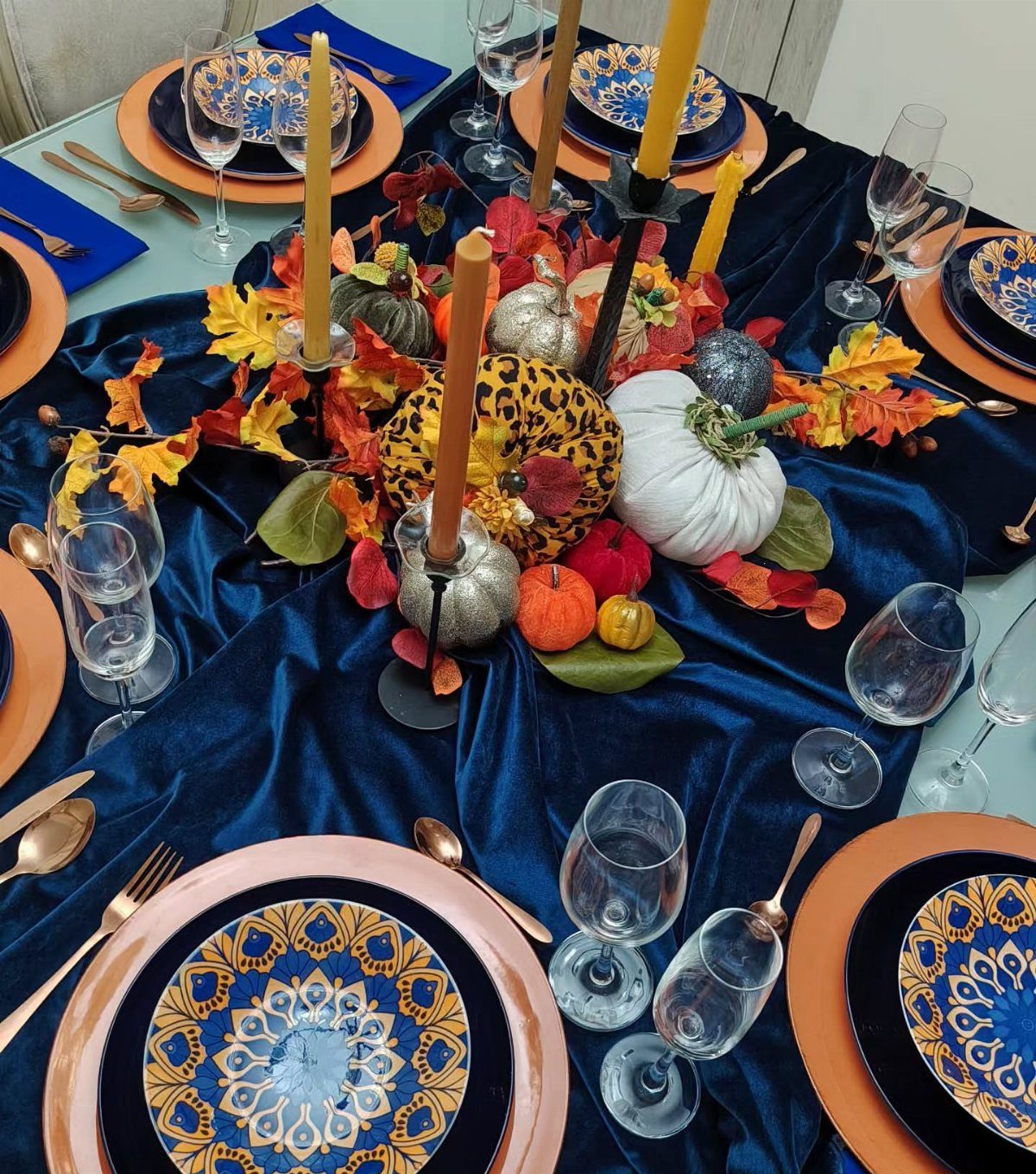
Navy velvet is the rare dark tablecloth that looks formal without feeling stuffy, and orange is its natural partner across the color wheel.
Gold flatware ties the two together. Patterned indigo plates carry enough detail that I would leave the centerpiece simple: pumpkins and a few leaves, nothing more.
8. Pinecone Tablescape
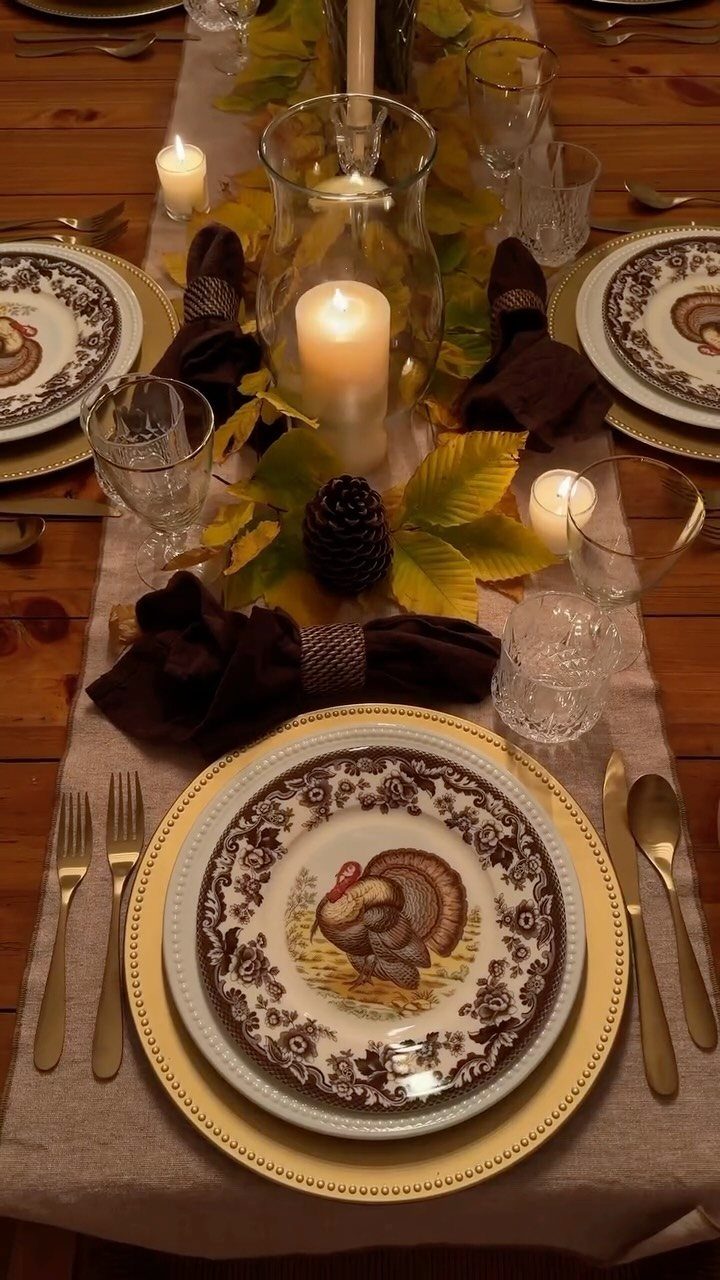
Burlap is a forgiving runner because it hides spills and makes brown napkins look intentional. A single pinecone set among the candles and leaves gives the table a natural focal point without crowding the plates.
Turkey-patterned plates already say Thanksgiving, so I would hold back on extra figurines. Gold chargers and glass candle holders add shine against all that texture.
9. Cool and Collected
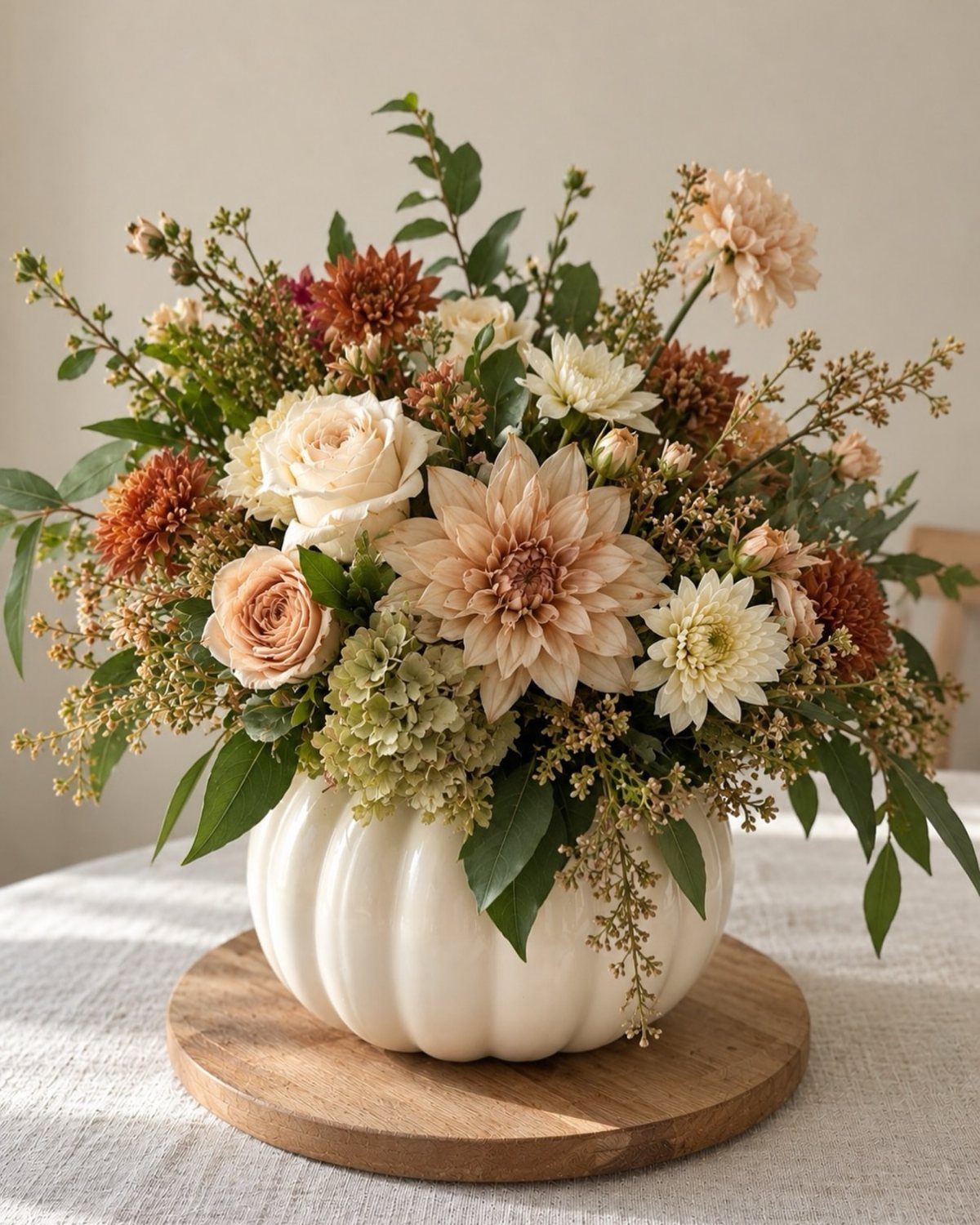
Tight, compact arrangements suit a table where every inch is spoken for. Cream, peach and rust flowers packed into one white ceramic pumpkin look polished, and the vase doubles as the seasonal accent.
Lift it on a wooden platter or pedestal so the blooms sit at eye level without blocking the view across the table. Plain white linen lets the pale colors stay crisp.
10. Go Natural with Foraged Materials
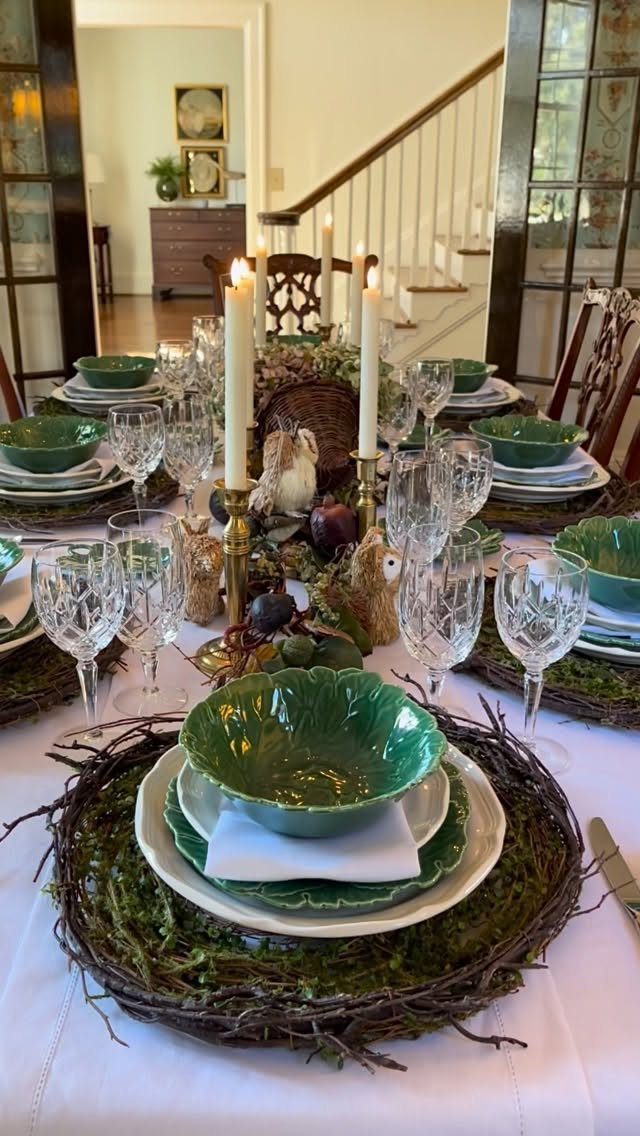
Twigs, moss and 2 or 3 little birds make a centerpiece that costs almost nothing if you gather the materials from your own yard. Skip the flowers entirely; bark, moss and dried pods give you plenty of texture to work with.
Shake out twigs and moss outdoors first so nothing drops onto the plates.
11. Burgundy Runner with Gold Chargers
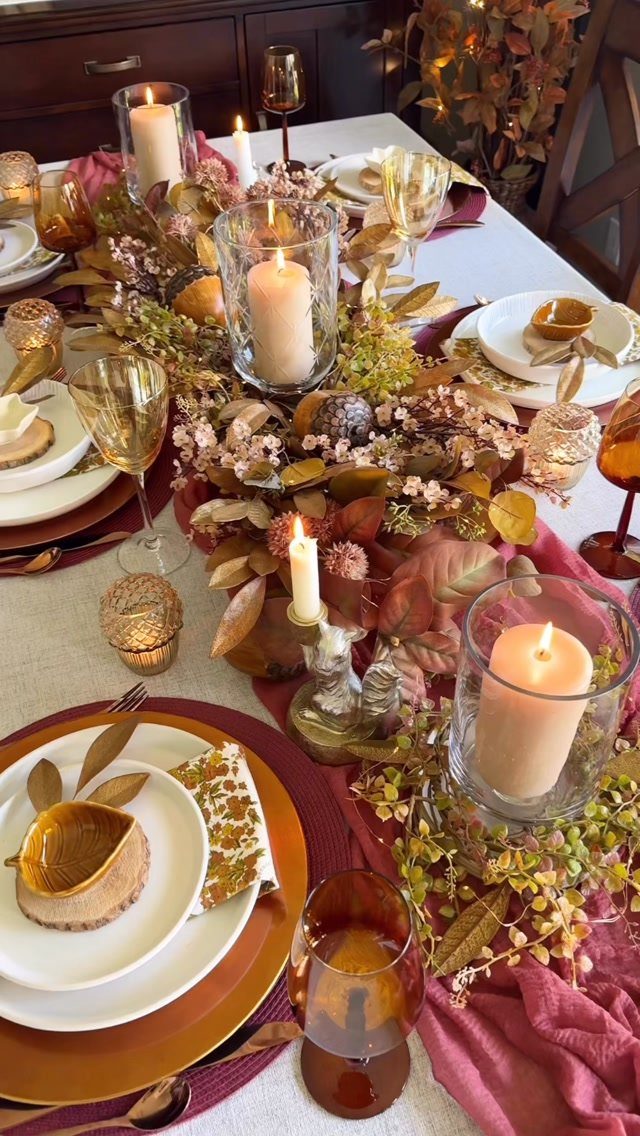
Deep burgundy against gold is a classic pairing, and a fabric runner is the cheapest way to get it. White plates on gold chargers stay crisp against the dark color.
Glass cylinder candles hold flames steady and add height, while autumn foliage down the middle fills the gaps. I prefer foliage over flowers here, since the runner already supplies the richness.
12. Orange Accents and Amber Glassware
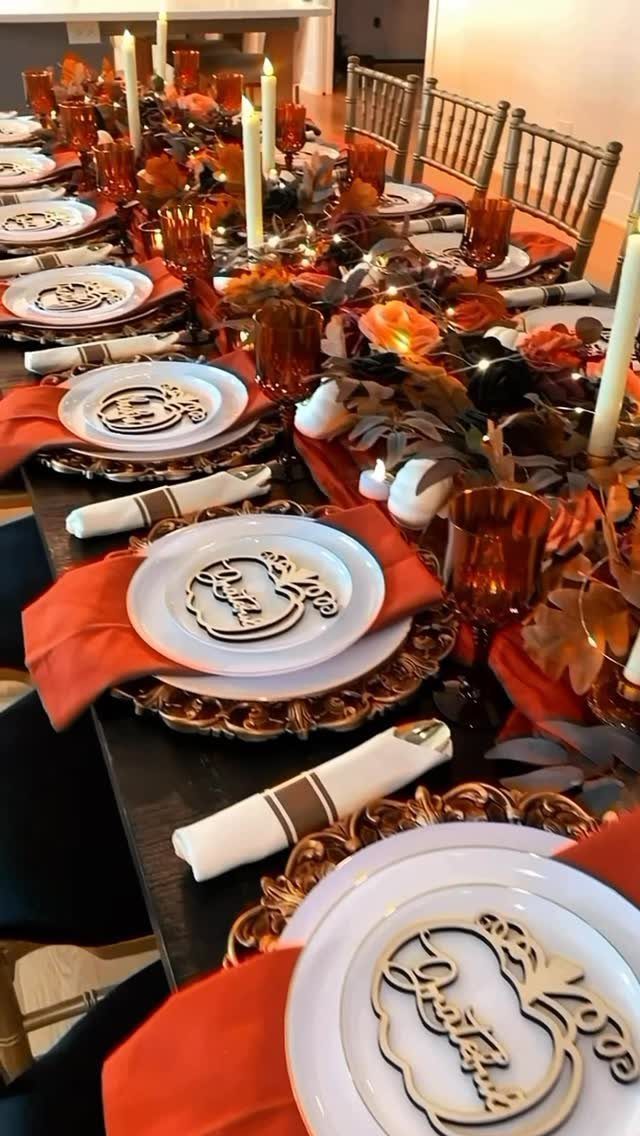
Amber glassware is the detail I would build around: it picks up candlelight and makes plain water glasses look special. Orange napkins repeat the warmth, and gold chargers keep it from feeling too bright.
Tall white candles rise above the fall florals and give the long table some height. Small wooden "Gratitude" cutouts on each plate double as place markers and a quiet message.
13. Beige Linens with Autumn Florals
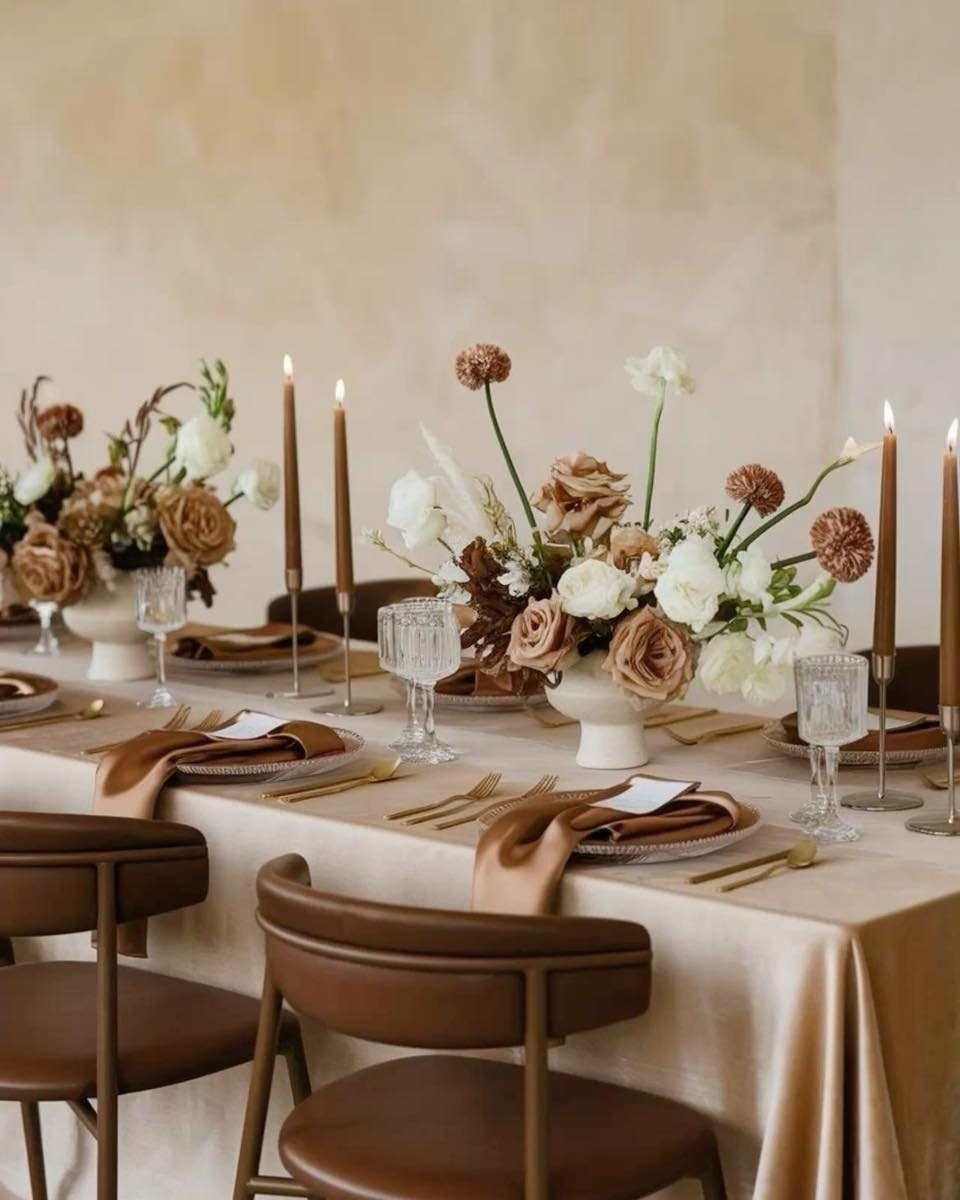
Neutral linen lets small details carry the table. Beige with brown napkins and gold flatware stays warm without adding a loud color, and it suits a host who wants formal without shopping for much.
Keep the flowers white and delicate so they read against the beige. Tall brown candles add height, and I would stop there instead of piling on more accents.
14. Outdoor Feast by Candleglow
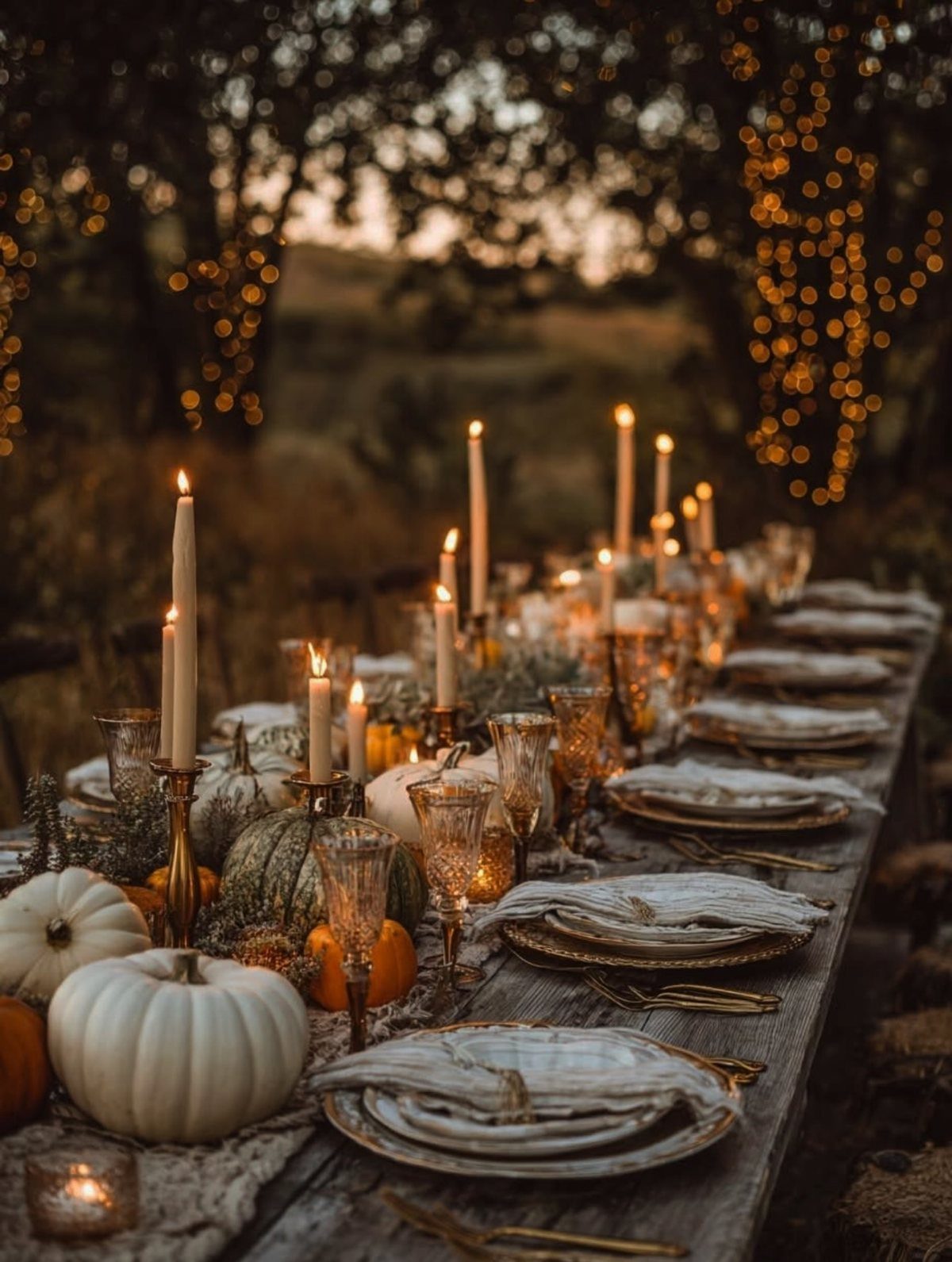
Candles and string lights do the decorating when dinner moves outside, and a long wooden table needs little else. White pumpkins and amber glasses sit well on bare wood, and tall tapers in gold holders give the table its glow.
Fairy lights in the trees behind the table light the guests’ faces as dusk comes on. Time the meal so you light the candles before the sun is fully gone.
15. Green Velvet Tablecloth
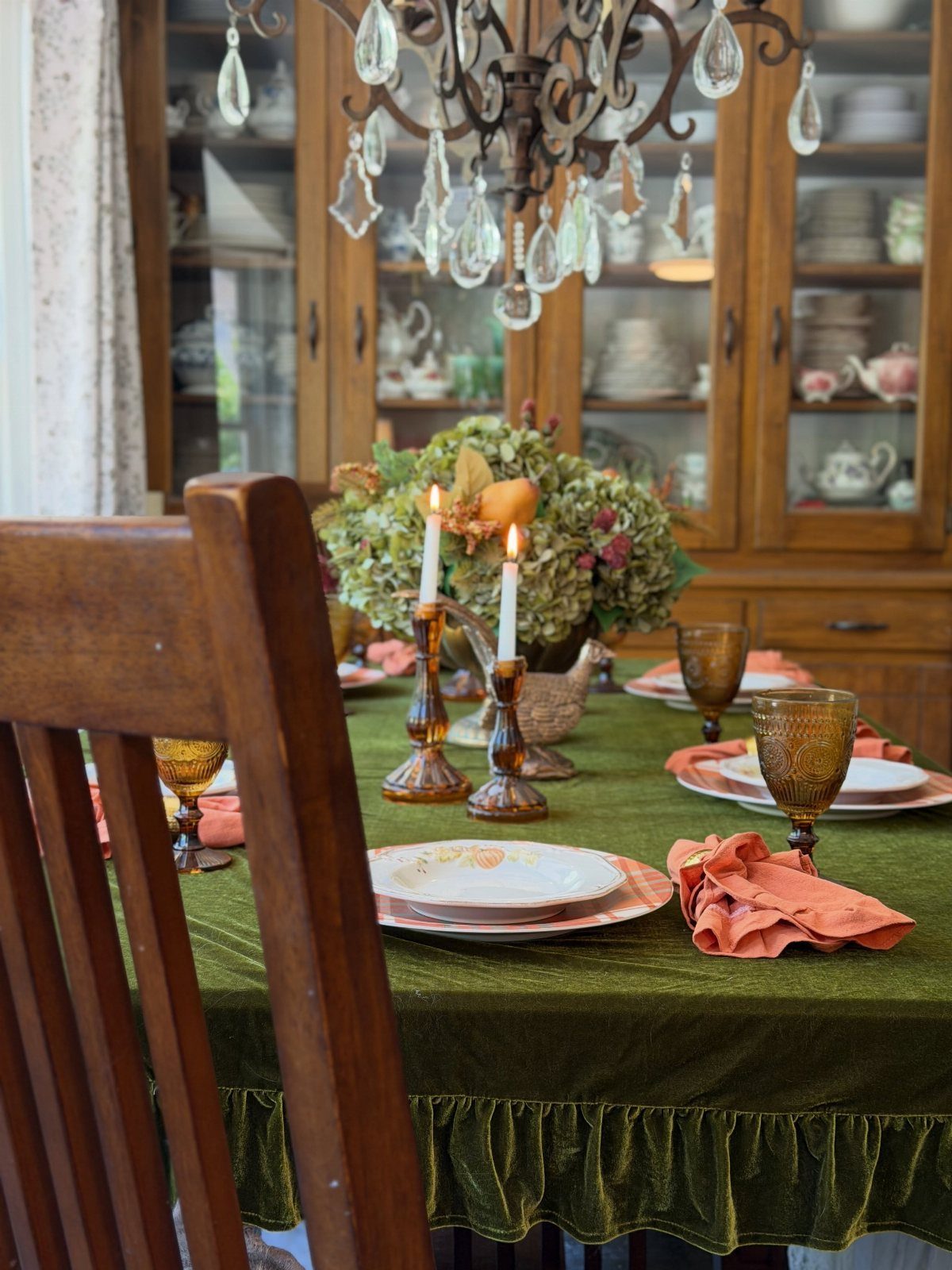
Green velvet is a bolder tablecloth than most hosts try, and it pays off. Orange napkins sit opposite it on the color wheel, so they pop without any extra effort.
White plates keep the deep green from swallowing the table.
Amber stemware and lit candles pick up the warm tones, and a small floral centerpiece is plenty. I would let the cloth lead and skip a runner entirely.
16. Pumpkin Bowl Place Settings
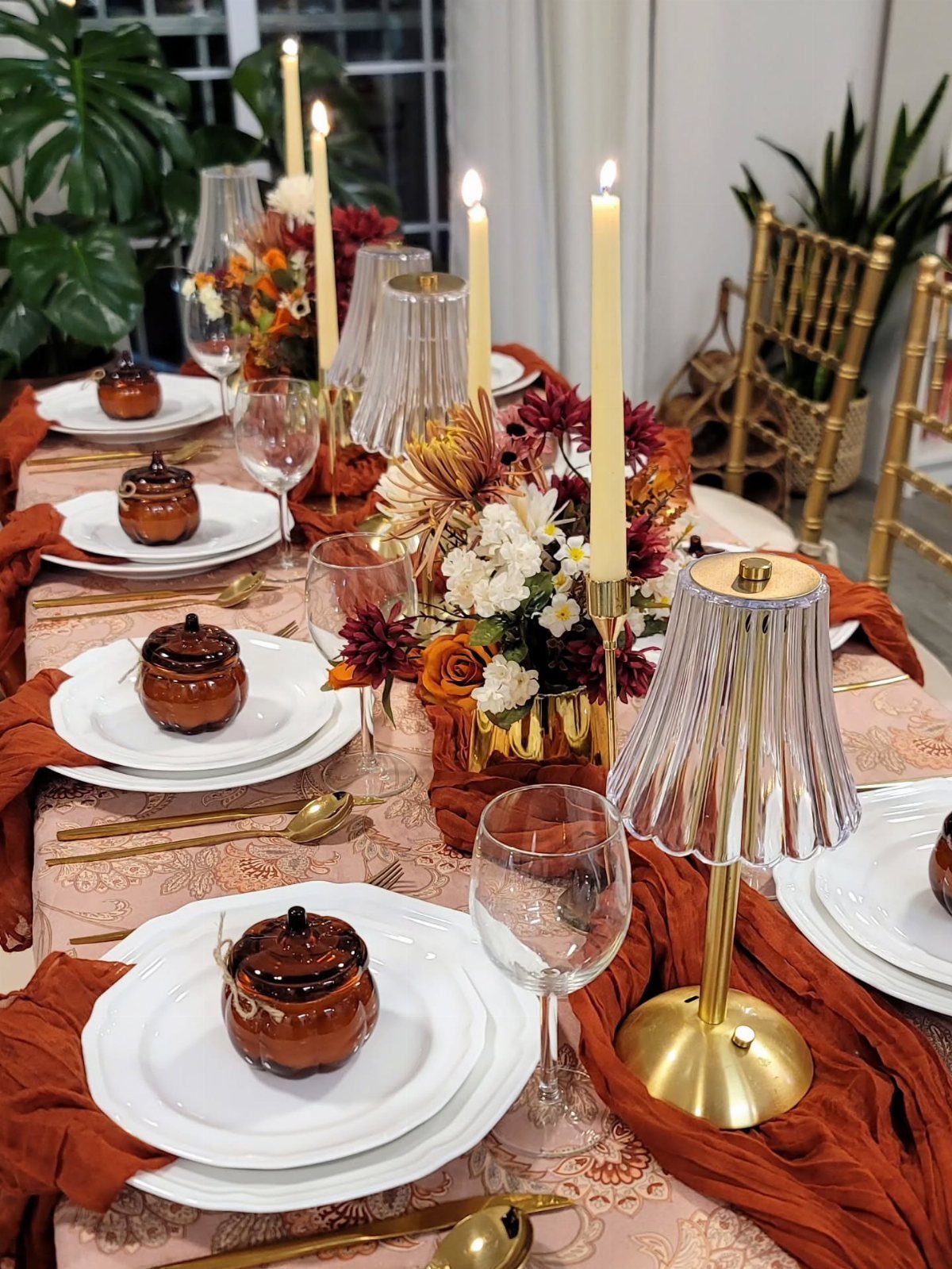
A miniature pumpkin-shaped bowl at each seat works as decor and as a serving piece in one.
Brown bowls set on white plates give every guest a small anchor, and they are a good spot for soup, nuts or a first bite.
Orange runners and autumn flowers fill the middle, so I would keep the centerpiece low. Gold cutlery and tapers finish the look without crowding the plates.
17. Pomegranate and Burgundy Centerpiece
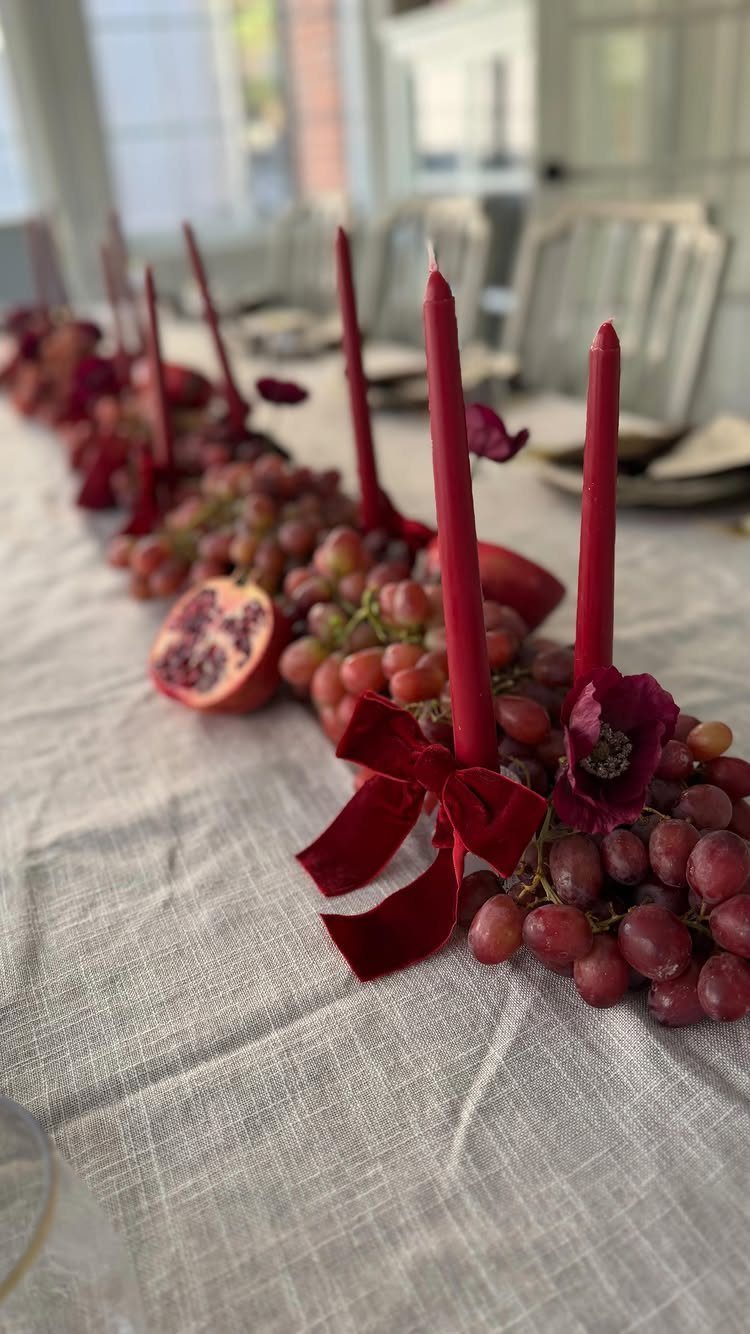
Sliced pomegranates show their ruby seeds, which is why they beat whole fruit here. Pair them with red grapes, burgundy tapers and dark red flowers, and the centerpiece reads rich without any greenery.
Light grey linen keeps all that red from feeling heavy. Red velvet ribbons tied around the candles or looped through the fruit are cheap, and I would choose ribbon over extra flowers.
18. Velvet Pumpkin Runner
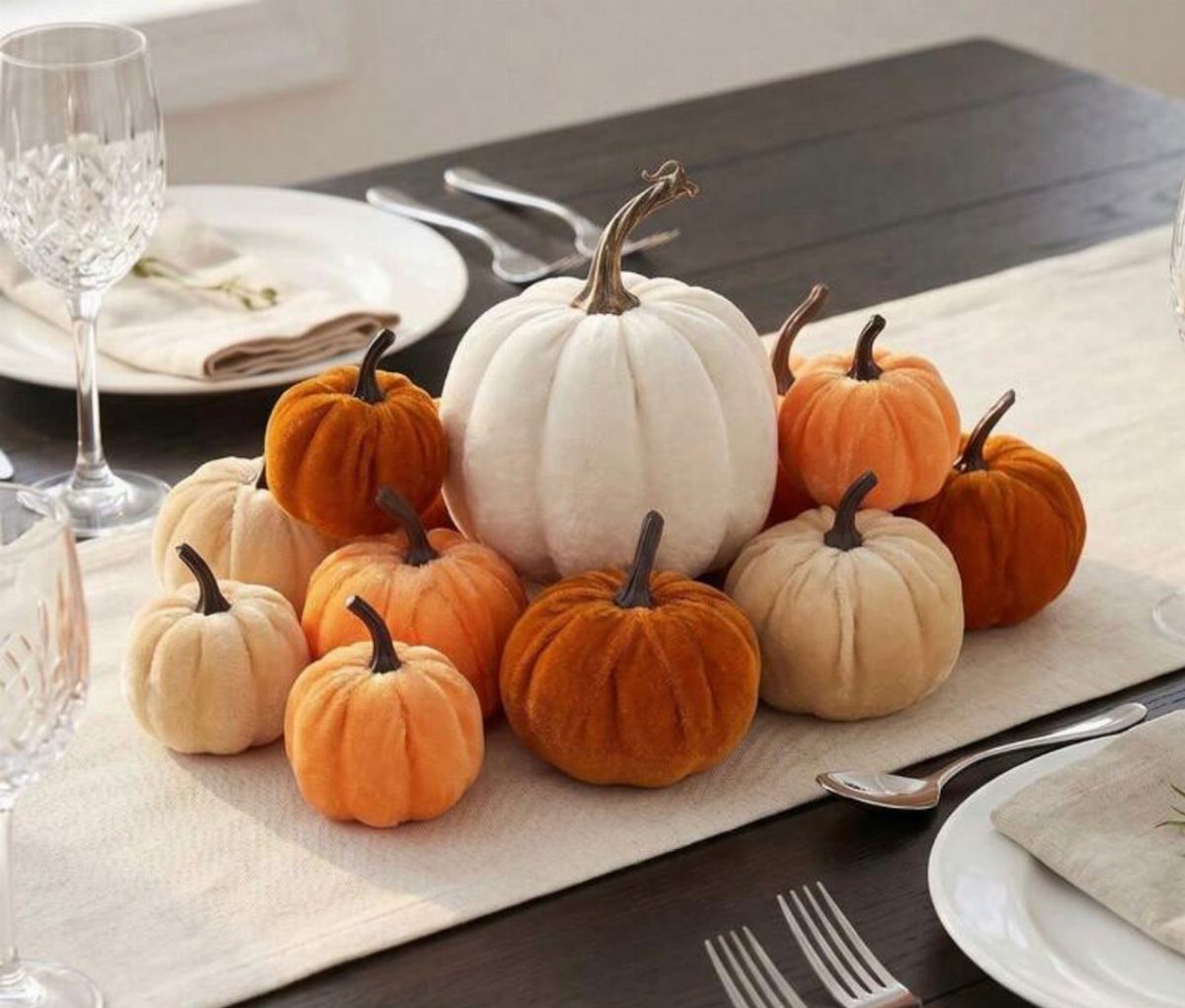
Velvet pumpkins in white, tan and orange are a centerpiece you can reuse every year, since they never rot or need a paint job. Cluster them along a light fabric runner on the table’s center line.
Odd numbers look natural, and varying the sizes helps. They sit low, so guests can see across the table.
19. Checkered Tablecloth with Turkey Motif
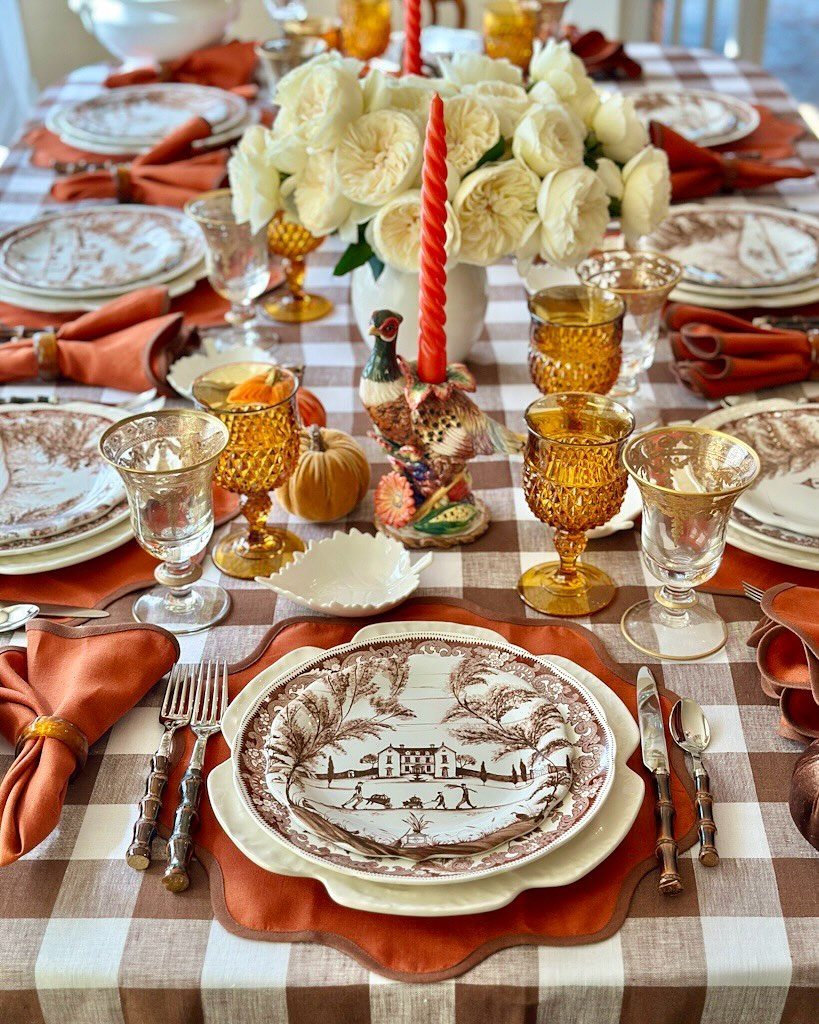
Brown and white check is a friendly base, and it lets a single turkey figurine stand in for a whole theme.
Orange napkins and amber glasses keep the palette warm, while white roses give the pattern a calm place to rest.
Because the cloth already has a pattern, I would keep the centerpiece to one white bouquet and one turkey. Anything more starts to compete.
20. Jute Pumpkin and Wood Cutout
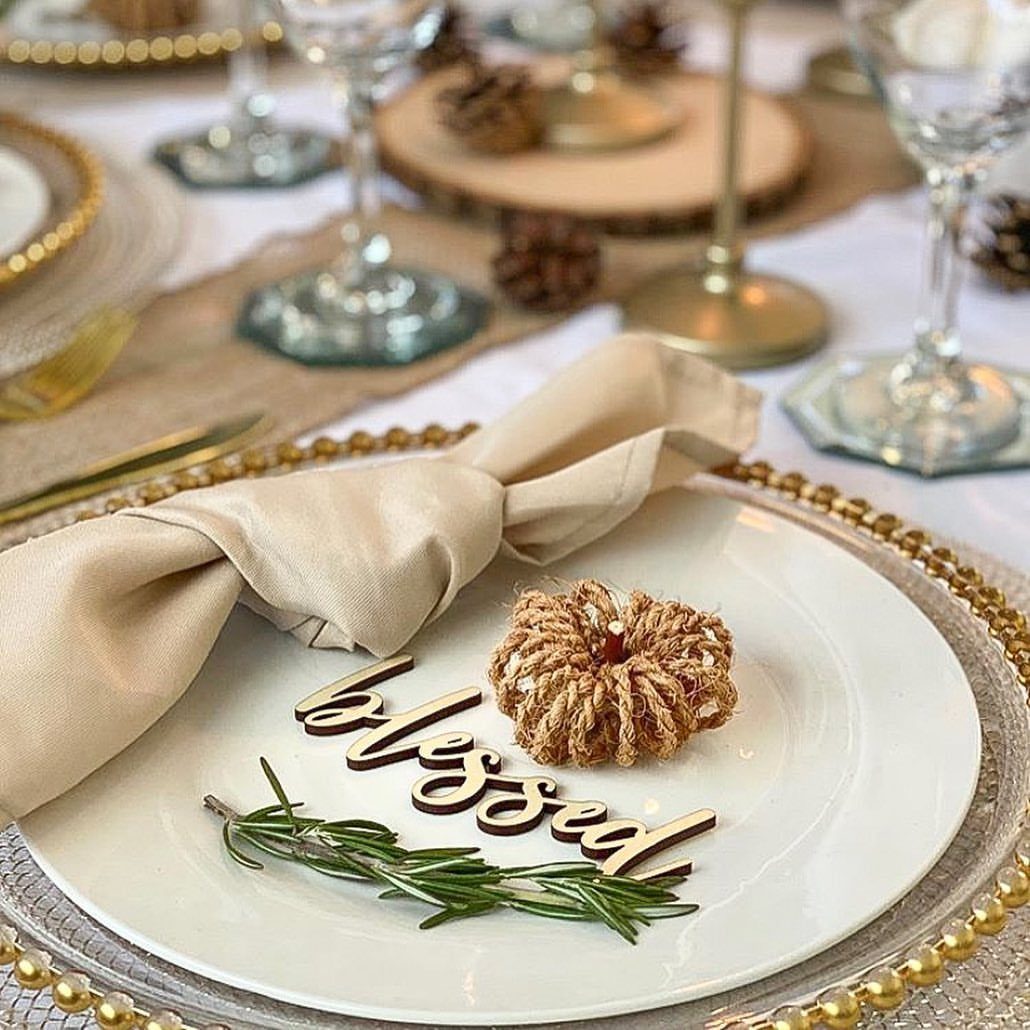
A small jute pumpkin on each plate does the work of a place card and a centerpiece in one. Paired with a wooden "blessed" cutout, a beige linen napkin and a gold-beaded charger, it makes a quiet, textured setting.
A rosemary sprig tucked beside the pumpkin adds green and a little scent for almost nothing. I would repeat the same trio at every seat so the table feels even.
21. Green and Gold Tablescape
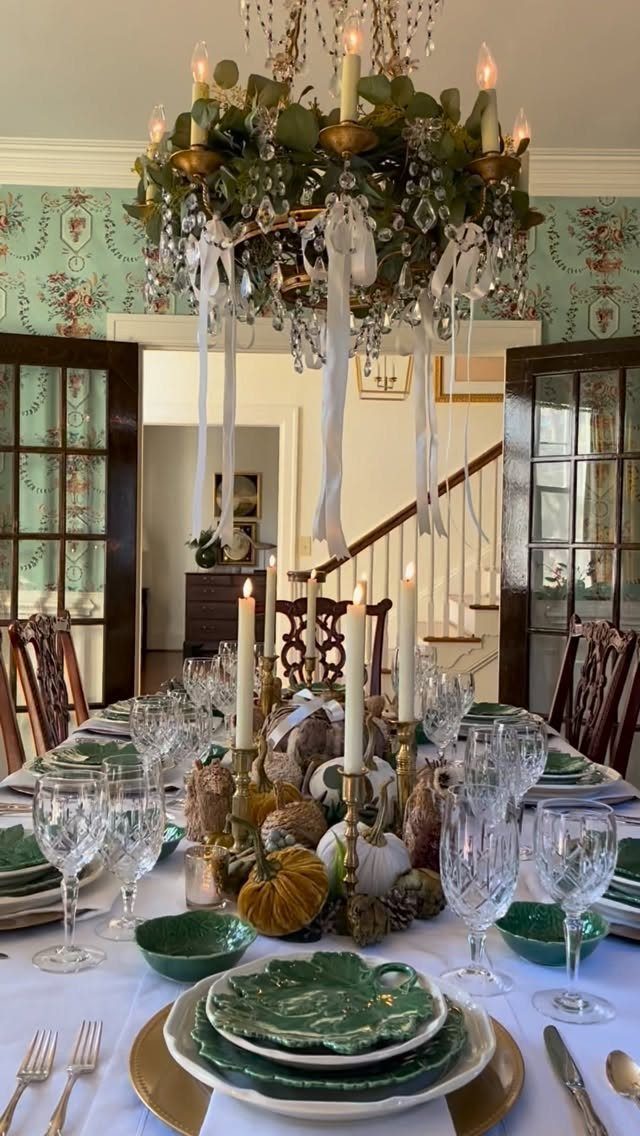
Green patterned plates on gold chargers add real depth, and white candles and fresh gourds keep it from turning heavy. Gold flatware follows the chargers, so the metal reads as one choice.
If you hang ribbons from a chandelier, the maker advises cutting them at 59–71" depending on the fixture height. Keep them at least 1 foot above any flame, or switch to faux candles.
22. Brown Gingham and Rose Bouquet
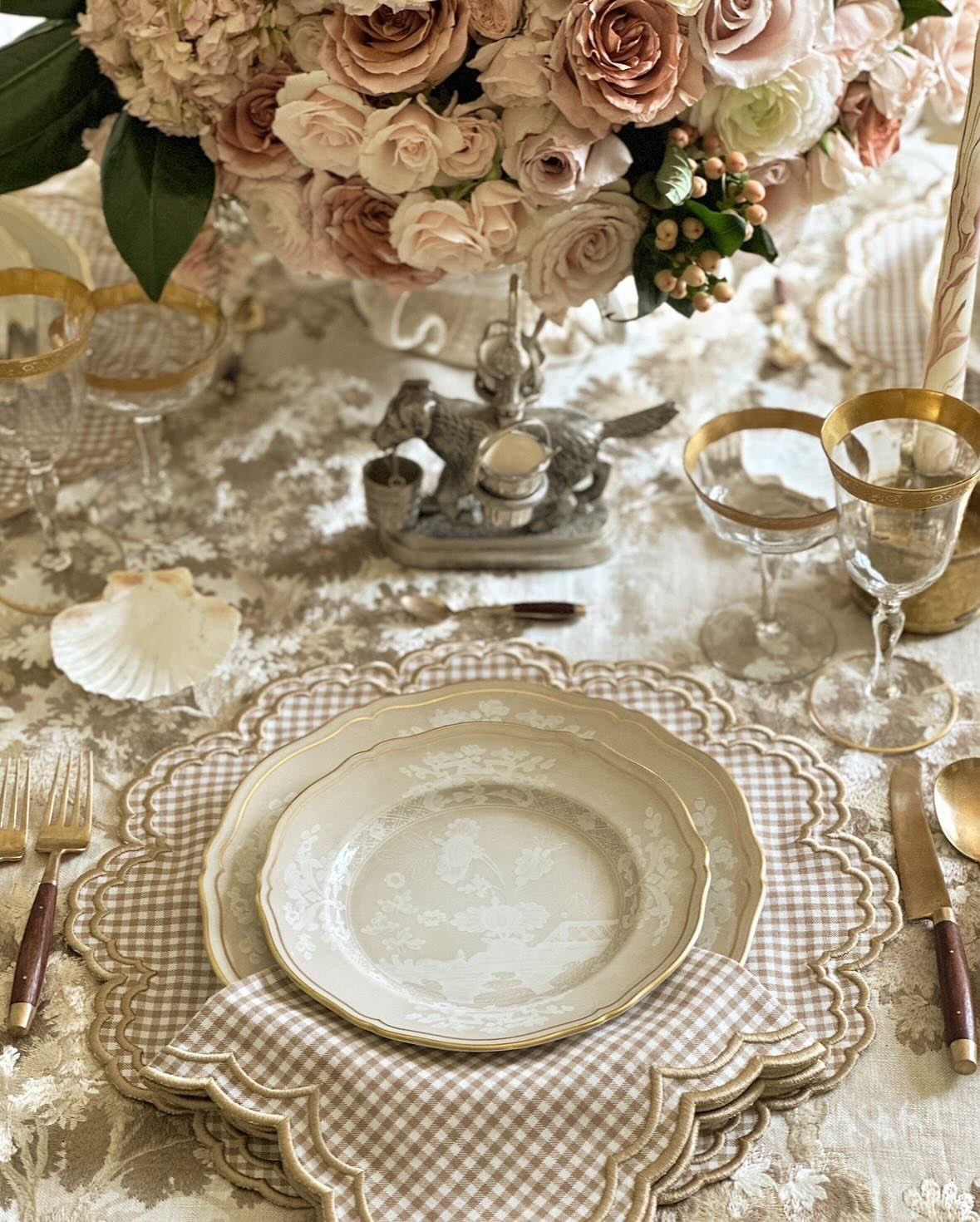
Brown gingham napkins and placemats feel relaxed, yet gold-rimmed plates and gold-stemmed glasses push the setting toward formal. That mix is why I like it.
Lay a lace tablecloth underneath and let pink roses carry the color in the middle. Keep the gingham to the napkins and placemats so the lace stays visible.
Tips for Setting a Cozy Table
Start with a bare table: take everything off, then run a damp cloth over the surface so crumbs and dust don’t end up under the linens.
Clutter and crumbs show through thin linens, and a clean surface makes every later choice easier to judge.
Pick a color scheme first, since it ties the tablecloth, napkins, flowers and candles together. Then layer in order: tablecloth, then runner or placemats, then dinnerware, then napkins.
Add flowers or candles last. Either one warms a table, and one of them is enough if space is tight.
Serving pieces count as decor too. A good platter or gravy boat set out early fills a gap and saves a trip to the kitchen later.
I would also say this plainly: the table should feel like you. If a setting looks right to you, guests will feel at home at it.
Choosing a Color Palette
Deep, rich colors such as burgundy, mustard and forest green give a Thanksgiving table its warmth. Pick two, not all three, and let the third show up only in small touches like a leaf or a candle.
Texture matters as much as color. Burlap, leather and wood add a rustic feel, and a plaid tablecloth brings coziness without any extra decor.
Burnt orange, camel brown and earthy green make a safe palette for centerpieces. It also works for any fall dinner party, so the pieces you buy stay useful past Thanksgiving.
Natural elements like pinecones, leaves and candles suit these shades well, and they cost little.
Importance of Centerpieces
Centerpieces can be built from seasonal produce, flowers or even food, and the food route has a bonus: part of the decor becomes part of the meal. Think of a fruit-and-vegetable arrangement that doubles as a side later.
Texture is what makes a fall centerpiece look finished.
Warm-weather leftovers like sea-grass coasters and wicker-wrapped glasses still work in November if they sit next to something heavier, such as a chunky wood board or a nubby wool runner, which pulls them toward fall.
A centerpiece that blocks the conversation has failed, however handsome it is.





