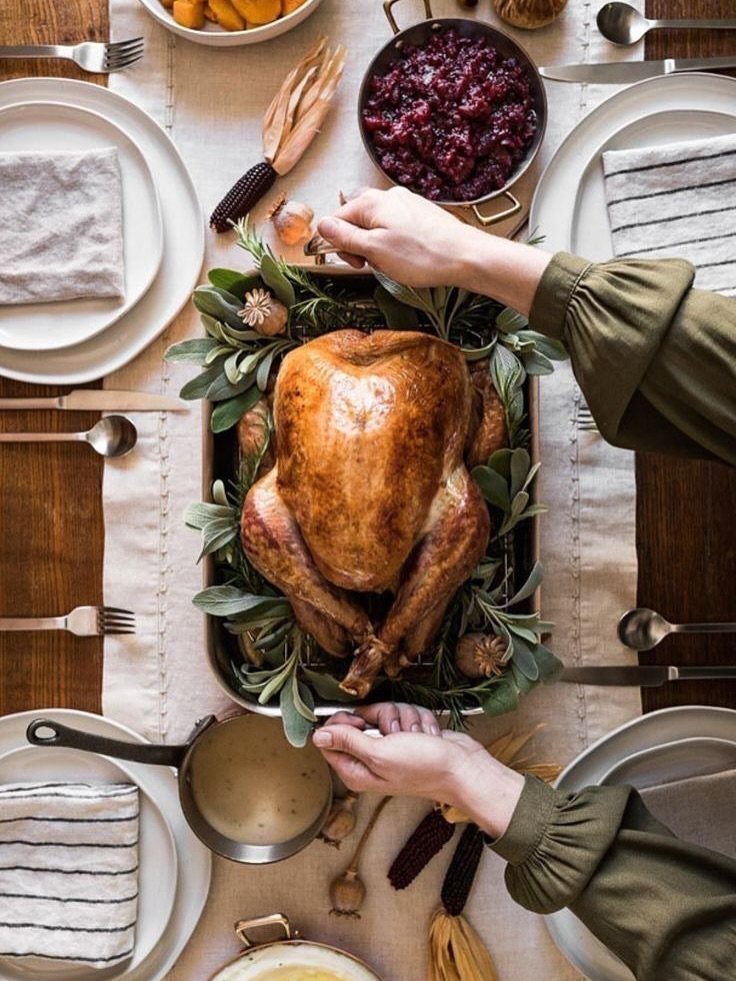
The table you already own decides which of these settings works.
A white cloth, a few mini pumpkins and a pile of real leaves cover one end of the range; the other end means thrifting a set of blue and white plates over several weekends, or steaming a velvet runner the day of the party.
If your table is small or the dishes will crowd it, pick a low centerpiece, because the turkey, sides and bread will claim the middle before dessert arrives.
1. Neutral Tablecloth
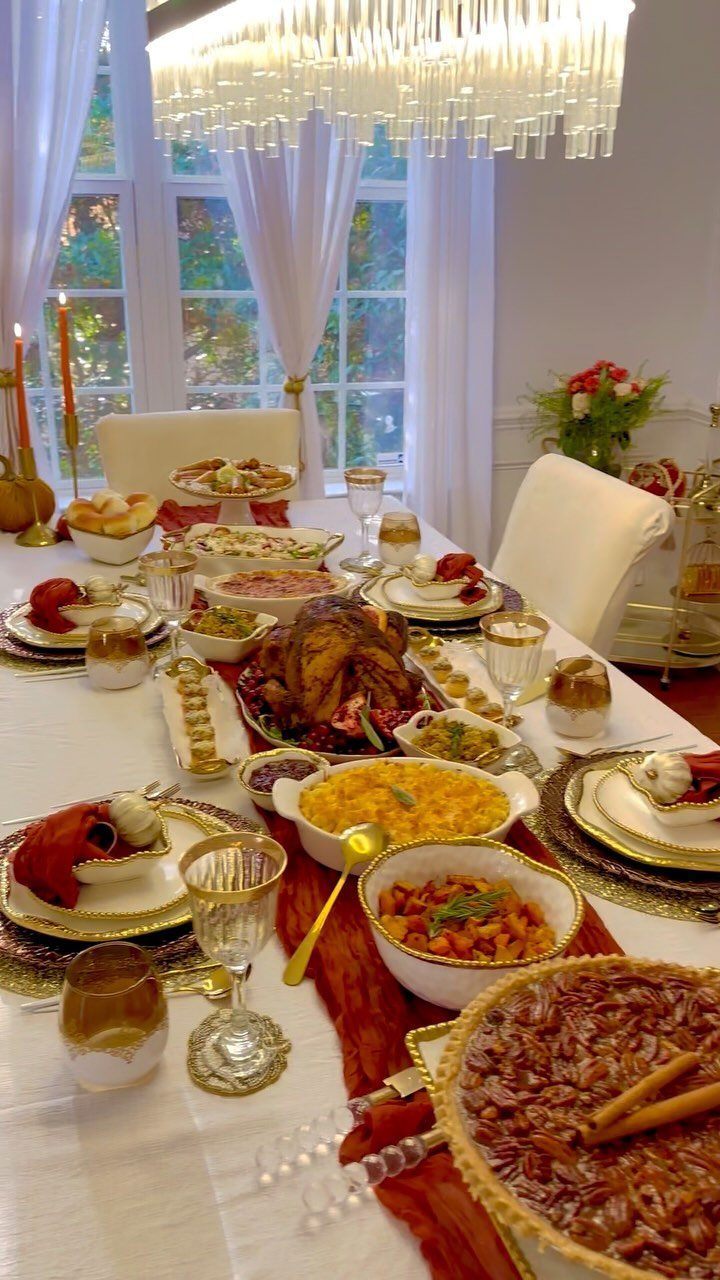
A white tablecloth is the cheapest way to make a Thanksgiving table look finished, and it works because the food supplies the color.
Because nothing on it says November, the same cloth goes back to work at Christmas or a spring brunch. Buy it once and change only the centerpiece.
Iron it the day before, since creases show on a plain surface.
2. Mini Pumpkin Tablescape
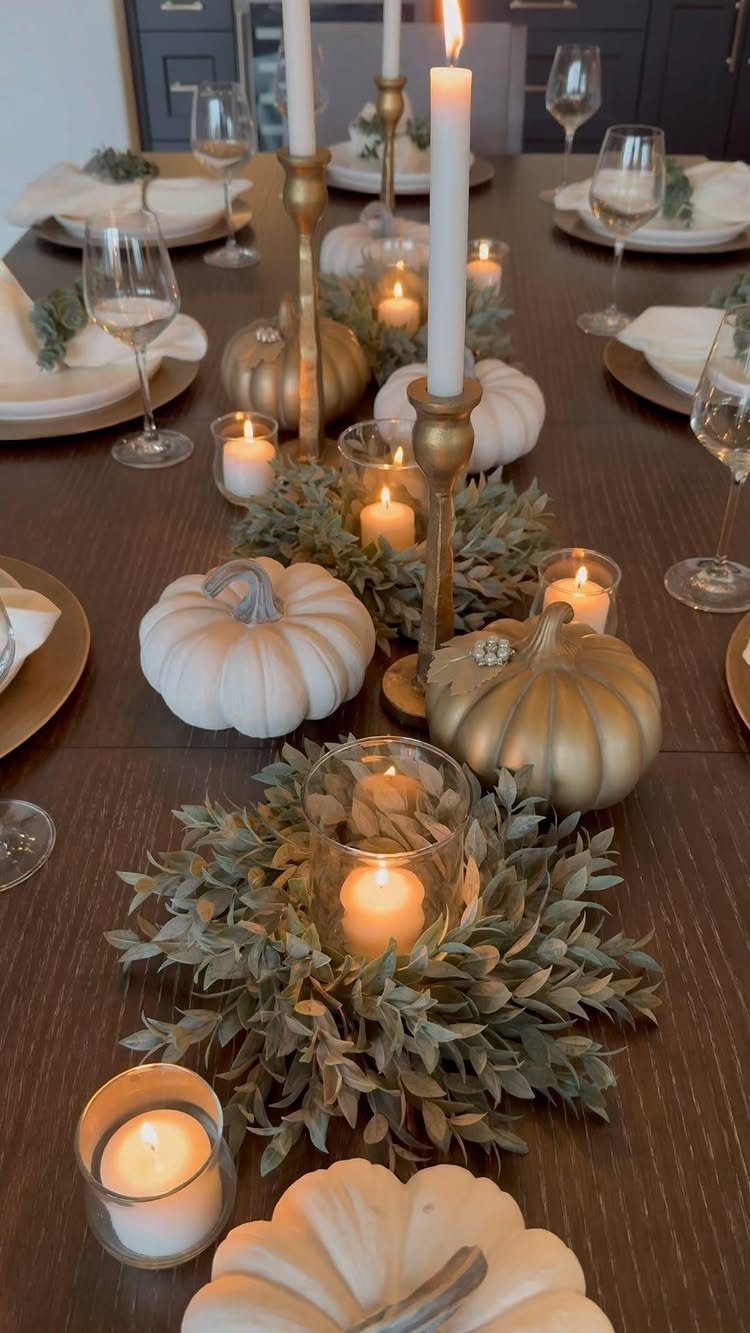
Mini pumpkins in white and gold keep a table from looking crowded. Scatter them between candles in glass holders instead of building a single mound, and the whole length of the table stays low enough to talk across.
I like pairing them with greenery wreaths set around the candles; the green keeps the pale pumpkins from washing out against white plates.
Spray-paint plain minis gold if you can’t find them ready-made. Do it a day ahead so the paint dries fully.
3. Cornucopia Centerpiece
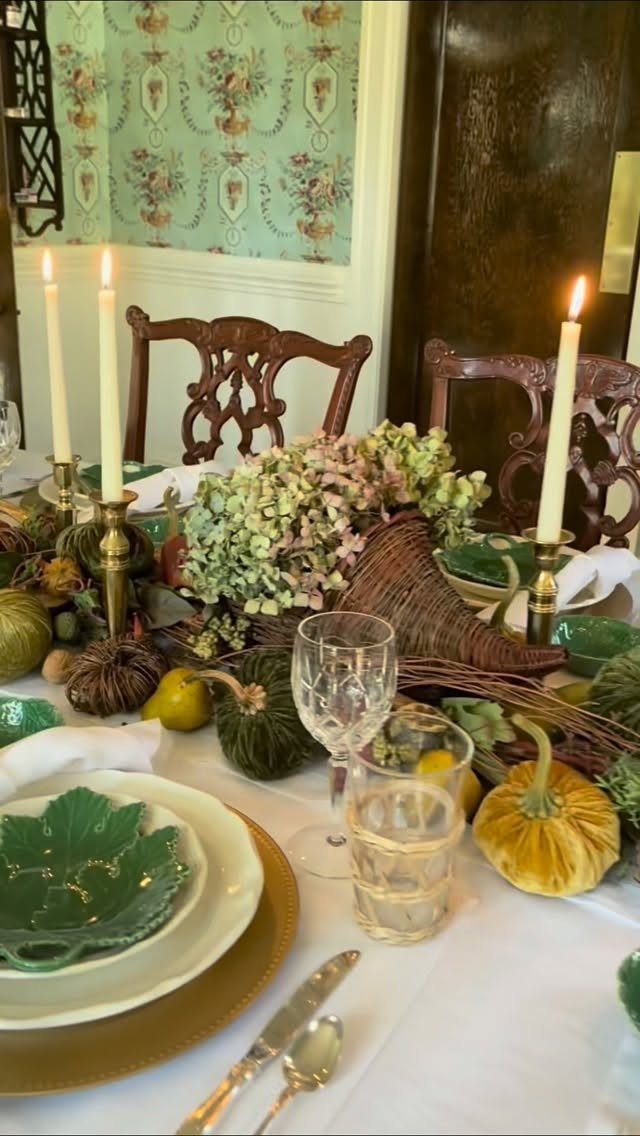
Wicker cornucopias are bulky, so give one the center of the table and keep everything else small.
The maker of this one filled a wicker cornucopia with dried hydrangeas, then ran two twig swags down the table to carry the arrangement outward.
Dried flowers hold up for weeks, so you can finish it days before dinner. Tuck gourds and small pumpkins into the opening, and keep candles low so no one has to peer around the horn.
4. Create a Thanksgiving Food Centerpiece
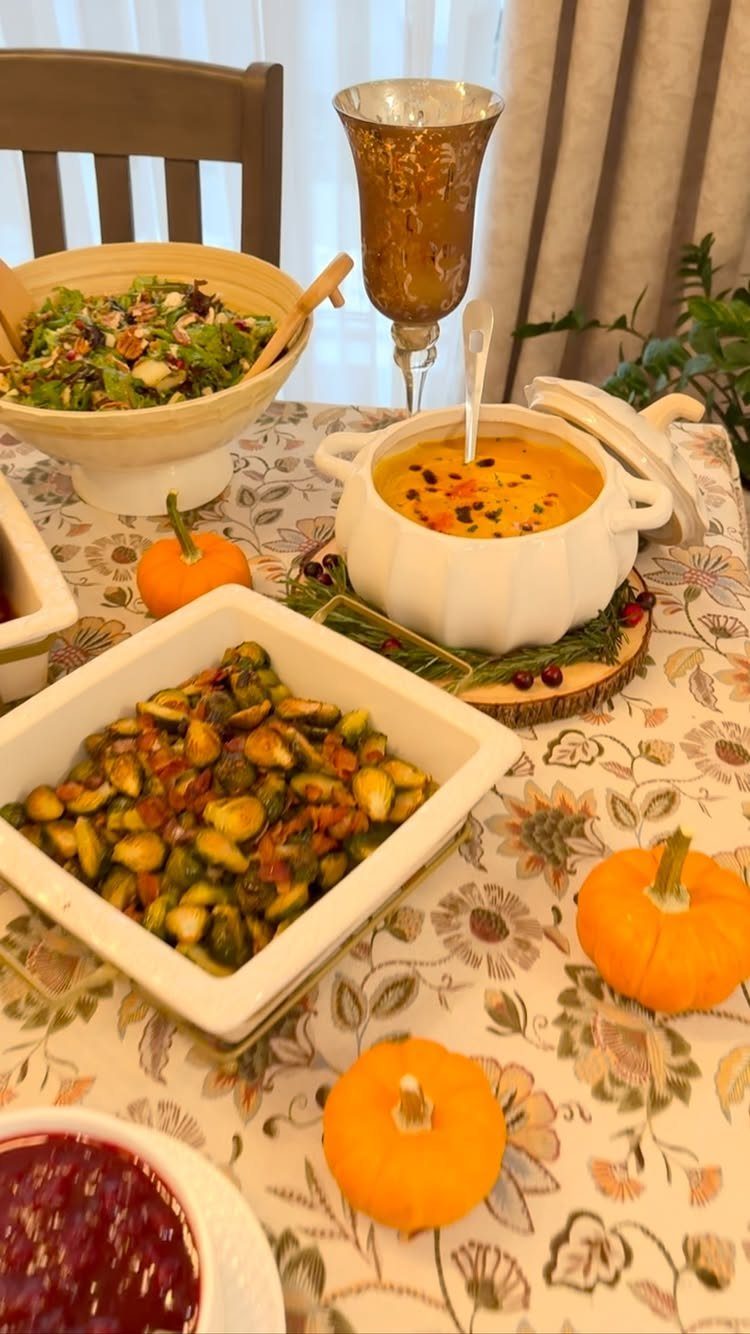
Dinner itself can be the centerpiece, and that saves money on décor. A tureen, a salad bowl or a dish of roasted vegetables can double as a centerpiece, since the food already fills the middle of the table.
Add a handful of mini pumpkins in the gaps so it looks arranged rather than just served. Pick dishes that look good in their serving bowls, and put the hot ones out last.
Space is the limit: this only works if guests still have room left for their plates.
5. Seasonal Florals
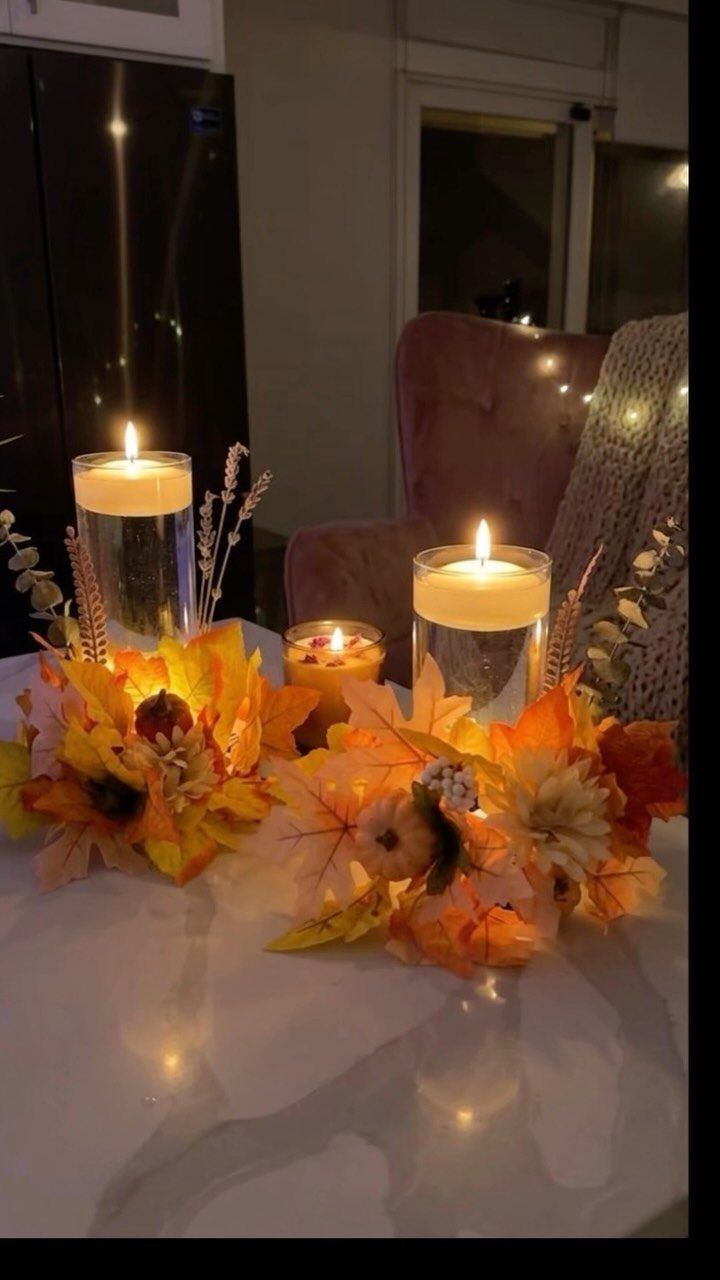
3 candles in glass holders, small pumpkins and a scatter of real leaves make a centerpiece quickly, with no florist needed. Glass holders keep the flames sheltered, and the leaves add color without any shopping.
Dried floral sprigs tucked among them give the arrangement its seasonal feel. Cluster the pieces rather than spacing them evenly; a tight group looks deliberate.
Keep the leaves back from the flames, and swap in fresh ones if they curl and dry out.
6. Jute Placemats with Patterned Ceramics
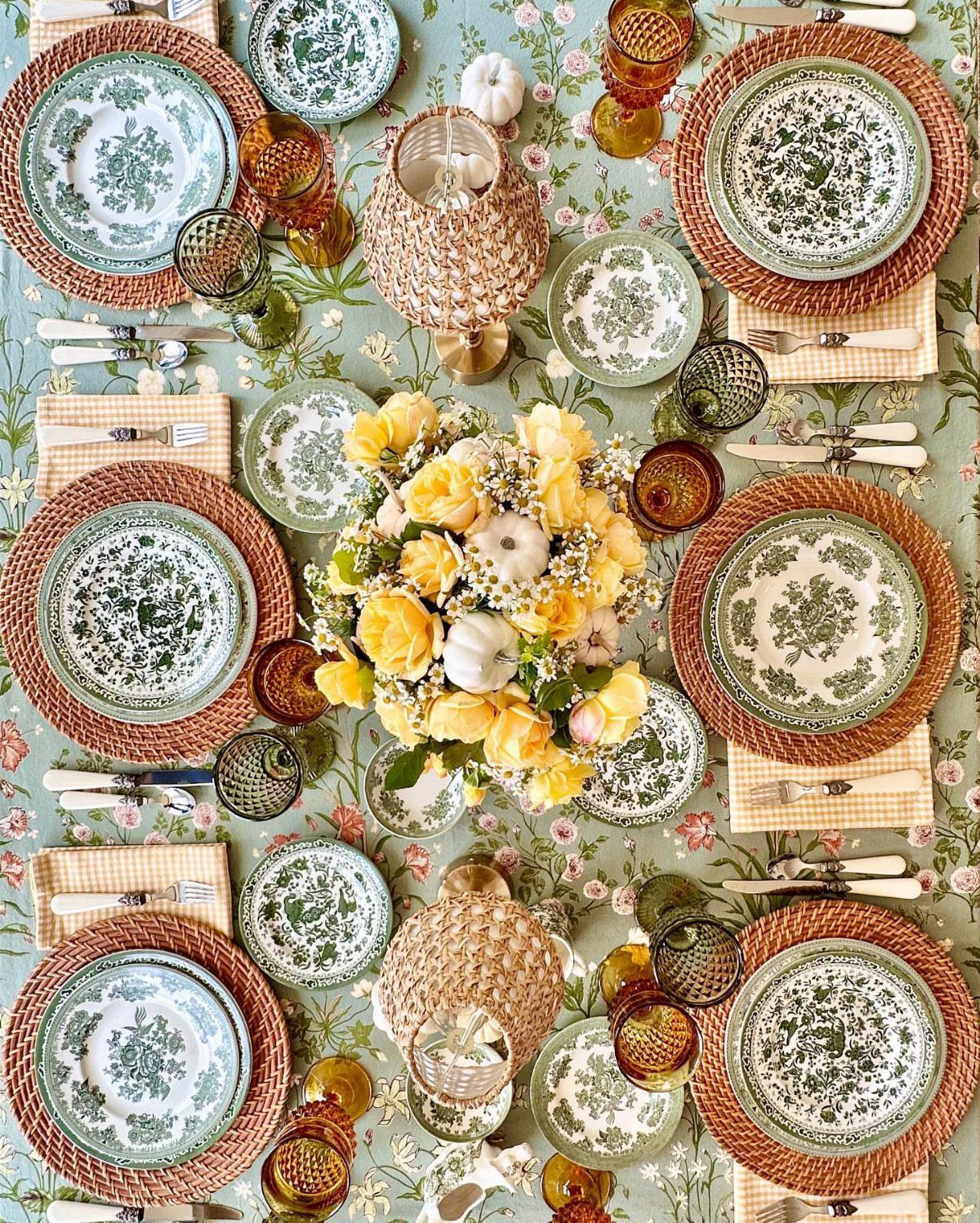
Jute placemats do something useful on a floral tablecloth: they give the pattern a rest and mark each plate’s spot.
Patterned green and white ceramics on top keep the layers from fighting, because the plates share a color with the cloth.
I’d keep the flowers in small vases so they don’t block sight lines.
Choose one busy layer, such as the patterned ceramics, and keep the others quiet. Here the plates carry the pattern, so the mats stay plain.
7. Finish with Rich Colors
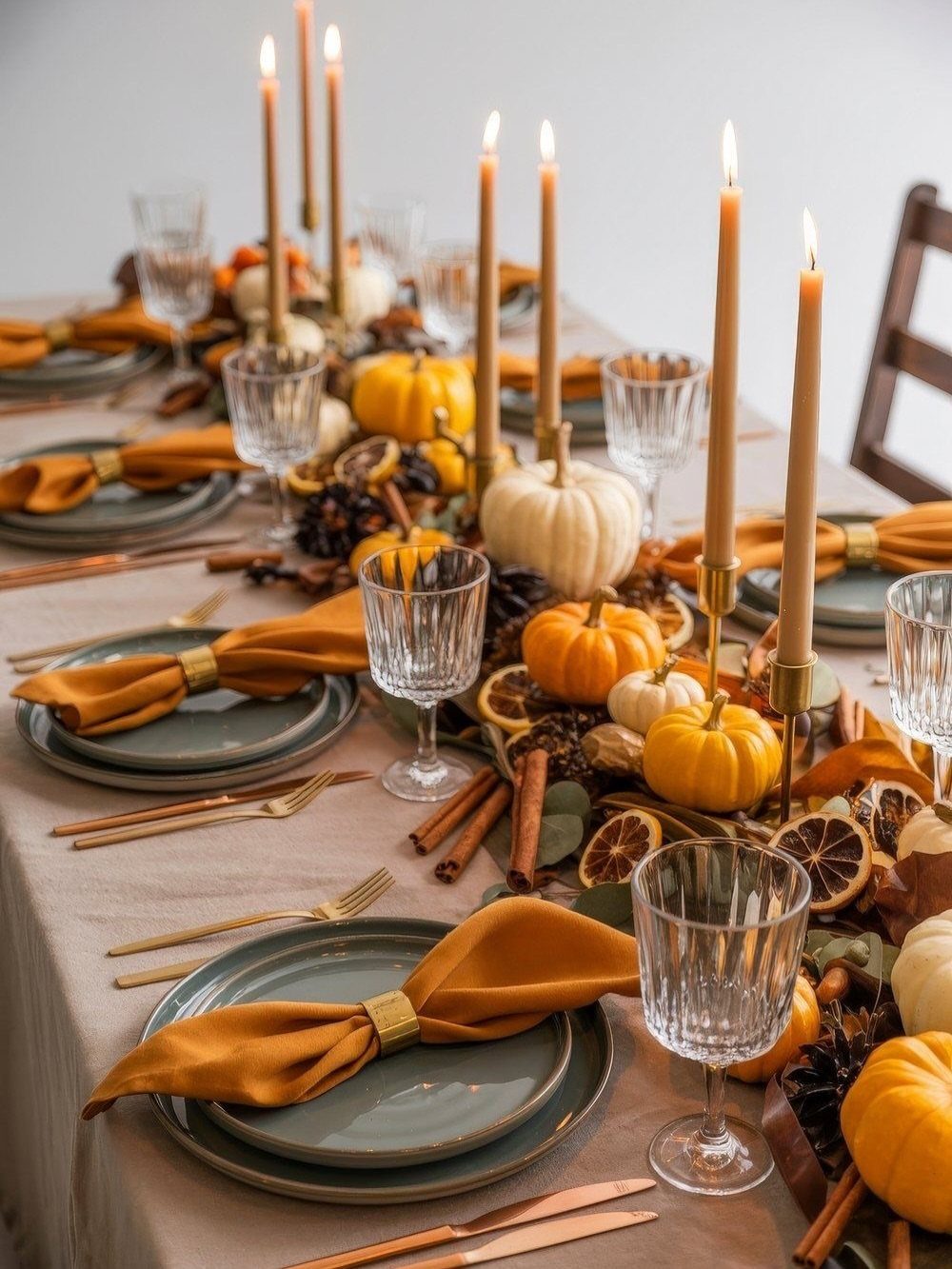
Grey is quiet enough that the deep autumn shade reads as intentional rather than loud.
Gold cutlery and candlelight warm everything up without adding another hue.
Napkins are the cheapest piece to swap, so pick them last, after the plates are settled.
8. Traditional Tablescape
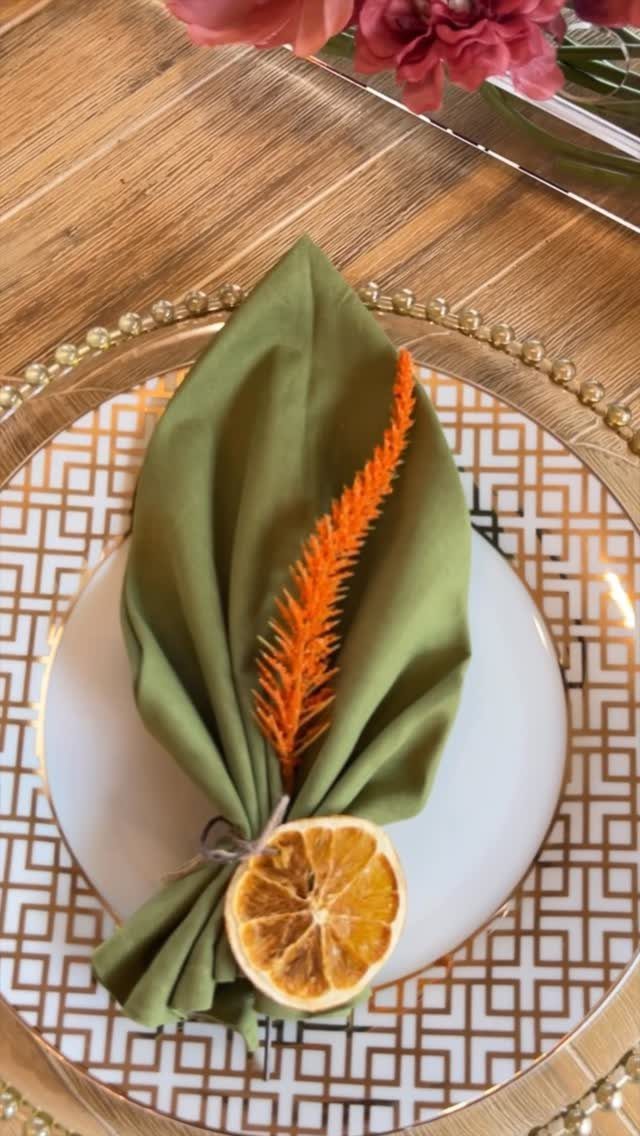
A classic setting is mostly restraint: a white plate on a gold charger, one napkin, one small touch of nature.
Dry the orange slices ahead of time; they cost almost nothing and sit flat under the sprig.
I’d skip a second accent per plate. Simple only looks simple when the pieces are few.
9. Velvet Table Runner
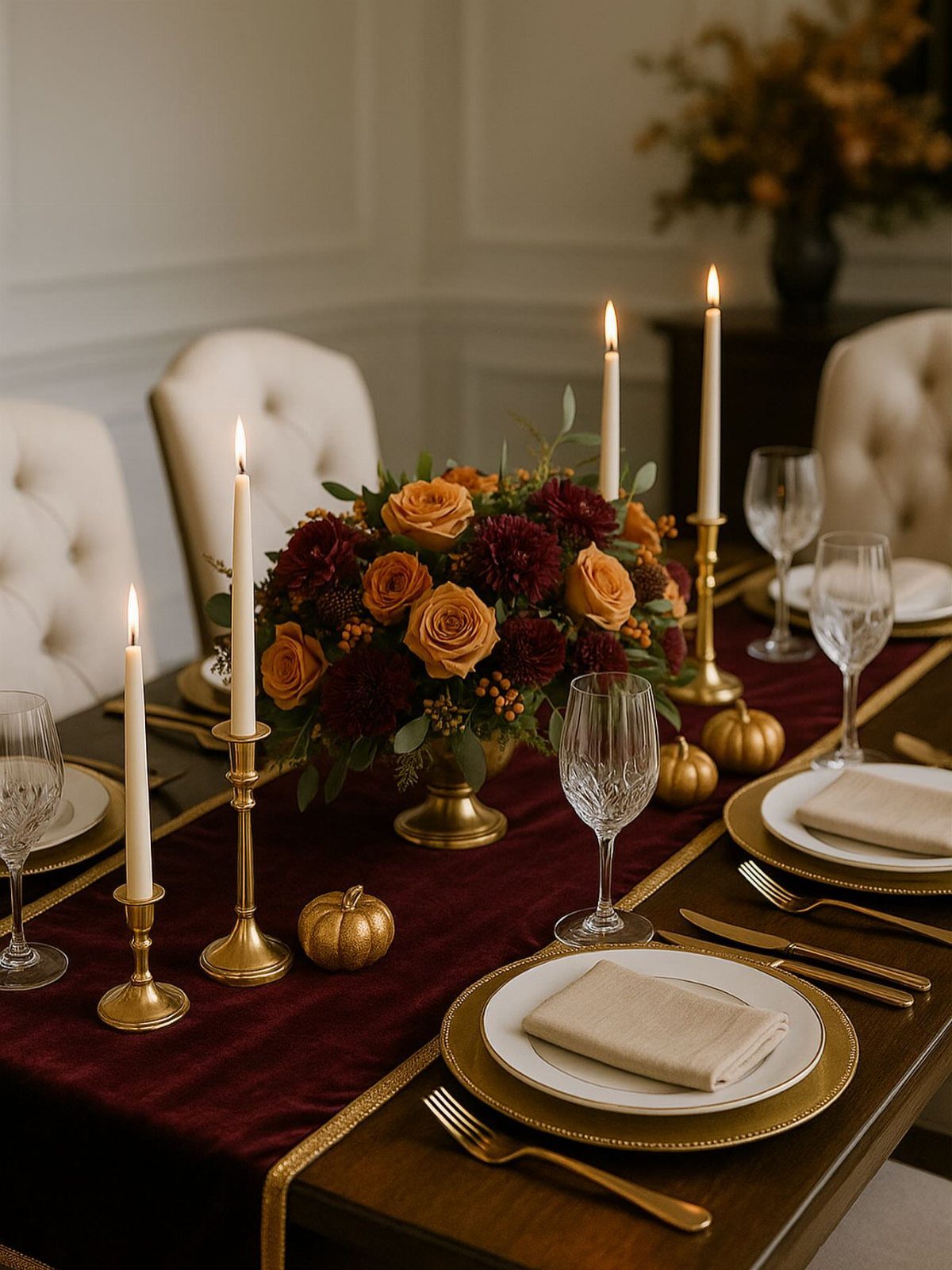
Velvet is the fastest way I know to make a table feel formal.
Keep the rest plain so the fabric stays the star. Velvet shows creases and lint, so steam it gently and brush it down the day of the party, once the table is set and before anyone sits.
Fabric near open flame deserves caution: set candles in sturdy holders and keep the flames away from the edges.
10. Charcuterie Board Tablescape
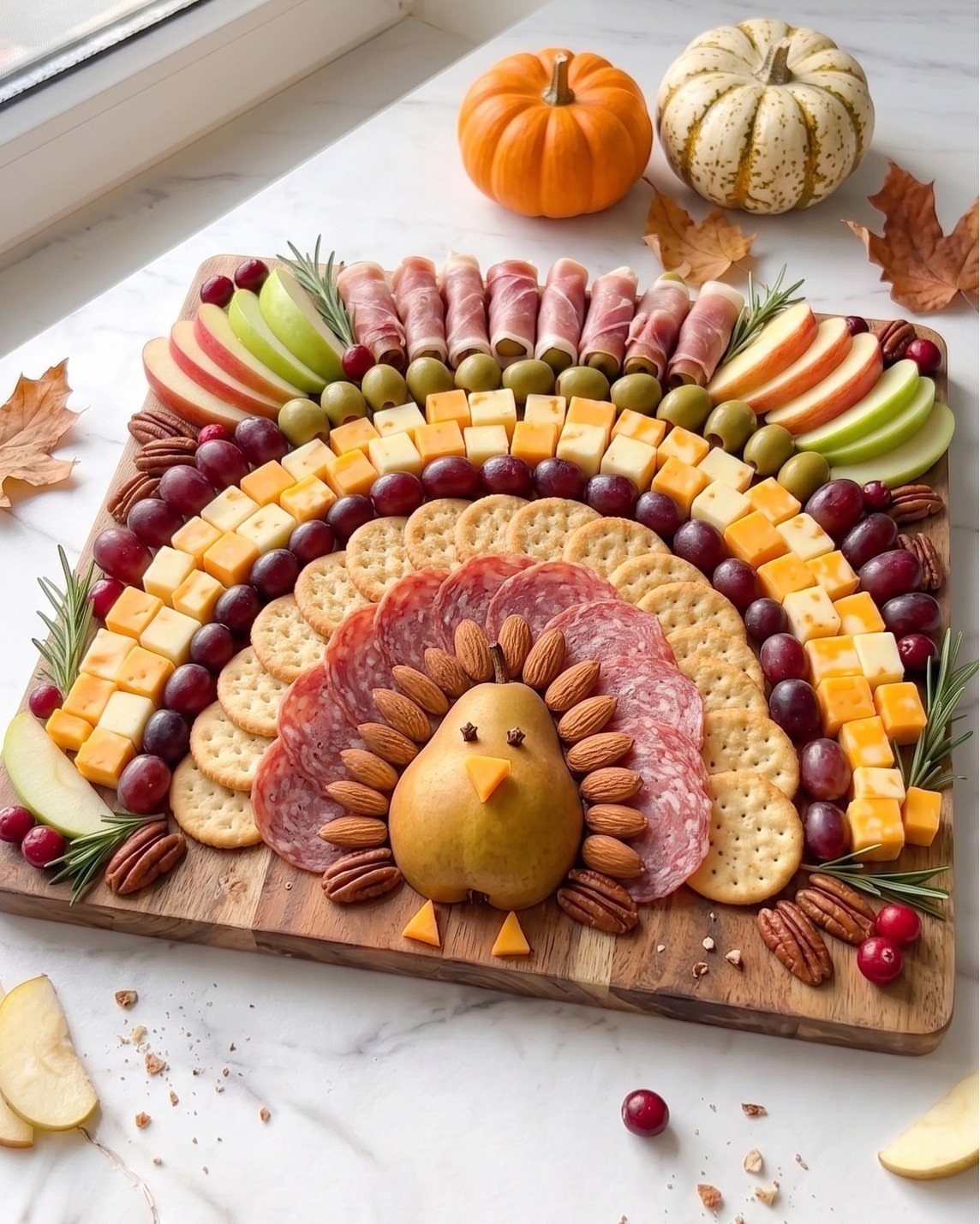
A turkey-shaped board turns the appetizer spread into the decoration. A pear makes the head, and salami, cheese, fruit and crackers fan out as the body on a wooden platter.
Tuck mini pumpkins and some real leaves around the edges to fill gaps. Build it just before guests arrive so the crackers stay crisp.
Store-bought meats and cheeses are fine here; the shape does the impressing. Set the board where people can reach it without crossing the dinner table.
11. Maximalist Floral Tablescape
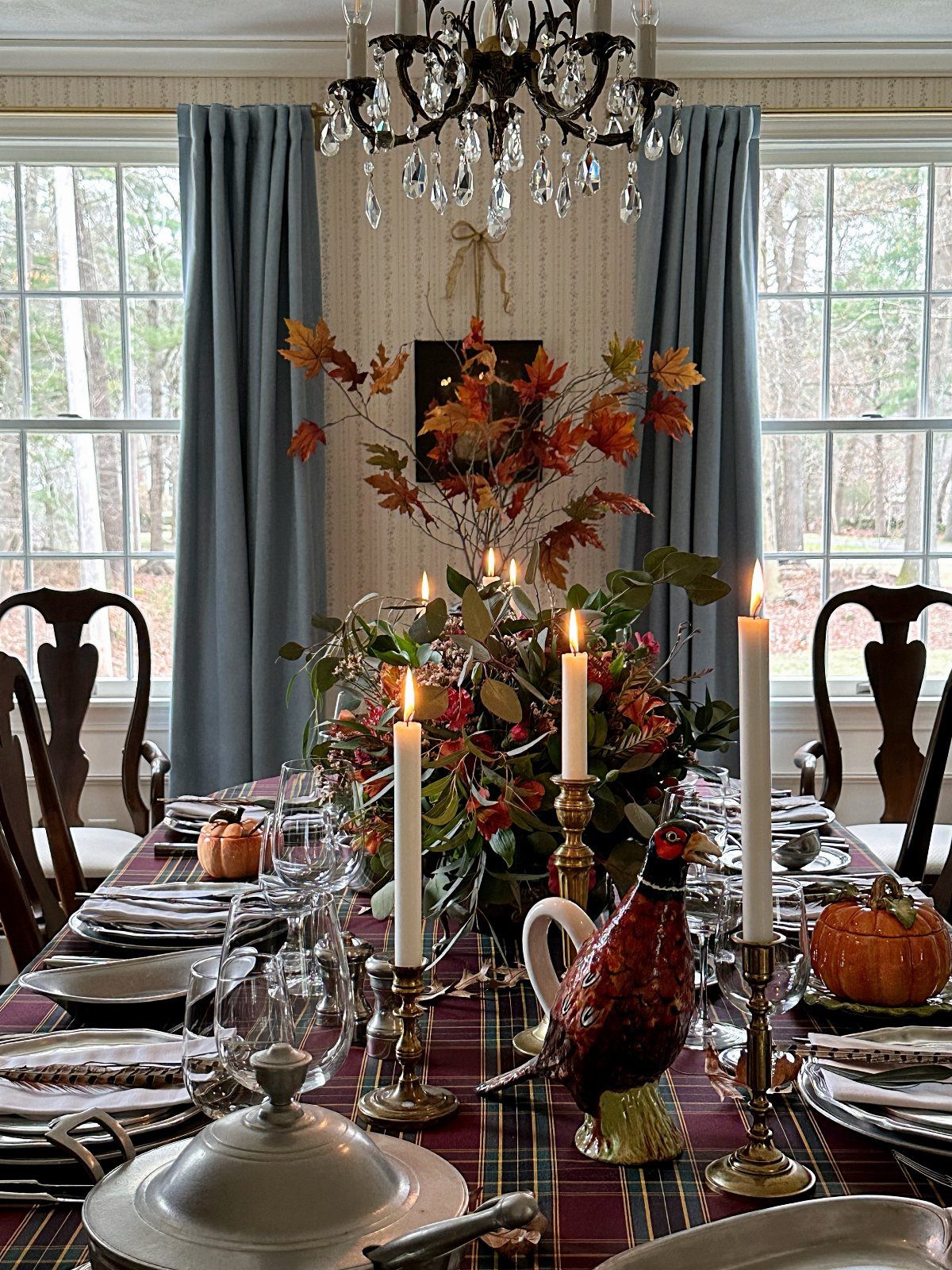
Abundance works when one thing is allowed to be too much. A large floral centerpiece with candles, pumpkins and a figurine puts the excess in the middle and leaves the place settings tidy.
Even with a plaid cloth underneath, the flowers hold their own. Fill the gaps with greenery rather than more blooms to keep costs down.
I’d check the height before dinner: sit in a chair and make sure you can see the person across from you.
12. Faux Flowers on Pumpkins Centerpiece
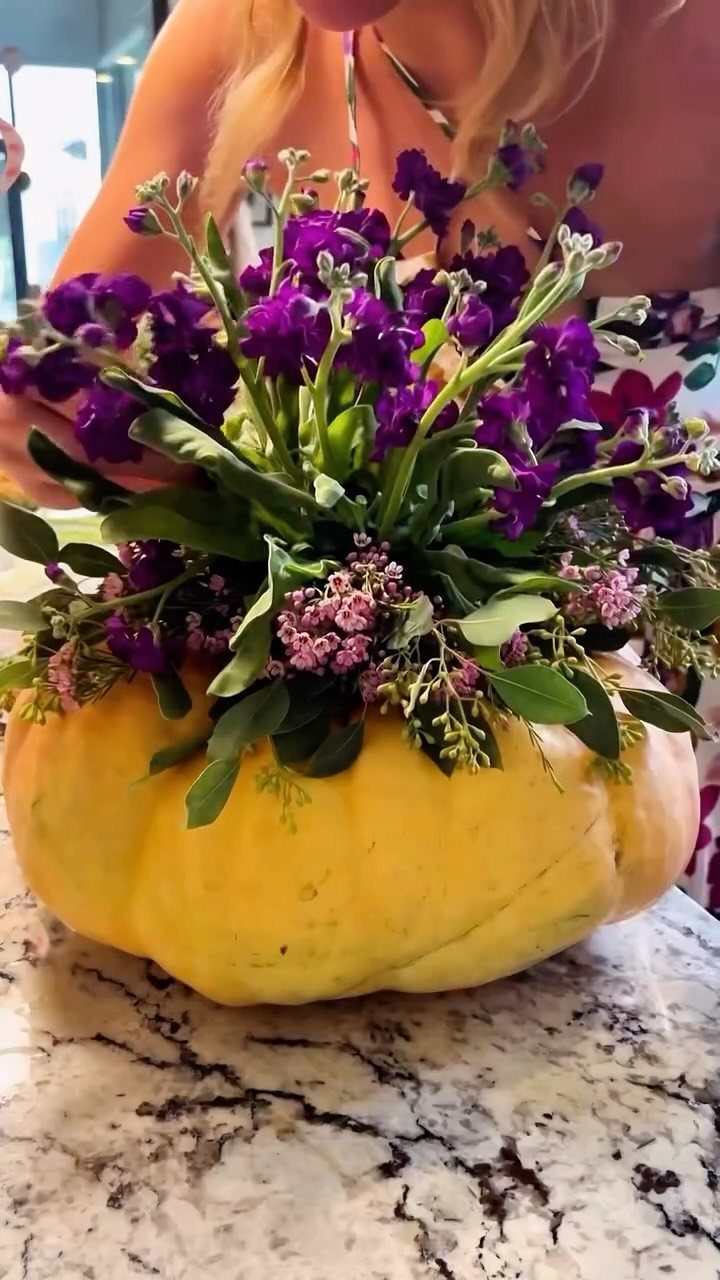
A hollowed-out pumpkin makes a vase that needs no shopping beyond the flowers. Faux purple and pink stems against a yellow shell give a color pairing real flowers rarely manage in November.
Cut out the top, scoop the inside clean, and push the stems in at different heights. Faux flowers can be made days ahead, with no water to leak.
Set the pumpkin on a plate or tray to protect the table.
13. Dried Citrus and Taper Candles
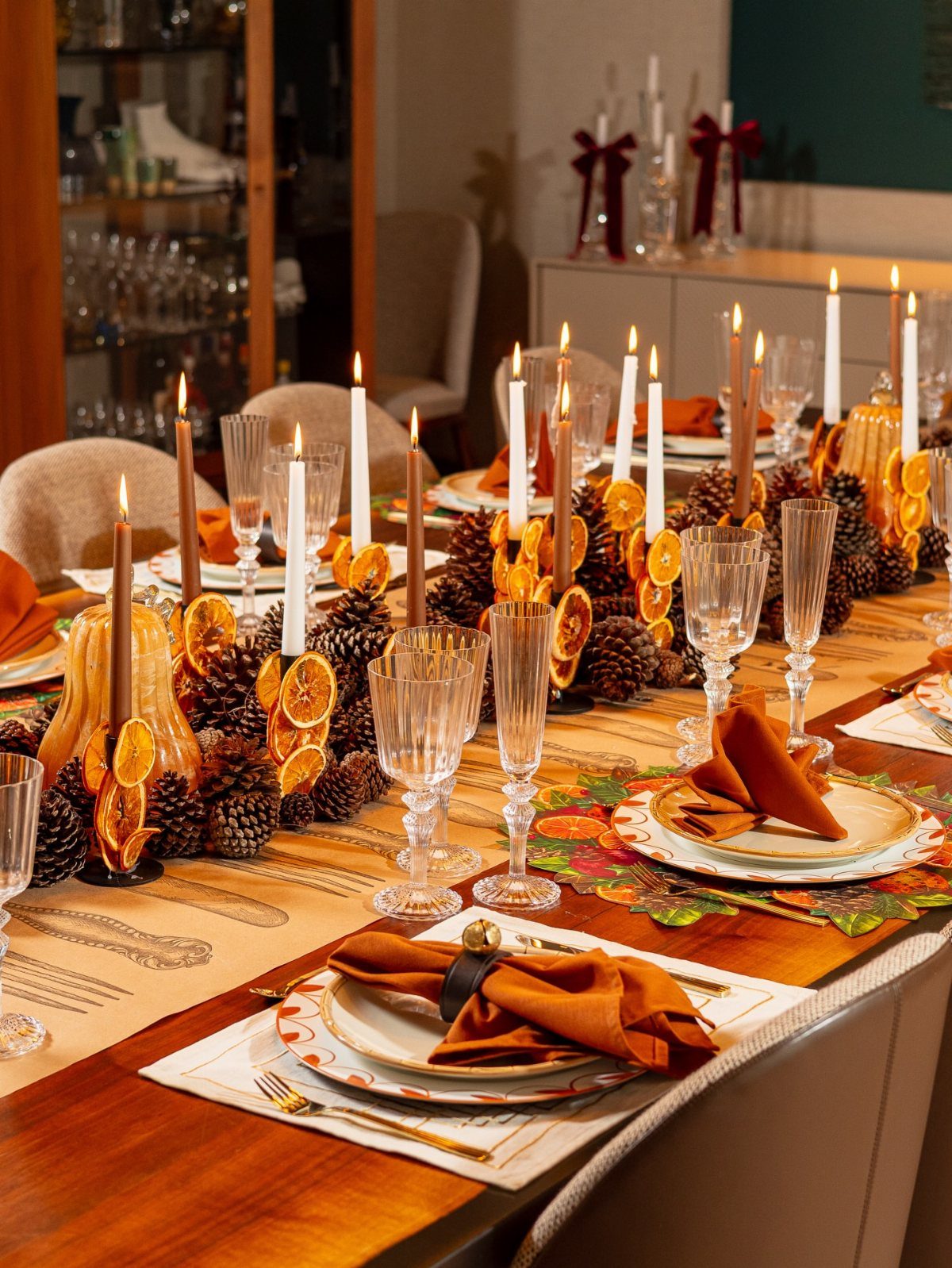
Dried orange slices and pinecones cost almost nothing and bring a warm color to a wooden table. Orange napkins pick up the same shade, so the citrus reads as part of the plan.
Scatter the slices and cones between taper candles in the middle of the table, and keep the candles well back from anything dry. Slice-and-dry work can happen weeks ahead, which takes a job off the last day.
Keep the glassware simple so the oranges stay the color accent.
14. Kraft Paper Runner with Script Napkins
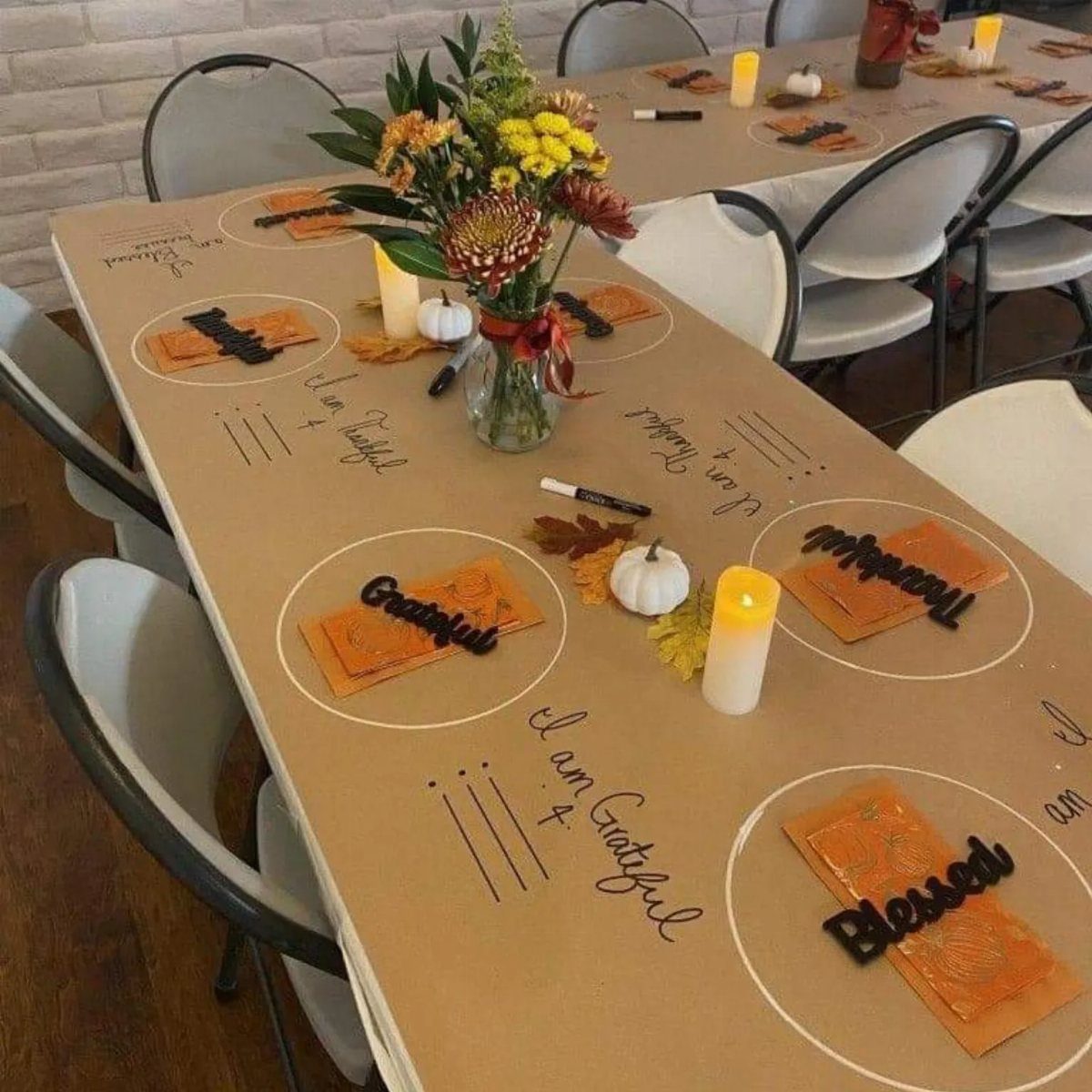
Brown kraft paper is the cheapest table covering I know, and it lets guests help with the decorating. Roll it down the table, then draw an outline for each plate so every seat is marked before anyone sits.
Orange napkins with "Blessed" and "Grateful" script add the message without extra signage. White candles, small pumpkins and one floral centerpiece are enough on top.
Tape the paper underneath so it stays flat, and keep flames away from its edges, since paper burns.
15. Dark Green Linens with Gold Accents
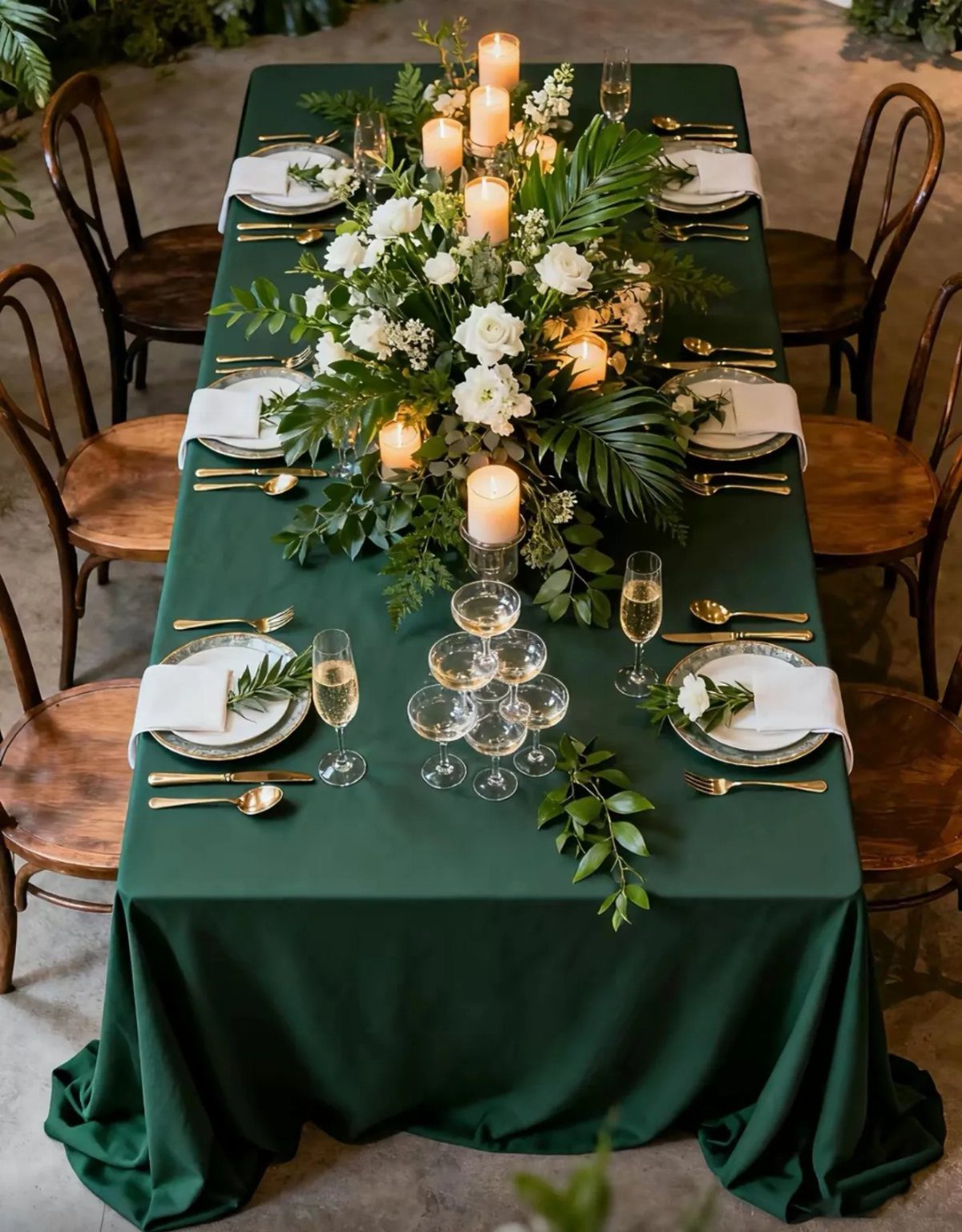
Dark green linen makes white flowers and gold flatware look richer than they cost. The deep cloth gives pale pieces a strong backdrop, so a white floral runner stands out without any extra color.
White napkins keep the place settings clean, and pillar candles supply the glow. Pillars are steadier than tapers, which helps on a long table where people reach across.
I’d stay with gold for metal and skip mixing finishes. Iron the cloth before the party, since dark fabric shows creases.
16. Blue and White Ceramic Accents
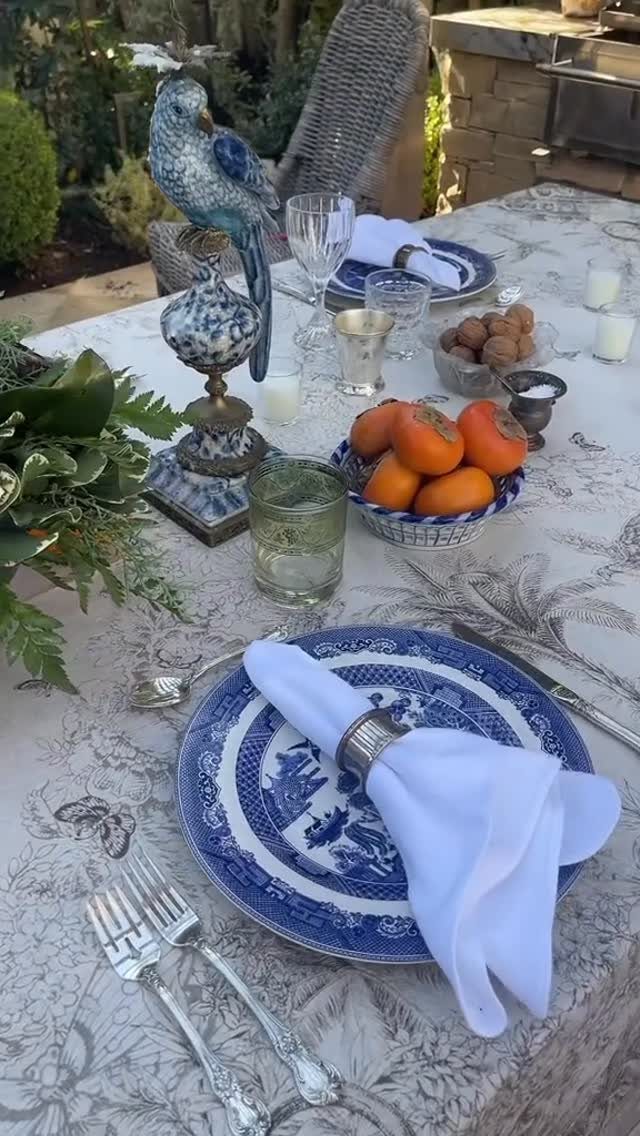
Thrifted blue and white plates can carry a whole table, and mismatched patterns work if the colors stay in one family. The maker of this setting says thrifting means no 2 of her tables ever look the same.
A bowl of persimmons adds orange against all that blue, and greenery fills the gaps. Pick one patterned layer to lead; here the ceramics and cloth share a palette, so they agree.
Cheap to build, but it takes a few weekend trips to collect enough plates.
17. Pampas Grass and White Pumpkins
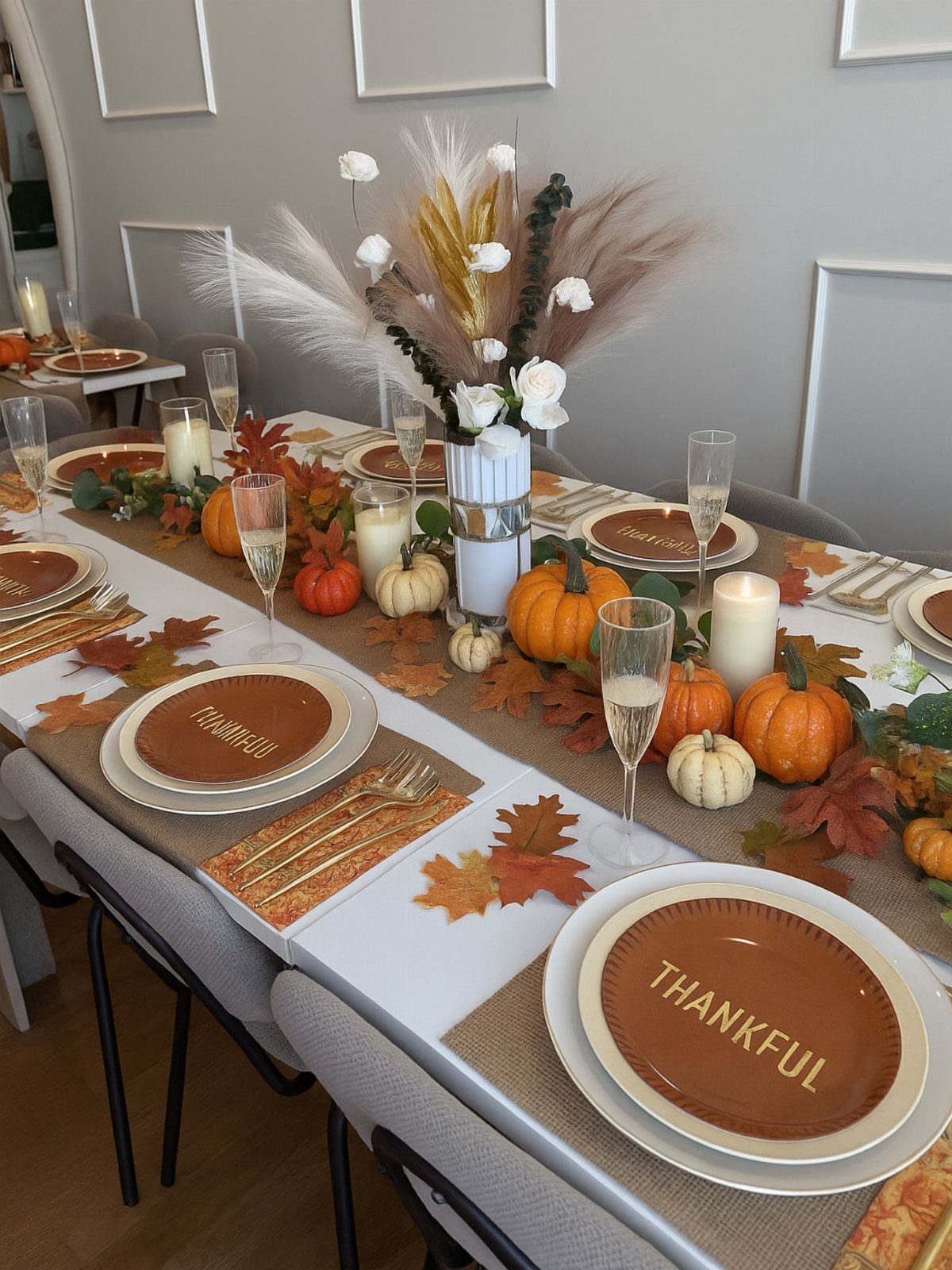
Pampas grass gives height and softness without a single flower, and it never wilts, so you can set it up days ahead. White pumpkins and pillar candles keep the palette pale, while a few orange pumpkins add warmth.
Plates that spell out "THANKFUL" do the labeling for you, so skip place cards. Gold cutlery ties the neutral scheme together.
Pampas sheds, so shake it outdoors before it goes on the table, and keep it clear of candle flames.
18. Plaid Tablecloth with Crystal Details
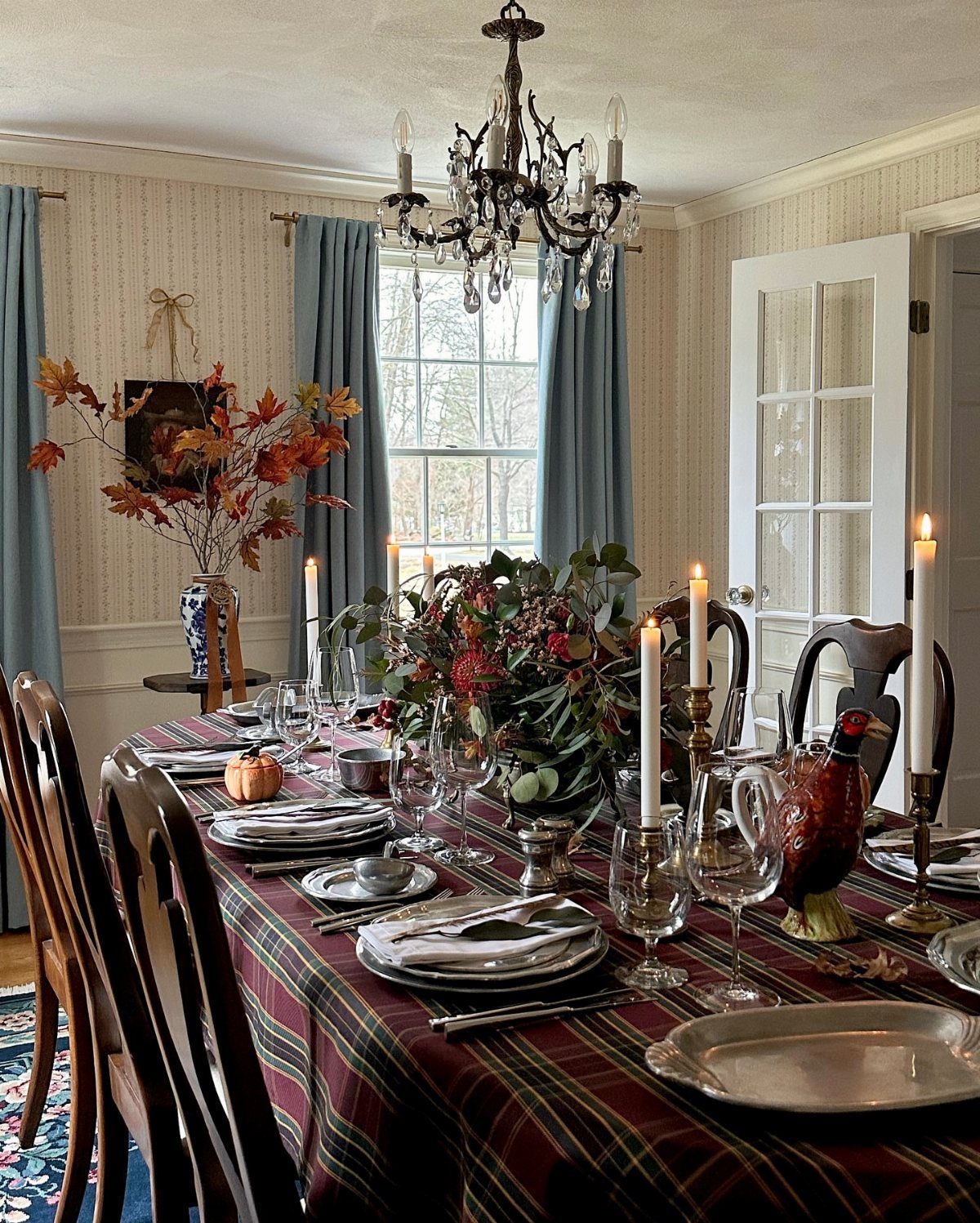
Red and green plaid is a bold cloth, so I’d let it be the pattern and keep everything else calm. White taper candles and an autumn floral centerpiece sit well on it without competing.
Crystal glassware sparkles against the plaid and makes the setting formal; it suits a dining room better than a casual buffet. Washing and polishing the glasses takes time, so do it the day before.
Pick a centerpiece low enough that guests can see across the table.
19. Modern Black and Gold Place Setting
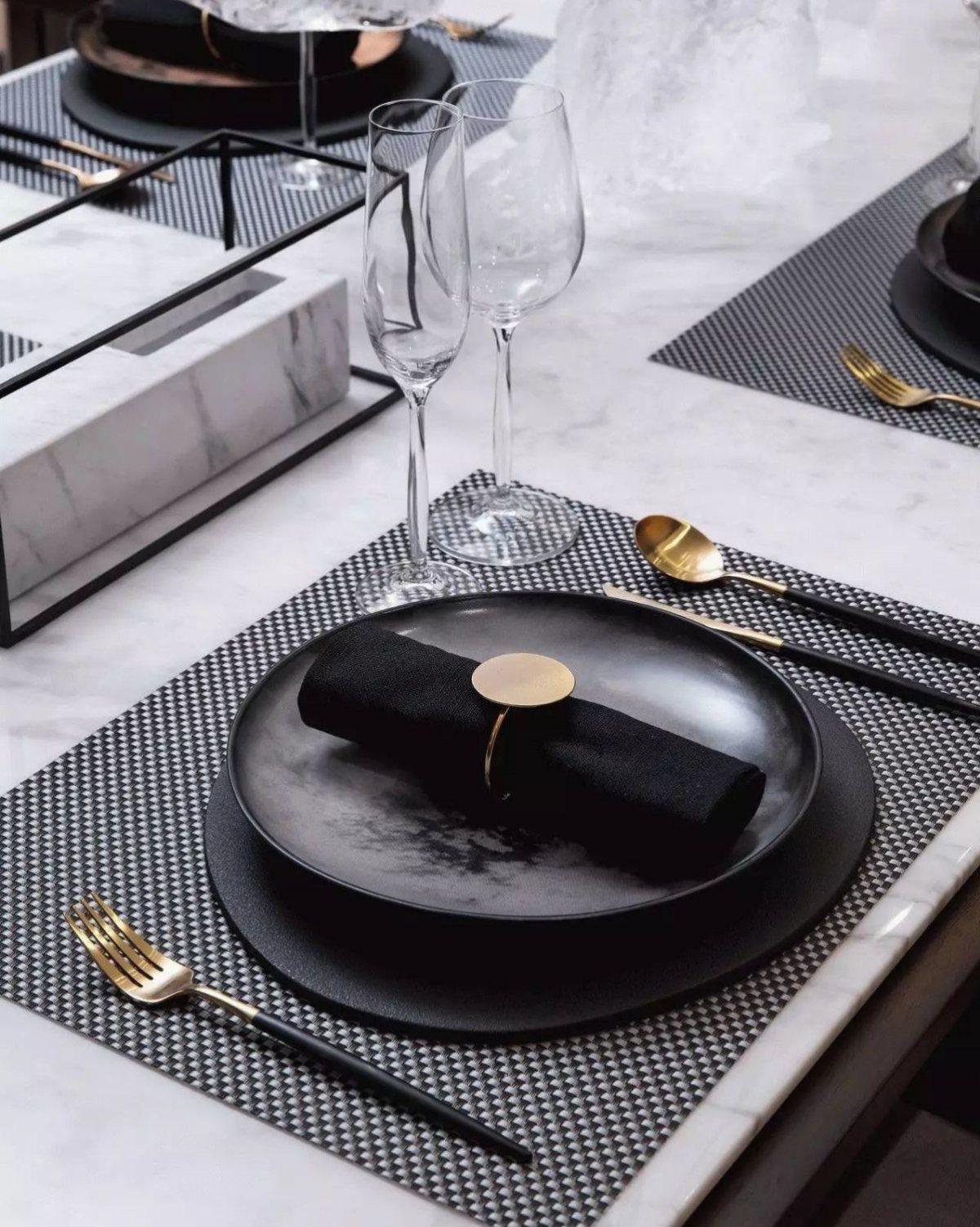
Matte black plates on a white marble surface give a table real contrast, and gold flatware keeps the black from feeling heavy. Black napkins with gold rings repeat both colors, so 3 pieces do the work of a theme.
Stick with 2 colors and one metal. Matte finishes show fingerprints, so wipe the plates just before guests sit.
Dark plates make food look bright, which suits a turkey dinner well.
20. Interactive Game Place Setting
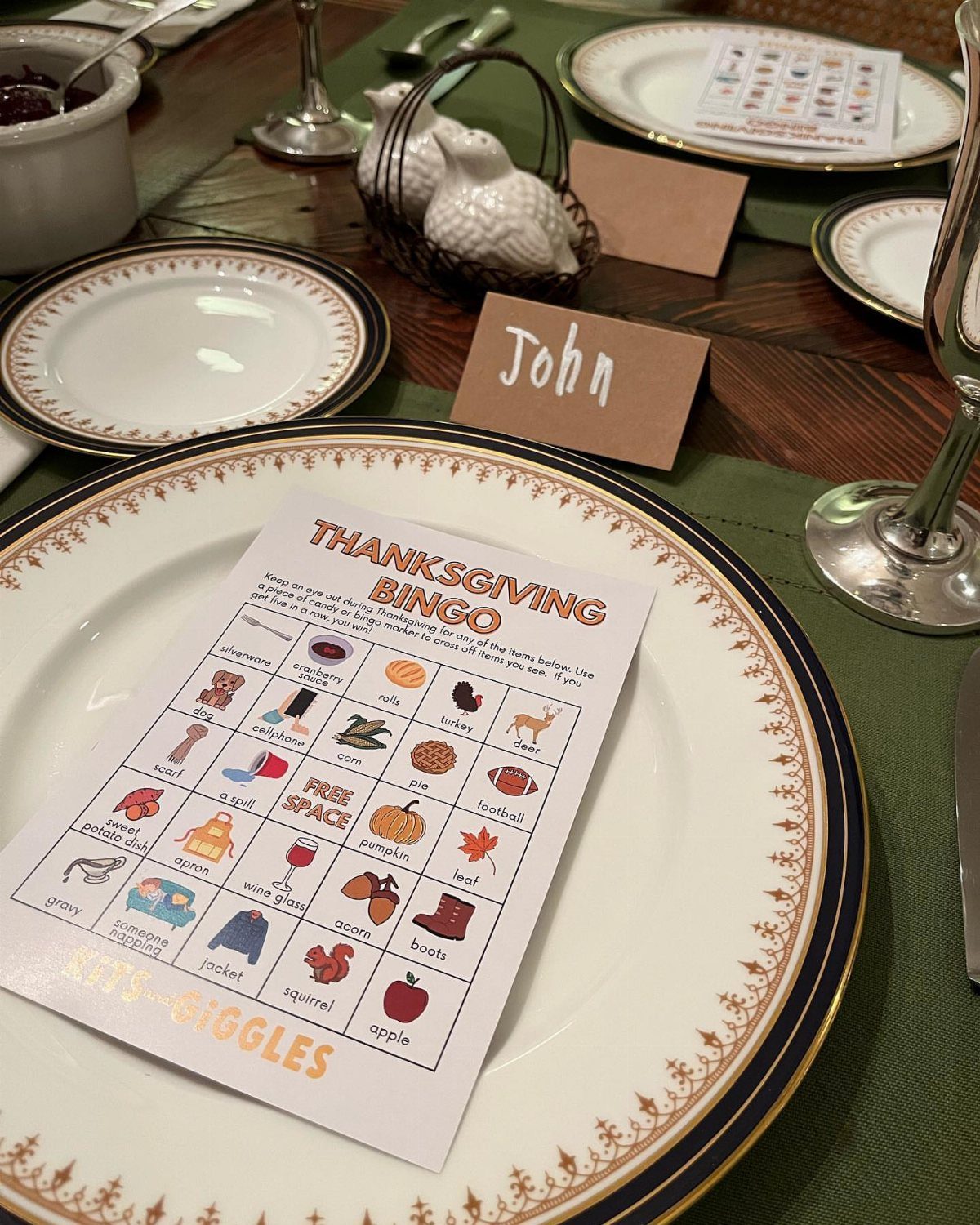
Name cards and a Thanksgiving bingo card at each seat give guests something to do before the food arrives. Cards work on plain white gold-rimmed plates because the paper supplies the personality.
I like this one for mixed crowds where cousins barely know each other. Write the names by hand, and print the bingo sheets a few days ahead.
Set a pen at each seat, and keep the cards flat so they don’t crowd the plate.
21. Al Fresco Candlelit Dinner Setting
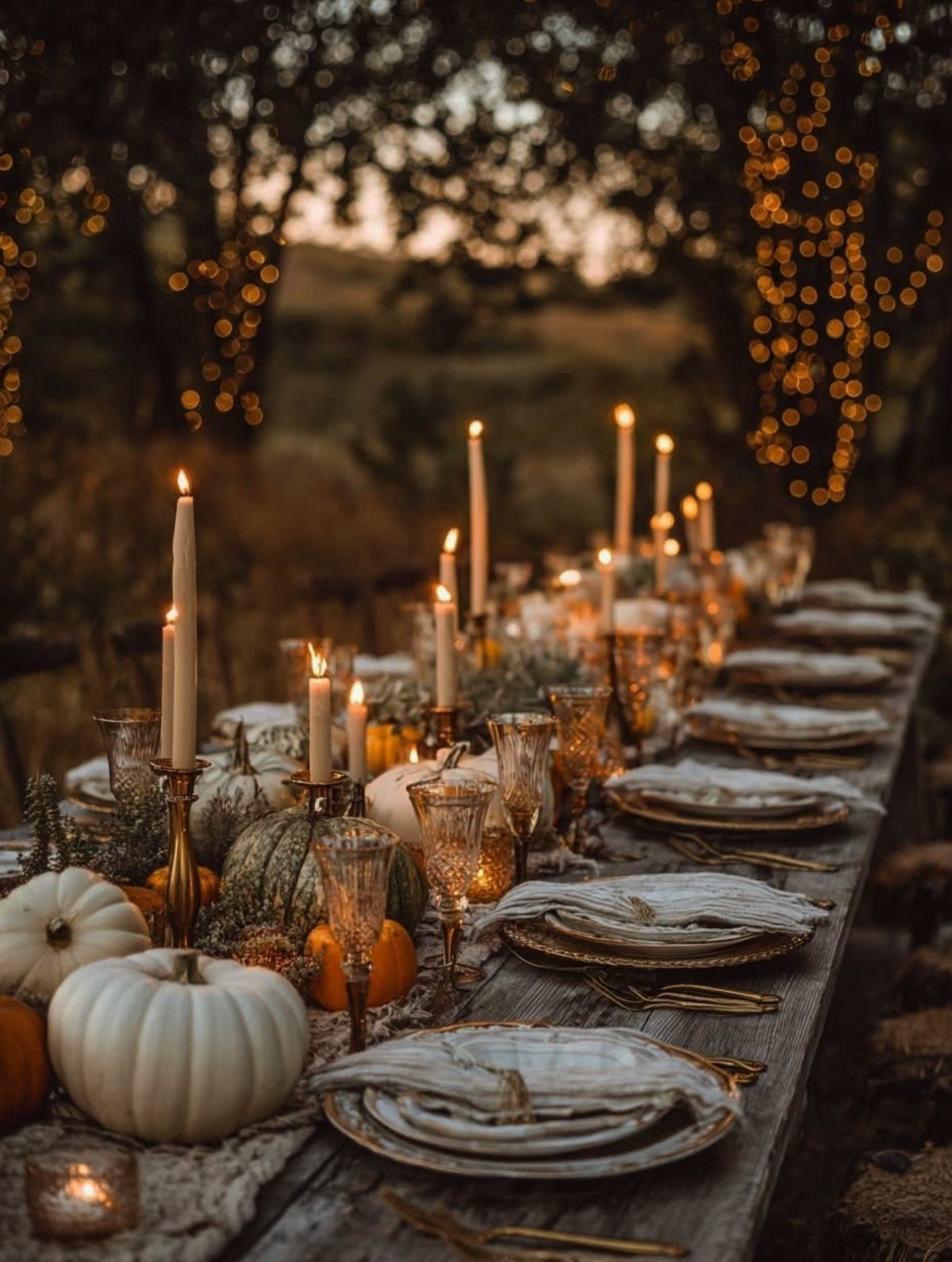
Tall taper candles in large numbers are what make an outdoor table feel like an event. Pair them with white pumpkins and gold-rimmed plates, and the wood does the rest.
Wind is the problem here. Choose a sheltered spot, and keep a lighter nearby for relighting.
I’d cluster the candles in groups, not a single line, so the table doesn’t look like a runway. Set up while there is still daylight.
22. Rose-Folded Fabric Napkins
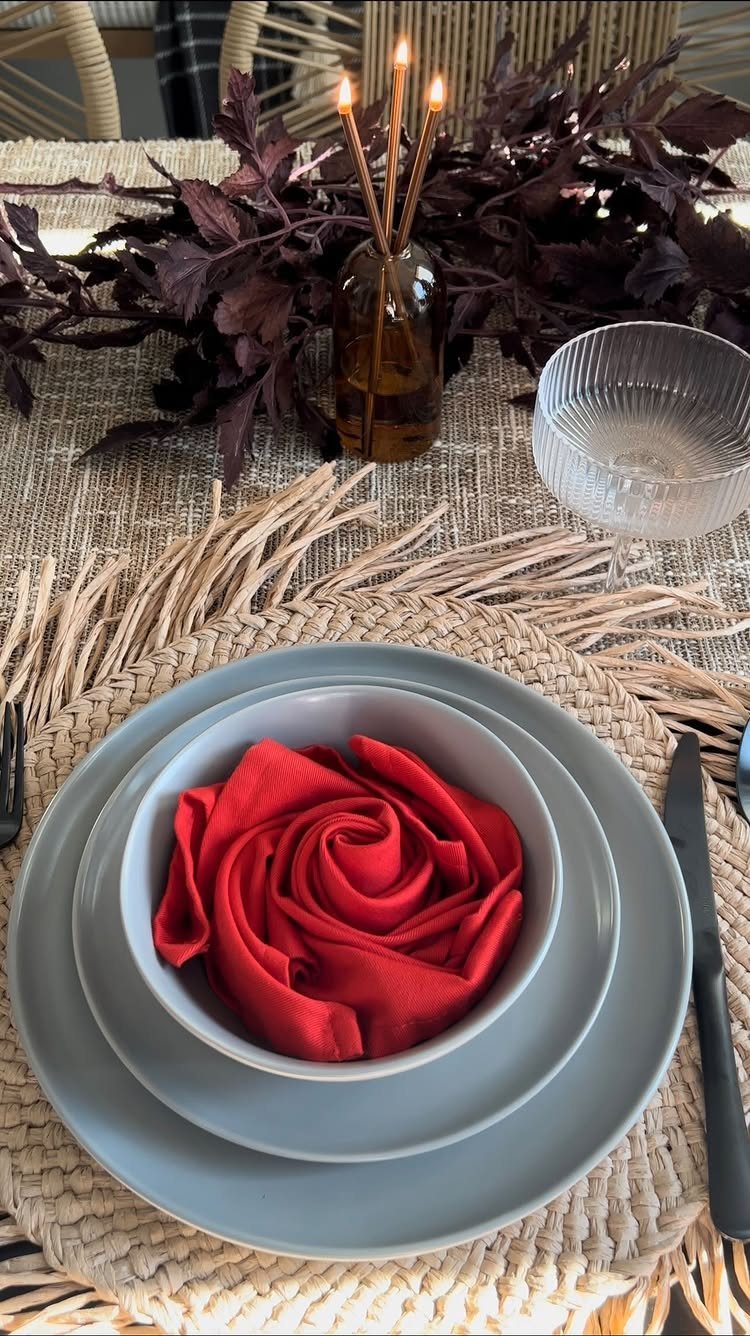
A red napkin folded into a rose sits on the plate like decoration you didn’t have to buy. Against grey plates and a woven placemat, the red is the only bright spot, so it reads clearly.
Practice the fold a few times before the party, since the first attempt rarely holds its shape. Starch or a good ironing helps the layers stay crisp.
Fold them the day before and set them on the plates.
23. Pear-Filled Floral Vase Centerpiece
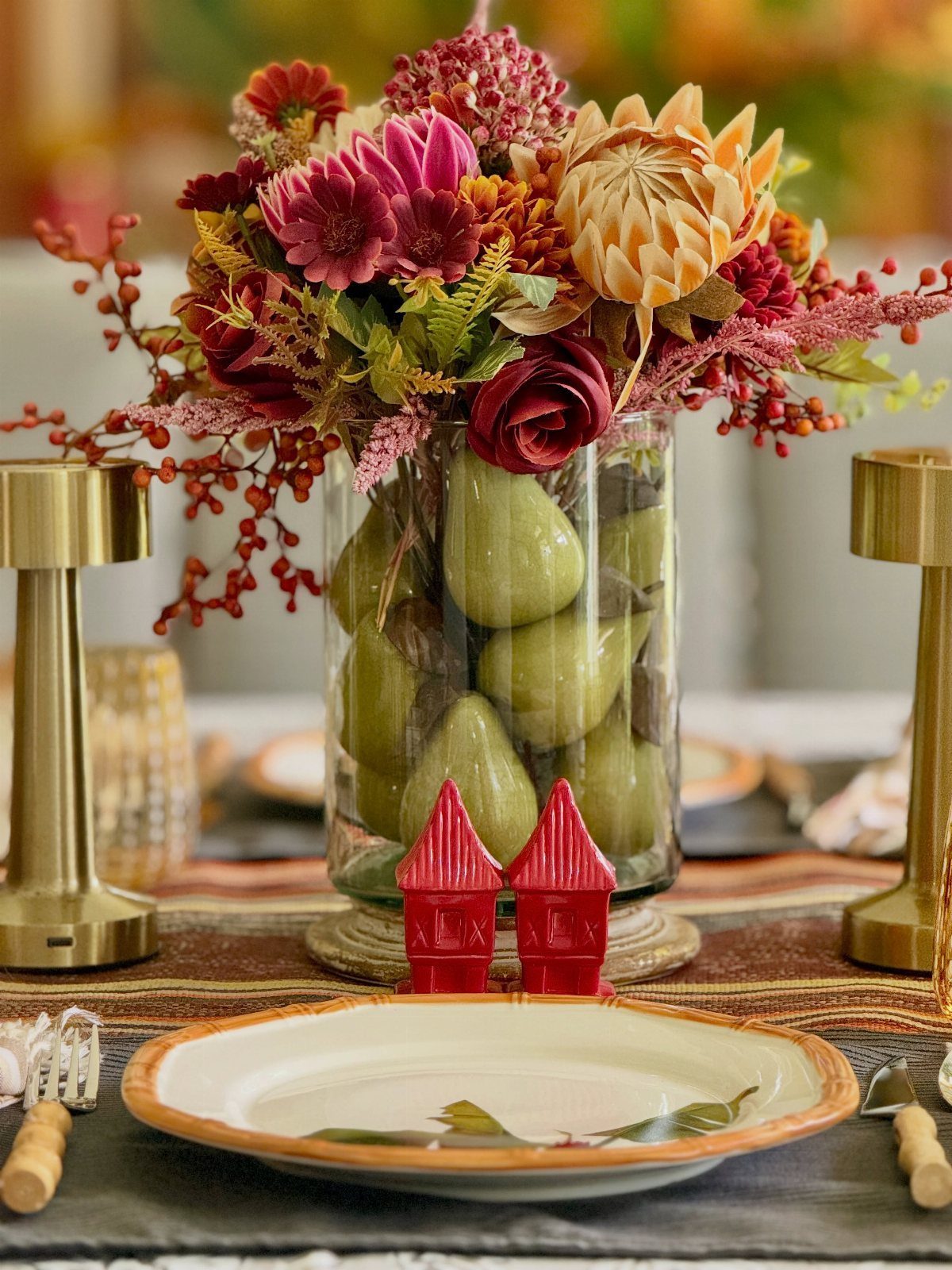
Fill a clear glass vase with green pears and set autumn flowers on top, and the fruit becomes the arrangement. It costs less than a full bouquet, because the pears take up most of the volume.
Choose firm pears that sit snugly, so the stack doesn’t shift. Set the flowers in last.
I’d keep it as a single vase, not several, so it stays tidy beside the plates. Eat the pears afterward.
24. Red Tapers and Pomegranate Accents
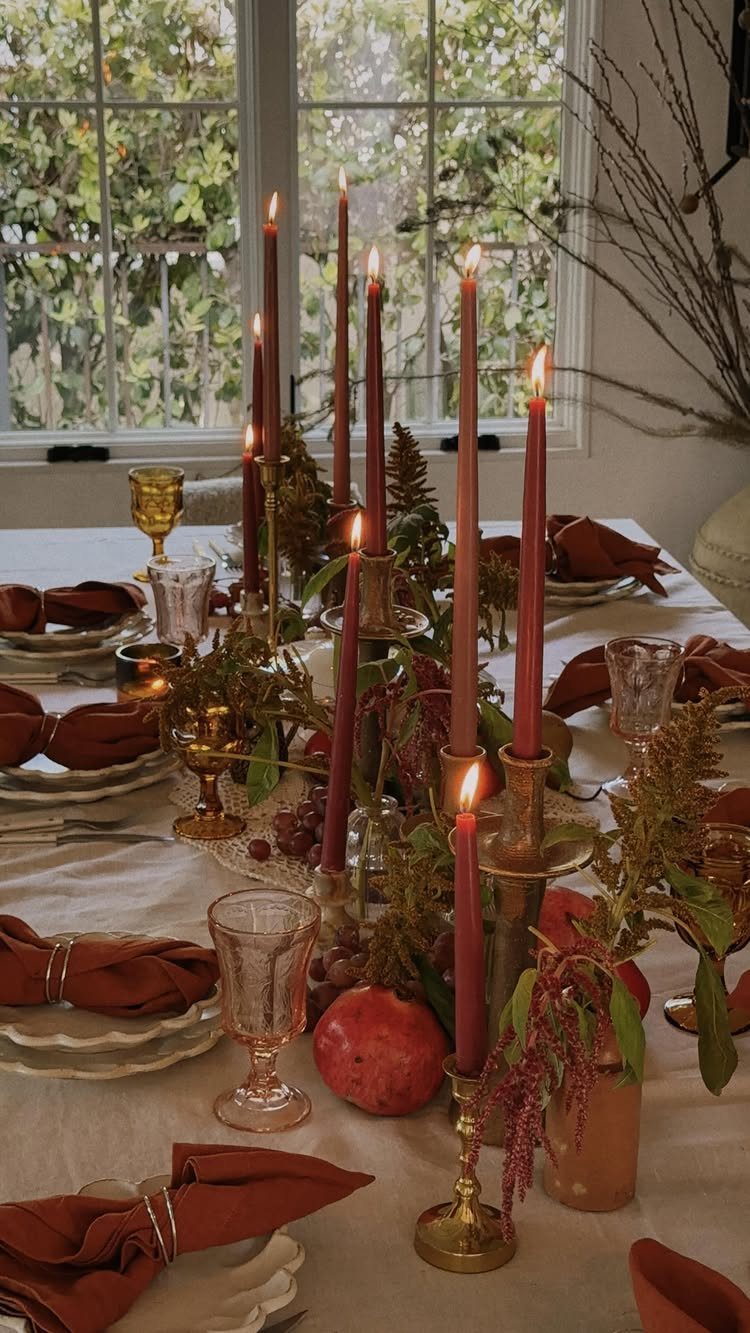
Red taper candles in brass holders look rich on white linens, and pomegranates add the same red without any flowers. Red napkins tie the palette together.
Keep the pomegranates whole and cluster them near the candle bases. Pick holders that are sturdy and heavy, since tapers tip easily.
I like this for a table near a window, where daylight shows off the color. Light the candles shortly before guests sit.
25. Pink Runner and Burgundy Napkins
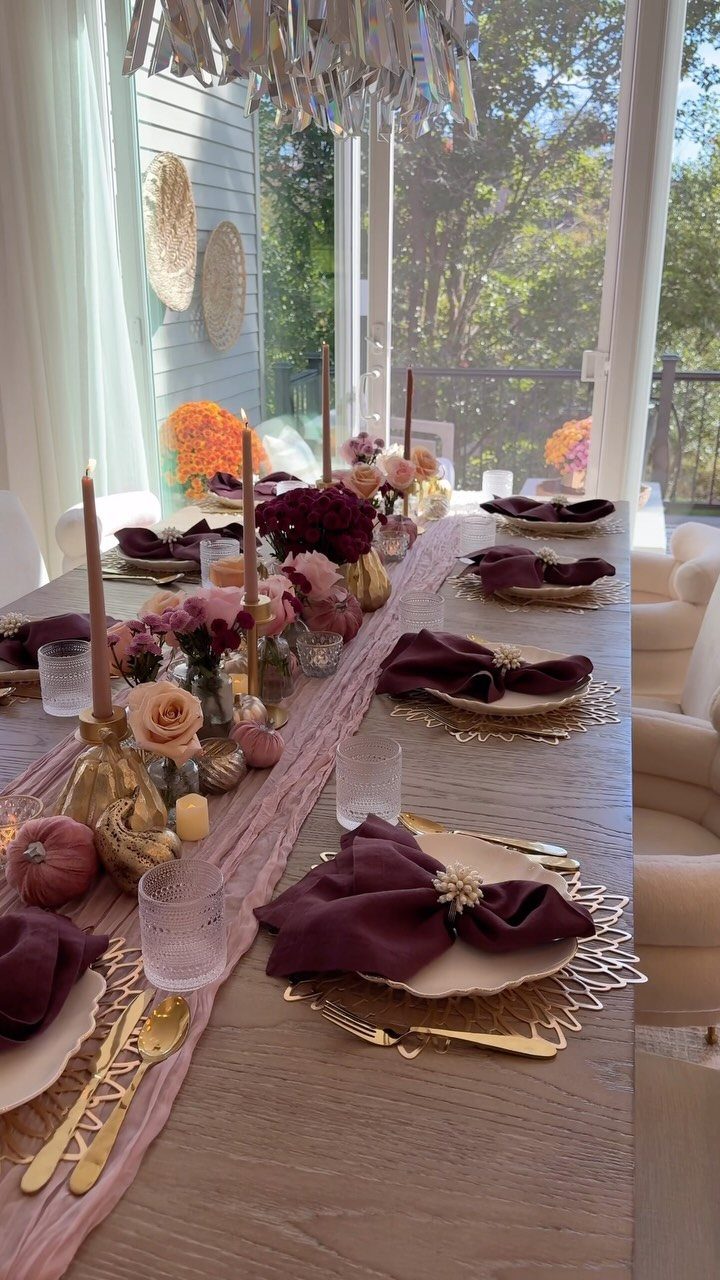
Blush pink against warm wood is a softer take on a Thanksgiving table, and the burgundy napkins keep it from turning sweet. Gold chargers tie the two together.
I’d match the flowers to the runner, so the pink reads as one idea and not three. Try swapping in rust or terracotta if burgundy reads too dark once the plates are down.
Keep the candles low enough to see over.
26. Eucalyptus Runner with Gold Cutlery
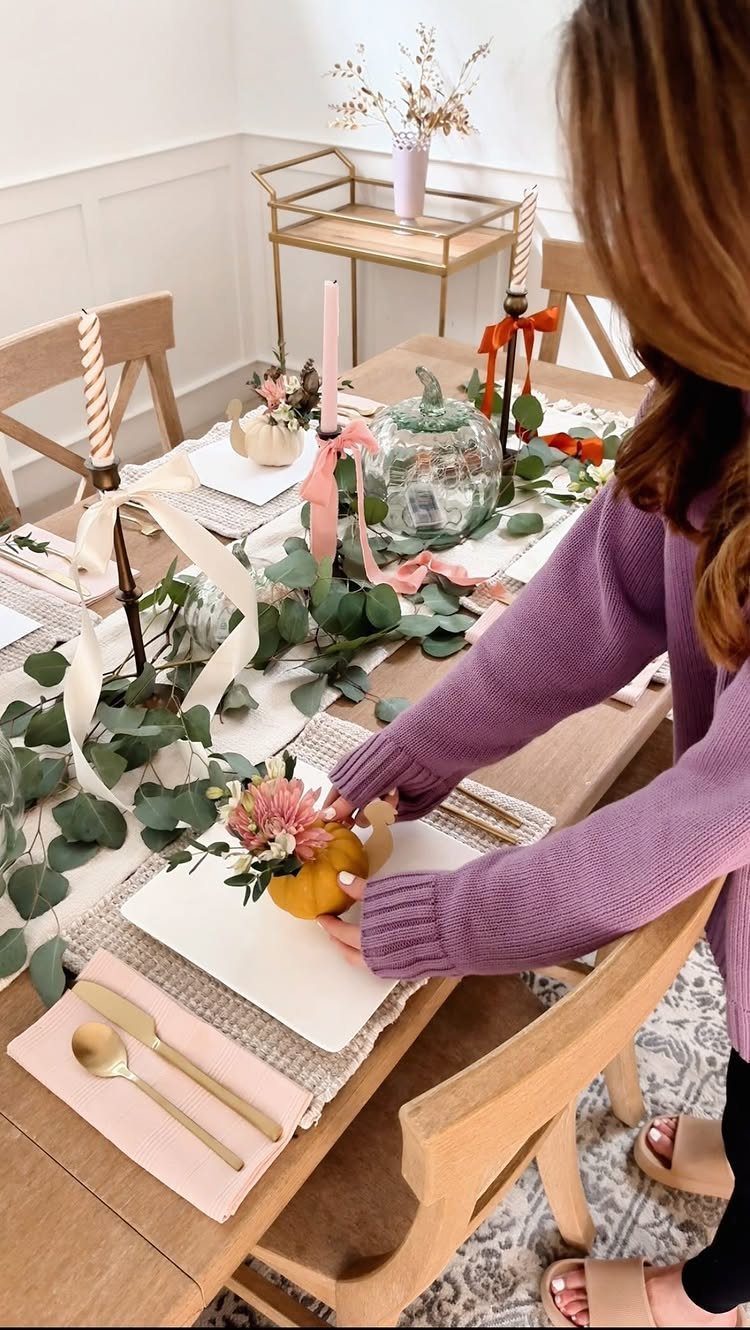
Fresh eucalyptus laid straight down the center of the table gives it a green line without a single flower. Soft pink napkins and gold cutlery warm it up, and a small pumpkin on each plate finishes the seat.
Lay the garland loosely and let it curve around the pumpkins. I’d keep it to one greenery, since a second leaf type muddies the line.
Set the pumpkins on the plates last, once the cutlery is down.
27. Decorative Corn Cob Centerpiece
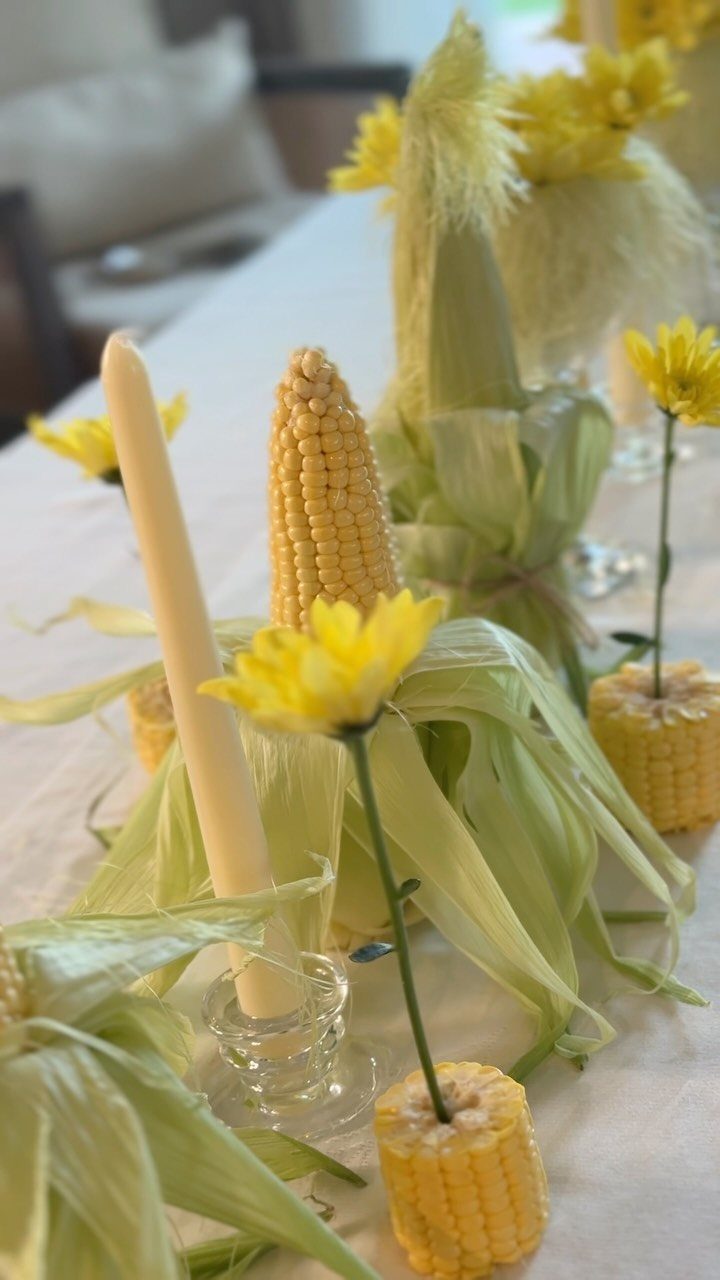
Whole dried corn cobs with the husks draped back are about the most inexpensive centerpiece material you can use, and the husks cover the gaps for free.
Yellow blooms pick up the kernel color, and white taper candles keep the white cloth looking clean.
Let the husks spill over the cloth rather than sitting in a neat pile. Keep the candles clear of the dry husks.
I’d stop at one cluster down the middle so the plates have room.
28. Leaf-Shaped Ceramic Accent Plate
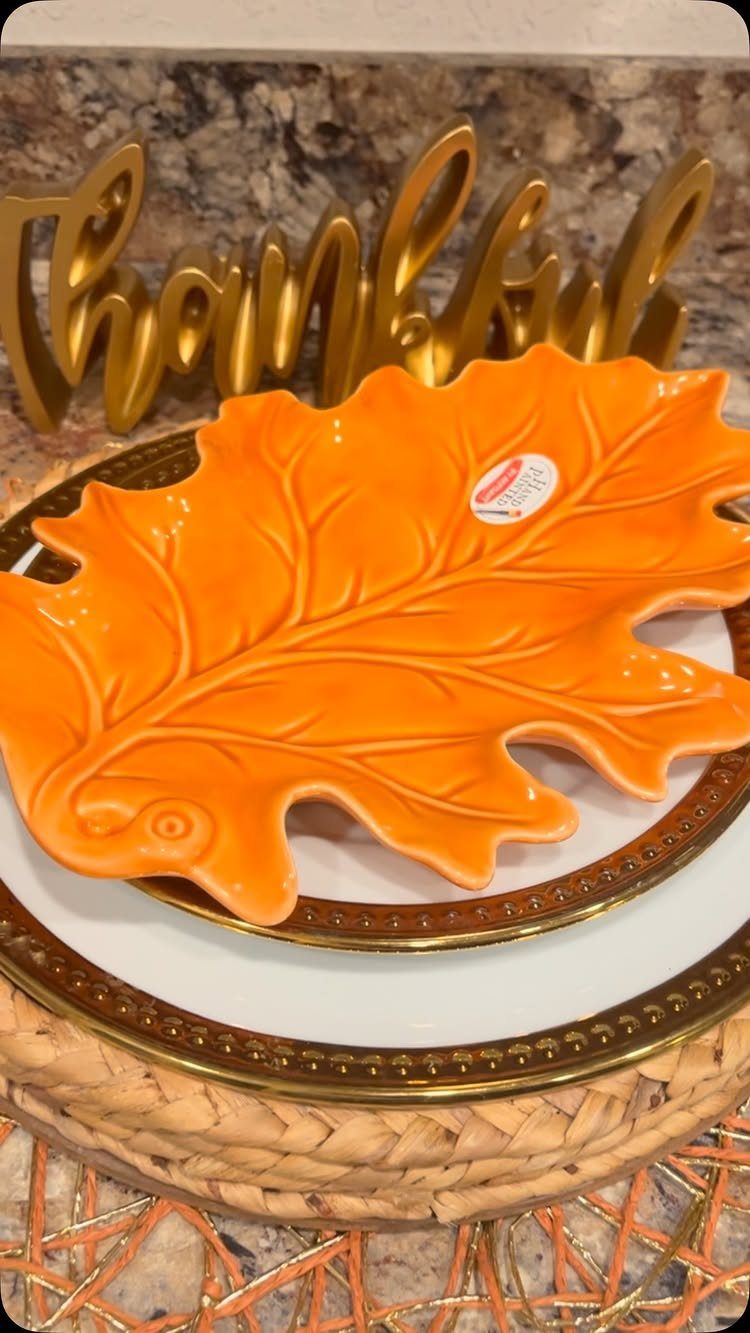
An orange leaf-shaped plate set on a gold-rimmed white dinner plate, over a woven charger, gives each seat three layers and one clear pop of color. It works well for a first course or a small bite of dessert.
Stack them in that order, charger first, so the leaf shows its full outline. I’d buy a single color for all the seats instead of mixing leaf shades.
Clear the leaf plate before the turkey arrives.
29. Shaped Linen Placemats
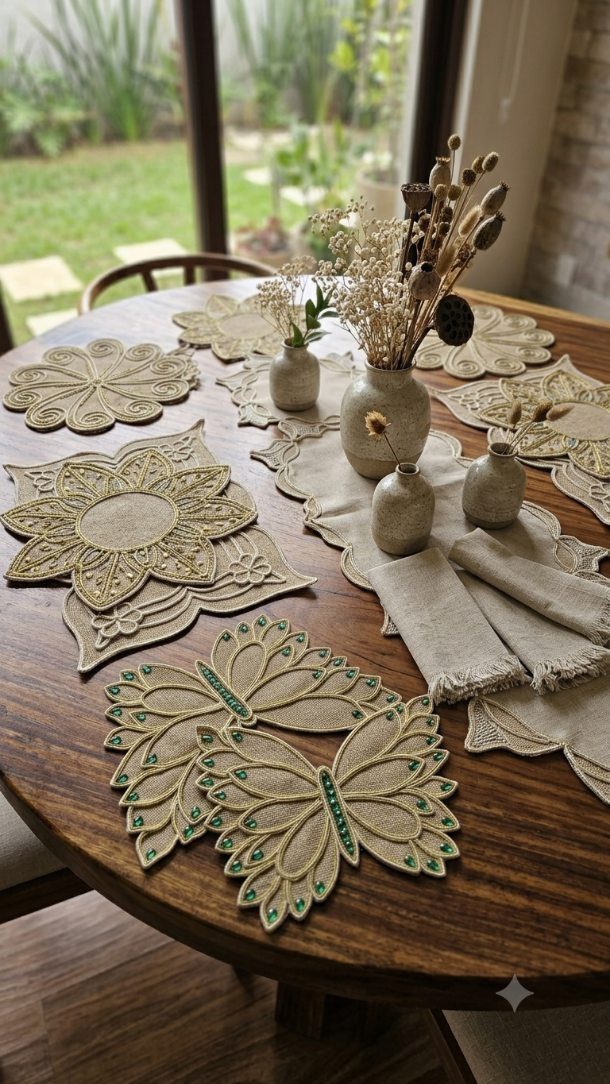
Placemats cut into floral and butterfly shapes make the table feel handmade, and beige linen keeps the shapes calm on natural wood. Matching napkins and a runner repeat the fabric, so the set looks planned.
Bud vases of dried flowers take up almost no room and last for days, which lets you set them out early. Press the creases out the morning of the party.
I’d keep everything else plain, since the cut-out edges are the detail.
Choosing a Color Palette
Two or three main shades, repeated across the table, will do more for a setting than any single showpiece.
Burnt orange, cream and natural brown is the classic Thanksgiving trio; burgundy paired with forest green looks deeper and moodier, and sage, ivory, terracotta and warm wood make a softer table.
Repetition is what makes the colors read as a plan. Pull one color from the centerpiece into the napkins, say burgundy to match the blooms, then let cream plates repeat the candles or small pumpkins.
Metallics count as an accent, not a third shade. Brass candleholders, gold-toned flatware or bronze pieces add glow without crowding the palette.
If you want a richer, rustic feel, burgundy, mustard and forest green sit well with textures like burlap, leather and wood. Pinecones, leaves and candles fit right in.
Centerpiece Considerations
Settle height, width and spacing before anything goes on the table. Keep it low enough, roughly 12 inches or less, that people can see across the table, talk, and pass dishes without moving it.
Low greenery suits a small gathering. If you want more height, add taller candles around the arrangement instead of raising the arrangement itself.
On a long table, two or three smaller arrangements beat one oversized display, and they leave gaps for platters.
A centerpiece that looks great at 4 p.m. can become a nuisance once the turkey, sides, bread and desserts arrive, so set your dishes out empty first and see what room is left.
Layering Place Settings
Start with a clear, wiped-down table, then build in layers: linens first, then dinnerware, napkins and glassware. A tablecloth is the base, and a runner, placemats and napkins can follow if you want more depth.
Choose your color scheme before layering, so each piece has a job.
A personal touch at each seat makes guests feel welcome before they sit. Set a handwritten name card at each plate, or tuck a small seasonal favor beside it, such as a mini pumpkin or a sprig of rosemary.
Add serving pieces and accessories last, sparingly. Each one should earn its spot on the table.
Frequently Asked Questions
How do I set a Thanksgiving day table?
Start with a plain base, such as a white tablecloth or a textured runner, then add one centerpiece and a layered place setting at each seat.
Keep the center low enough to see across, and pick one busy layer while the others stay quiet. A white cloth lets the food supply the color, and it can be reused for Christmas or a spring brunch.
What are some creative ways to decorate my dining table?
Mix natural pieces with a tight color scheme and one personal touch. Mini pumpkins between candles, dried orange slices and pinecones, a hollowed pumpkin used as a vase, or a bowl of pears under flowers all cost little.
Kraft paper rolled down the table with outlines drawn for each plate is another cheap idea that lets guests join in.
What is the best theme for a Thanksgiving table?
Pick two or three main shades and repeat them across the table, so the setting reads as planned. Treat gold or brass as an accent rather than a third color.
How tall should a Thanksgiving centerpiece be?
Keep it low enough that guests can see the person across from them.
Sit in a chair and check before dinner. Tall tapers and big arrangements are fine only if they leave sight lines and plate space open.





