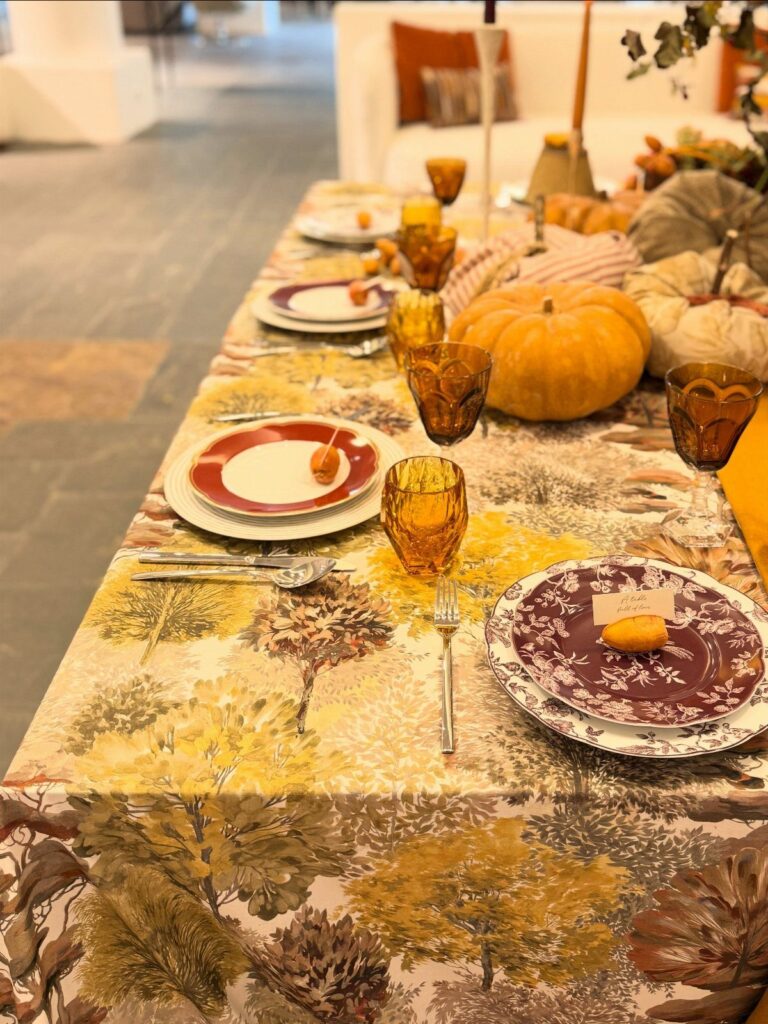
The settings in this post run from a casual table to a basic one with a full set of tableware, and the menu and the occasion decide how far you go.
A casual dinner needs only the basics, while a formal one needs a spoon, a wine glass or a steak knife only if the food calls for it.
1. Casual Table Setting
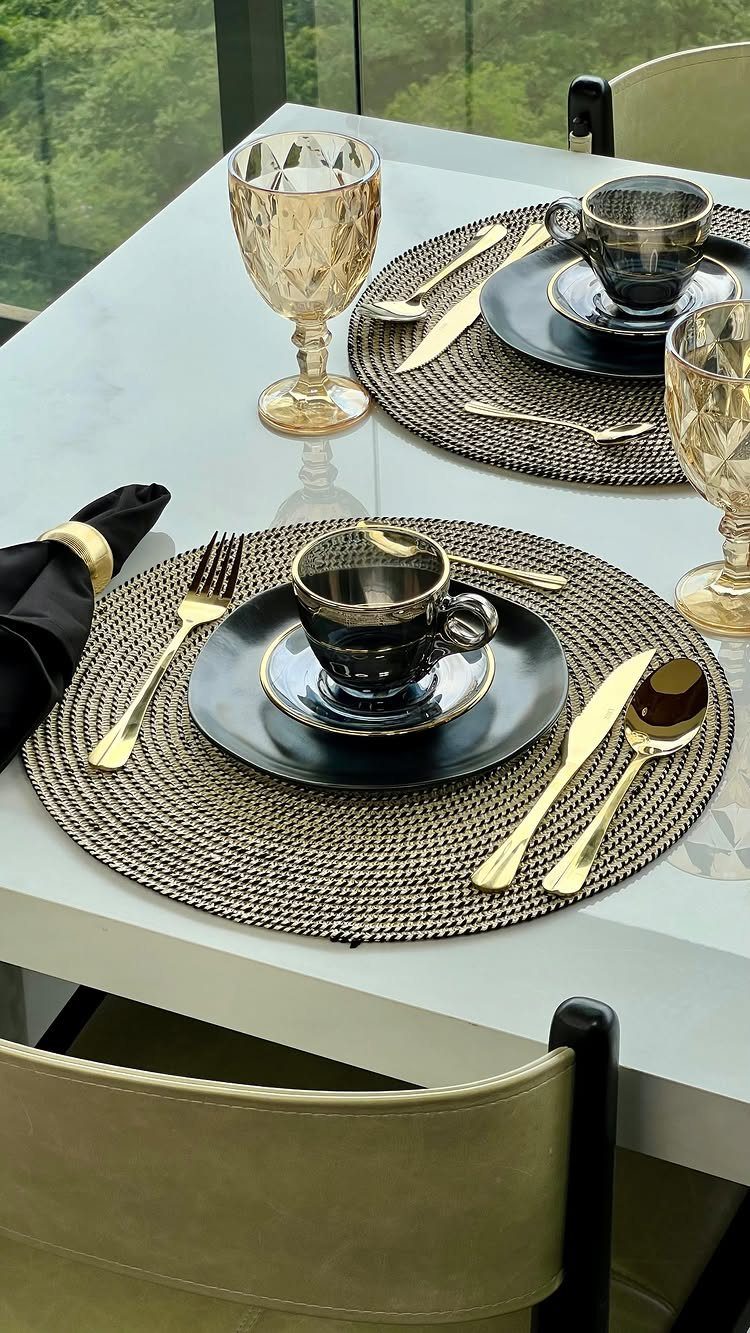
Black plates on woven placemats with gold flatware and amber glassware bring formality to a casual setup without adding anything you’d only use once.
The placemats do the work a tablecloth would, and they hide nothing, so a white table underneath keeps the dark plates sharp.
A napkin in a ring on the left of the plate is a small move that reads as intentional.
For a weeknight dinner or a relaxed get-together, I would stop there and skip chargers, extra glasses and anything that needs polishing.
2. Basic Table Setting
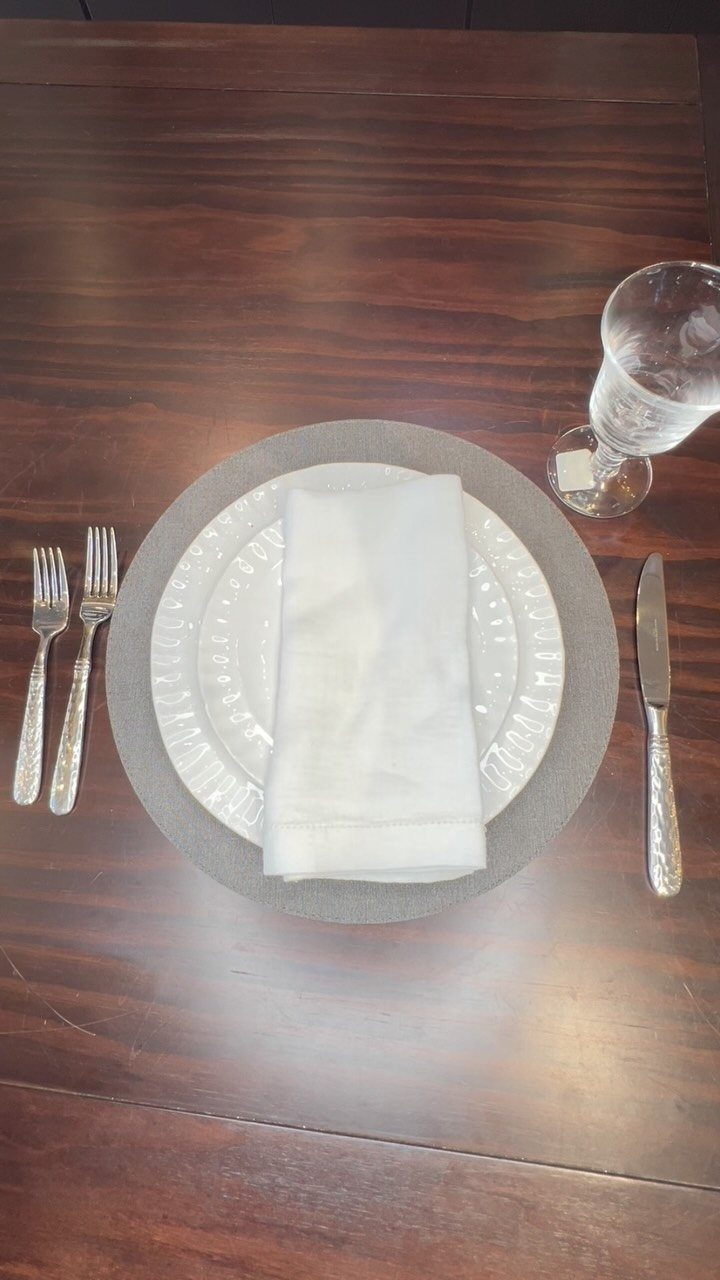
A charger, a dinner plate, two forks, a knife and one water glass: that is the whole basic setting, and it covers most dinners you will host.
The white napkin can sit on the plate or to the left of the forks.
Forks belong on the left side, knife on the right with the blade turned inward, and the glass positioned above the knife tip.
I like a dark wood table with white plates because the contrast needs no styling. Add pieces only when the menu calls for them, such as a spoon or a wine glass.
3. Buffet Table Setup
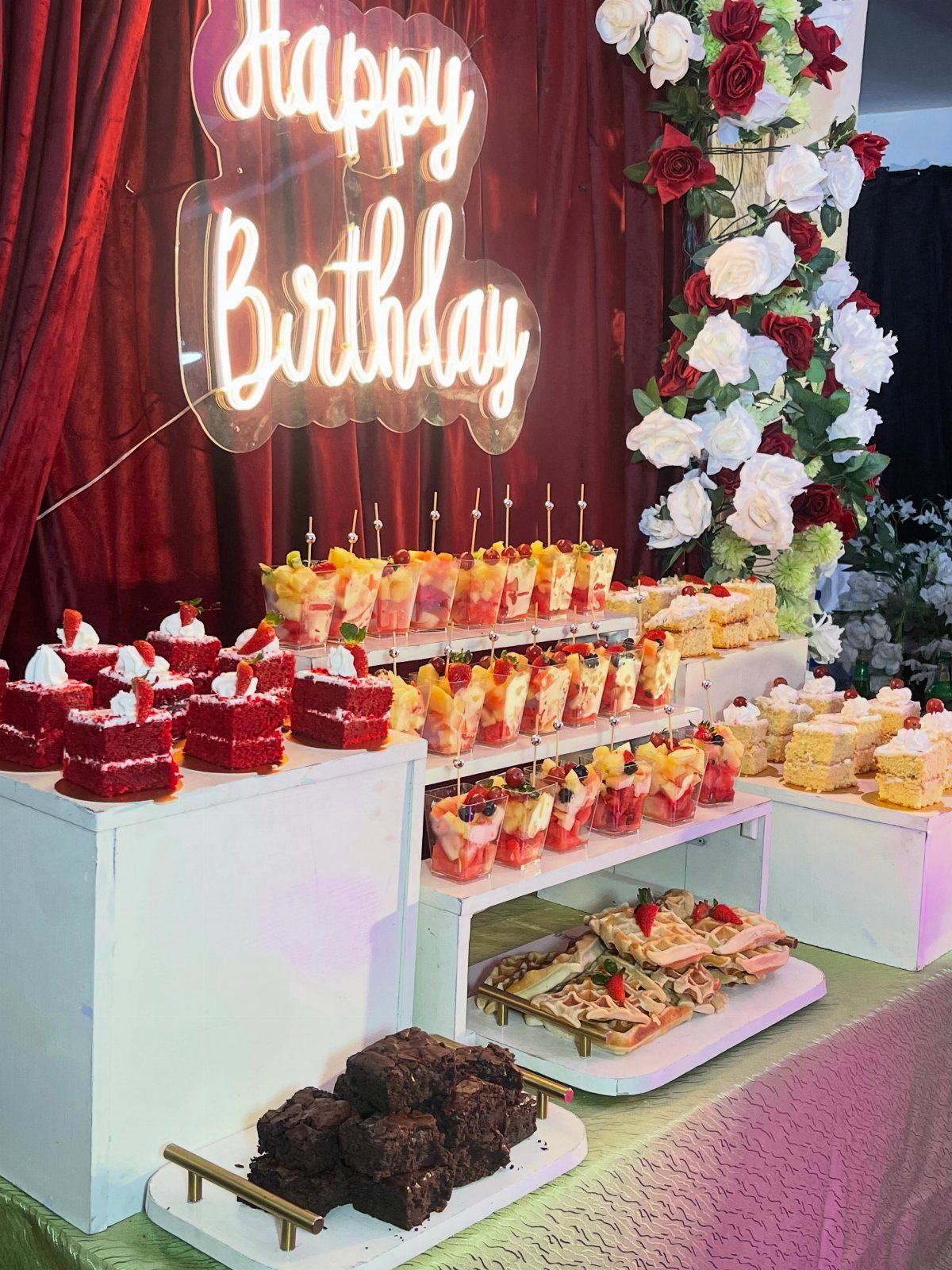
Self-service tables work best when guests can see the whole spread and reach it without a traffic jam. A dessert buffet like this one rewards a backdrop and a sign, since the spread needs something to lift it visually.
Vary the height with a stand or a stack of books under a cloth, and put plates and napkins at the start of the line.
Single-serve cups, like the fruit ones, save you from slicing and serving. Put forks last in the buffet line so guests keep both hands free until they’ve filled their plates.
4. Centerpiece Arrangement
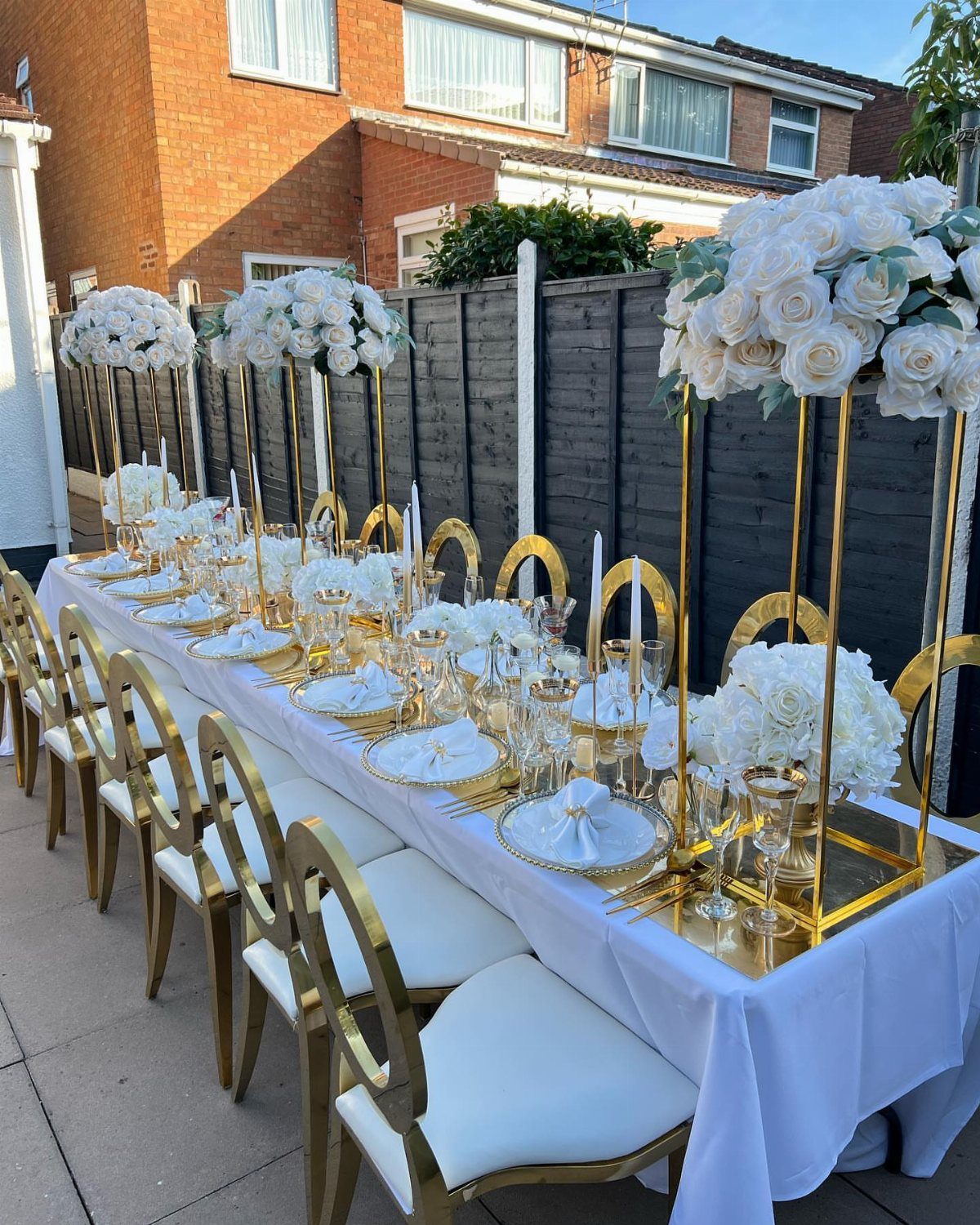
Tall white roses on gold stands lift a centerpiece above eye level, so guests across a long table can still see each other under the blooms. That is the main reason I like stands for a big table.
Repeat the stands at even intervals rather than crowding one in the middle, and match the metal to your chairs and plates.
Gold on white reads formal outdoors, but it needs a clean cloth. If your table is shorter, one stand is plenty.
5. Table Decor Essentials
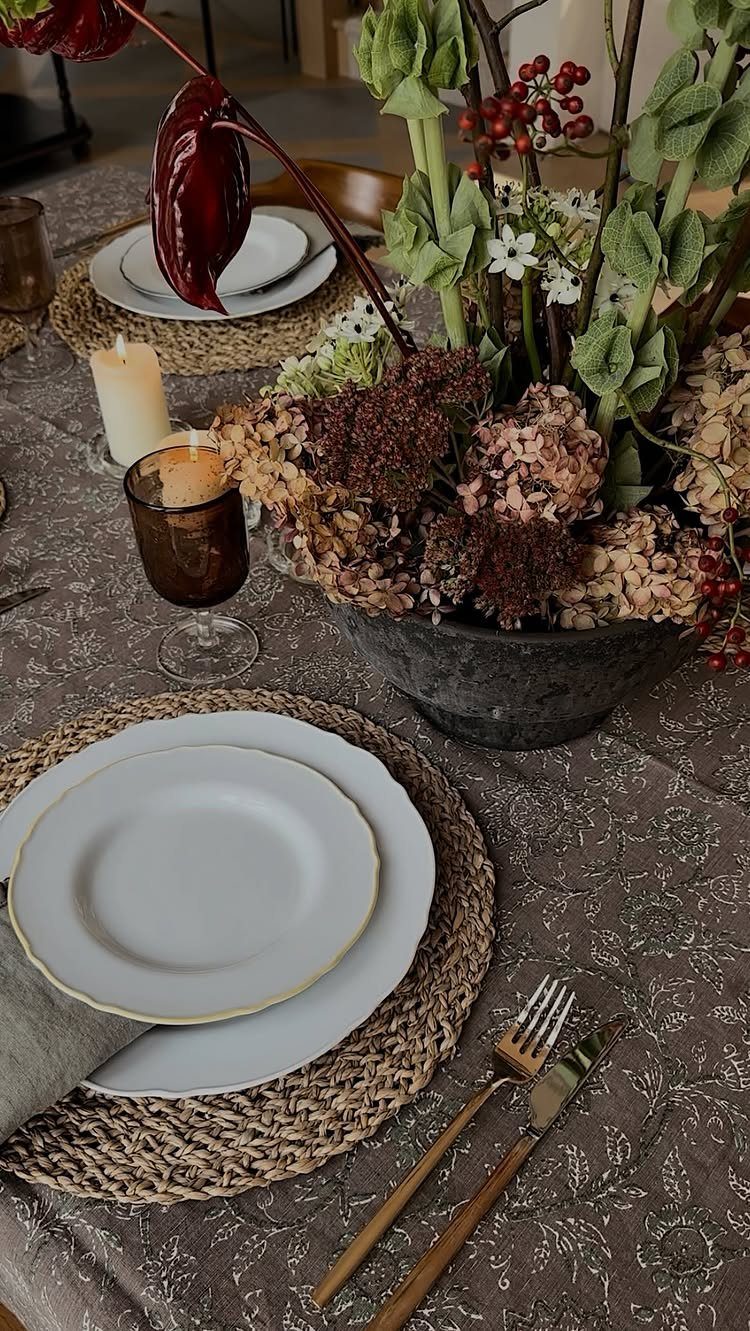
A large floral centerpiece, woven placemats, candles and a patterned cloth can all share a table if the plates stay plain. White plates and gold cutlery give the eye somewhere to rest while the texture does the talking.
Choose one pattern, here the cloth, and let everything else be solid or woven.
Candles add warmth for the price of a few tapers or votives. Keep the centerpiece wide rather than tall if people will be talking across it.
6. Name Cards and Printed Menus
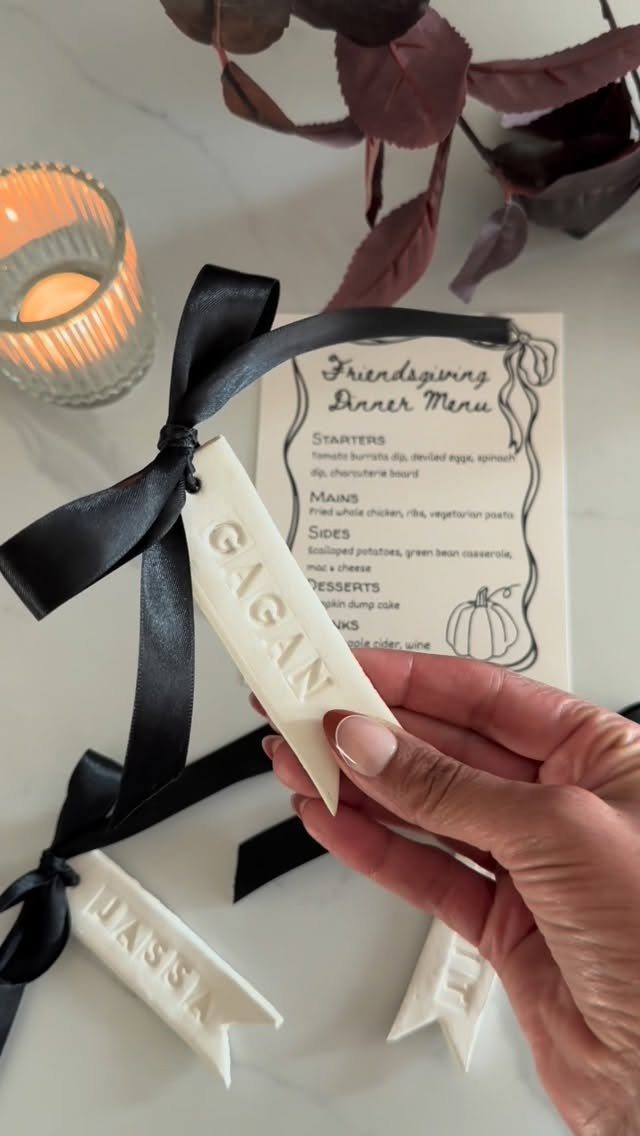
Cookie name cards double as a favor, which is why I would make them for a gathering like Friendsgiving. Each guest finds a place and takes dessert home.
The maker of this set says to let the cookies air dry for 2–3 days before tying on the bows, so bake early in the week, not the night before.
Pair them with a one-page printed menu and a candle beside it. Spell names carefully with a food-safe icing pen, and ask about allergies before you hand out cookies.
7. Tableware Selection
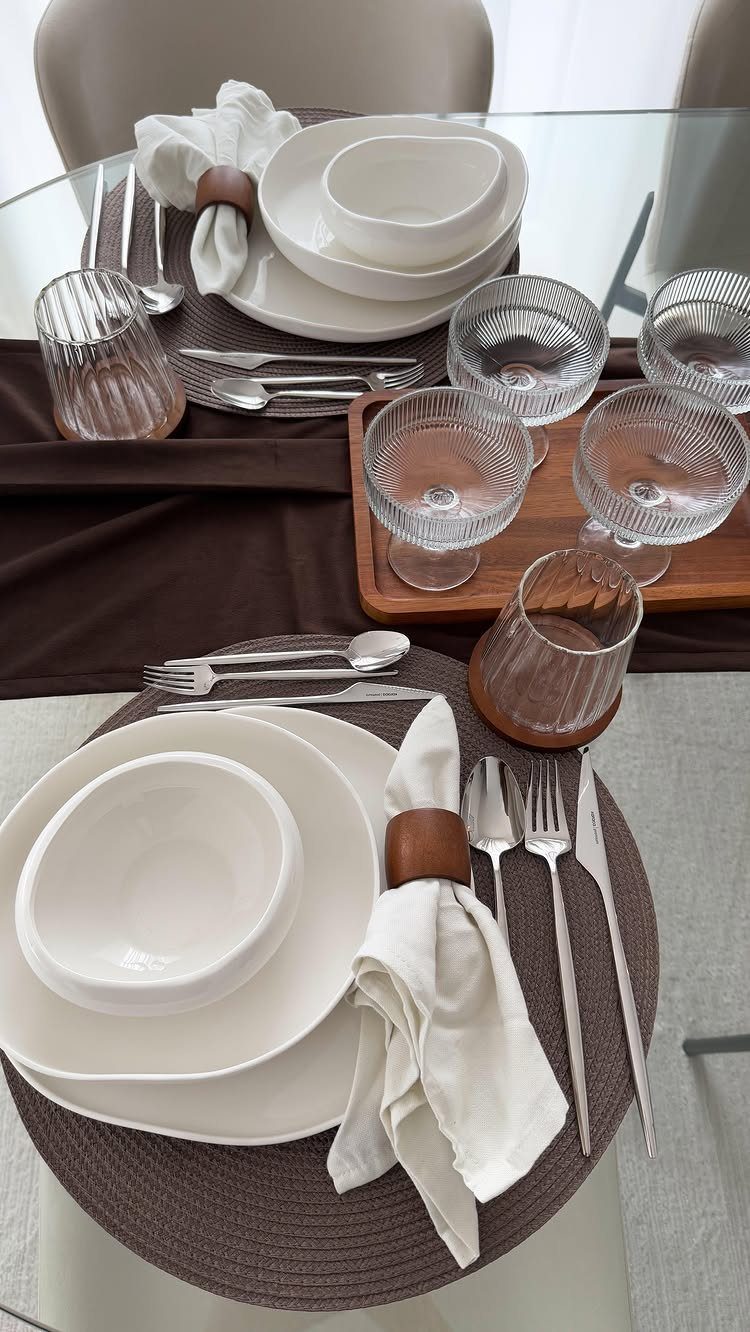
White plates and bowls with silver cutlery are the safest dinnerware you can buy, because they suit nearly any menu and any season. On a brown table, as here, they stand out without any effort from you.
Ribbed glassware adds texture, so I would let it be the one detail that catches light and keep everything else plain. Pick one color for the placemats, runner and napkin rings, and the set looks planned rather than collected.
Buy a matching set of white plates and bowls first. Change the napkins, rings and runner for each occasion, and the same dishes will serve a table for two or a table for twelve.
Importance of Table Setting
A table is the backdrop for the whole party, and it is where you set the formality, carry a theme and signal the mood before anyone sits down.
Guests notice more than you would expect, even if they could never say why the evening felt put together.
A thoughtful setting also tells people you are glad they came. A well-set table makes store-bought freezer appetizers look as intentional as a homemade quiche crust, so the food reads as planned either way.
A set table also gives the meal a clear order, so guests know what comes next.
Match the effort to the occasion: a casual dinner needs just the basics, and a wedding or formal dinner calls for layered place settings and extra linens.
The biggest difference between a casual table setting and a formal one is the amount of tabletop items included,” explains Jove Meyer, an NYC-based luxury wedding and party planner. “The less formal the meal, the fewer items you need to eat it.
Common Mistakes
Knife direction is the mistake with a practical cost: turn the blade inward so nobody grabs it by accident.
Too much tableware crowds the table and wastes dishes. Too little is just as bad, so if the menu needs a steak knife or soup spoon, put it out before guests sit.
Check your centerpiece against one test: can people see and talk across it? Keep candles unscented, and think about the fragrance of any flowers, since strong scents compete with the food.
At home, guests rarely scrutinize your layout. If a change suits your menu, make it, and a clear intention beats a rule followed blindly.
Etiquette Tips
For a formal setting, build from the center outward. Start with the placemat and charger, then the salad plate on top; each course’s plate is cleared and the next one takes its place.
Behind the water and champagne, the wine glasses go in a short diagonal: red toward the back and white toward the front.
Four glasses can look like a lot, so stagger them to keep each one easy to reach.
Frequently Asked Questions
What is the correct order for setting a table?
Build from the center outward. Lay the placemat and charger first, then the dinner plate (topped with a salad plate if a salad course is coming).
Forks go to the left, the knife to the right with its edge facing the plate, and the glass sits just above the knife tip.
Lay the utensils in the sequence they’ll be used, with the first course’s pieces farthest out, so guests just pick up whatever is on the outside and move in.
What are the basic types of table settings?
The usual types are basic, casual, informal, formal and buffet. For most dinners at home, one plate, two forks, one knife and a water glass is all a place setting needs.
Casual adds things like placemats and napkin rings, formal layers on extra plates, glasses and linens, and a buffet is arranged so guests can serve themselves without a traffic jam.
How to make a table look nicer?
Pick one color or one pattern and keep everything else plain. Plain white plates against a patterned cloth, woven placemats or a ribbed glass give the table texture, and that’s what keeps it from looking flat.
Candles add warmth cheaply, and a centerpiece should stay wide or sit on a stand so people can still see each other across the table.
Where do the knife, fork and glass go on a table setting?
Put the forks to the plate’s left.
The knife goes on the right, cutting edge facing the plate, so no one grabs it by the blade. Fold the napkin onto the plate, or tuck it under or beside the forks on the left.
How do you arrange wine glasses on a formal table?
Line them up in a short diagonal just past the water glass and champagne flute, red nearer the back, white nearer the front.
If you’re using 4 glasses, offset them in a slight staircase so a hand can reach any of them without bumping the rest.
What are the most common table setting mistakes?
A blade turned away from the plate is the one error that can actually cause trouble, since a guest’s hand may brush the sharp edge.
Too many pieces and the table feels jammed; too few and a guest is stuck with no steak knife or soup spoon when the menu calls for one.
Keep the centerpiece low enough to see and talk over, and leave out scented candles, since strong fragrance fights with the food.





