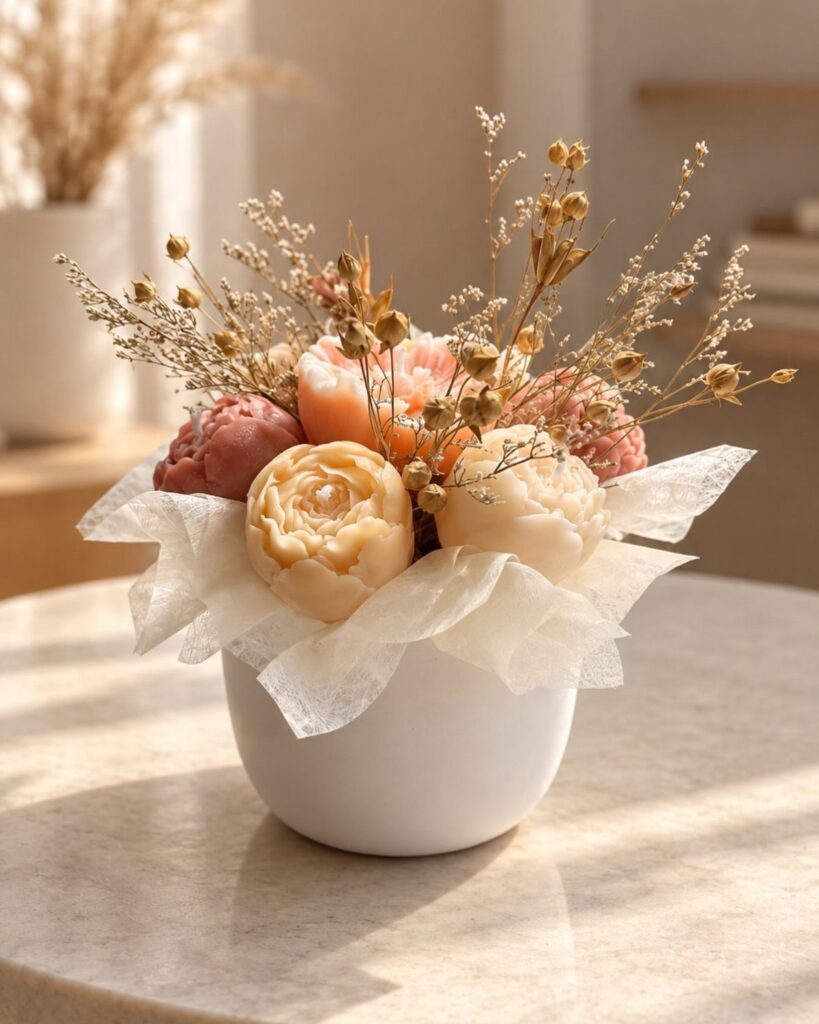
What decides the pick is whether the centerpiece has to survive a whole week of ordinary dinners or only one meal.
Potted plants, sculptural pieces and LED table lamps hold up for weeks, while a fruit bowl or a floral arrangement wants eating or replacing.
The ideas range from a single pillar candle ringed with pinecones, cinnamon sticks and dried orange slices to a twisted blue glass holder that needs nothing else, and most of them stay low enough to see across the table, with a couple of tall branch arrangements as the exceptions.
1. Candles
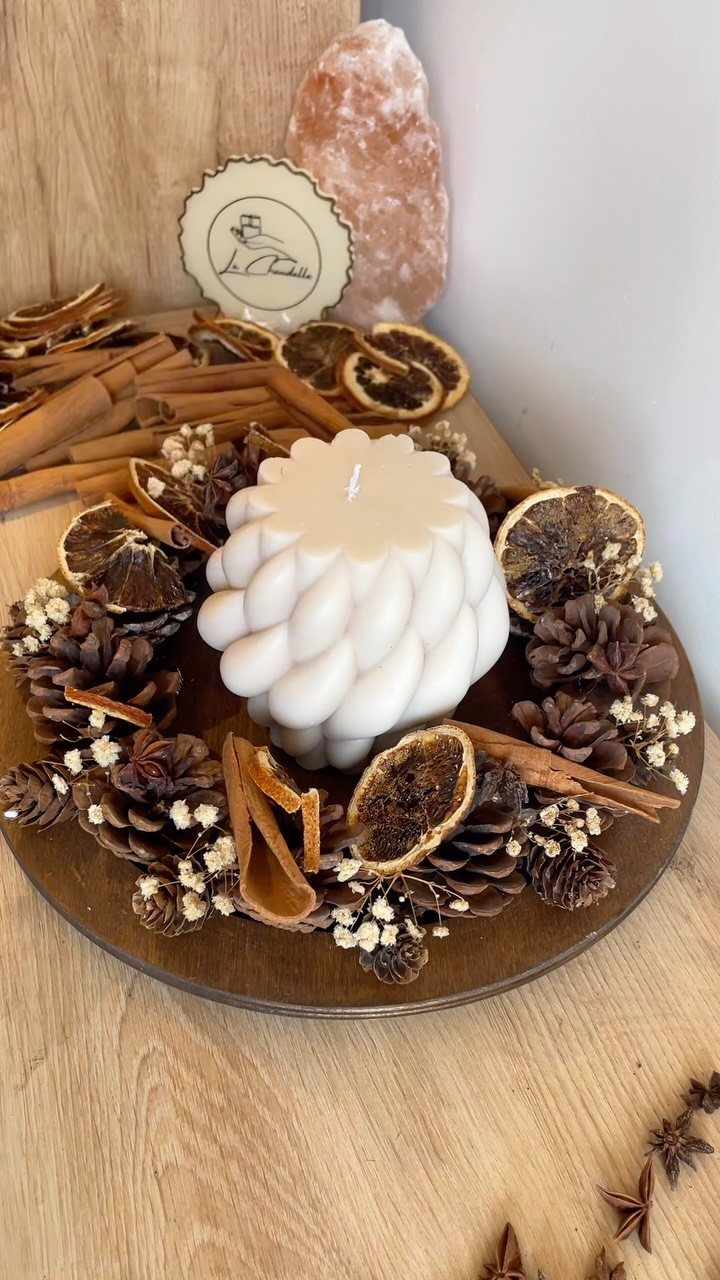
A single white pillar candle with a ring of pinecones, cinnamon sticks and dried orange slices around its base is about the cheapest centerpiece I can think of. Most of it comes from the pantry and the yard.
Set everything on a tray or wooden platter so the pieces read as one object and the table stays clear.
Keep the candle taller than the ring so the flame sits above the dried pieces, and trim any citrus or cinnamon that leans in close.
Textured pillars look good unlit, which matters on weeknights when you skip the flame.
2. Floral Arrangement
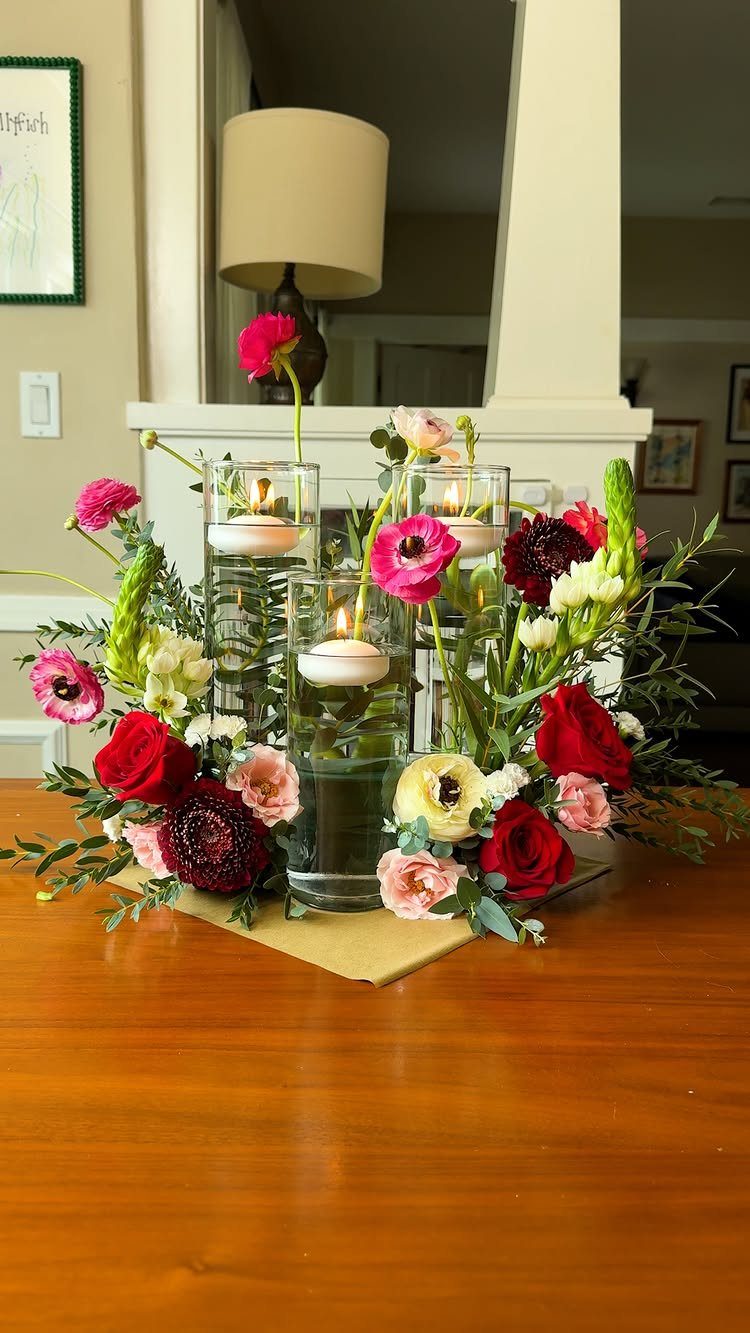
I like the cylinders sitting inside the arrangement, because the glass keeps the shape tidy and the blooms hide the edges.
Buy one mixed grocery-store bouquet and split the stems into small clusters around the base of the cylinders if you want to keep cost down.
Fill the glass with water, set the floating candles on top, and keep the flowers low so guests can see across the table.
3. Fruit Bowl
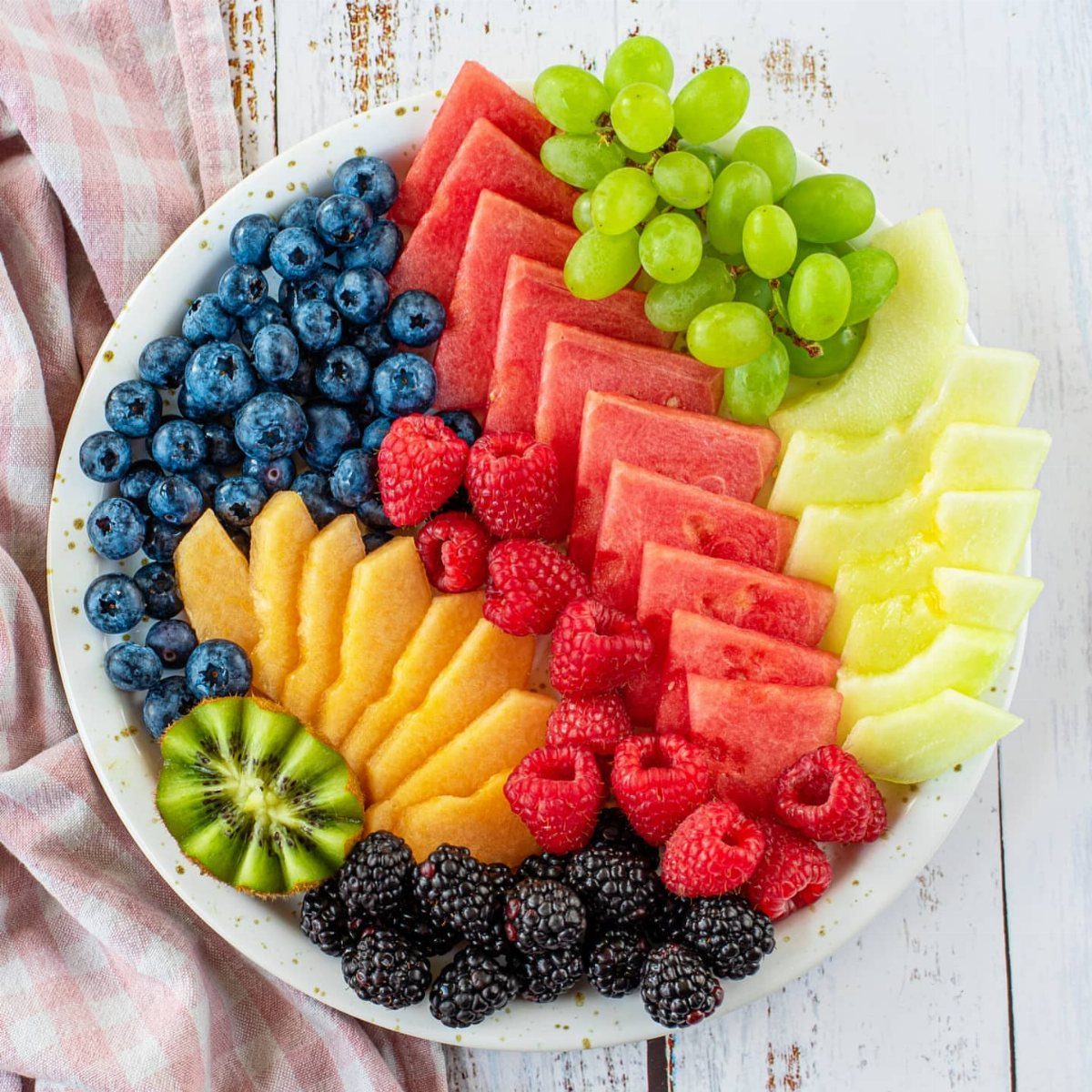
Cut fruit in a white bowl does double duty: guests snack from it and it fills the middle of the table with color.
A white bowl lets the fruit carry the color, and I would pick it over anything patterned.
Cut fruit has to be eaten, so this suits a single meal, not a table you leave set all week.
4. Tray Display
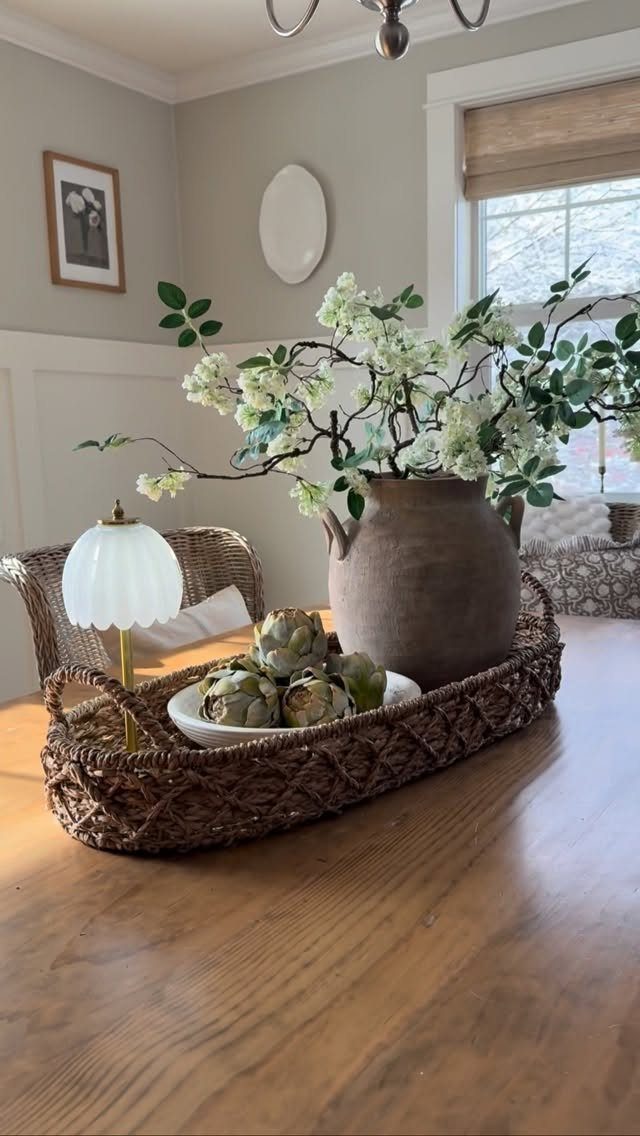
Gathering a few pieces on a woven tray gives the table a center without making you place each item separately.
Here a tall clay vase of white flowering branches balances a low white bowl, which is a pairing I would copy: one tall piece, one low one.
The maker filled the bowl with realistic artichokes, and faux ones mean the tray can stay put for weeks. Real ones work too if you plan to cook them afterward.
Pick a tray that leaves a few inches of table showing around it.
5. Cluster Small Vases
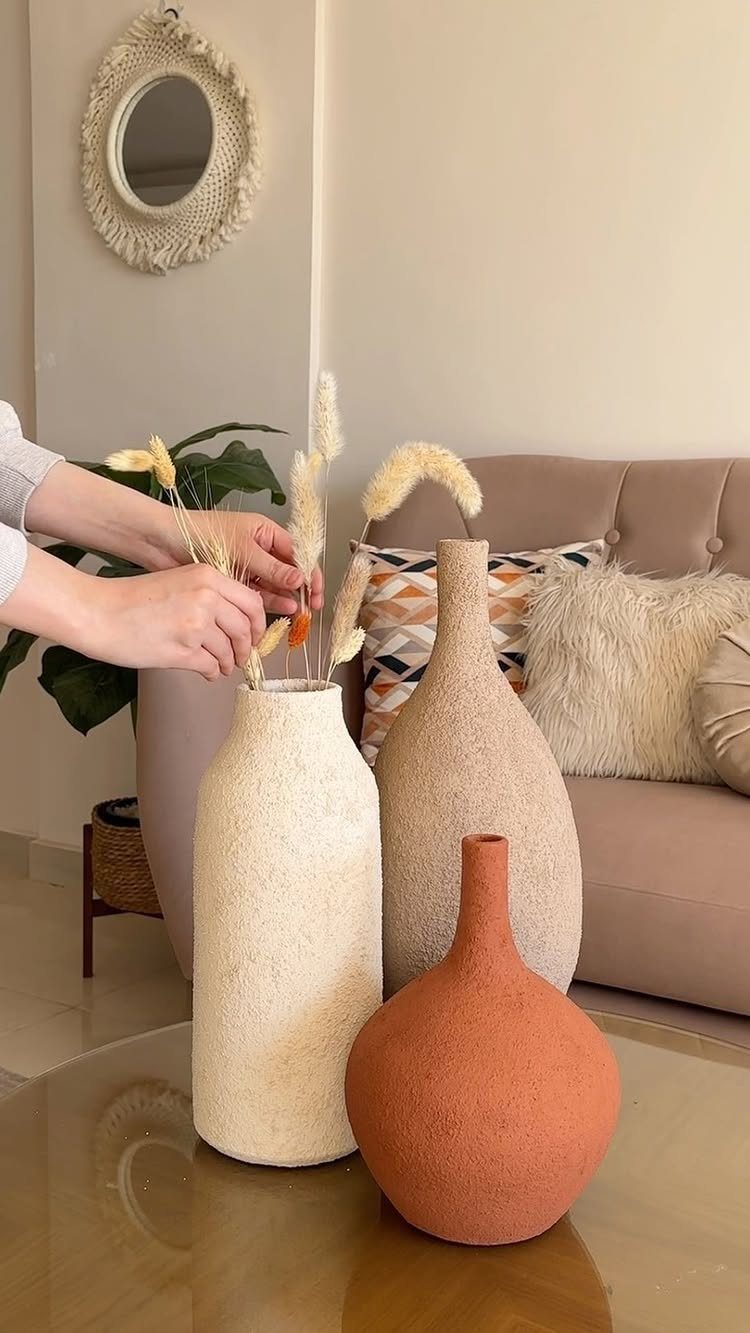
3 ceramic vases in matching earth tones, each holding a little dried grass, look deliberate because they share a palette but differ in shape.
Dried stems cost nothing to maintain, so they suit an everyday table better than fresh flowers do.
Vary the heights of the vases and the stem lengths, and keep the grass loose rather than tightly bunched. Odd numbers sit better than pairs, so stay with three or add two more.
Move the group by hand as you arrange it, since small shifts change the look more than you would expect.
6. Potted Plants
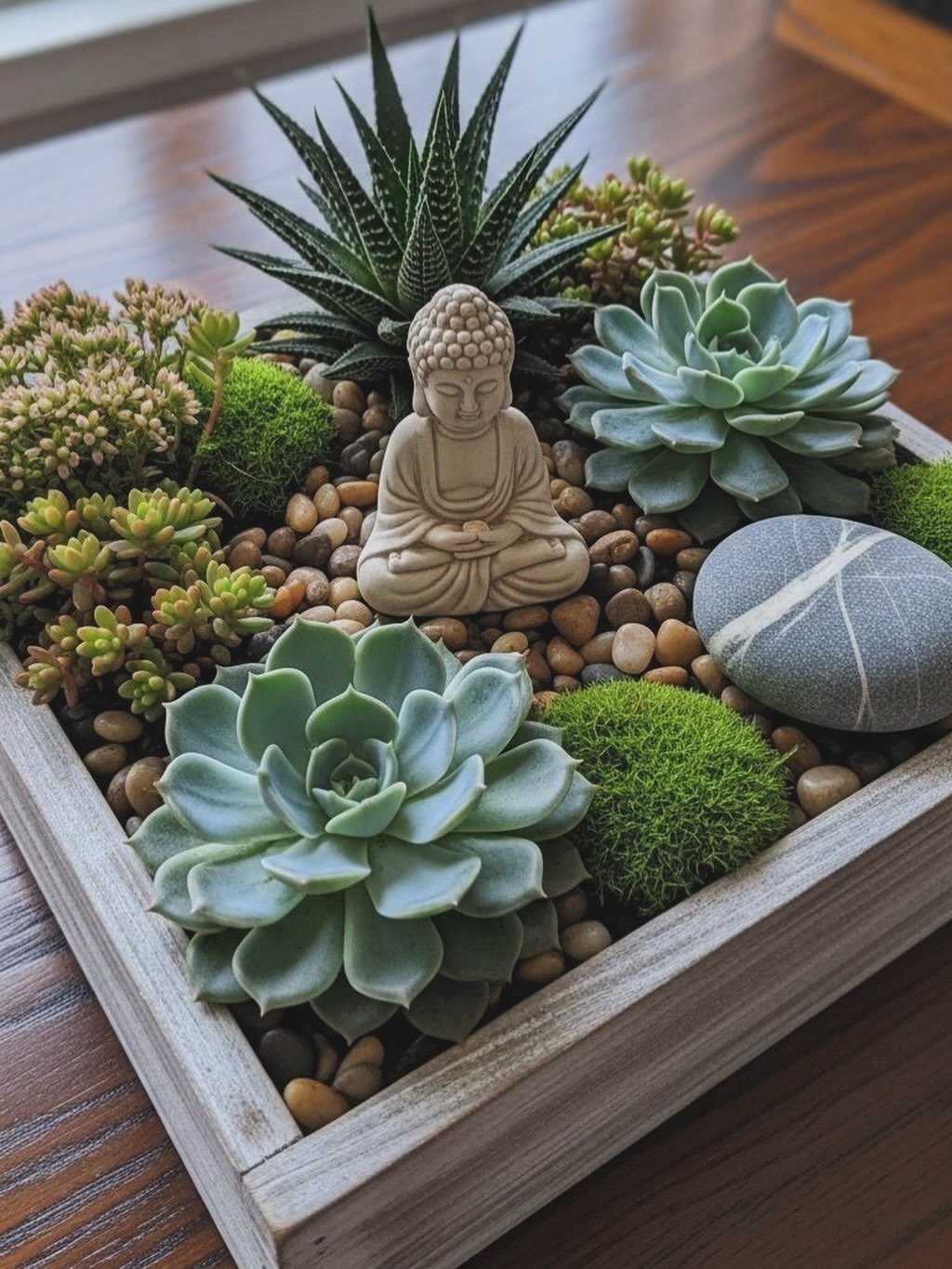
A shallow wooden box planted with succulents, moss and pebbles gives you a centerpiece that stays alive and needs very little from you.
A grey stone and a small statue add a focal point, and I like that a planter this size reads as a landscape rather than a pot.
Choose a box low enough to see over. Group the succulents off-center, fill the gaps with moss, and scatter the pebbles last to hide the soil.
Of the six entries here, this one asks for the least repeat work once it is planted.
7. LED Table Lamps
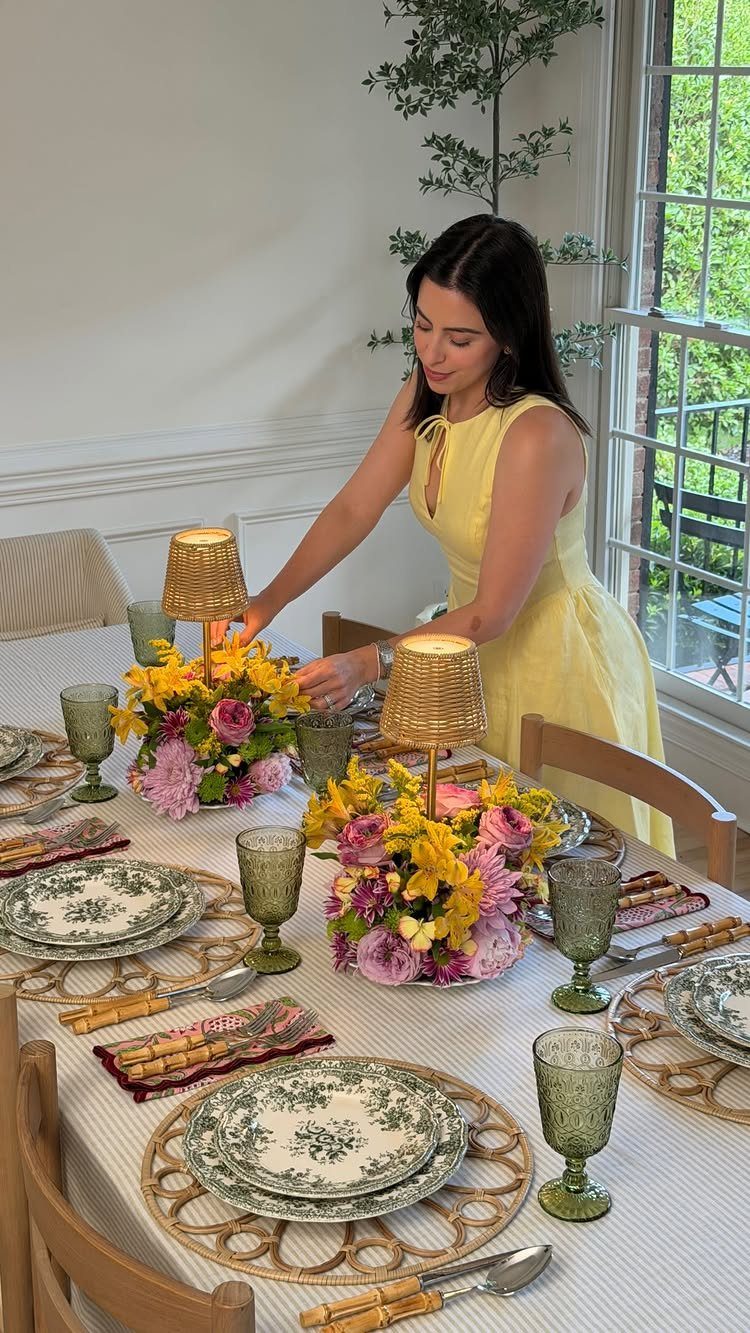
2 small cordless lamps with woven shades give a table a warm glow without a single flame. That makes them my pick for weeknights, and for any table with kids or a busy elbow nearby.
Set them a little apart with the floral pieces between, so the light spreads along the whole length of the table. Keep the lamps short enough for guests to see over them.
Charge them before dinner, since a dead lamp is just a basket.
8. Table Runner
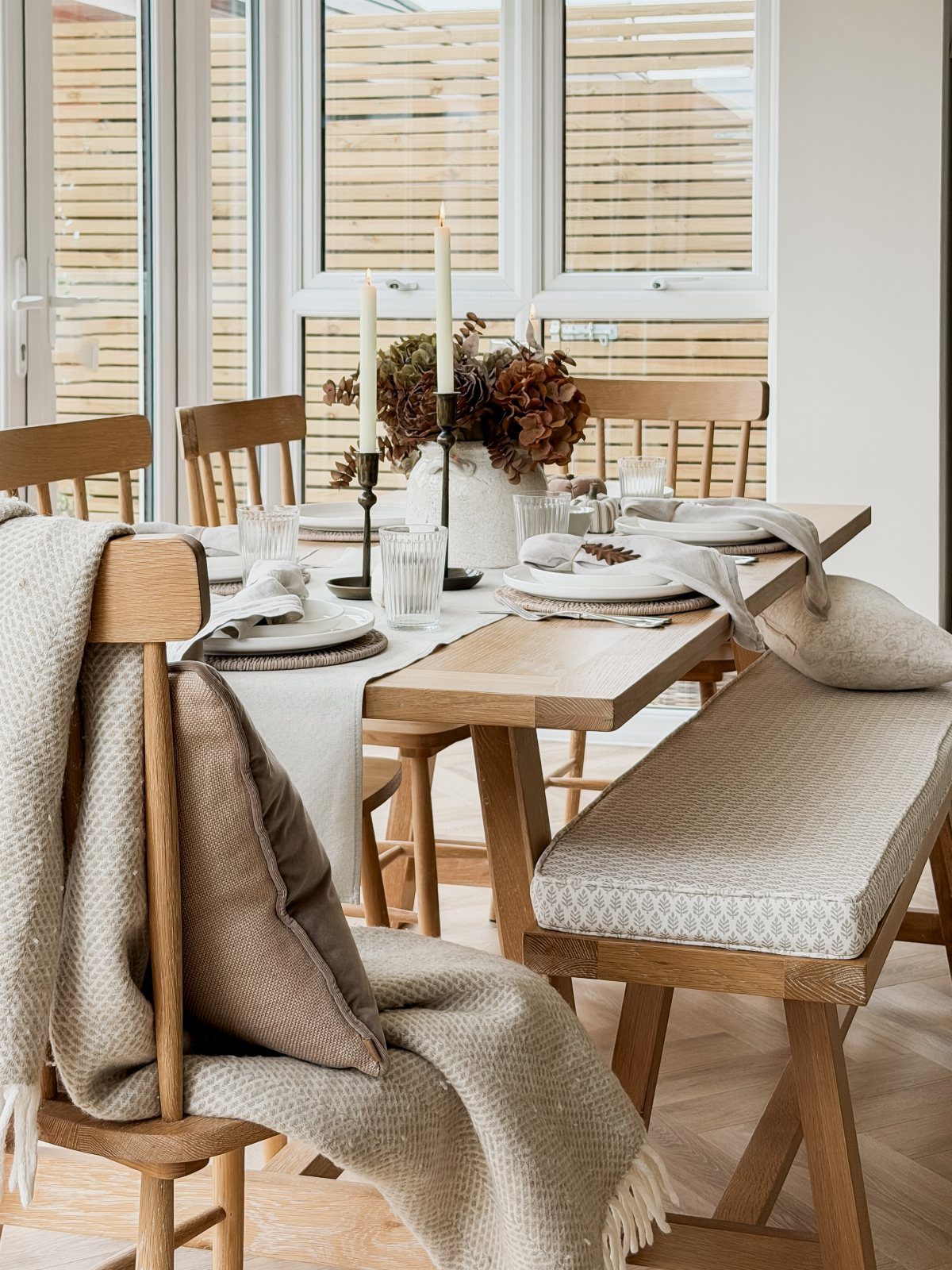
A beige fabric runner is the quickest way to give a wooden table some texture, and it works as a base for whatever else you set down.
Candles and a bit of foliage sit well on it because the neutral color lets them stand out.
Let the runner hang over the table ends a few inches. Keep it narrow enough that plates and glasses still sit on the wood.
Linen-type fabric washes easily, which suits everyday use.
9. Sculptural Elements
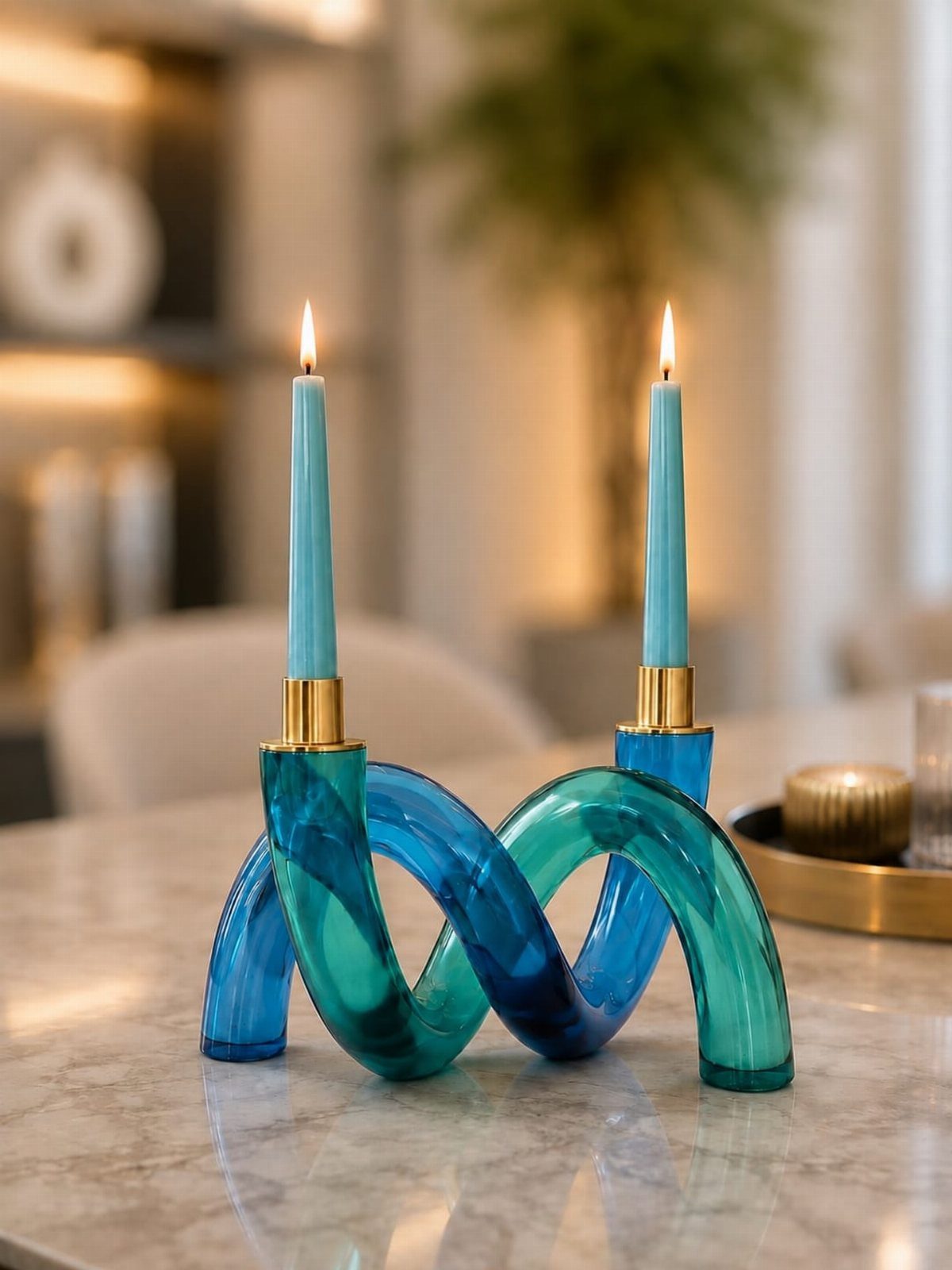
A twisted blue glass candle holder is a centerpiece all on its own, so I would add nothing else to it. 2 light-blue tapers fill it, and the glass catches the flame.
Put it on a plain surface like the marble here, and keep the rest of the table quiet so the holder stays the focal point. Choose tapers that match the glass in color.
One good piece costs more than a handful of small ones, but you only need the one.
10. Seasonal Elements
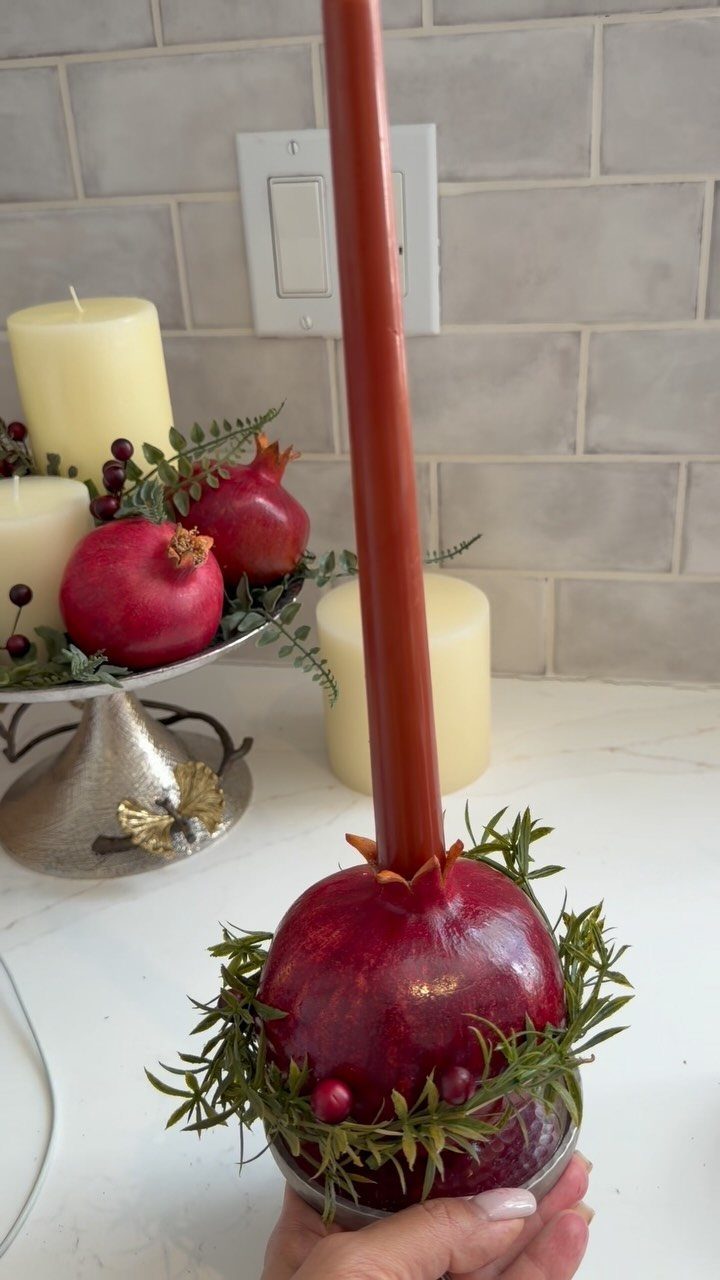
A pomegranate used as a candle holder is a seasonal idea I like because the fruit does the decorating.
A red taper pushed into the top of the arrangement, with a little greenery tucked around it, looks festive without any extra purchases.
Group a few on a pedestal or platter, and vary the candle heights. Keep tapers clear of the greenery so nothing leans into the flame.
Swap the fruit and greens as the seasons change.
11. Minimalist Everyday Centerpiece
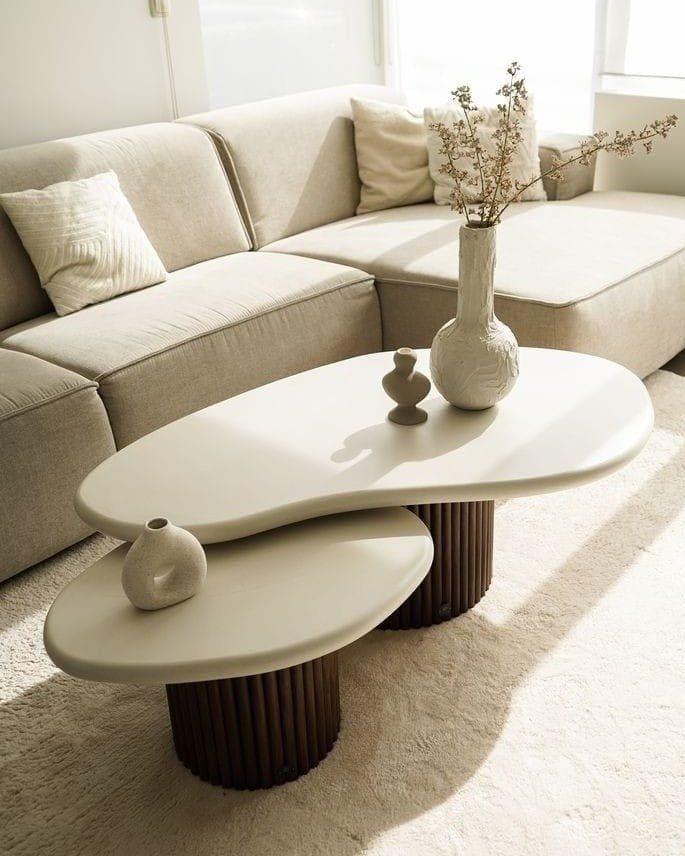
One tall vase of dried branches and two small sculptures is all a minimal centerpiece needs. Dried stems never wilt, so this holds up through a whole week of ordinary dinners.
Choose a textured vase in a single neutral shade, and set the sculptures at different heights beside it. Leave open space around the group, because that gap is what makes it look minimal.
It is a low-effort setup, and I would choose it over fresh flowers for everyday use.
12. Vintage Vases
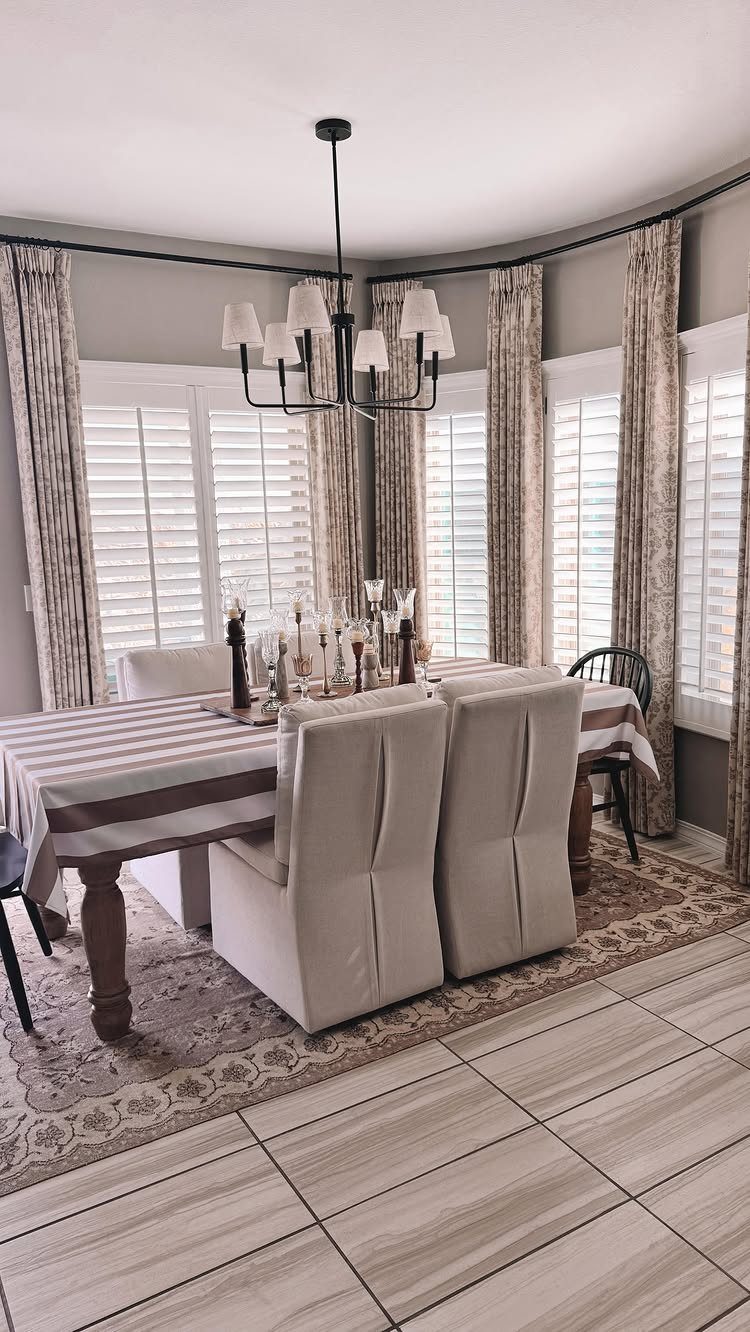
Mismatched vintage vases, grouped down the middle of a striped runner, look collected instead of bought. A few crystal-like pieces catch the light, and candles tucked in among them add more.
The maker of this table found 12 vases over two or three stops at the same shop, so repeat visits pay off. Mix shapes, but keep the colors close so the group holds together.
Fill only a few with stems; empty ones still look good.
13. Tall and Short Items
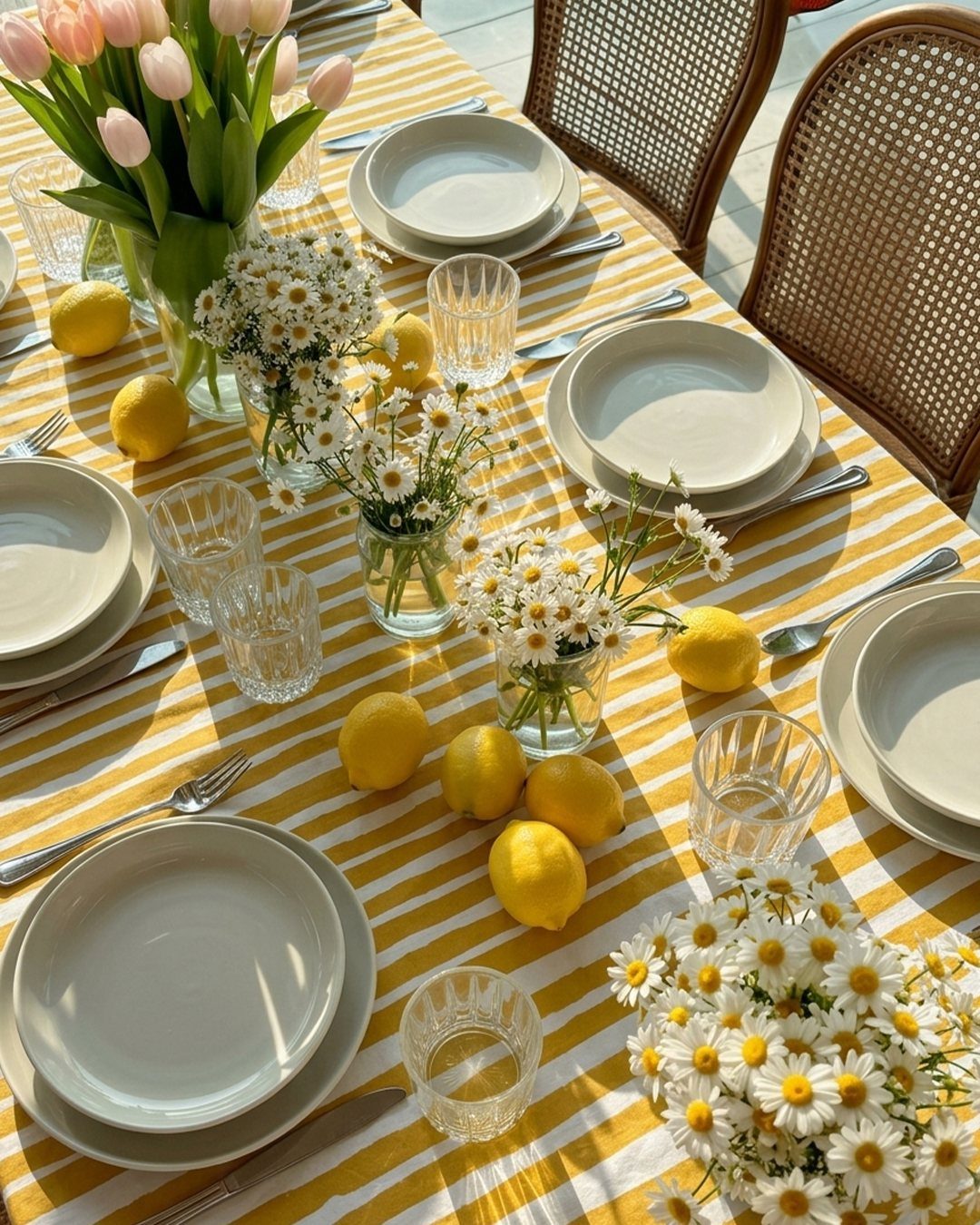
Mix vases of different heights, fill each with a single flower type, and scatter fruit or small objects between them. The lemons fill the gaps, so you need fewer stems.
Set the tallest vase toward the middle and step down toward the ends. Keep every stem below eye level so guests can talk across the table.
Lemons cost little and hold for days, which makes them a better filler than extra flowers.
14. Tiered Stand Centerpiece
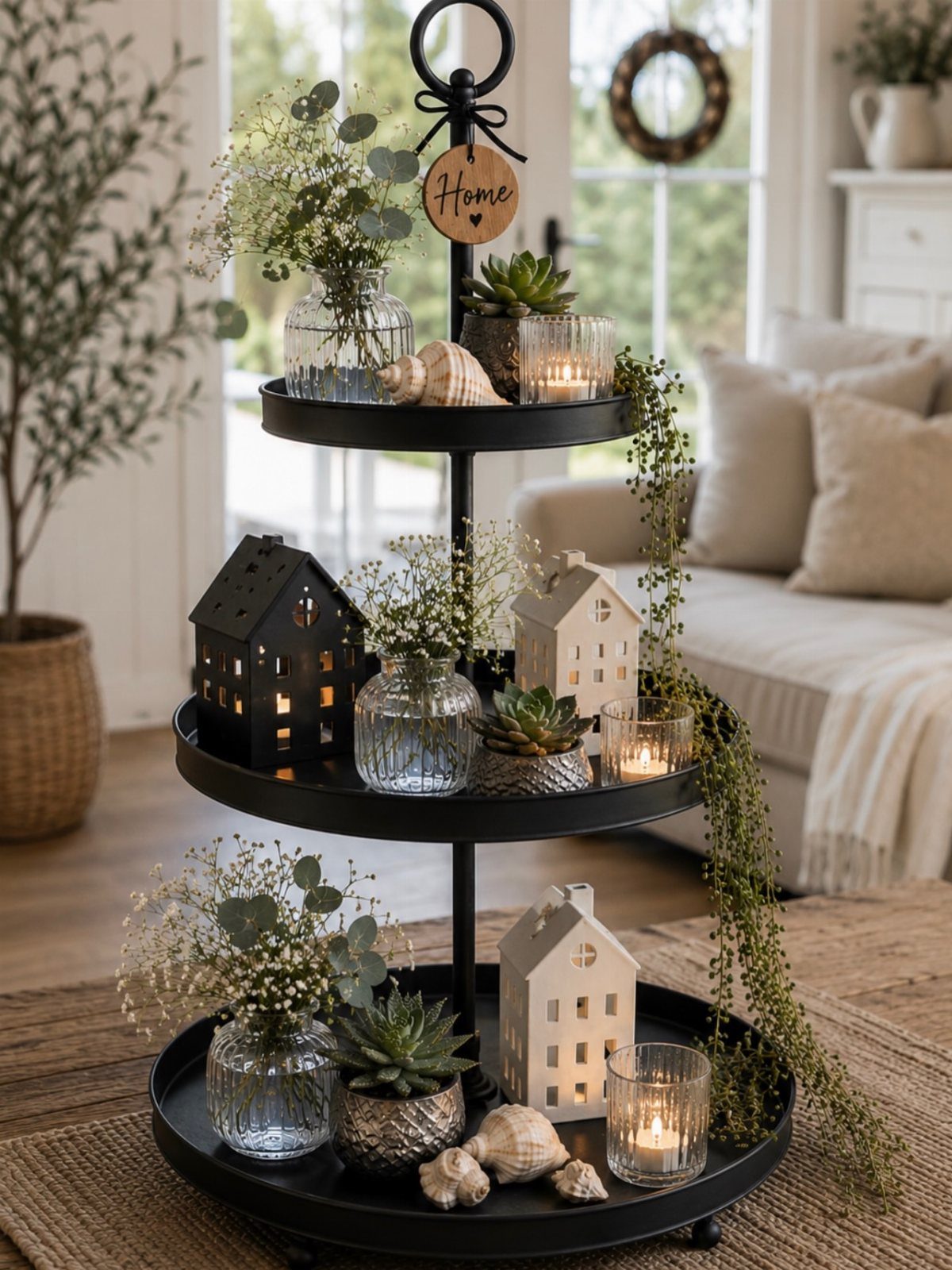
A three-tiered metal stand turns a small corner into a centerpiece, because the height is built in and you only choose what rides on each level. Mini succulents, bud vases, candles and a few small trinkets fit the tiers well.
Put the heaviest items on the bottom tier and the lightest on top. Use bud vases for single stems, so nothing crowds the shelves.
On a dining table, I would keep it to one stand and leave the rest of the surface clear.
15. Fresh Fruit and Foliage Runner
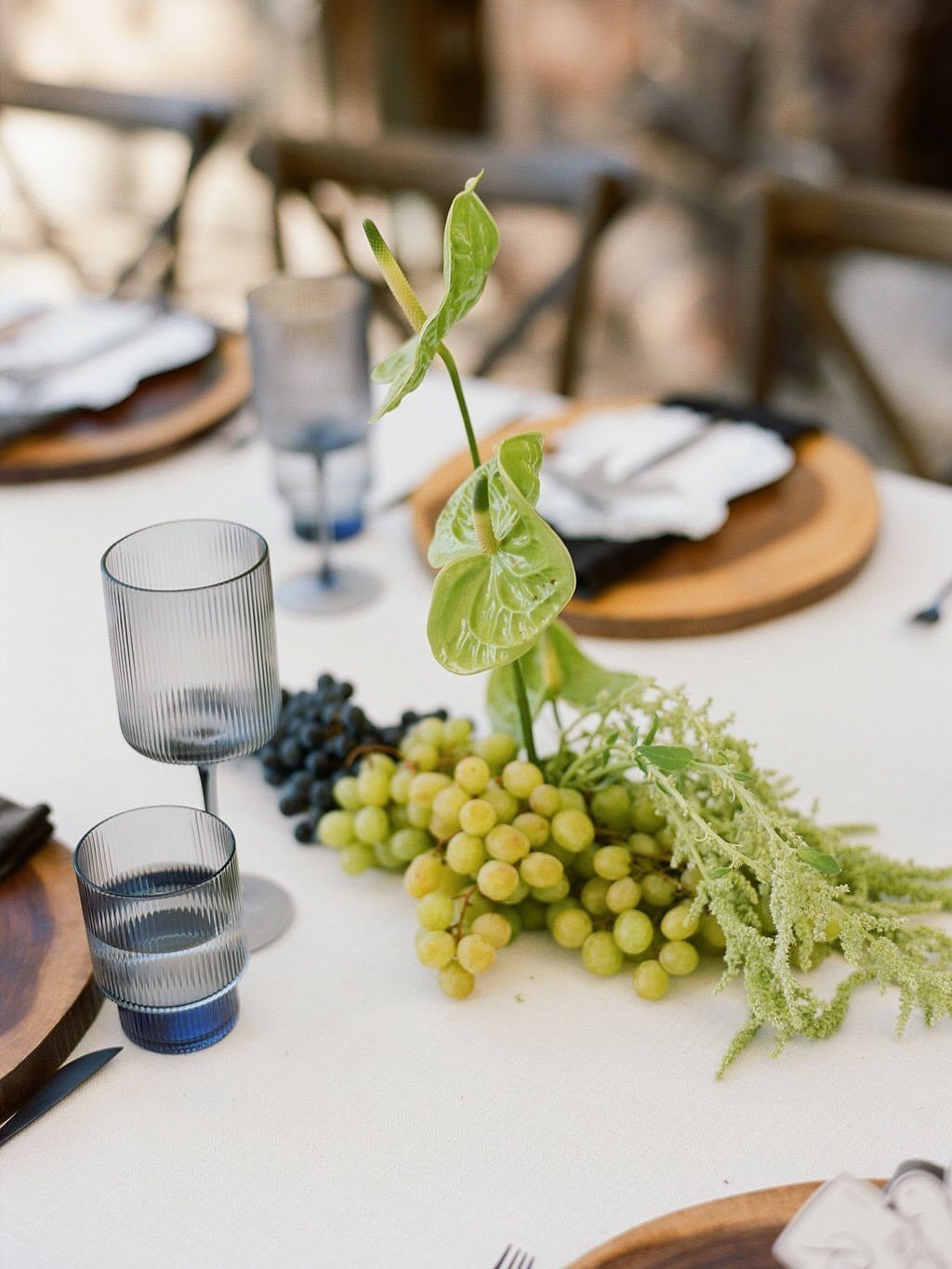
Loose clusters of green and purple grapes laid down the center of the table, with leafy greenery tucked between them, make a runner you can build in minutes.
One large leaf, like the anthurium here, gives the arrangement a bold anchor.
Let the clusters overlap the foliage and leave small gaps so the white table shows through. Keep the line low and narrow enough to leave room for plates.
Grapes can be eaten straight off the table, which is a point in their favor over a purely decorative runner.
Choosing the Right Size
Size decides whether a centerpiece looks right, and a piece that is too small feels lost while one that is too large feels heavy and gets in the way.
A big table can carry one oversized piece, like a wide bowl, a tall urn or a deep basket, and it won’t need much else.
Pick one main container first, then add around it. That keeps the table simple and makes it look pulled together right away.
Look at the room around the table too. A clean-lined room looks right with a spare arrangement, and a traditional room can take more ornament.
Skip anything ultra-tall. Low or clear elements keep the view open for everyone at the table.
Maintaining Conversation
Aim for a centerpiece that can stay on the table through the whole meal.
Plenty of people set out an elaborate arrangement and then have to carry it away before dinner because nobody can talk over it, or because the food and drinks have no room.
Build function in. Candles at dinner should be the star, so let them lead and keep everything else quieter.
If you usually serve fruit afterward, put that fruit in the display. Flowers a guest hands you can stay on the table if you want them close, but a tall bouquet may need to sit somewhere lower during the meal.
Setting everything on a tray helps, since the whole thing lifts off or swaps out in one move. Beauty counts as a function too, so purely decorative pieces still earn their spot.
There’s no need to save a centerpiece for a special occasion like a dinner party or birthday celebration, either. You can easily dress up your dining table with floral arrangements, trays, or vessels any day of the week.
Mixing Textures and Colors
Choose objects that can live on the table permanently, then change only the branches or flowers. Start with hurricane lanterns and set a vase, a plain basket or an odd little pitcher beside them.
Color can carry the whole look. Translucent amber glass hurricanes, for example, pick up other orange touches in a room.
3 containers in a group balance mixed materials better than any other setup I know.
The three can be identical or slightly different, provided one thing ties them together: a shared color, similar shapes, or the same blooms or greenery in each. 3 simple vases holding the same flowers is a safe start.
This also suits a long table, since the trio fills the space and leads the eye from one end to the other.
Frequently Asked Questions
What are some simple centerpieces I can put on my everyday table?
Dried stems in a few vases, a white bowl of cut fruit, or a single pillar candle ringed with pinecones, cinnamon sticks and dried orange slices all work.
Dried stems last for weeks without watering, and a candle ring costs almost nothing when the pantry and the backyard supply the pieces.
Fruit is the quickest to assemble, but someone has to eat it, so I’d save it for a single dinner and not a table that stays set all week.
How do I decorate a table for every day?
Pick pieces that can stay put, such as a woven tray, a fabric runner, dried branches or a planter of succulents.
Set a few items on one tray so the group reads as a single object and lifts off in one move. Linen-type runners wash easily, and a table that stays mostly clear leaves room for plates and conversation.
What can I put in the middle of my dining table?
A wide bowl, a group of 3 vases, candles, a tray of mixed pieces or a planter of succulents and moss all fit.
Keep everything low enough that guests can see over it, and skip anything ultra-tall. One main container with a few items added around it looks pulled together right away.
How big should a table centerpiece be?
Match it to the table: a small piece looks lost on a big table, and a large one feels heavy and crowds the food. Keep it low or clear enough that everyone can talk across it.





