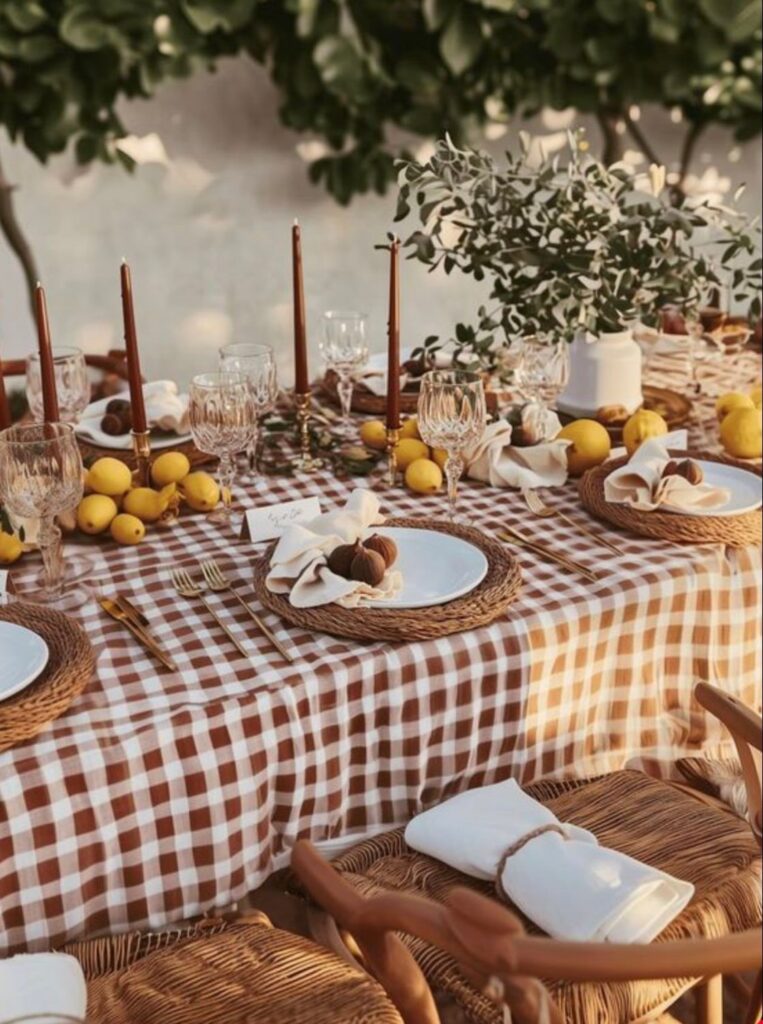
The ideas here run from a woven placemat and a few sprigs of lavender to a red tablecloth with gold flatware and crystal, and what decides your pick is the occasion and the hour.
Most of the 12 settings also come with a few room-setting tips, since lighting and scent shape a table before anyone sits.
1. Woven Placemats Table Setting
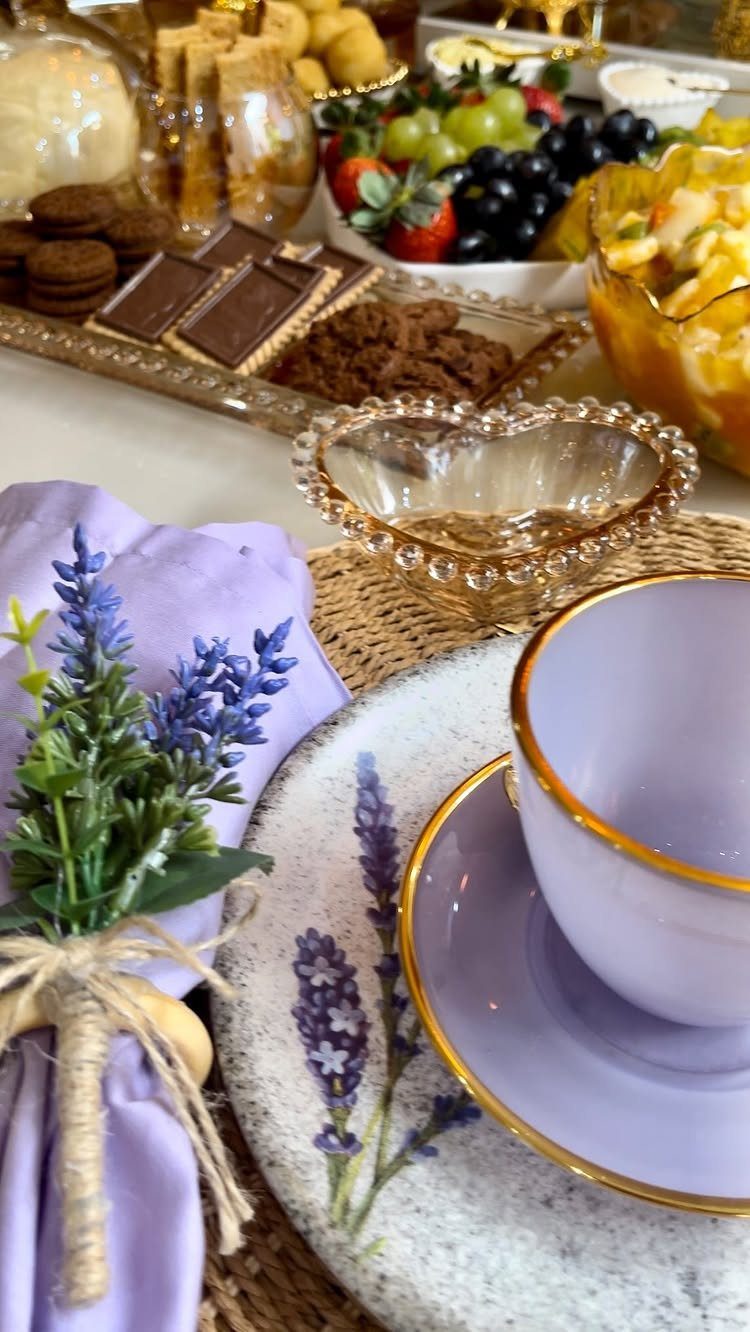
Woven placemats give a table texture before a single dish lands on it. Against the purple teacup and napkin, the natural fiber keeps the color from feeling sugary.
Pick a placemat in a neutral tan so the napkin and teacup stay the focus. Sprigs of lavender laid beside the saucer repeat the purple without adding another object to clear later.
I’d choose this for a tea or brunch table, where the setting is small and each piece gets noticed.
2. Pastel Table Setting
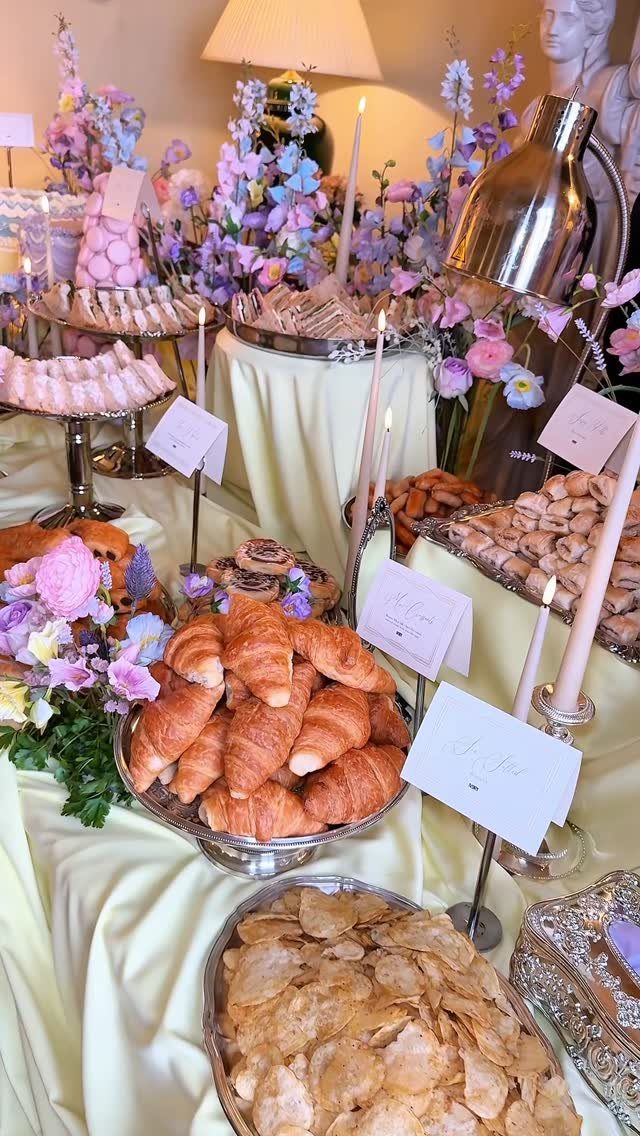
Soft yellow linens set the tone for a pastel table, and flowers in purple and blue carry the color the rest of the way. Silver platters keep the colors from drifting into nursery territory.
Stick to one linen shade and let the flowers carry the second and third colors. Small white labels in front of each dish cost almost nothing and make a buffet easier for guests to follow.
Pastels fade in dim light, so I’d add candles.
3. Rustic Tablecloth and Napkins Table Setting
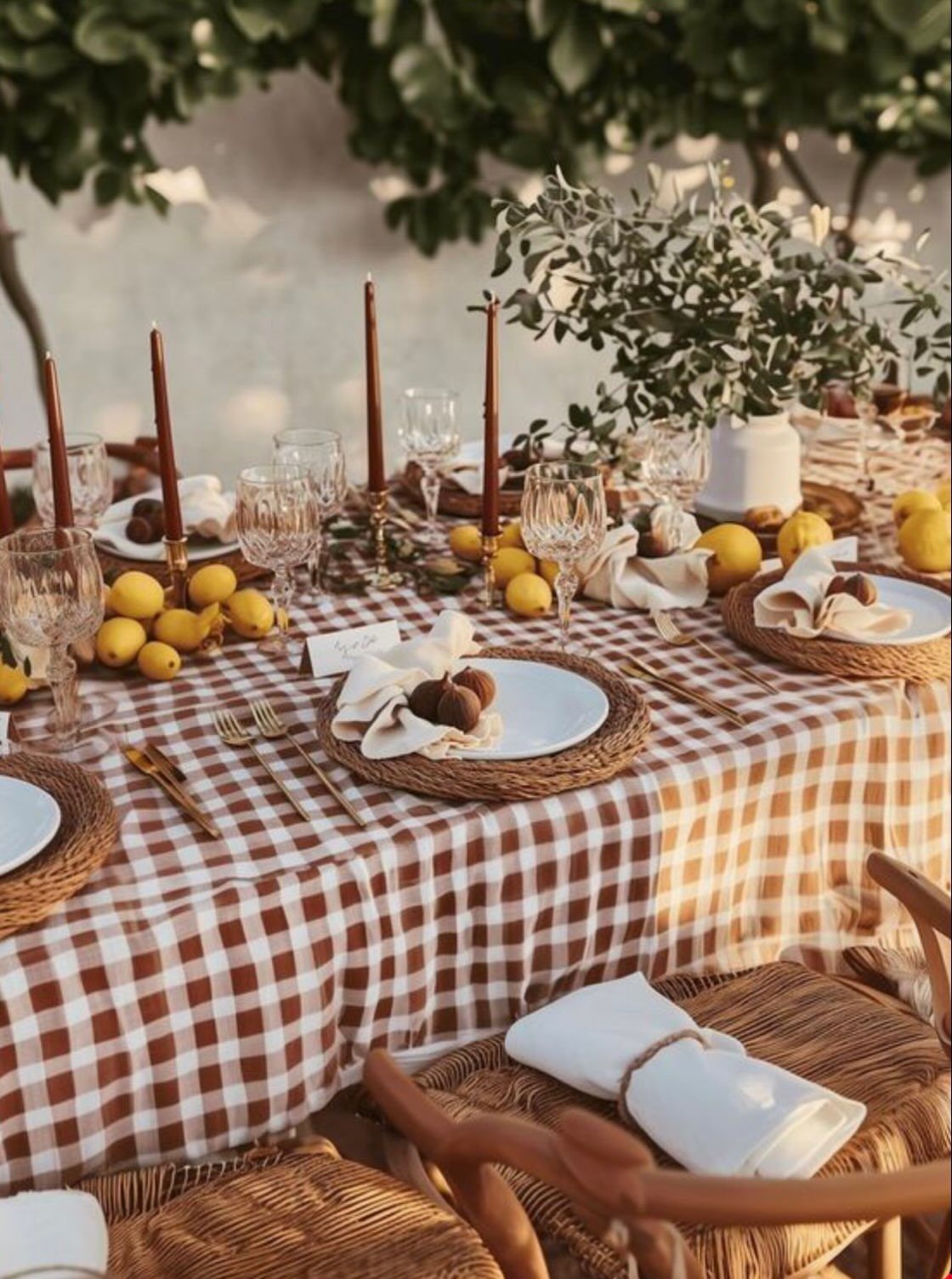
Brown gingham is a quiet choice, and it makes white plates look crisp without any extra effort. Woven chargers under the plates add a second texture, and a few lemons scattered down the center give a fresh, inexpensive accent.
Keep the napkins in a deeper tone than the cloth so they stand apart. Candles finish the setup for an evening outdoors.
I like it best with plain white dishes, since the pattern already does plenty.
4. Splash of Colour Table Setting
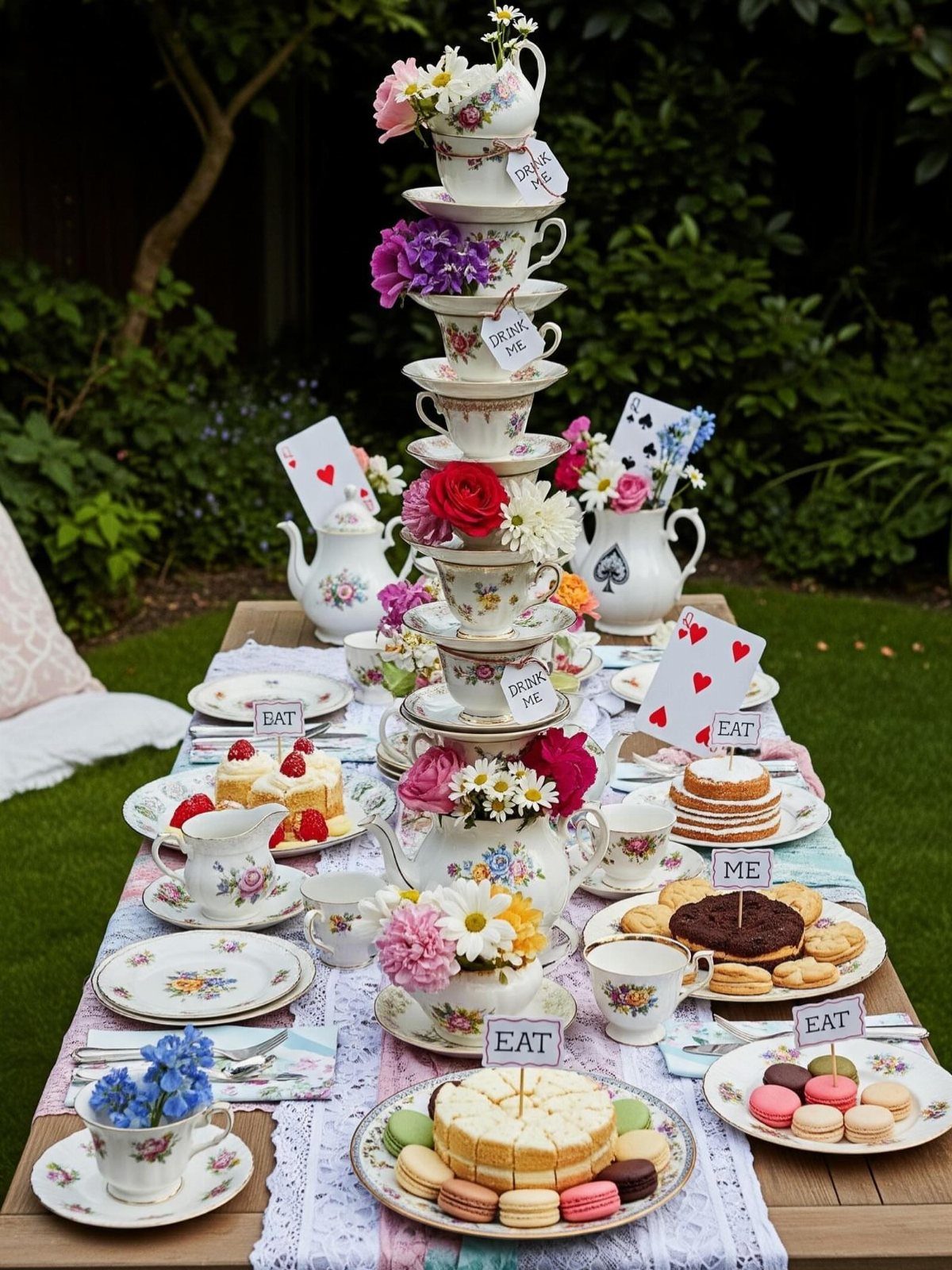
A table can handle a lot of color if the pieces share a mood.
Choose one theme first, then buy mismatched cups secondhand so the stack feels deliberate. Put the cakes and macarons at different heights so nothing sits flat.
Without a theme, bright color just reads as clutter, so I’d settle that before shopping.
5. A Simple Beige Table Setting
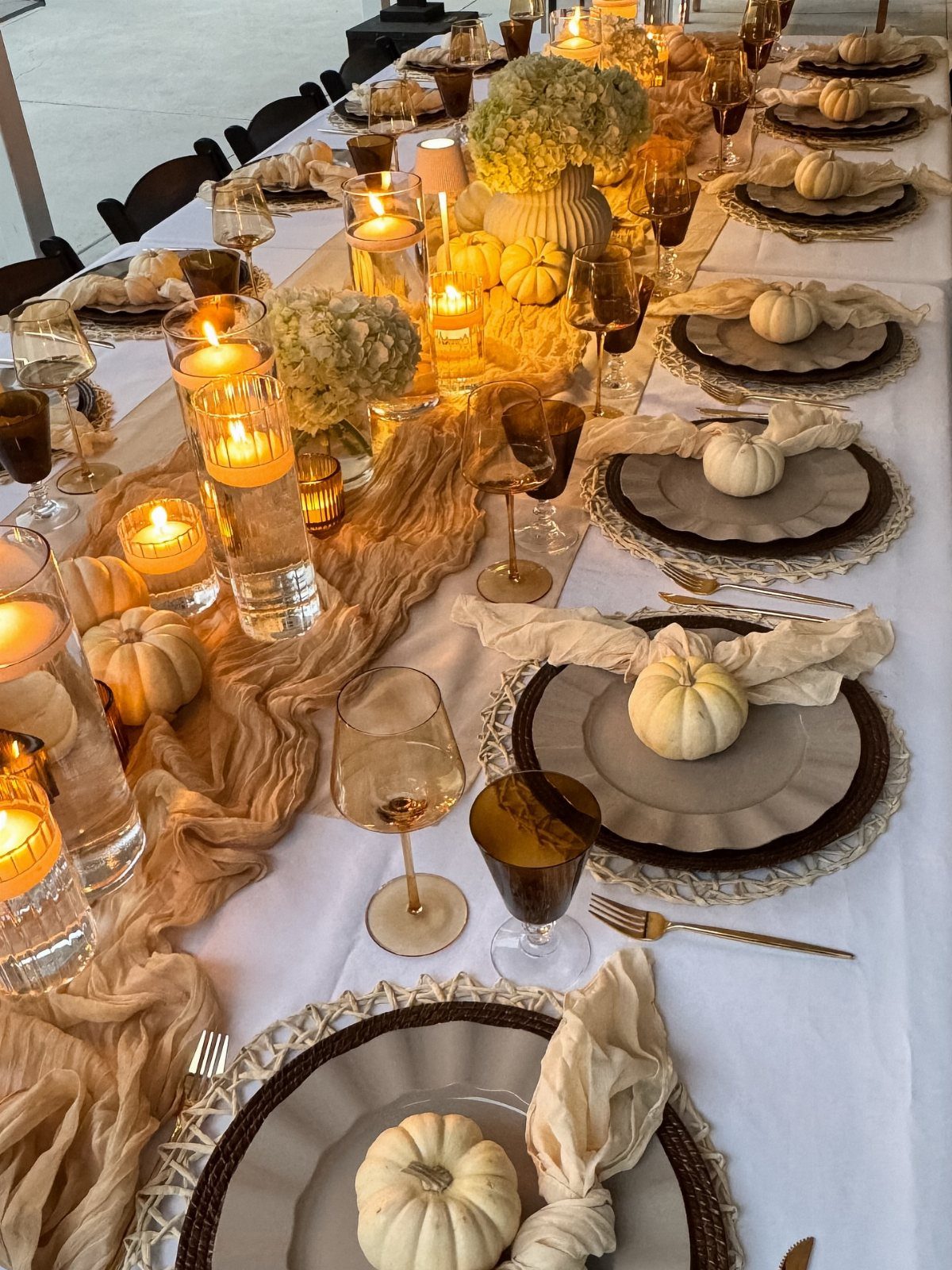
Beige works because it lets texture do the talking. A white cloth with a beige runner, woven placemats and white pumpkins keeps the palette to 2 quiet shades.
Run the runner down the center and set the pumpkins and candles along it, leaving room for plates on either side. Floating candles in clear glass add light without crowding the glassware.
Low arrangements matter here. Guests should see across the table, and I’d keep every piece under eye level.
6. Informal Table Setting
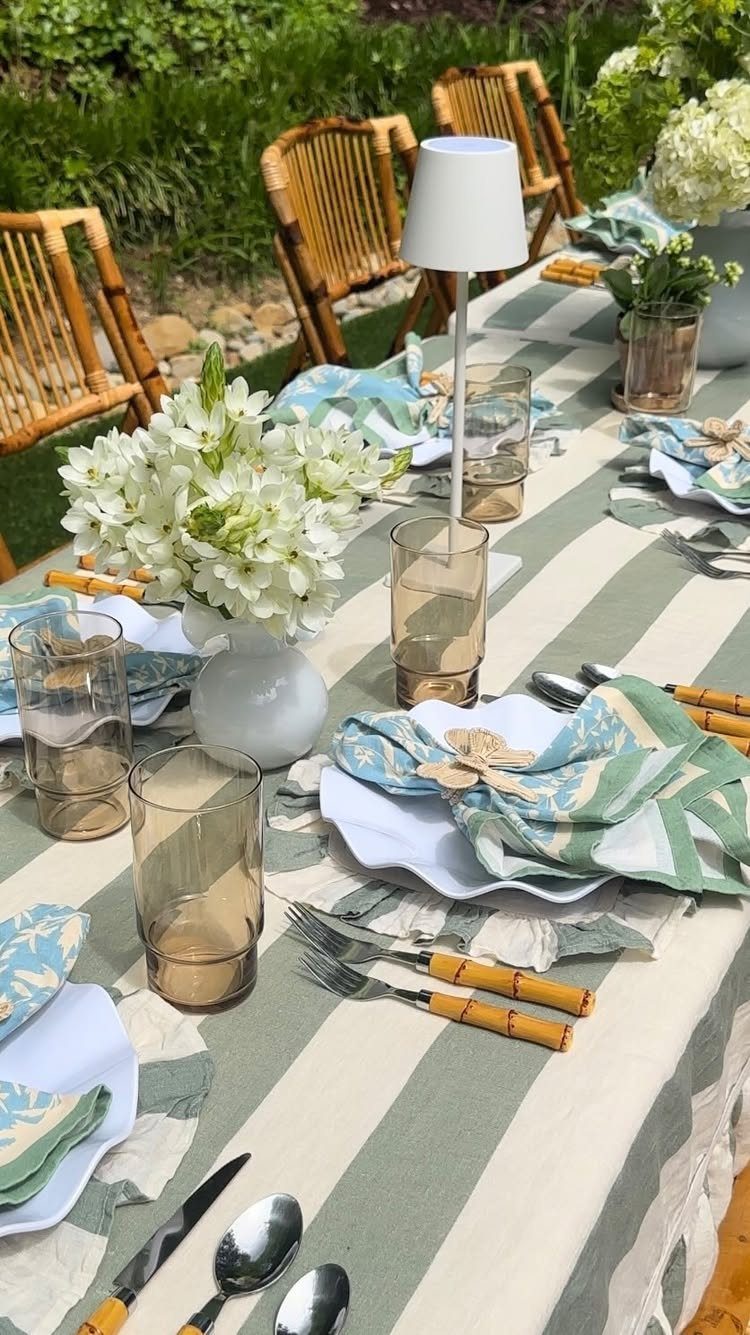
Casual does not have to mean paper plates. A striped tablecloth, bamboo-handled cutlery and brown glassware already feel relaxed, and napkin rings in a blue-green pattern make the table look planned.
Spend on the details guests touch: the napkins and the flatware.
I’d choose this for backyard lunches, because the stripes hide small spills and nobody worries about fuss.
7. Flowers and Candles Centerpieces
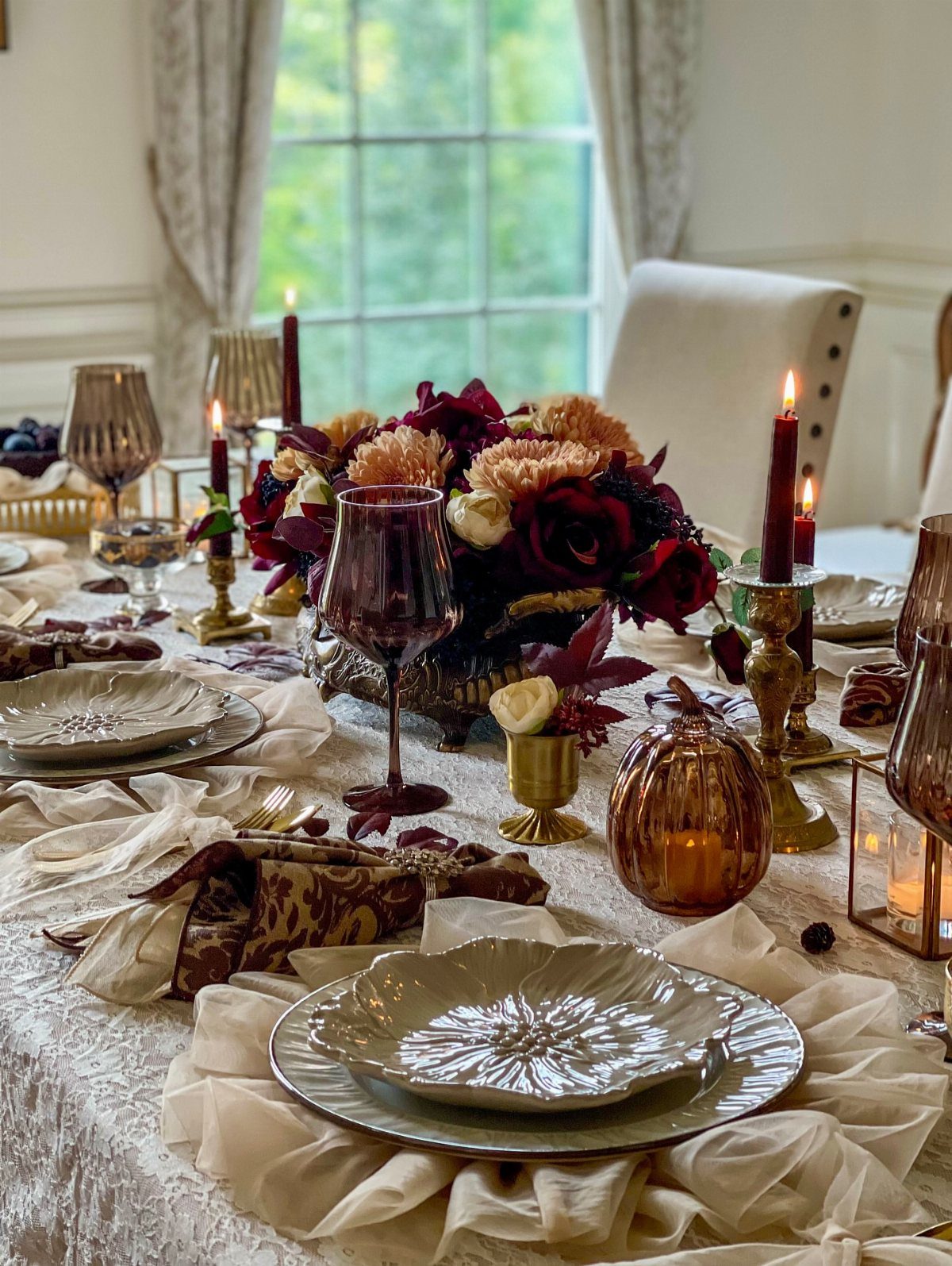
Red taper candles against a white lace cloth give the table its drama, and burgundy flowers in the center pick up the same red. Amber glassware warms the whole setup.
Keep the arrangement low enough to see over, and set the candles in holders so the wax stays off the lace. Light them just before guests sit down.
I’d choose this for a winter dinner, when the window goes dark early and the candles do the work.
8. Cohesive Color Palette Table Setting
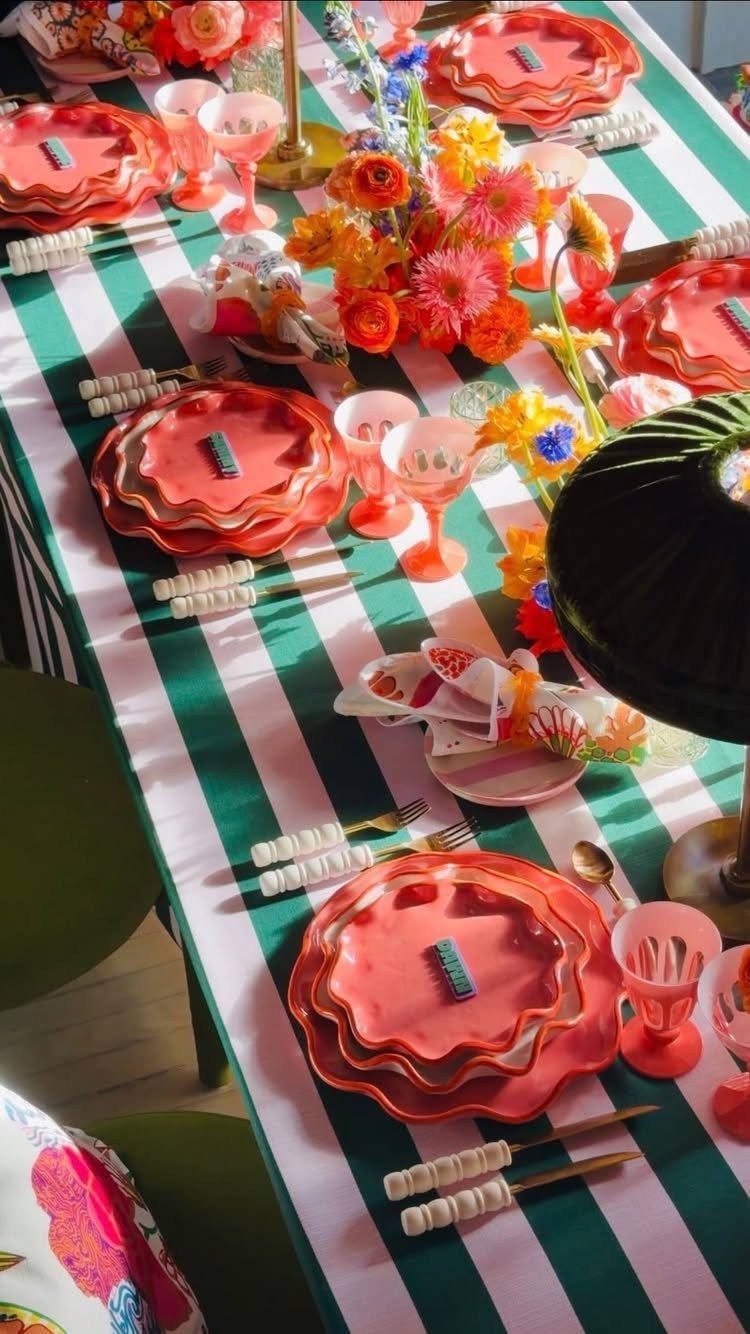
A palette holds together when each color repeats at least once.
Choose the plates first, since they are the hardest piece to swap. Then match the flowers and glasses to them and let the cloth stay the calm element.
I’d limit the table to three or four colors, because a fifth tends to break the effect.
9. Festive Easter Table Setting
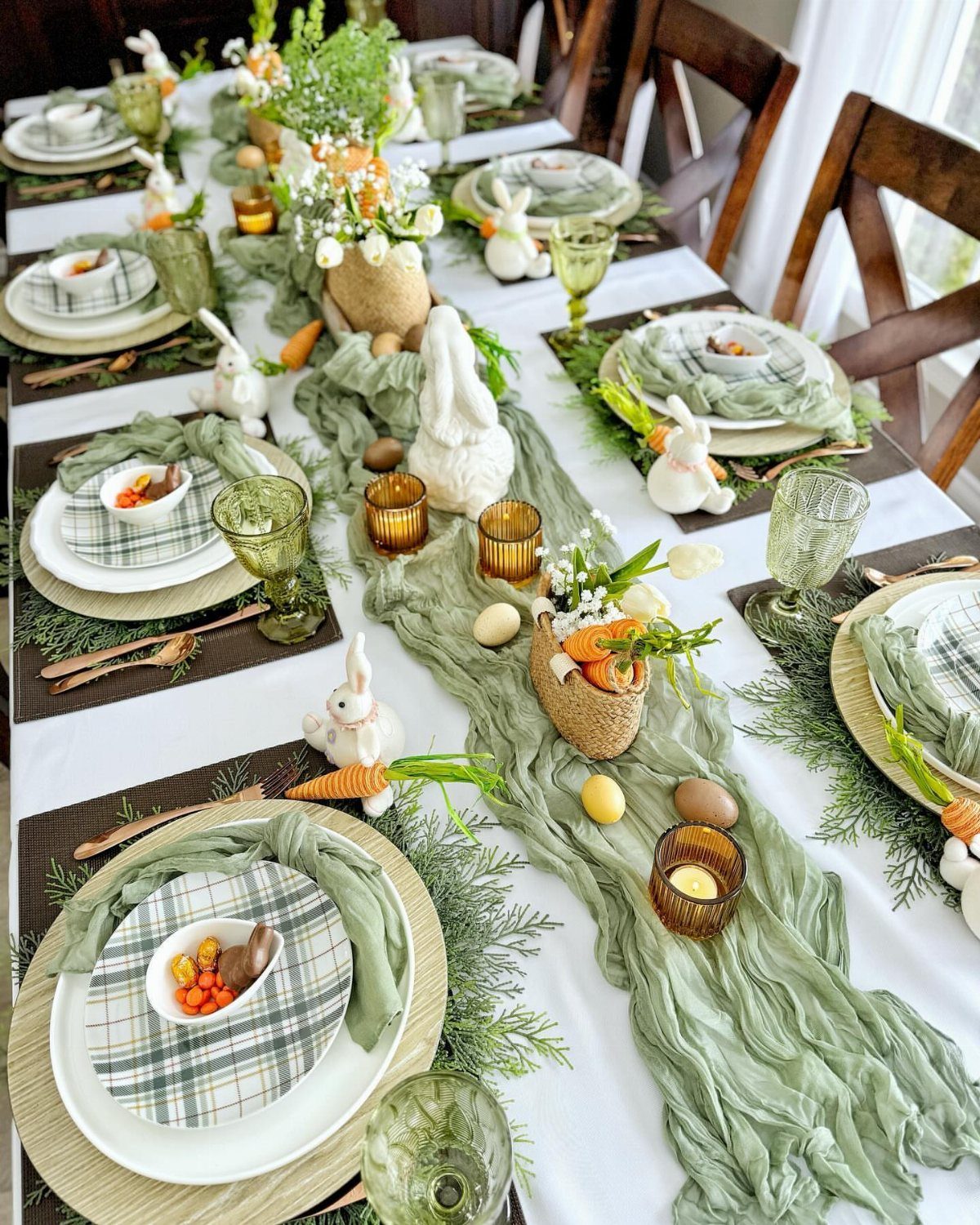
Plaid plates are an easy way to make an Easter table feel like spring without pastels. Sage green runners tie them to the white cloth, and ceramic bunnies and carrots work as place decor and centerpiece in one.
Space the bunnies along the runners rather than clustering them, and add the floral arrangements between them so the table reads evenly end to end.
Small pieces like the carrots can go at each setting. I’d keep the cloth plain white so the plaid is the one pattern.
10. Lace Tablecloth Setting
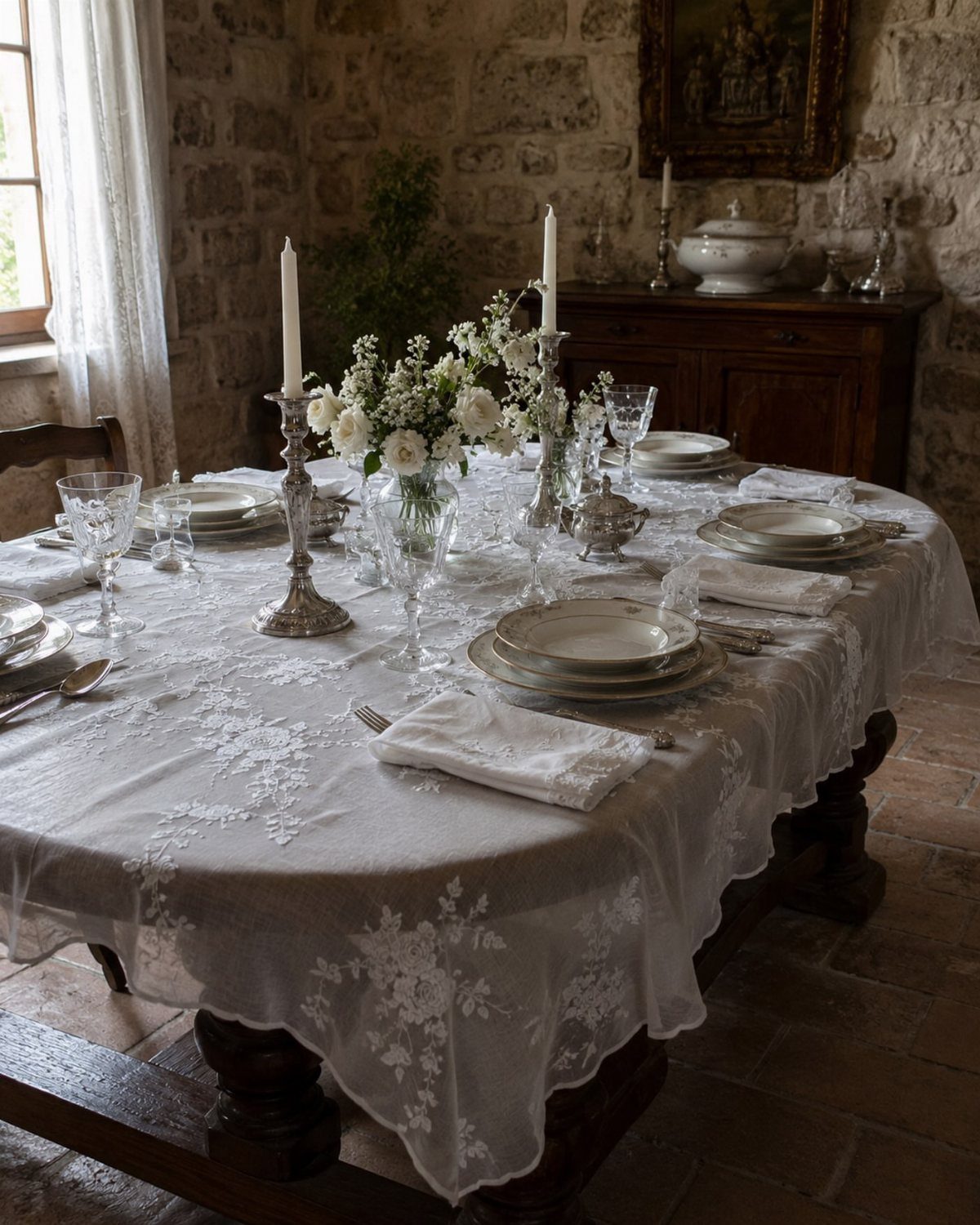
A white lace tablecloth is the quickest way I know to give a table a vintage feel. The pattern is detailed enough that the rest can stay simple: fine china, clear glassware, taper candles and white flowers.
Keep the flowers and candles in one color family so the lace stays the focus. A wooden table shows through the openwork, which adds depth.
Lace needs gentle handling, so I’d skip dripping candles and dark sauces near it, or set a hidden liner underneath.
11. Elaborately Folded Napkin Setting
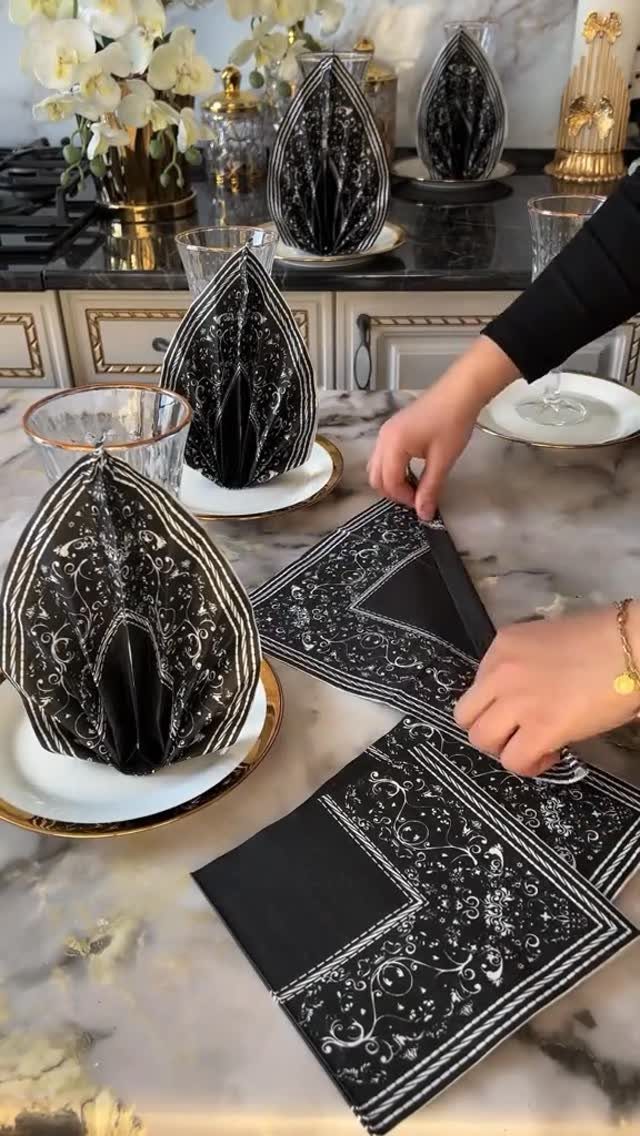
Tall, pointed napkin folds turn a plain white plate into the centerpiece of each place. Black patterned napkins stand out sharply against white plates with gold rims, so the shapes read from across the room.
Choose a napkin with some body, because a stiff fold holds its peak while a limp one slumps. Practice the fold on a spare napkin first, then set them all just before guests arrive.
I’d keep the rest of the plate minimal, since the fold already carries it.
12. Vibrant Red Tablecloth Setting
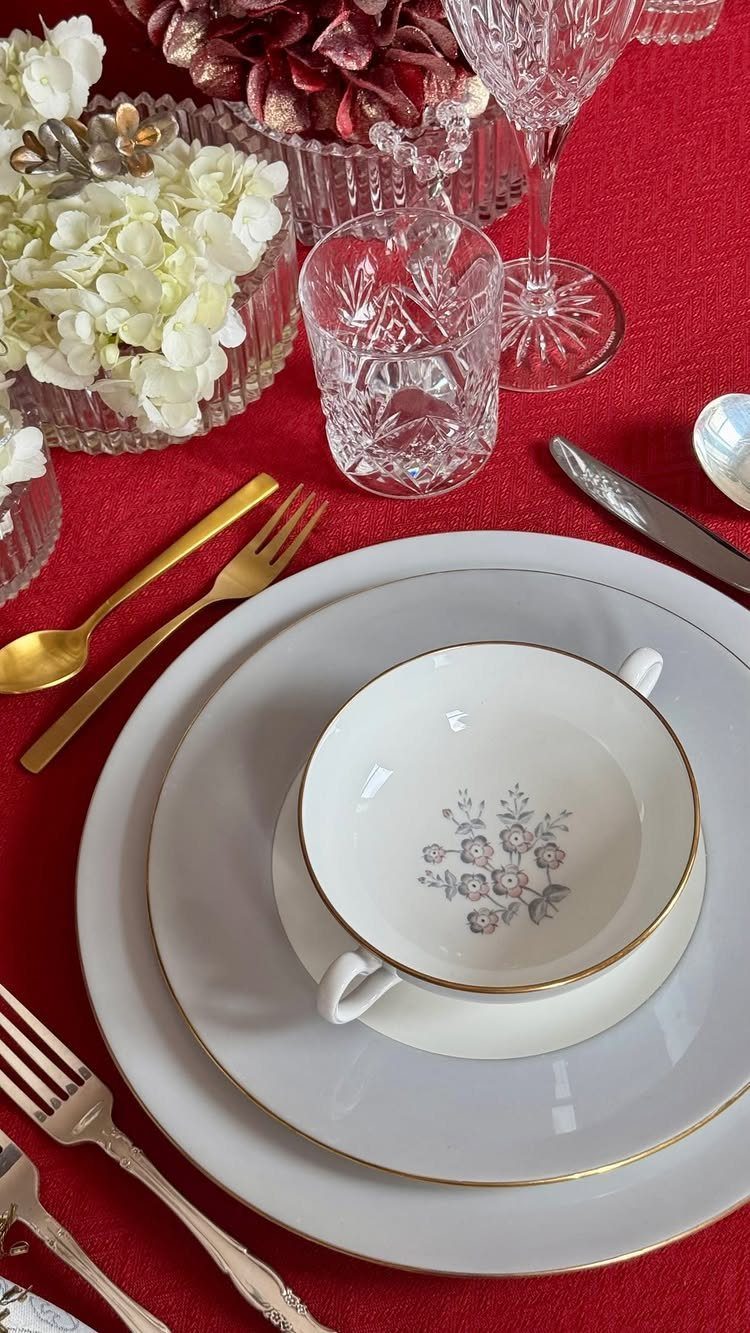
A red tablecloth makes a bold base, and gold-rimmed white plates keep it formal instead of loud. Gold flatware and crystal glasses add light, while a floral bowl breaks up the solid color.
Let the plates and glassware stay simple. With red this strong, extra patterns compete.
I’d pick a floral bowl in softer colors than the cloth, so the flowers stand out instead of blending in. Iron the cloth first, because creases show clearly on a solid color.
Creating a Welcoming Atmosphere
Lighting, sound and scent set a mood before anyone sits down, and they cost less than most table pieces. Turn the overheads down and light candles or string lights, which make even a grocery-store tablecloth read as a choice.
Set a playlist at the volume where conversation still happens easily. Light a candle before the first guest arrives, or let something good bake in the oven so the house smells like dinner.
I’d treat these as the first things to check, ahead of any extra decoration. A table that guests want to linger at depends on the room around it as much as on the place settings.
Importance of Symmetry
A formal place setting stacks plates, stemware and flatware in quantity, and symmetry is what keeps it from turning into clutter. Balance each side of the table and guests relax into the meal.
A runner gives you a center line to work from.
Keep the extra decor understated. Candles or flowers work well, as long as they are not too tall or too fragrant, since guests need to talk across the table without leaning around them.
With so many place pieces already competing, I’d let the centerpiece stay quiet.
Using Natural Elements
Natural materials add warmth that a store-bought accent can’t copy. Cut greenery or a handful of flowers from the yard add color without requiring any real skill to arrange.
Texture is the easiest way in. Linen runners and cloth napkins relax even a formal table, and a wooden serving board or tray gives ceramic dishes a contrasting surface.
Shells, stones or seasonal botanicals tucked between dishes feel personal.
Berries work too: rowan berries paired with lit candles can make a table feel homey. I’d pick one or two of these rather than all of them, so the table stays calm.
A long table setting gives you the chance to create a ‘storyline’ with your decor. Instead of one summer table centerpiece idea, build movement down the table with less structure and low arrangements, it looks more natural – it’s far more guest-friendly, too.
Frequently Asked Questions
How do you set an elegant table?
Start with a few quiet materials and repeat them: a white lace or plain cloth, fine china, clear glassware, and taper candles with flowers in one color family.
Keep centerpieces low enough to see over, and balance both sides of the table so it feels calm. Light candles just before guests sit down, since lighting and scent shape the mood before any decor does.
How do I transition a table setting from basic to informal?
Swap paper napkins for cloth ones and tuck them under the fork. If the menu has a salad course, a salad fork can sit outside the dinner fork, but skip it otherwise.
What are the essential rules for setting a formal dinner table?
A formal table starts with a tablecloth or runner, a charger under every dinner plate, and a cloth napkin resting on top of each one.
A bread plate with its butter knife sits above the forks, while the dessert spoon and fork lie horizontally above the plate.
Keep the layout symmetrical and the centerpiece low and unscented, so everyone can see and talk to the guests opposite.





