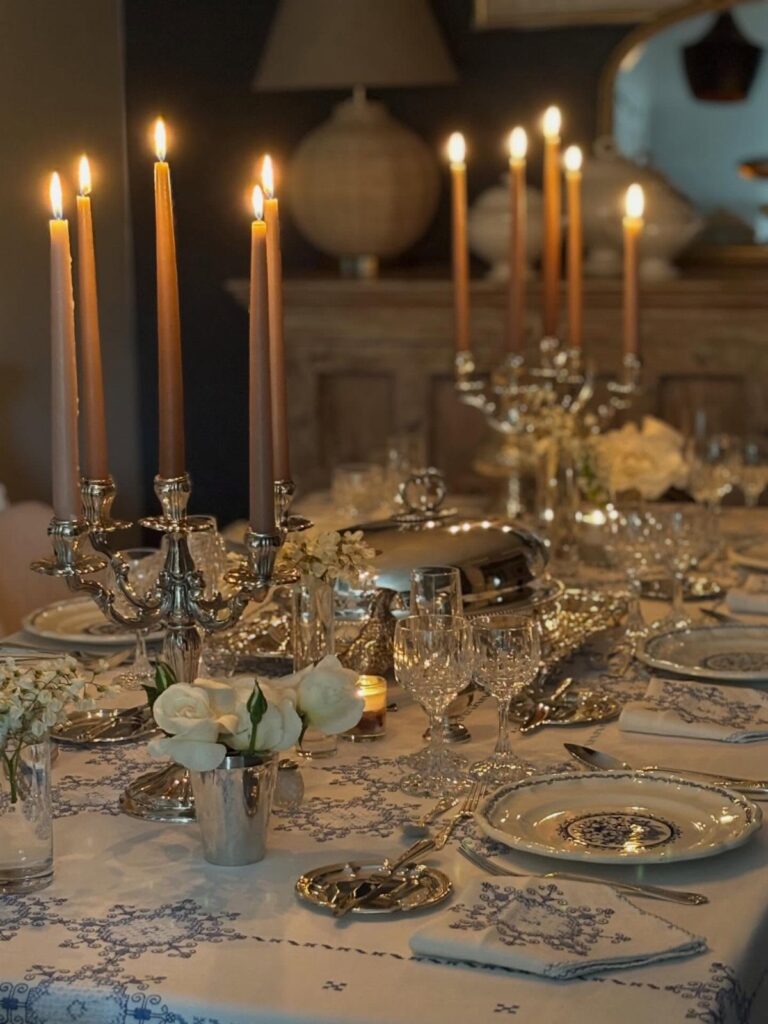
Centerpieces here run from a row of single-stem bud vases to a large bowl piled with seasonal fruit, and what separates them is how much the table has to do besides look good.
A table you eat at every day needs a piece that lifts off with one hand and stays low enough to see the person across from you, like the tray that slides away in one move.
1. Sculptural Vase with Flowers
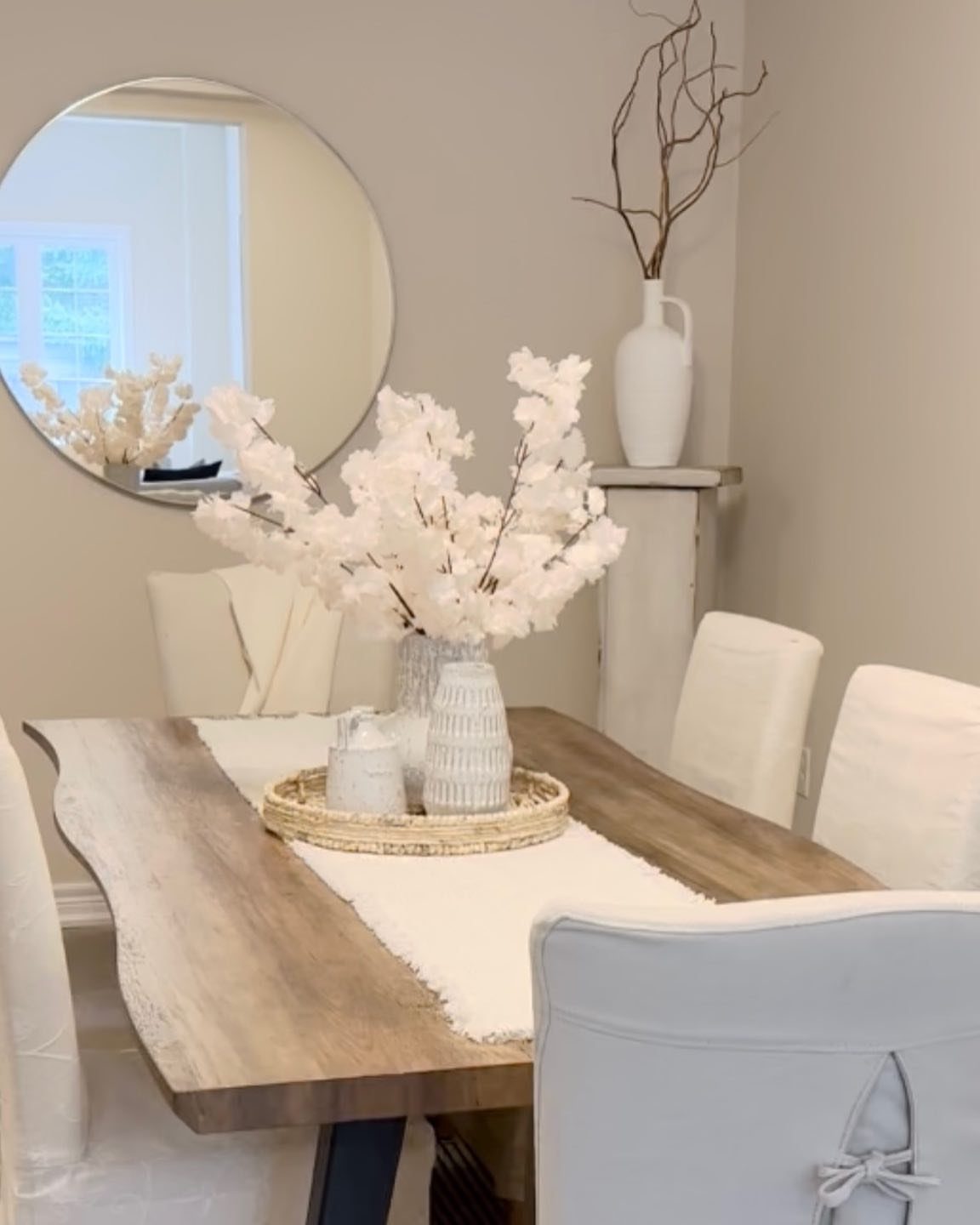
A vase with some shape to it does most of the work here, so the flowers can stay simple.
White blooms in textured white vases keep the whole table calm, and a woven tray under them gathers the pieces into one centerpiece instead of scattered objects.
I like the tray as much as the vases. It slides off in one move when dinner needs the space, which suits a table you eat at every day.
Greenery alone works too if flowers aren’t in the budget.
2. Set Out a Large Bowl
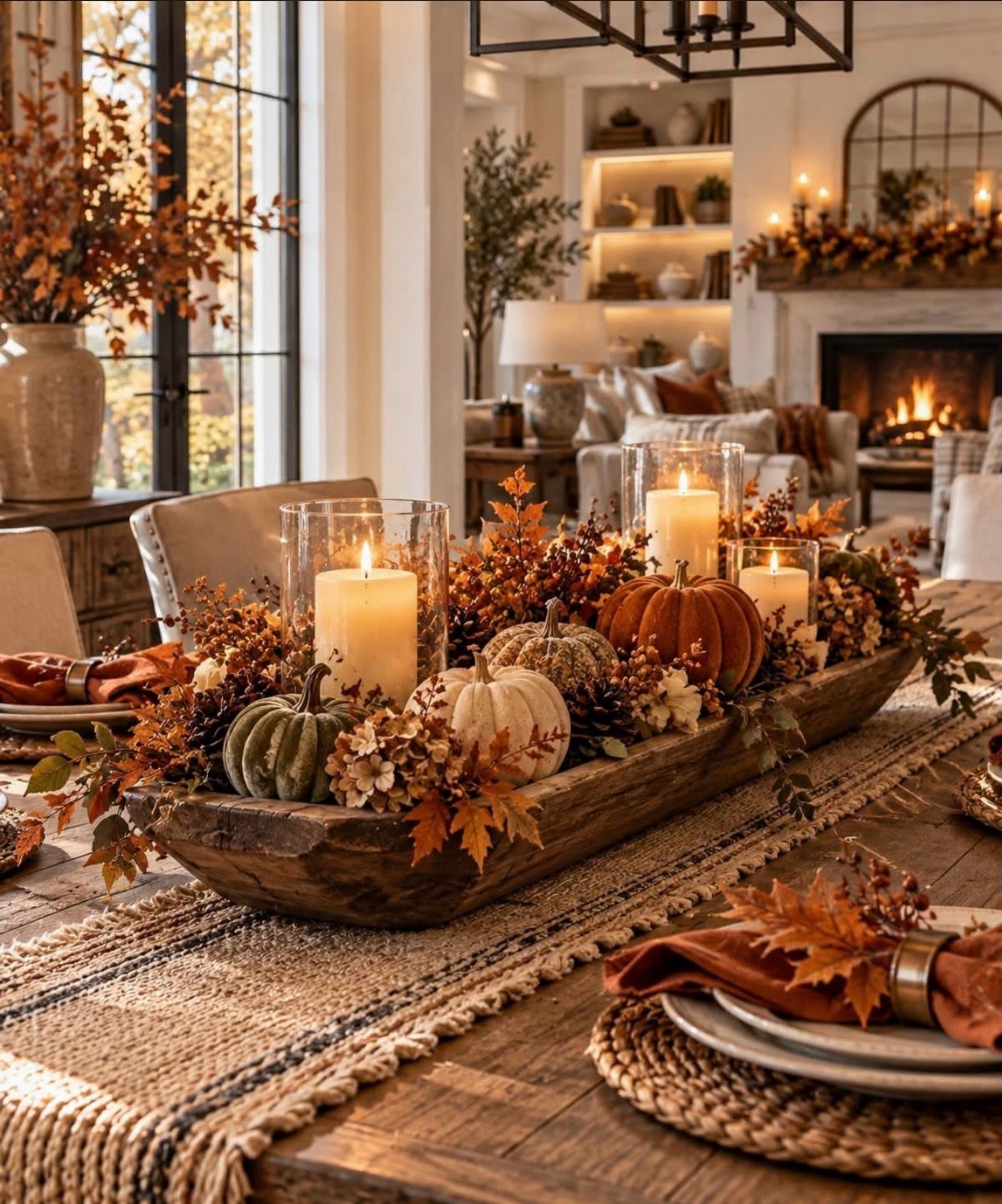
Any wide bowl can hold a centerpiece, and a big wooden dough bowl is my pick for fall. Pumpkins, a few autumn leaves and candles tucked between them fill it without any arranging skill.
Set the candles in last so they sit clear of the leaves. Dry leaves next to a flame is a risk, so keep them well back from the wicks.
Because the bowl is the only thing you commit to, the filling can change with each season.
3. Eucalyptus Branches
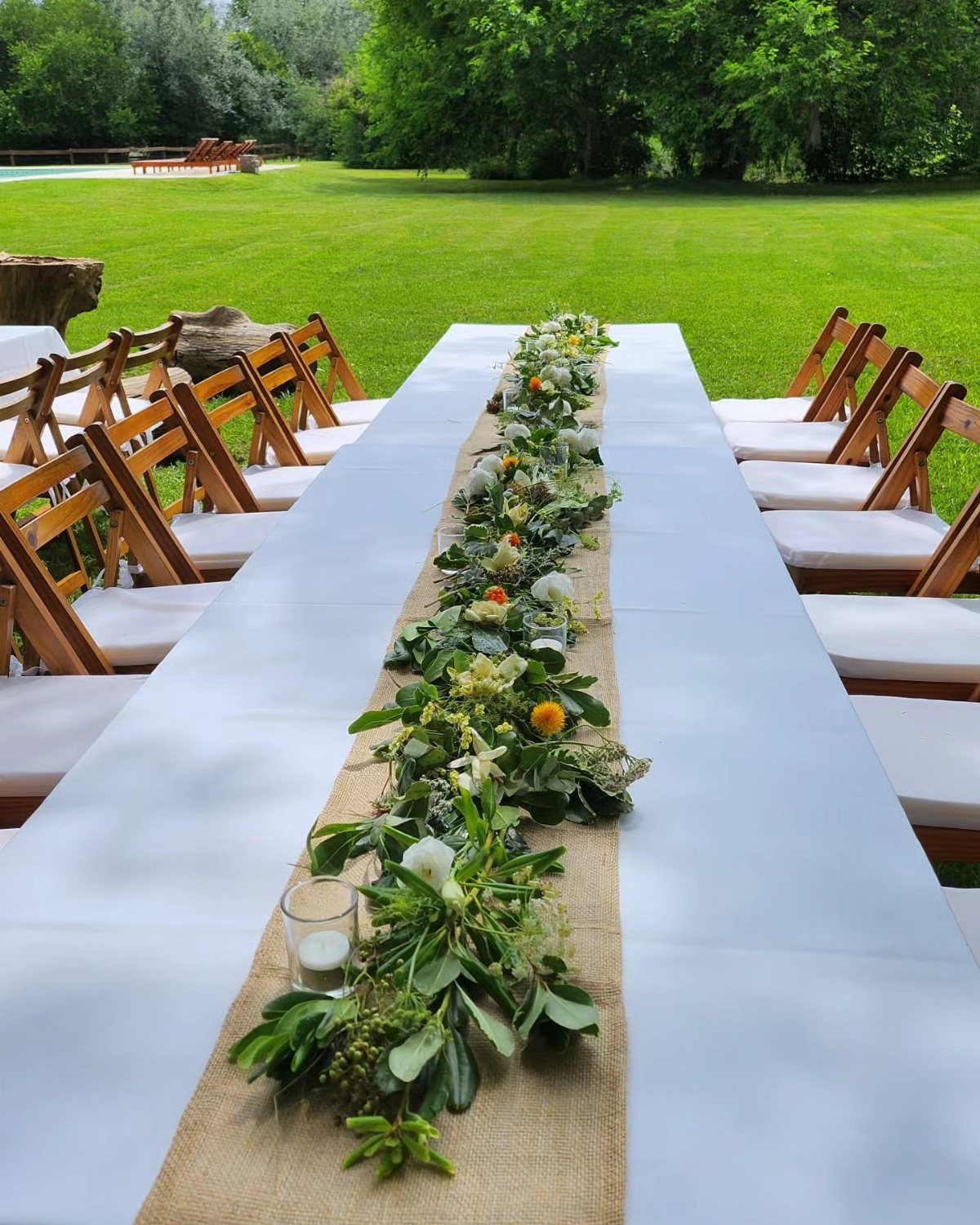
Long outdoor tables need something that runs their length, and eucalyptus branches laid end to end do exactly that.
Candles set among the branches add a glow at dusk. Lay the branches loosely rather than combing them straight; a slightly uneven line looks more natural on a lawn.
Greenery is easy to cut to fit a table of any length.
4. Candle Holders
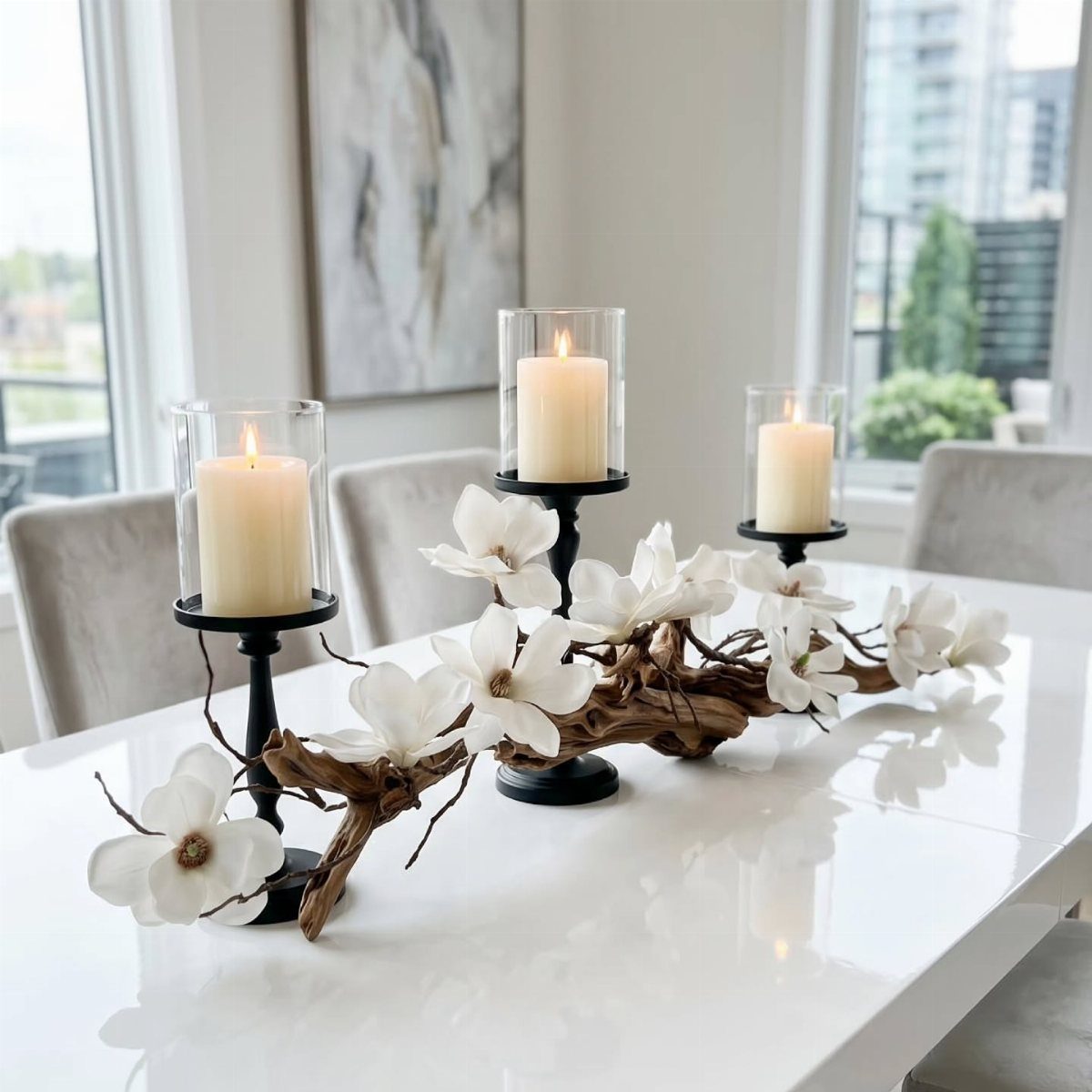
3 candles in a row is a centerpiece that needs almost no setup. Tall white pillars in glass cylinders, set on black holders, give height without blocking sightlines.
Add a few white magnolia blossoms and some brown vines between the holders to soften the black. Without those, the trio can feel stiff.
Hurricane glass also keeps drafts off the flames, which matters at a table you move around a lot.
5. Seasonal Delights
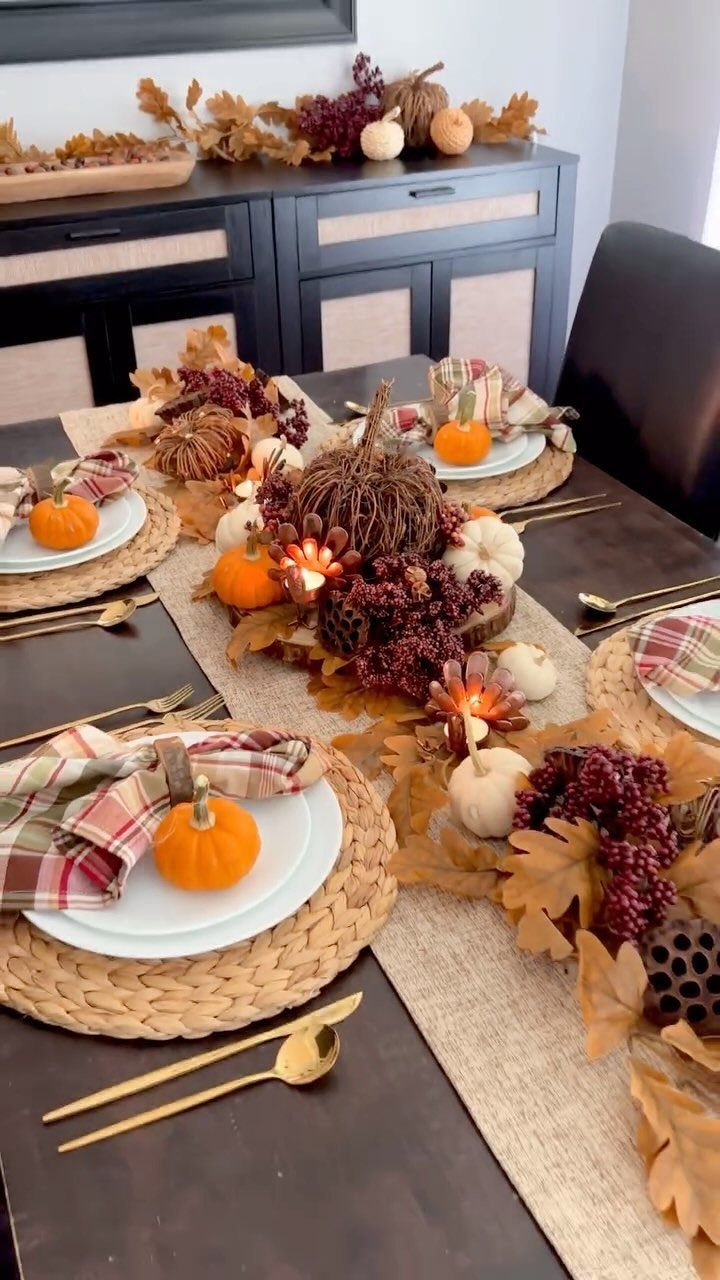
Swapping the centerpiece with the calendar is the cheapest way to keep a dining table interesting. For autumn, pumpkins, fall leaves and berries running down a burlap runner do the job, and gold cutlery picks up the warm tones.
I’d keep the runner and placemats the same all year and change only the center. That way each season costs a handful of props, not a whole new table.
Store the pieces together in one box.
6. Minimalist Elegance
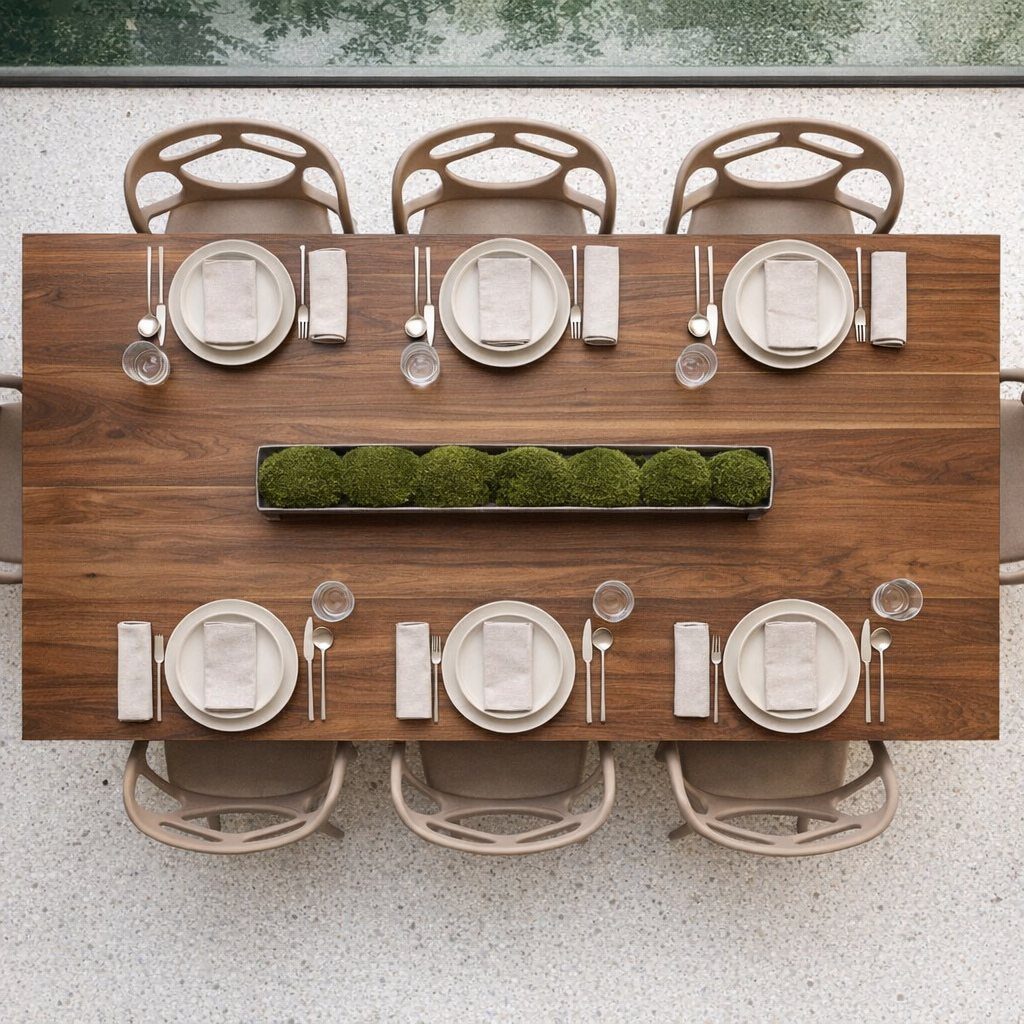
Neutral linens leave the green as the only color.
Pick a tray that runs about half the length of the table so it reads as deliberate. Plates and glasses still need room, so leave clear space on both sides.
Moss balls need no water and never wilt, which makes this the lowest-effort option on the list.
7. Fruit and Floral Table Garland
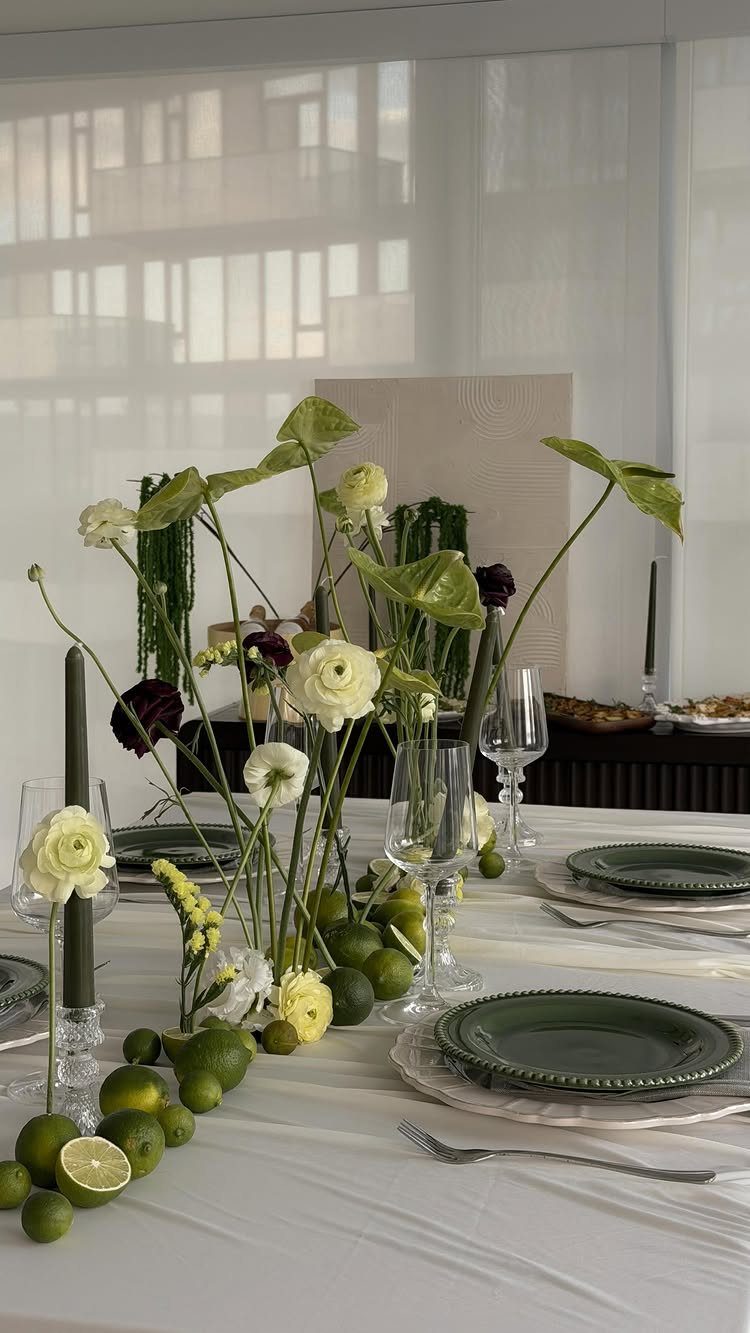
Limes do the work of color here: a few whole, a few sliced, tucked between white flowers and greenery so the green plates and glasses seem to continue into the centerpiece.
Cut the slices just before guests sit down, since cut citrus dulls and dries at the edges. Whole limes are cheap, and they hold their shape through a long dinner.
Lemons would suit a table set in yellow, and oranges would warm a rust or terracotta one.
8. Baby’s Breath Table Runner
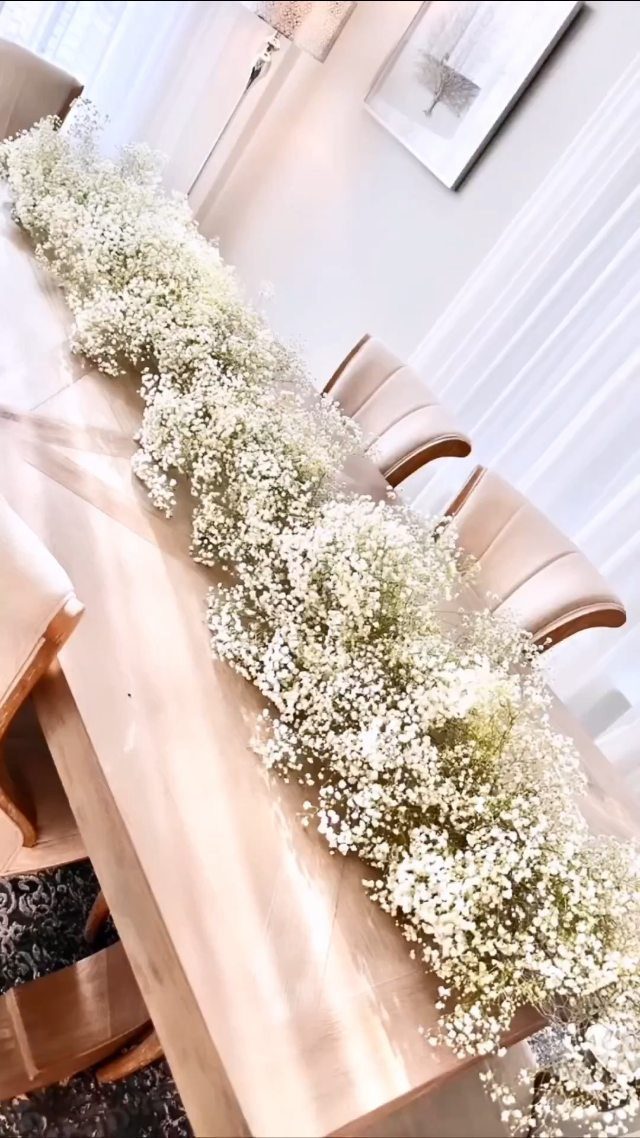
Baby’s breath is among the least expensive flowers to buy by the bunch, and a dense runner of it down a long wooden table looks like a much bigger spend than it is.
Pack it tight, with the stems overlapping, because thin gaps make it look sparse. A light wood table and neutral chairs let the white read as soft instead of fussy.
I’d keep the runner narrow enough to leave plates and elbows room on both sides.
9. Bud Vases in a Row
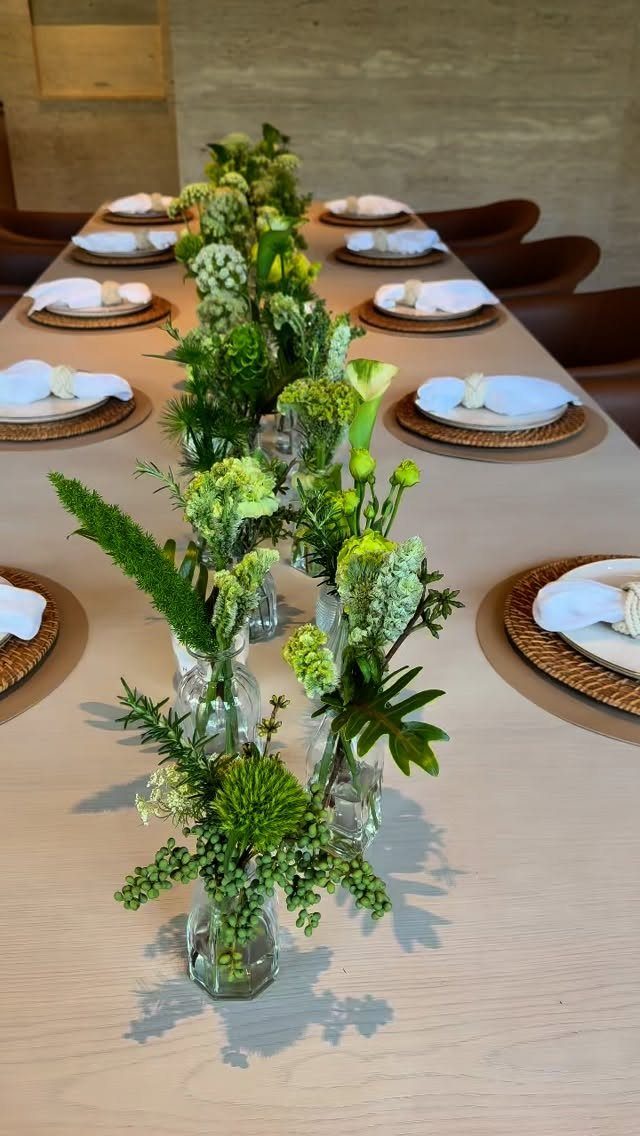
Small glass vases in a line let one stem per vase count as an arrangement. Mix the greens: a leafy sprig, a tall branch, something wispy, so the row looks gathered, not copied.
Space the vases evenly along the center and leave the plate area clear. Because each vase holds so little, a few clipped stems from the yard can fill the whole row.
Best part: if a vase tips or a stem wilts, you replace one, not the whole centerpiece.
10. Tall Vase with Low Bowl
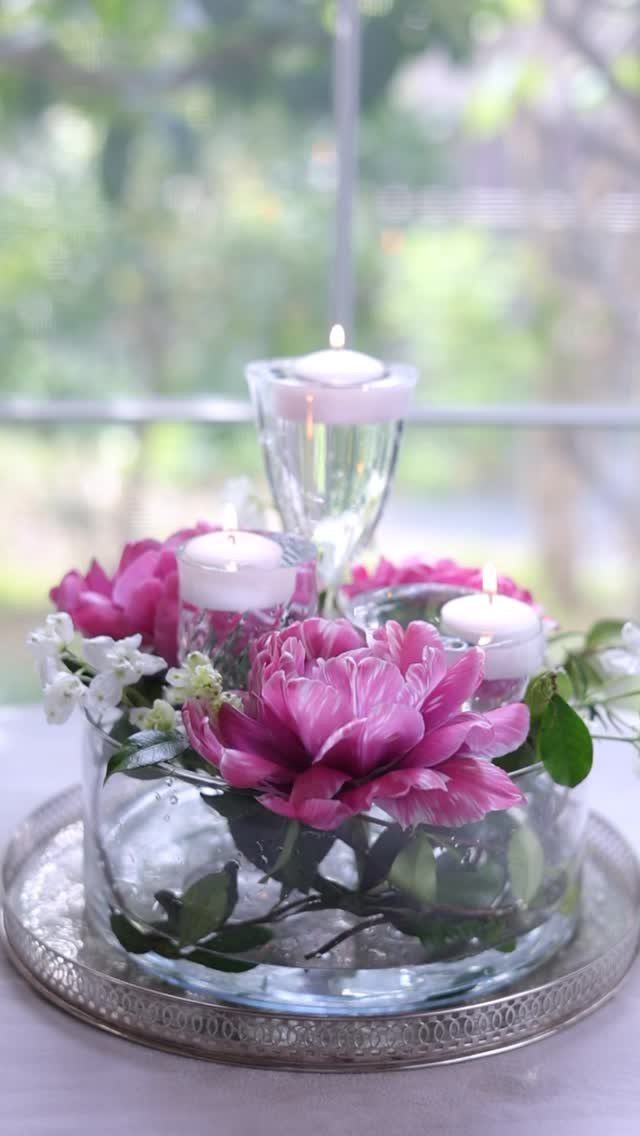
Height and a low bowl together give a centerpiece 2 levels, and a silver tray ties them into a single piece.
I like a tall glass vase holding one candle beside a low bowl of pink blooms with the other two candles floating.
Keep the tallest piece below eye level for people seated across from each other. Lift the whole tray off when the table needs clearing.
Pink peonies are pricey out of season, so swap in carnations or roses if the budget is tight.
Creating a Cohesive Look
Look at the rooms that open onto your dining area and pull one color and one material from them.
A brass lamp in the living room, a walnut sideboard, or a blue throw on the sofa can each become the thread that ties the table in.
Repeat, don’t match. One echoed element reads as planned, while three or four start to look like a showroom.
Texture counts as much as color. If the nearby rooms lean on wood and linen, a ceramic or woven centerpiece will sit comfortably, while a high-gloss piece may feel like it belongs somewhere else.
Stand at the doorway and squint. If the centerpiece disappears or jumps out, adjust one element and look again.
Practical Considerations
A table that gets used every day needs a centerpiece that can be picked up with one hand. If it takes 2 trips to clear for homework, games or crafts, it will end up on the sideboard and stay there.
Check the sightlines from a seated position. You should be able to see the face of the person across from you, so skip anything tall and elaborate on a daily table.
Choose pieces that can take a bump. Sturdy materials and a low, stable base survive kids and chaos far better than anything precious.
Keep the footprint small, too. An arrangement that spreads across half the tabletop will end up in your way at every meal, so it gets shoved aside daily.
Seasonal Transitions
Change only the elements that signal the season: the greenery, the blooms, the small props.
Leave the container or tray where it is and swap only what sits in it, so a seasonal change is a quick job instead of a full redo.
Plan the changes around natural shifts: bare branches in winter, fresh stems in spring, lighter and brighter pieces in summer, deeper tones in fall.
Buy the next season’s props when they appear in stores, since they cost more once the weeks go by.
Fresh material is the one thing that can’t be stored, so rely on dried or faux pieces for anything you plan to reuse. Label the box and keep it where you can reach it without moving anything else.
Frequently Asked Questions
What do you put in the middle of your dining room table?
A low arrangement you can lift off in one move works best: a wide wooden bowl of pumpkins and candles, a row of small glass bud vases, or a few white blooms in textured vases on a woven tray.
Keep it below eye level so guests can see across the table. A tray or bowl also makes swapping the contents each season a quick job.
How to decorate for a dinner party?
Start with one centerpiece that suits the table, then add candles for glow and keep plates and glasses clear of clutter.
Eucalyptus branches laid end to end down the center of a 72-inch table make a runner with no extra cost, and candles tucked among them finish it.
How to decorate a wooden dinner table?
Pair the wood with contrasting materials and textures, such as glass, white flowers, ceramic or woven pieces.
A dense, narrow runner of baby’s breath looks fuller against a light wood table, especially with neutral chairs. Leave room on both sides of any runner or tray for plates and elbows.
What are some common items found on a dining table?
Plates, glasses, cutlery, placemats and a runner are the everyday basics, with a centerpiece in the middle.
That might be flowers in a vase, candles in holders, a bowl of seasonal props or a tray of greenery. Keep the centerpiece small enough that the place settings still have space.





