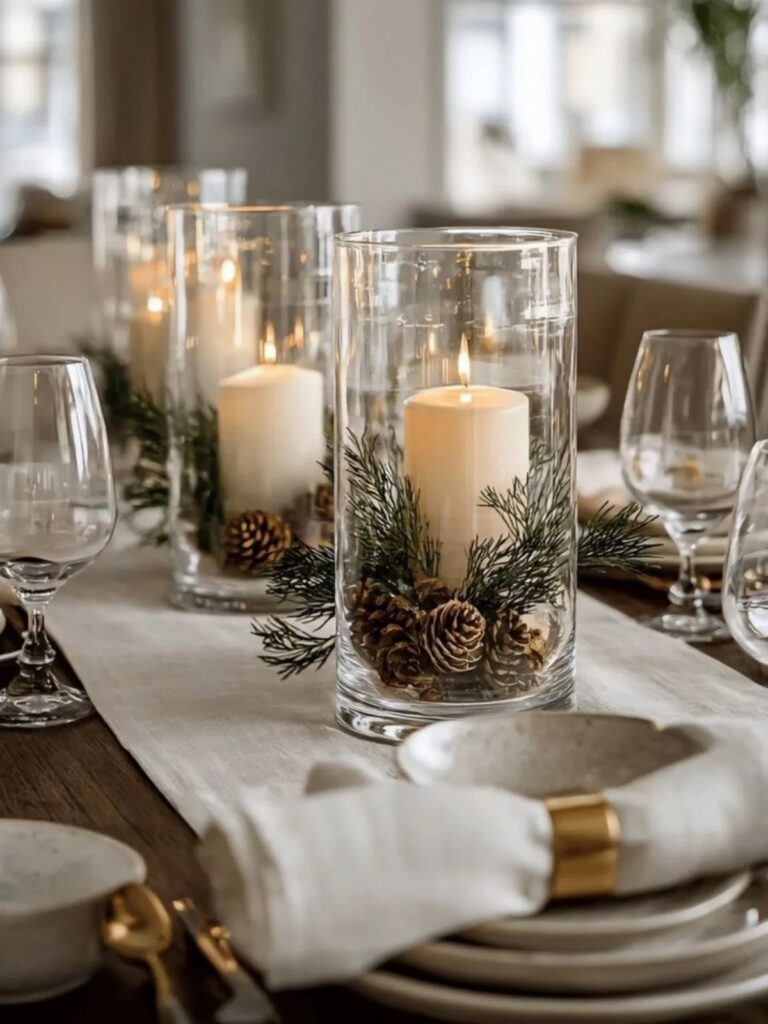
The 13 settings here run from foraged greenery to thrifted plates, personalized place cards and a hanging centerpiece, and the right one depends on what is already in your cabinets.
If white plates are already in the cabinet, the cost is nearly zero; buying new, white dishware stays the cheapest option because it works with everything else on this list.
1. DIY Napkin Rings
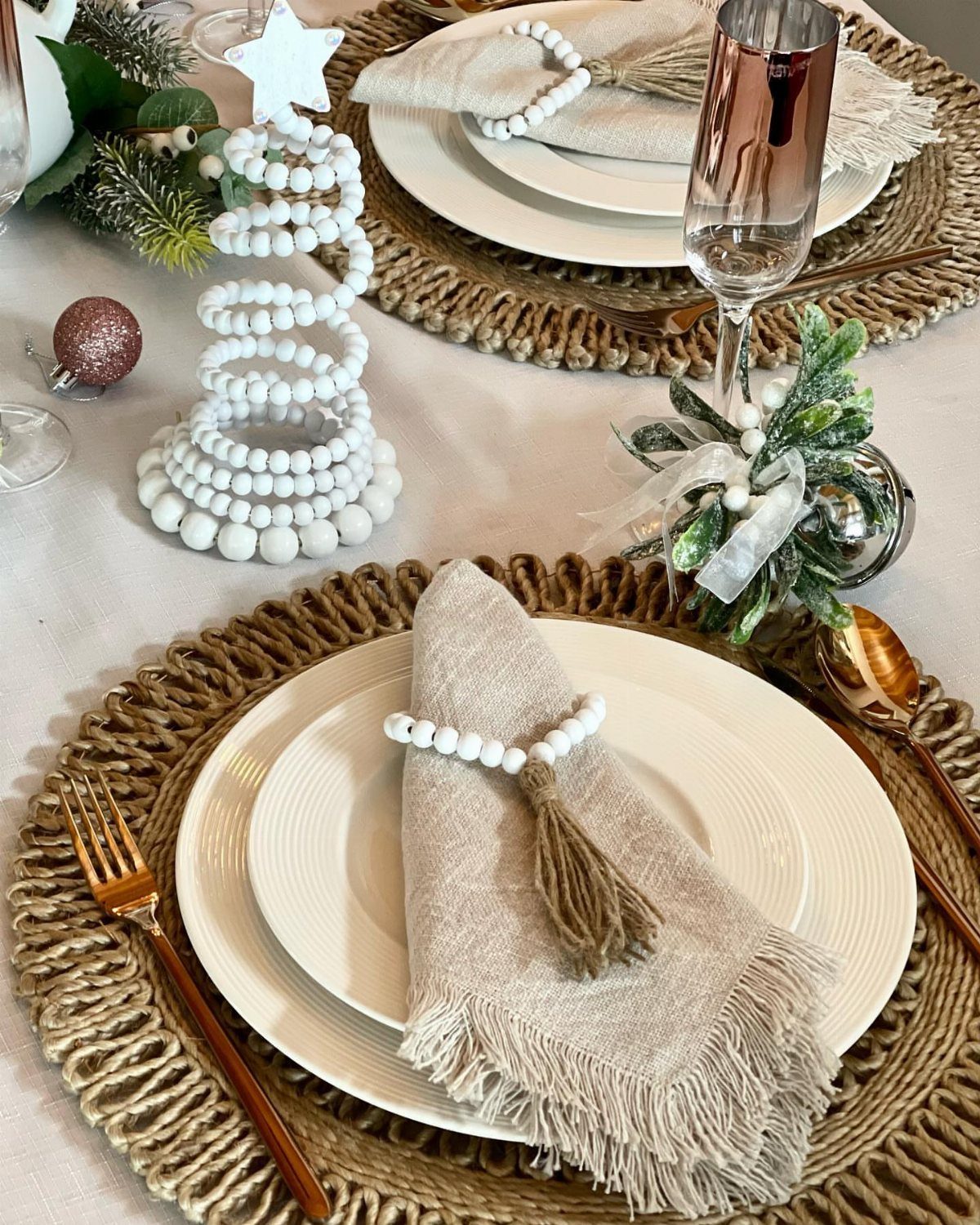
Beaded rings with a small tassel are the easiest handmade detail to add to a Christmas table, and a plain linen napkin is all they need.
White beads on a beige napkin read soft and quiet against white plates and woven placemats.
Threading beads onto cord or elastic and finishing with a tassel can happen in front of a movie, one ring per guest. Make one extra to test the fit around a rolled napkin before you commit to the full set.
2. Red and Green Table Settings
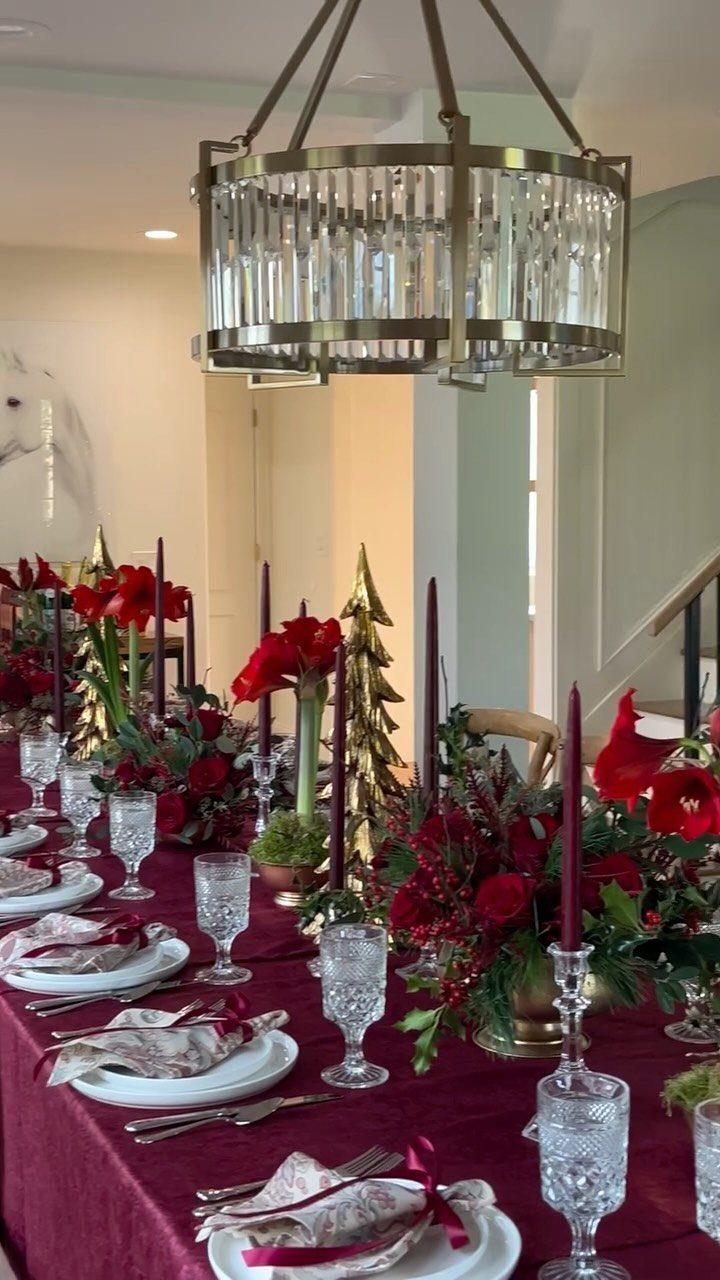
Burgundy and red can look heavy, so I keep the greens and golds doing the lightening. Green foliage, gold accents and plain white plates break up a dark tablecloth and keep it from swallowing the room.
Deep red taper candles give a warm, intimate glow, and the antique-inspired gold pieces add depth. A chandelier overhead helps, but it is not required; candles at table height do most of the work.
Pick one red for the cloth and flowers, and let the napkin pattern be the only busy element.
3. Natural Christmas Table
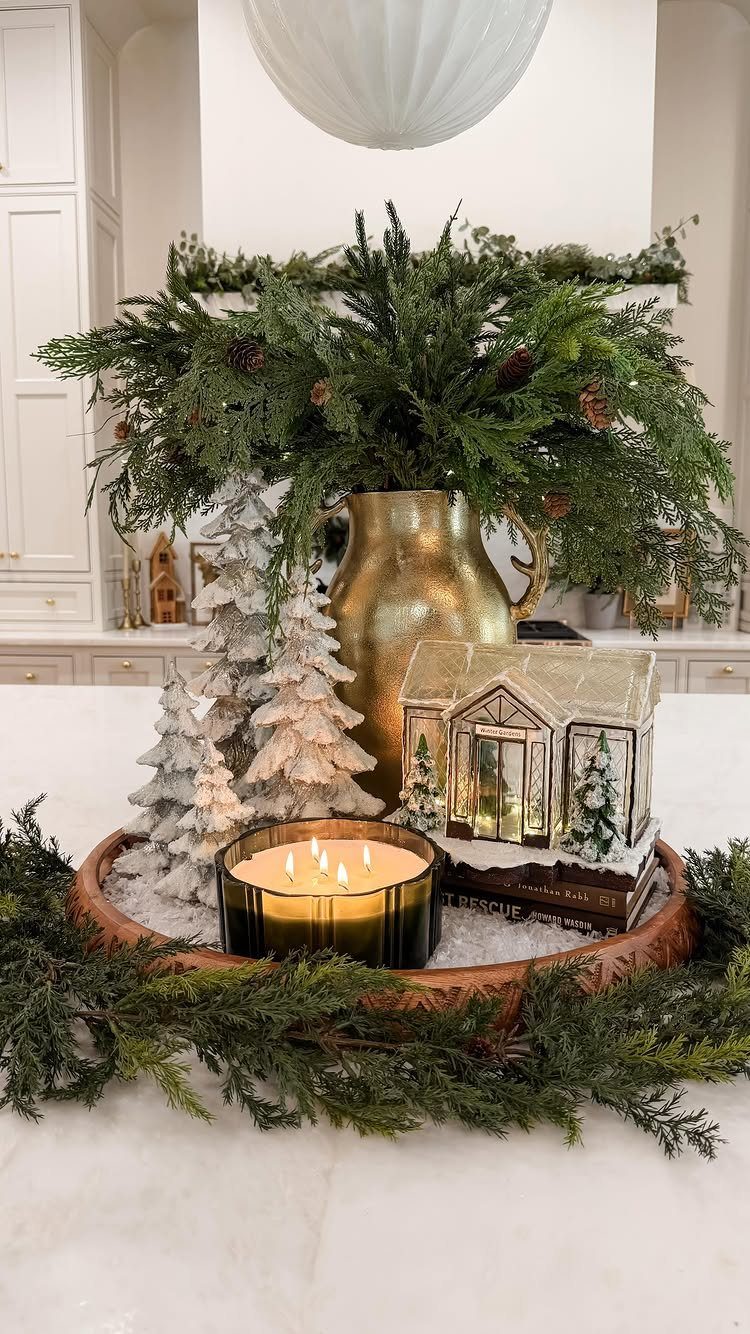
Evergreen branches in a gold pitcher do more than a store-bought arrangement ever will, and the pitcher can come from a cabinet you already own.
I like this for hosts short on money, since the materials are mostly branches and things you have. Keep the pieces low and grouped so guests can see each other across the plates.
To start, take a few notes from the luxury British tablescaping service Maison Margaux’s Louisa Preskett Mobbs, who posits that Christmas season is an ideal opportunity to release your inner maximalist.
4. Gold and White Table Settings
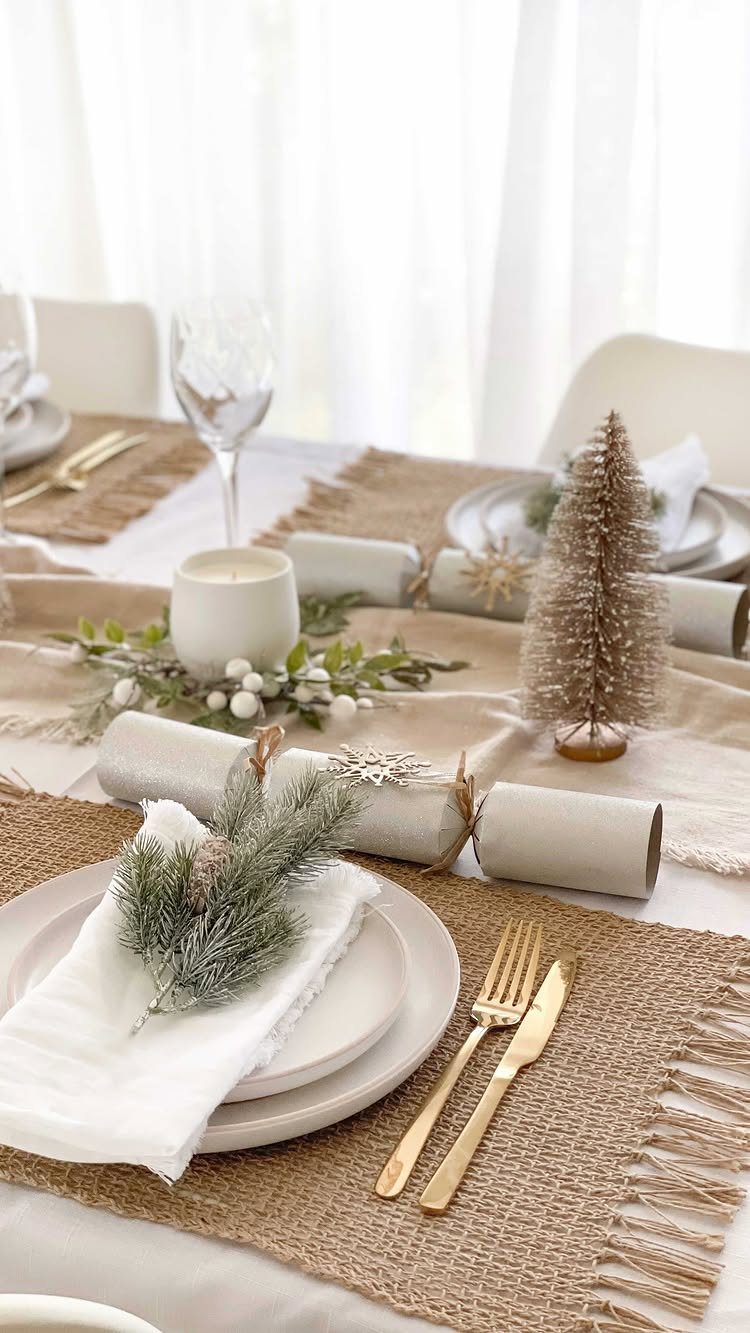
Gold flatware on white plates is the cheapest way I know to make a table look planned. Burlap placemats keep it from feeling stiff, and a small gold tree plus white candles finish the center.
Keep the palette to those 2 colors and let the greenery supply the rest.
Gold cutlery sets cost more than silver, so if the budget is tight, buy only enough for the main course and set the dessert forks out separately.
5. Foraged Greenery
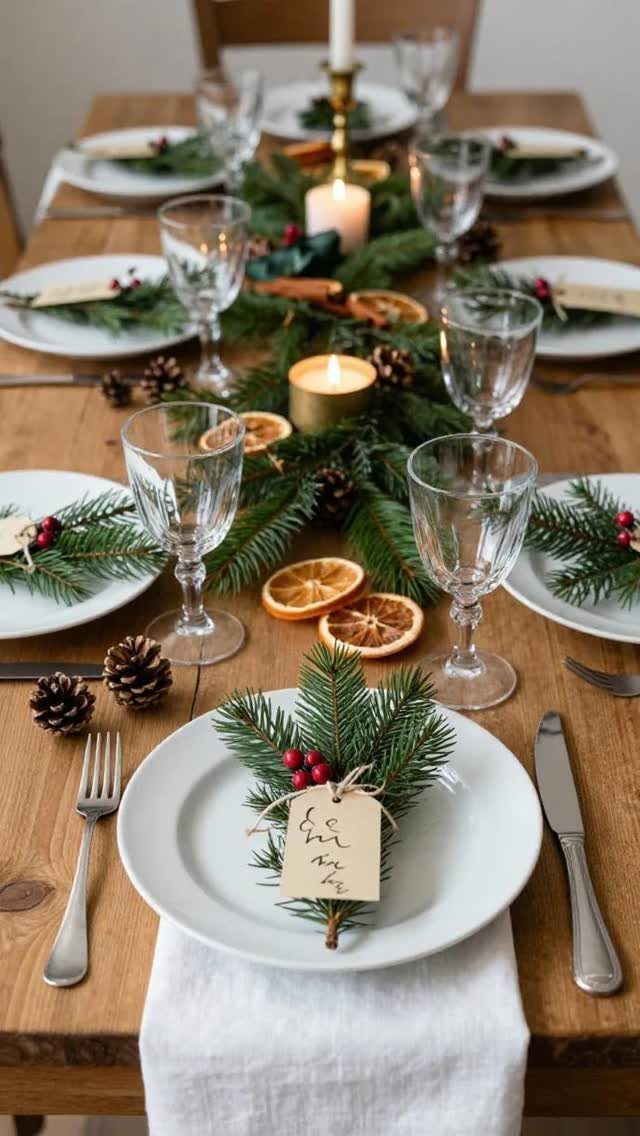
A walk around the yard or a nearby park can fill most of a centerpiece.
Small greenery sprigs with tags on each plate double as place markers and cost nothing. Shake out branches and check for bugs before they come inside, and cut fresh ends so they last through dinner.
6. Plaid Table Decor
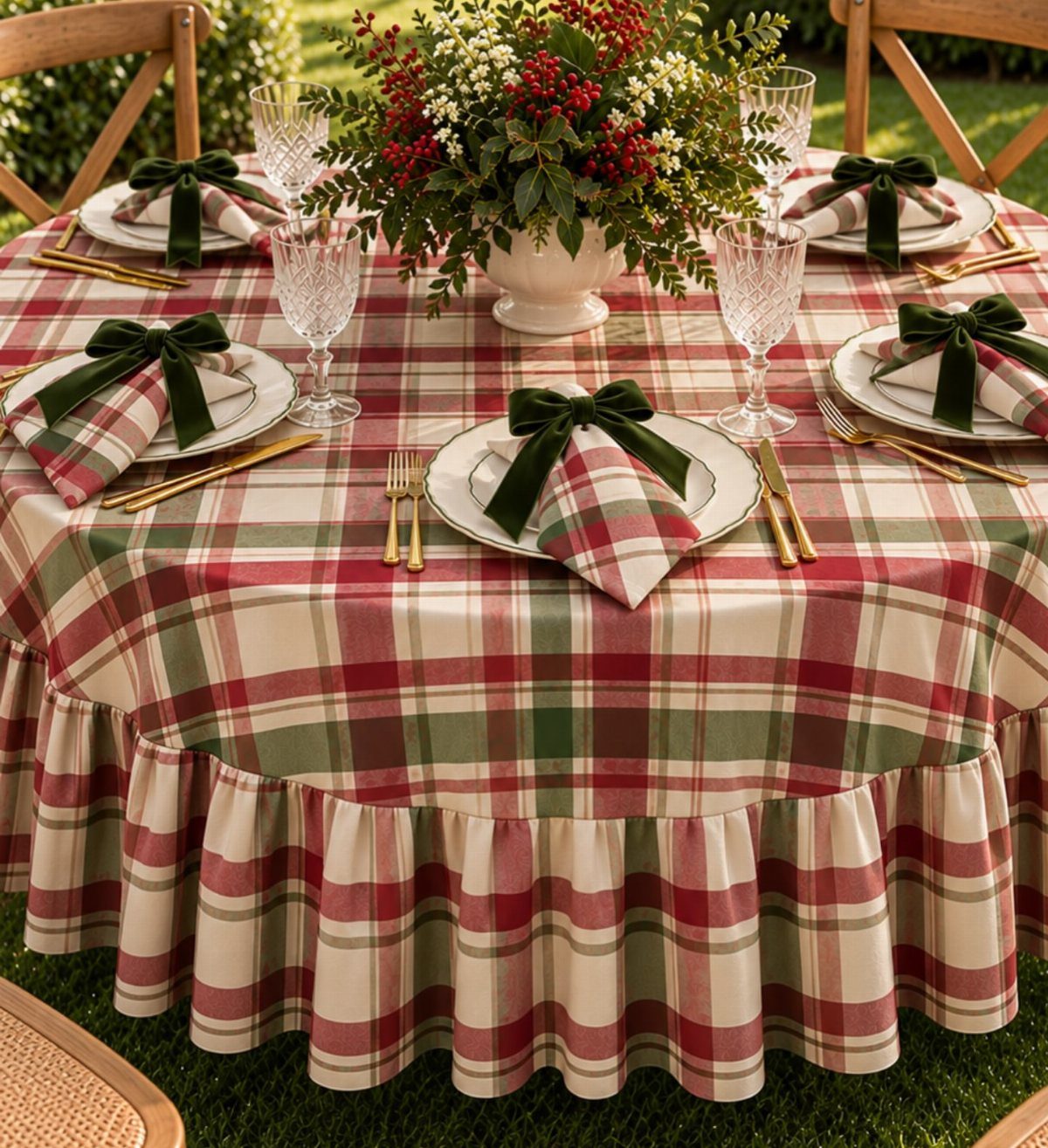
Red and green plaid does the work of an entire centerpiece, so I keep everything layered over it plain.
With a bold plaid tablecloth, keep everything on top plain: white plates, gold cutlery and clear crystal glasses let the pattern do the work.
Napkins with bows in a matching plaid tie the setting together without needing more decor.
A small red berry arrangement in the center is enough. Choose a plaid with a small repeat if your table is round, since big checks can look lopsided.
7. White and Cream Dishware
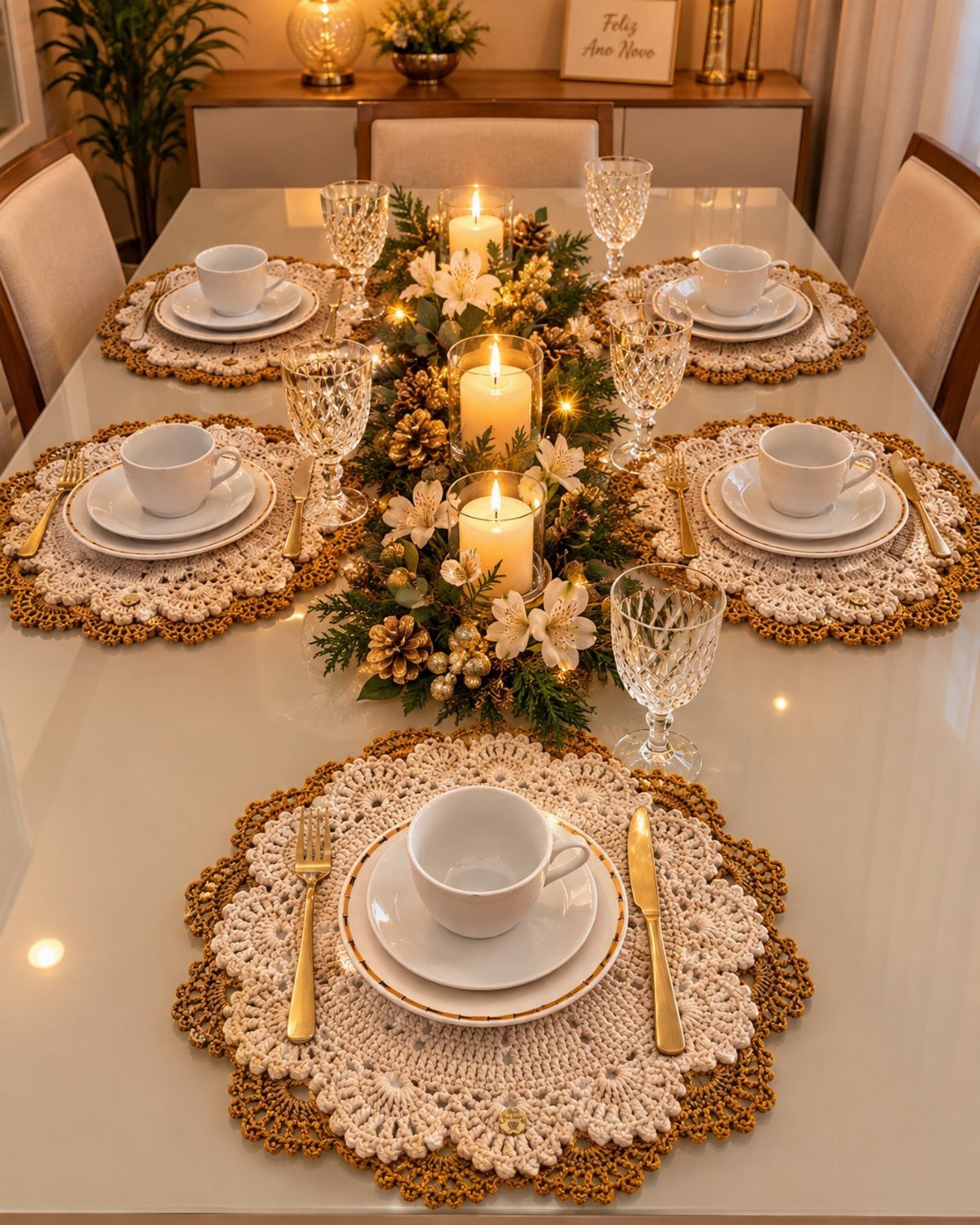
White plates on cream crochet placemats give a table texture without adding a single color. Gold cutlery adds warmth against white plates, and a few sprigs of greenery down the center handle the holiday part.
Plain white dishware is the easy choice for a host on a budget, since it pairs with every other idea on this list and can be reused all year.
I would put the candlelit evergreen arrangement down the center and keep everything else quiet.
A small handwritten sign is a nice finishing detail.
8. Hanging Centerpiece
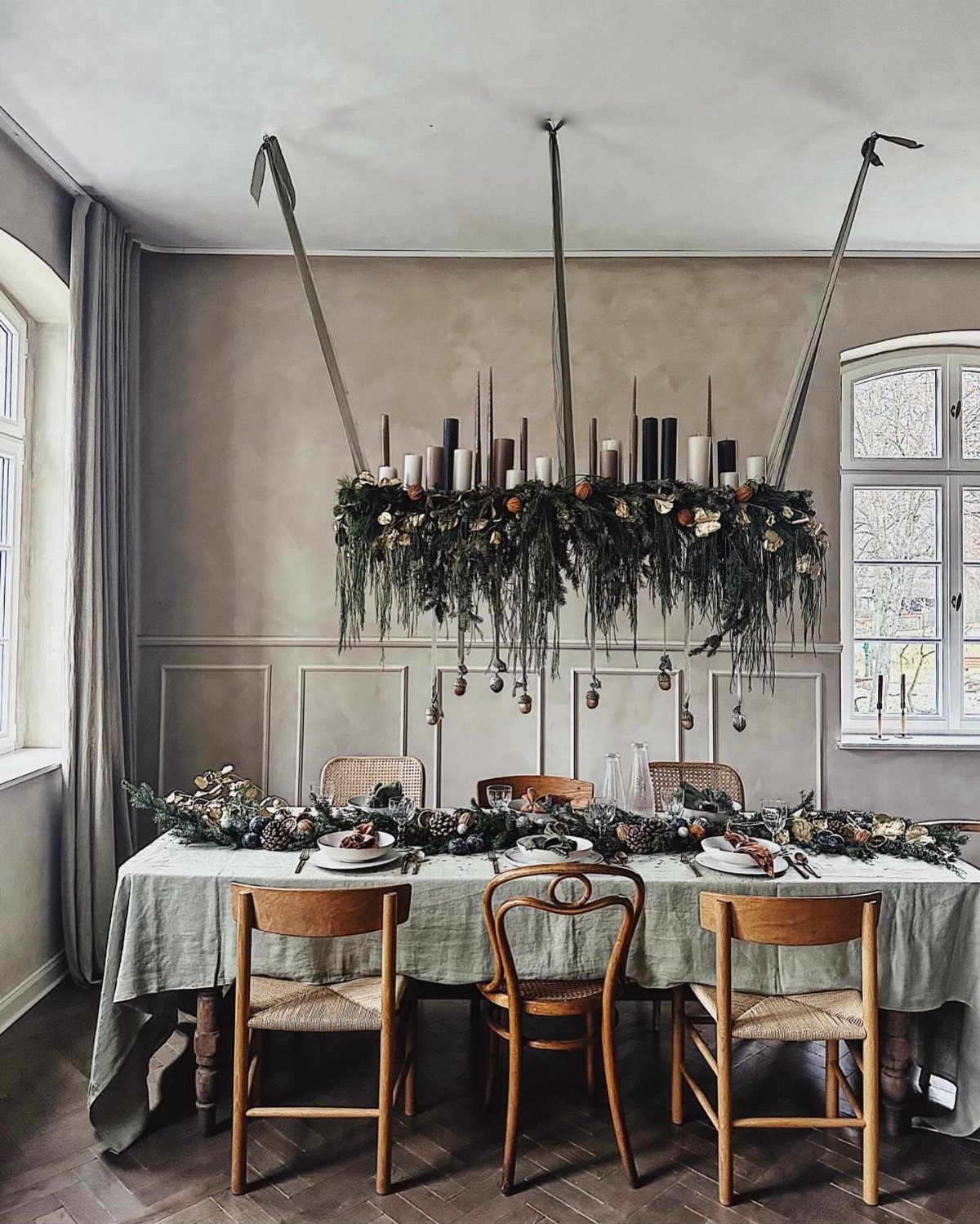
A greenery-covered chandelier with candles hangs the display above the table, so the surface stays free for plates and glasses. That is its best argument: nothing sits between guests.
Underneath, I would keep the setting simple, with plain dishes and no tall pieces competing for height.
Hang it from a secure ceiling point, and keep real candle flames well away from the branches. Battery candles are the safer swap.
9. Mismatched Thrifted Dishware
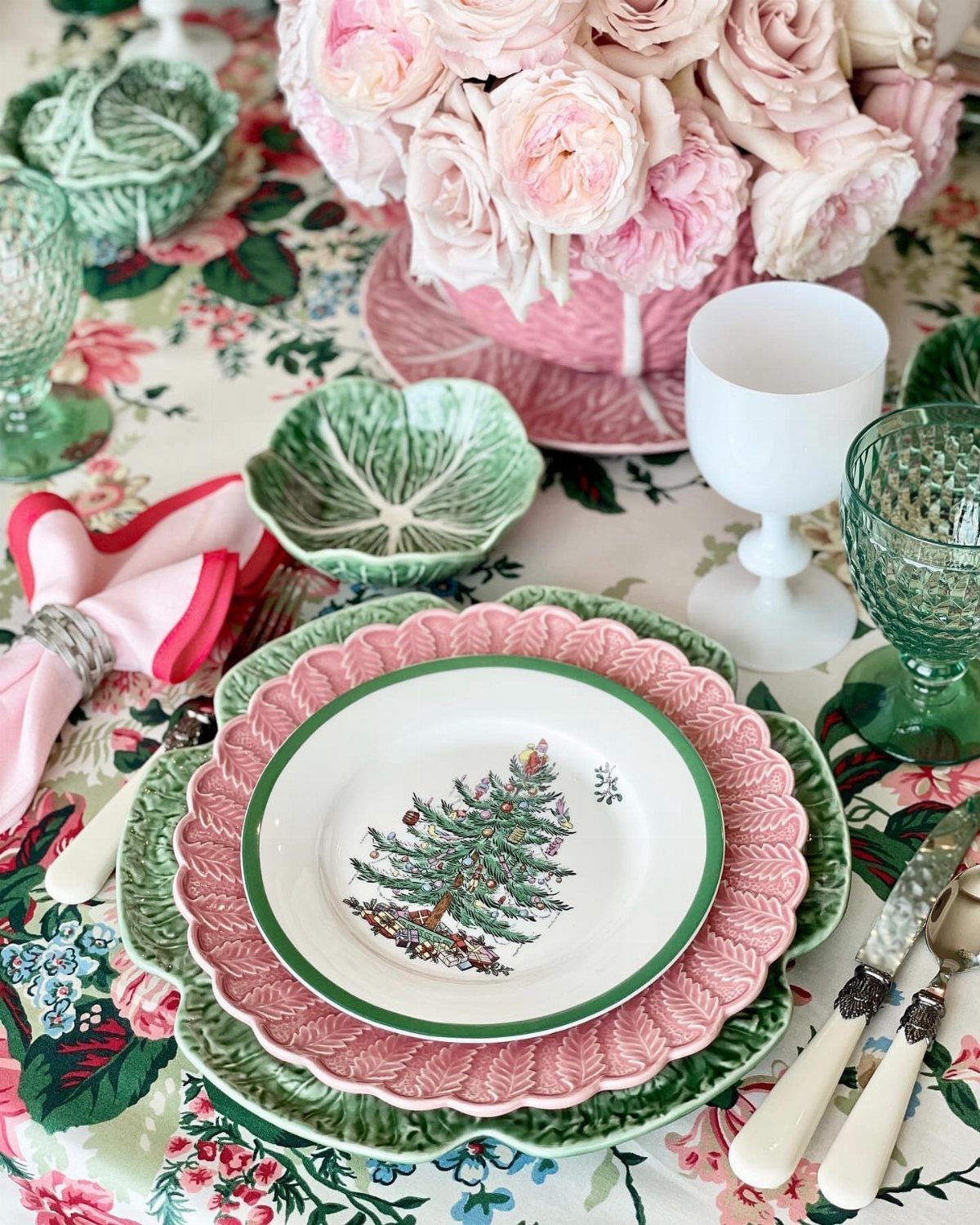
Pink and green plates that do not match look planned when the two colors repeat from one place setting to the next. A floral cloth, a pink flower arrangement and green glassware keep the palette tight.
Thrifted plates are the budget route, and buying a few more than the guest count gives you room to choose the best combinations.
I like saving one special plate, such as a Christmas tree design, for the center of the setting.
Stack by color so no 2 neighbors clash.
10. Blue Christmas Tabletop
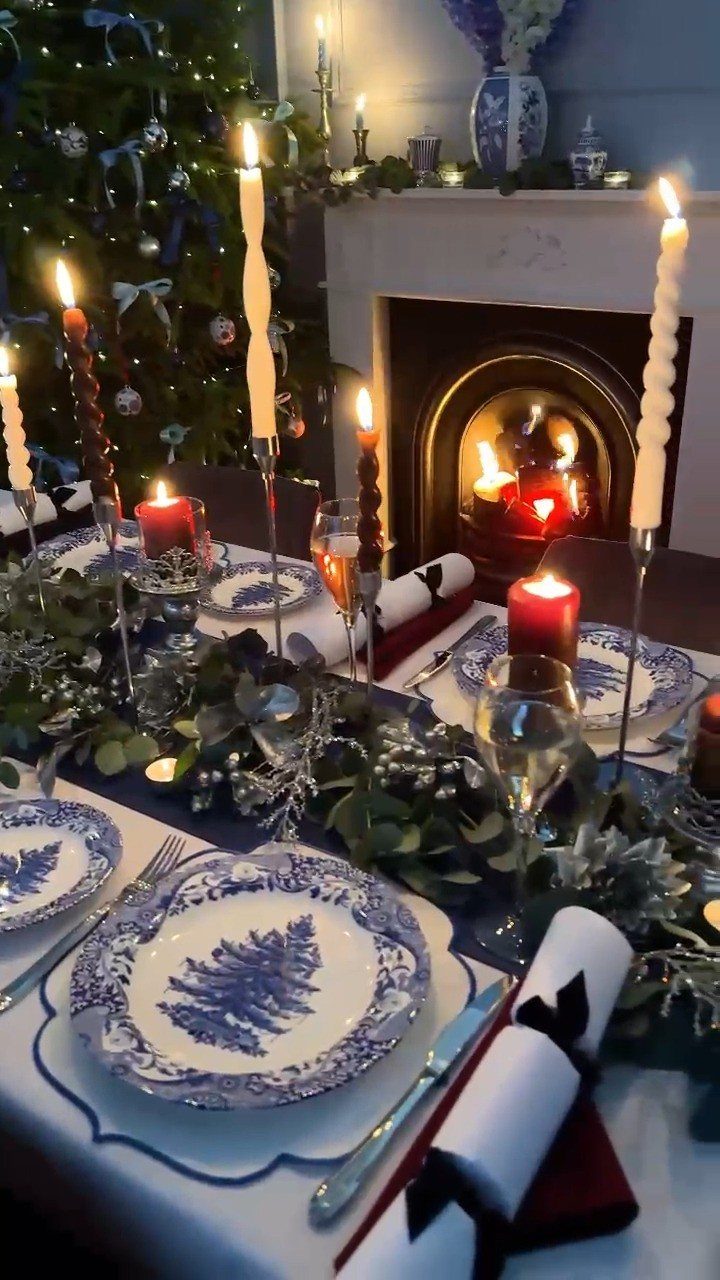
Blue and white patterned plates feel calm next to a Christmas tree and a lit fireplace, and they are a good answer if red and green seem too expected.
A blue runner ties mixed dinnerware together, and greenery and candles supply the holiday part. I would let the plates carry the pattern and keep the runners solid.
Wine glasses in clear glass keep the blues from getting crowded. A blue and white set also works for hosts who already own it, which keeps the cost close to nothing.
11. Greenery and White Candles
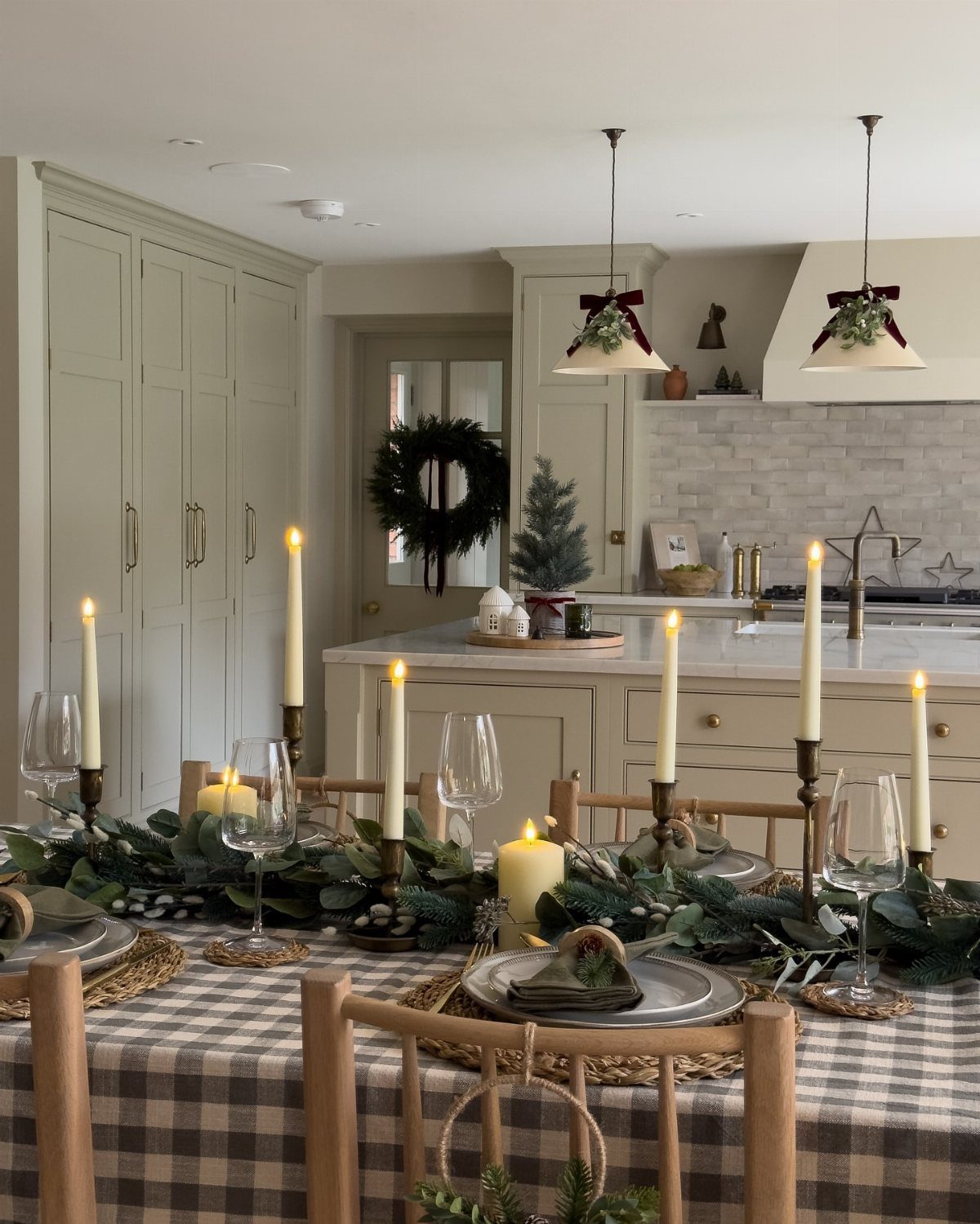
Greenery and white candles look festive without crowding the table, which suits a kitchen where the island is already part of the room. A checkered cloth adds pattern, so I keep everything else plain.
Lay a greenery garland down the center and set white candles in among it. Since you are working with few pieces, spacing matters more than quantity.
Trim the garland low so it does not block the view across the plates, and keep candle flames clear of the leaves.
12. Bold and Vibrant Layered Tablescape
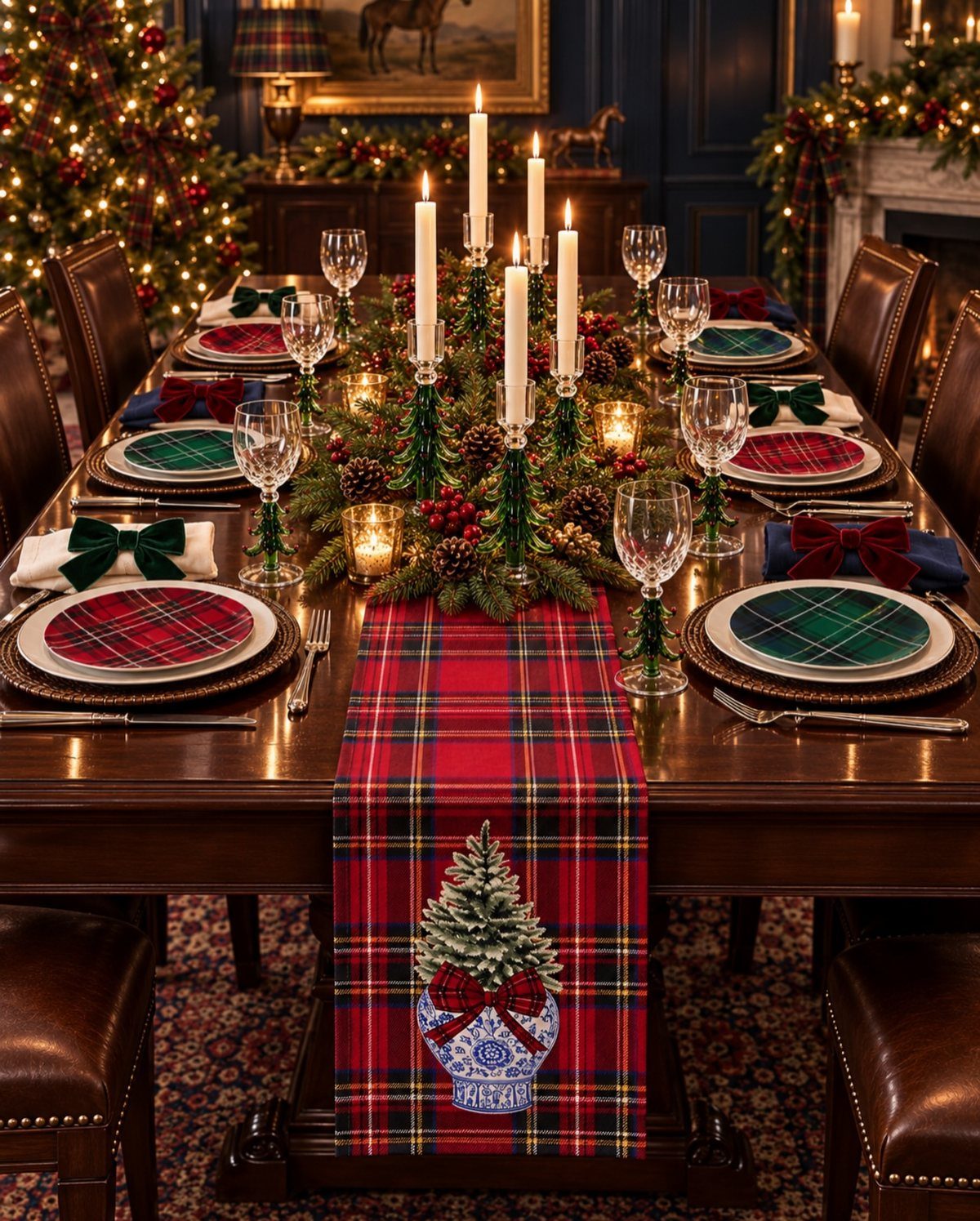
A red plaid runner is a good base for layering, because you can add colorful plates, green glassware and candles one piece at a time and stop when it feels full.
On a long wooden table, a pine centerpiece anchors the middle while the runner leads the eye along the length. Let the plates be the loudest color and keep the pine simple.
Bold works best with one rule: repeat each color at least twice, so the table reads as a choice and not a pile.
13. Personalized Place Cards
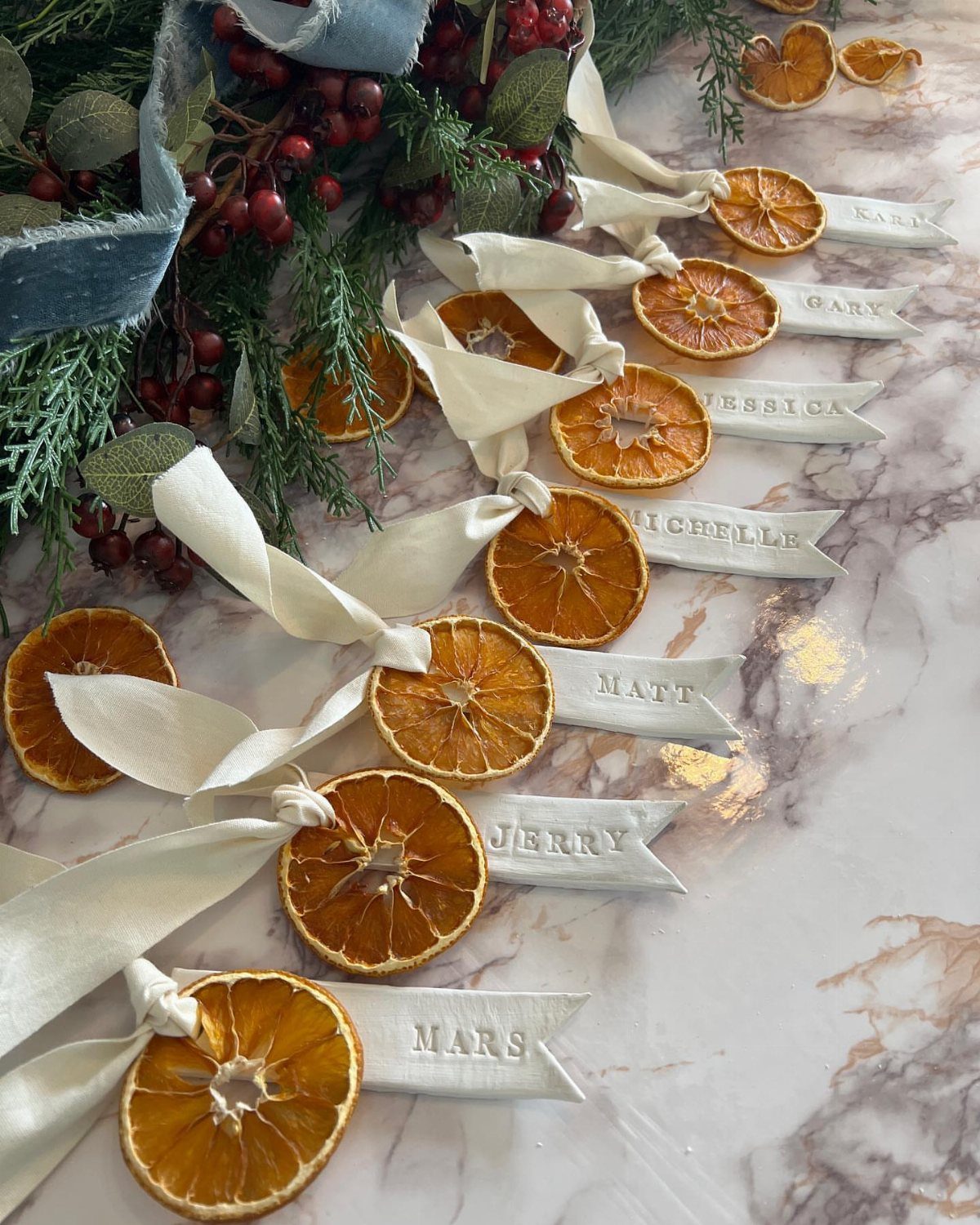
Putting each name on a tag, not a folded card, means it can double as a small keepsake.
Write the names in one hand, and keep the ribbon the same cream on every tag so the set reads as one. Set the tags on the plates or just above the forks, where they won’t crowd the glasses.
Make 1 or 2 extra tags for guests who turn up unannounced.
Planning Ahead
Set the table a few days before Christmas. Doing it early means the big day is for cooking and talking, not for hunting down the missing serving spoon.
Lay out the plates, glasses, flatware and napkins first, since those decide how much room is left for everything else.
A basic place setting puts the fork on the left, knife and spoon on the right, glass above the knife, and napkin either under the fork or on the plate.
Hold back anything that wilts, melts or burns until the day itself: lit candles, bread baskets and fresh greenery all belong in that group.
If the table gets set 2 days early or more, drape a clean cloth or old sheet over it so dust stays off the plates and glasses.
Frequently Asked Questions
How to decorate a dining room for Christmas?
White plates, gold flatware and a line of greenery make it Christmas without using up space.
Choose one color to carry through linens and flowers, then let the napkin add the pattern. Candles near the plate level give light where you need it, or drape the chandelier with greenery if you want an open surface.
What is trending for Christmas decor this year?
Natural materials, bold colors and personal touches are what people are reaching for. Evergreen branches in a pitcher you already own, a red plaid runner layered with colorful plates, and name tags tied with ribbon on each plate all fit.
Use each bold color at least twice or the table reads as random instead of planned.





