The cards here run from a casual "This is your invite" signed "Love, Smriti" to a black-and-gold formal card that spells out the date and hour in words, and the right one depends on how much the evening asks of your guests.
A potluck card needs dish categories and an allergy line, a formal seated dinner needs a dietary question, and a Christmas dinner card needs the arrival time and the dress code spelled out before anyone replies.
Whatever the style, write the date the American way, September 23 or 9.23.2024, because 23.9.2024 reads as nonsense here.
1. Dinner Party Invitations
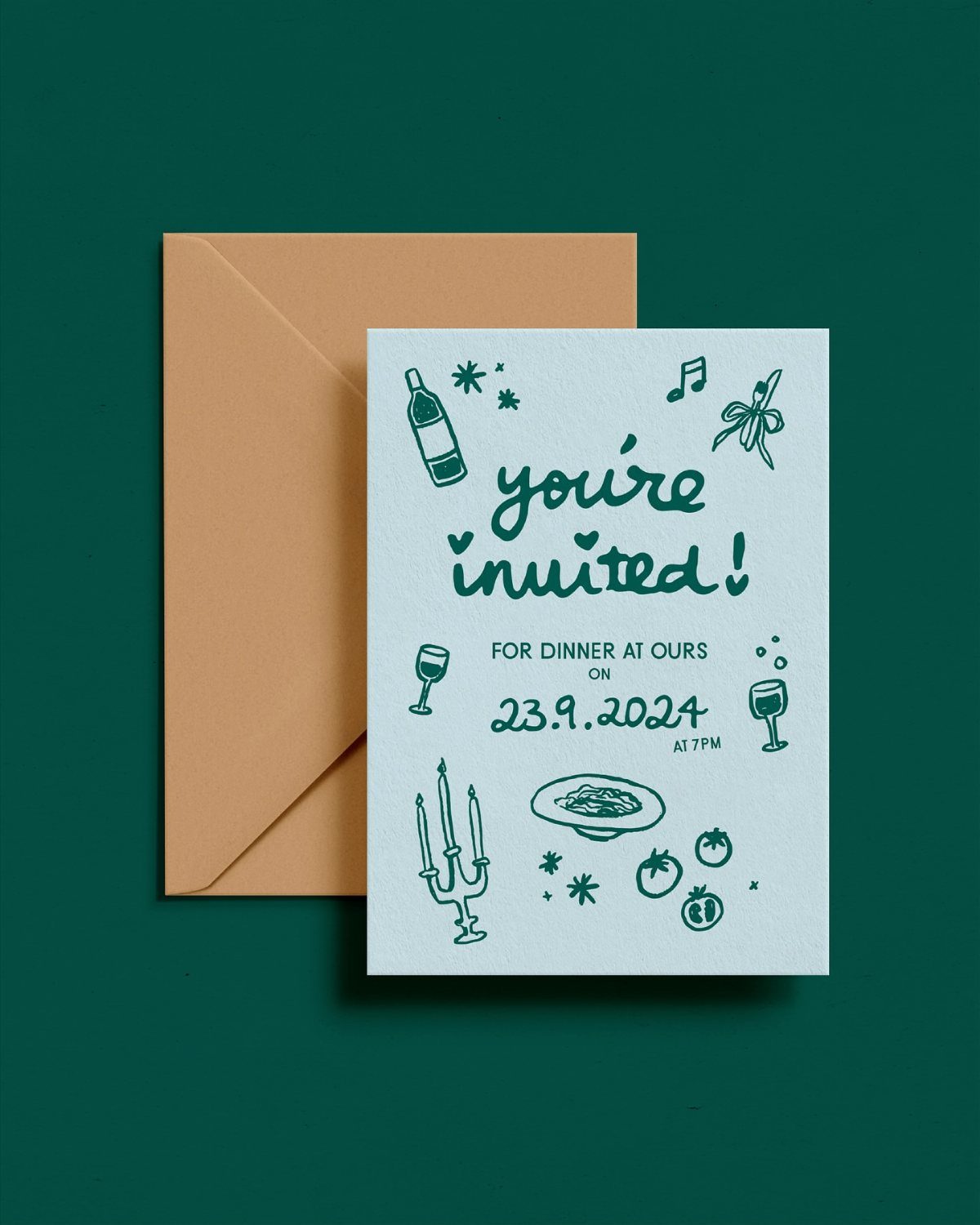
A date written as 23.9.2024 is the detail to check before sending. American guests read 23.9 as nonsense, so spell it "September 23" or write 9.23.2024 instead.
The card does the rest well: host line, day, and 7PM, with nothing else competing. Add the address and an RSVP date on the back or in the message that carries the card.
2. Casual Dinner Invitation
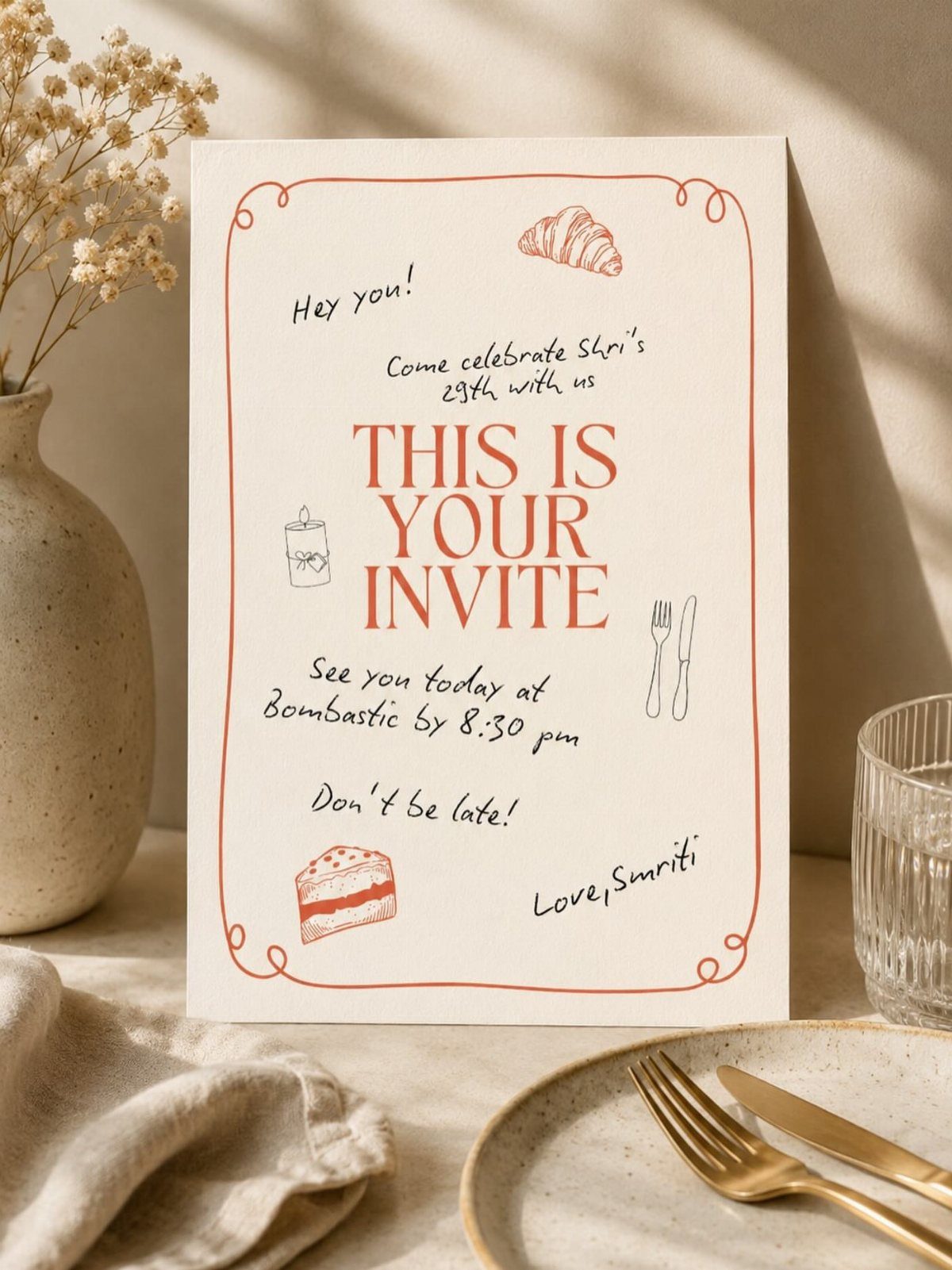
Casual wording works best when it sounds like you talking. "This is your invite" does the job in a handful of words, and the sign-off "Love, Smriti" keeps it warm.
Still give the guest-of-honor name, the age if it’s a birthday, the venue, and the start time. Food illustrations hint at the menu, so the tone is set before anyone reads a line.
3. Formal Dinner Invitation
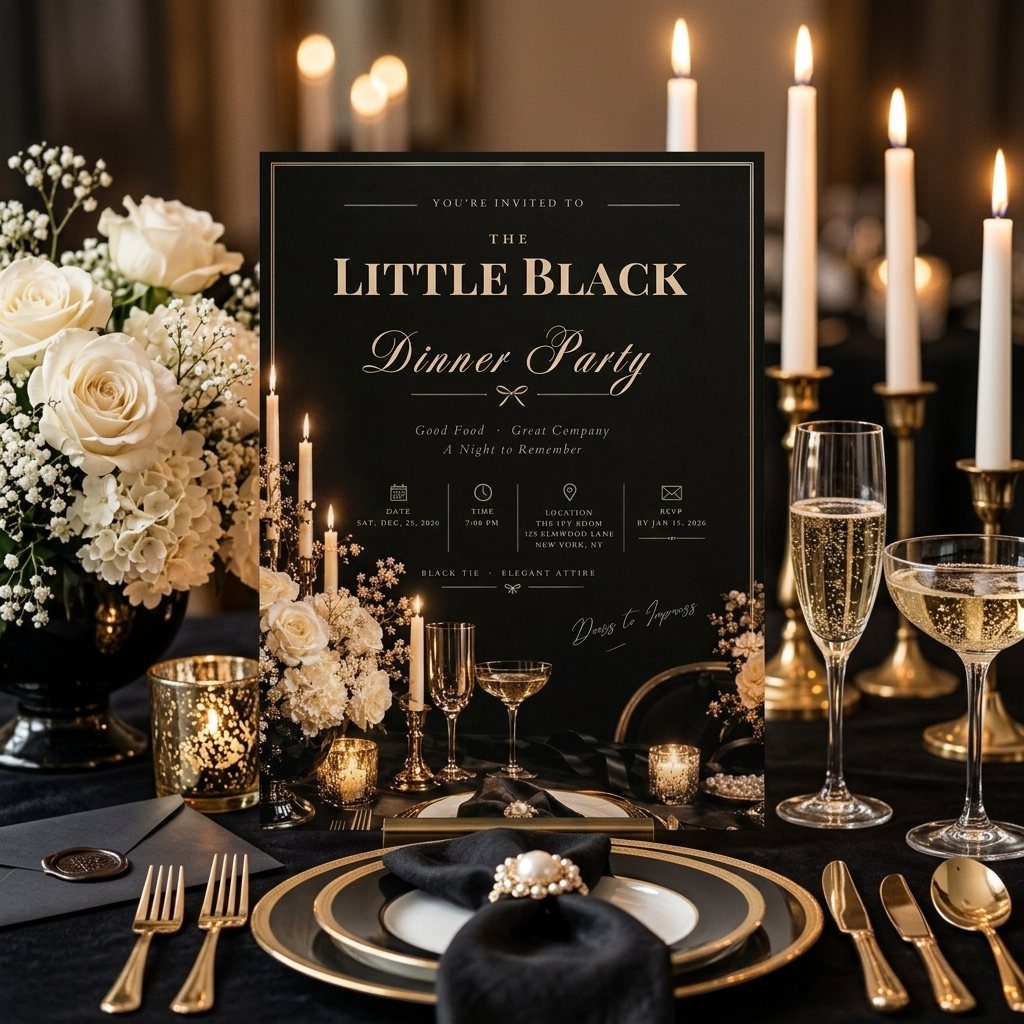
Formal wording starts with a title. "The Little Black Dinner Party" tells guests the dress code before you spell it out, and a black card with gold type backs it up.
Write the host line in the third person, put the date and hour in words ("Saturday, October 12, at seven o’clock"), and add "Black tie optional" or similar below. Ask for "Regrets only" or a firm reply-by date.
Once you have those details, you can pick out the perfect dinner party invitations. These should describe who the event is for, the theme of the dinner, RSVP details, dress code and other specifics, and of course the basic location and date details.
4. Potluck Dinner Invitation
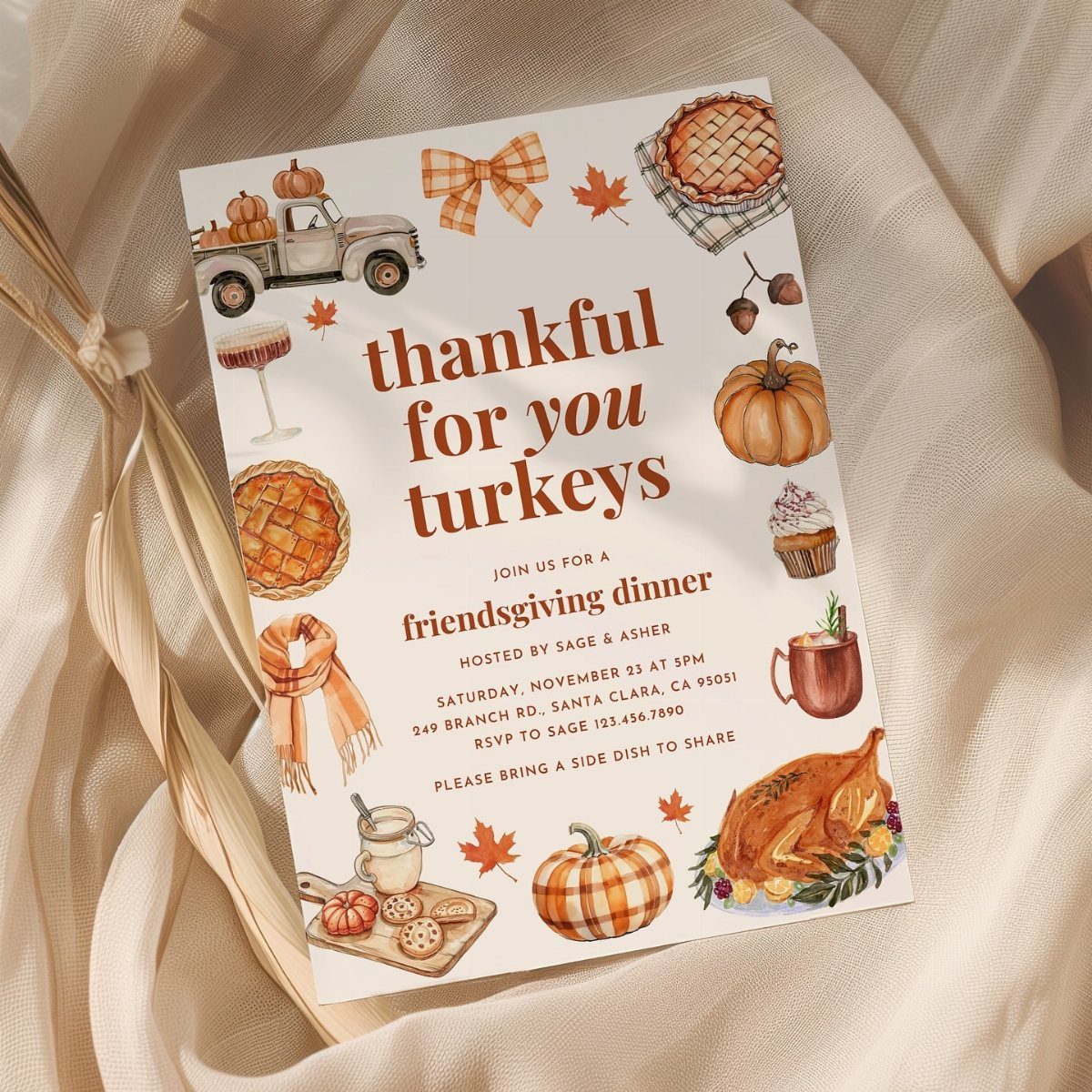
A potluck invite has one job beyond the usual details: assigning food. This friendsgiving card asks for a side dish, which is a clear, specific request.
Better still, name categories (a side, a dessert, a salad) so you don’t end up with nothing but desserts. Ask guests to reply with what they’re bringing, and include a line for allergies.
5. Christmas Dinner Invitation
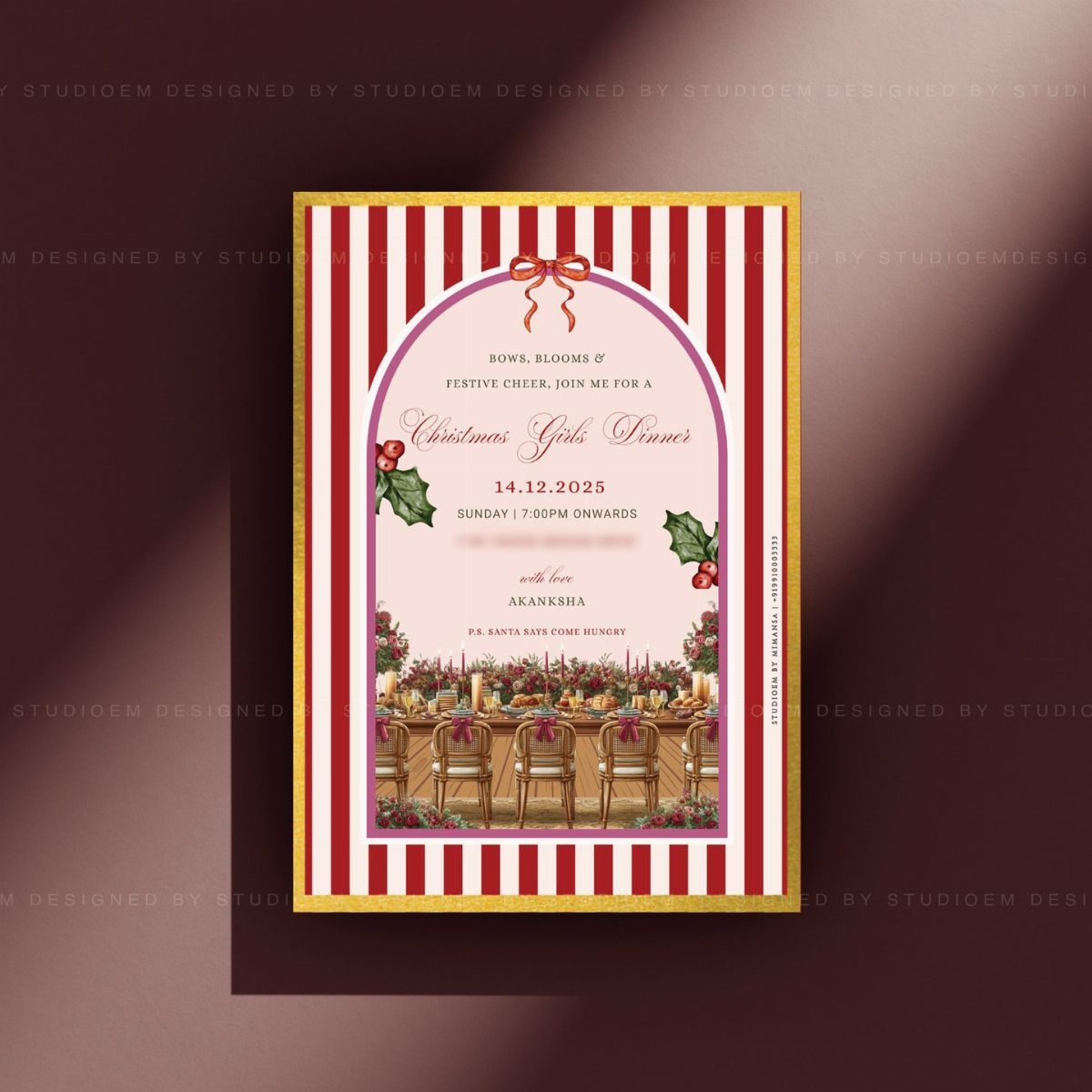
Christmas wording can be playful, as "Christmas Girls Dinner" proves: the name tells guests the mood and the guest list in 3 words.
Put the date in American order, 12.14.2025 or December 14, and add the start time and address. Holiday calendars fill early, so I’d send a digital card like this one well ahead of the date.
6. Bow and Scalloped Border Card
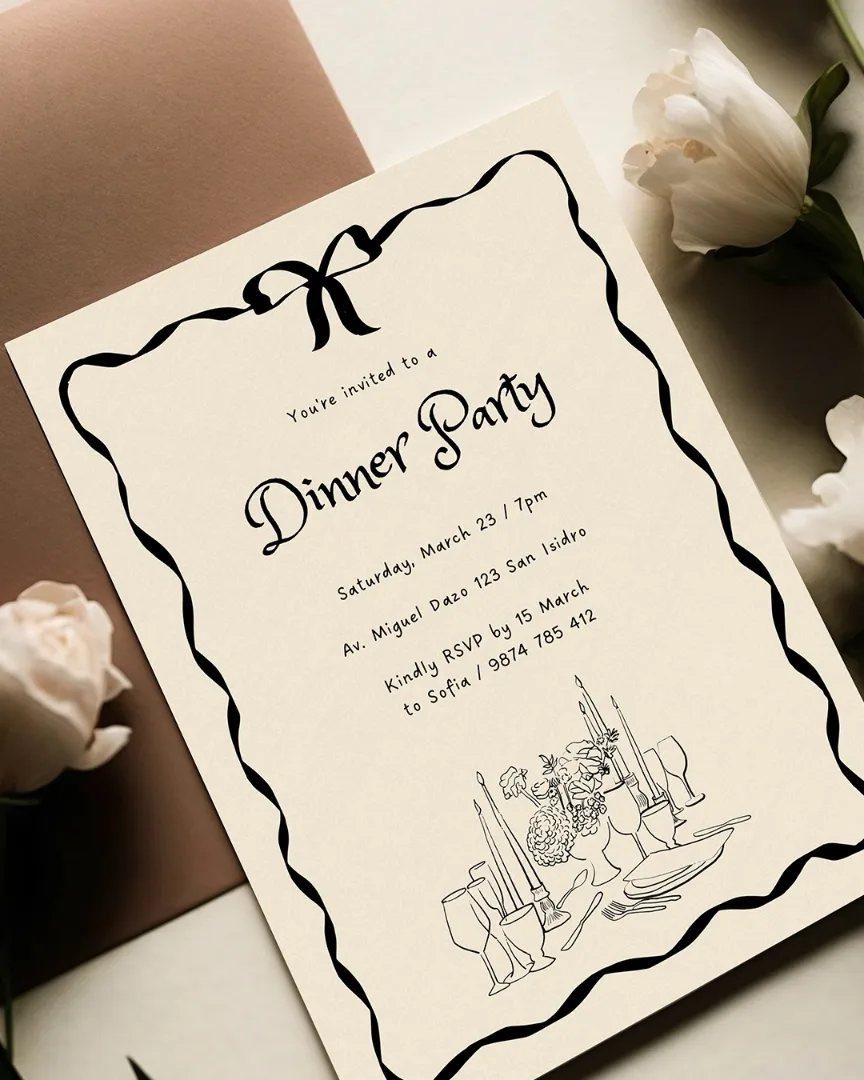
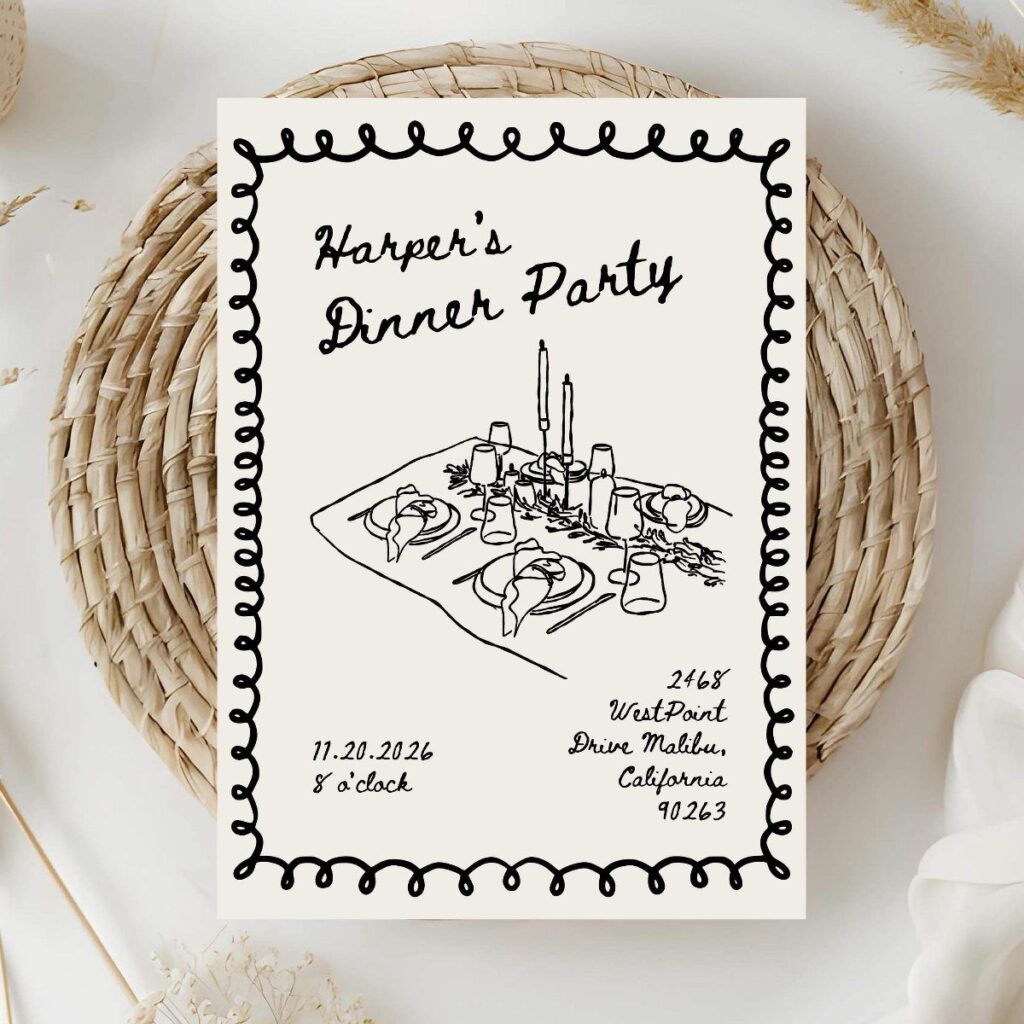
A scalloped black border and a printed bow on cream paper do the styling, so the wording can stay short. "Dinner Party" as the title is enough.
Keep the text to date, time, address, and a reply request, in one typeface. Black on cream reads clearly, and an envelope in a warm brown suits it better than stark white.
7. Striped Card with Drink Illustration
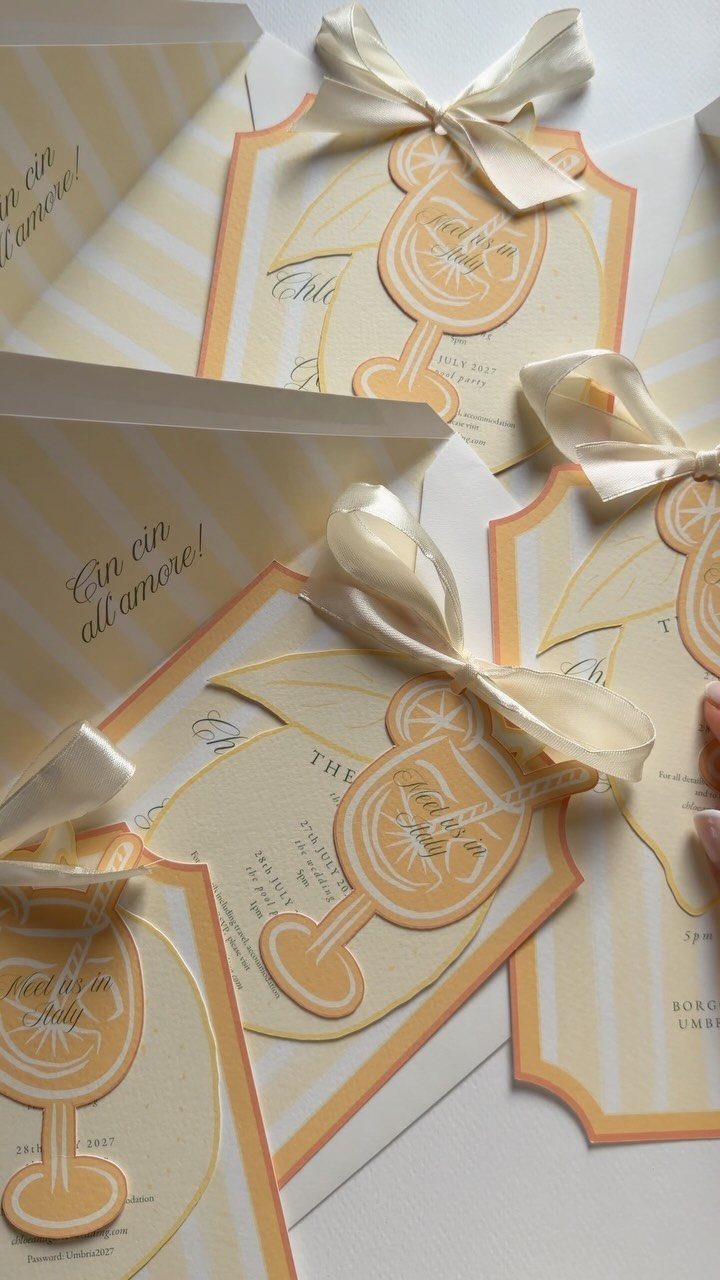
A drink illustration tells guests what the night is about before they read a word.
Here the cocktail glass and the "Cin cin all amore!" toast set up an aperitivo evening, so the menu can follow: something Italian, something to sip.
Keep the details to a minimum, since the stripes and orange border already carry plenty. Put the date, time, and address on one line each, and let "Meet us in Italy." act as the theme line.
A white ribbon bow at the top makes a card feel handmade without extra text.
8. Scalloped Card with Wax Seal
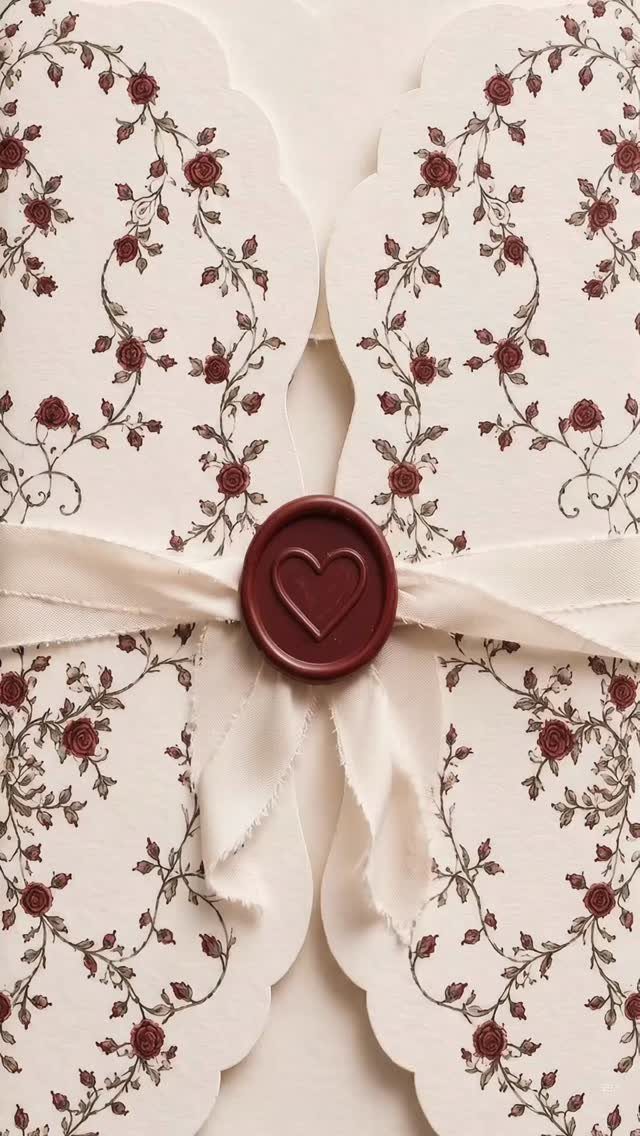
Scalloped edges and a rose vine already say romantic, so a heart wax seal on the ribbon finishes the card without any extra effort. I like that the seal closes the ribbon like a small gift tag.
This suits an anniversary dinner, a Galentine’s supper, or a bridal shower. Keep the wording soft and short, and print the date and time on the card itself so nobody has to break the seal twice.
Wax seals add a step per card, so set aside an evening to finish them.
9. Scalloped Monogram Card with Tassel
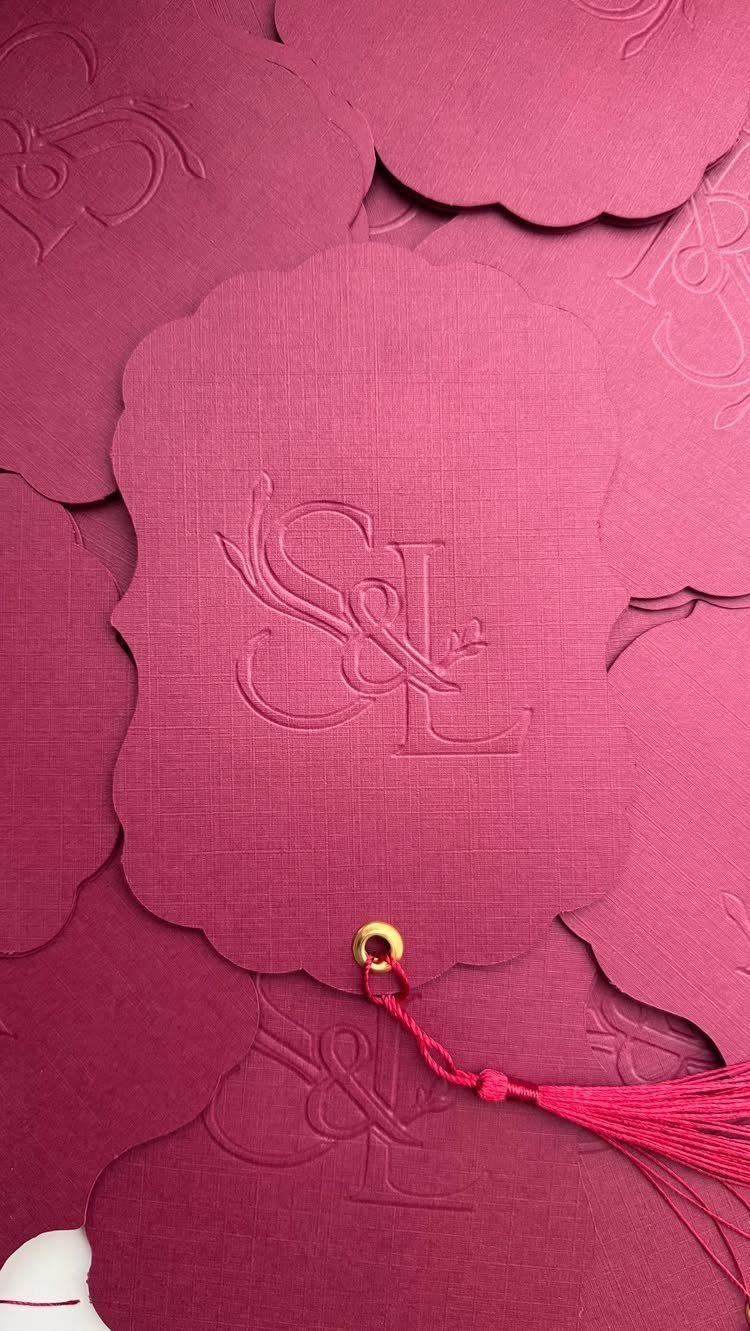
Magenta cardstock with an embossed "SL" monogram feels like stationery from a host who has done this before. The silk tassel on a gold eyelet is the one detail guests will keep touching.
Choose your initials for the monogram, since they work as a signature and save you a host line. Because the color is so strong, I’d print the text in white or gold and keep it brief.
A tassel adds bulk, so check the envelope size before you order.
10. Fan and Circular Shaped Suite
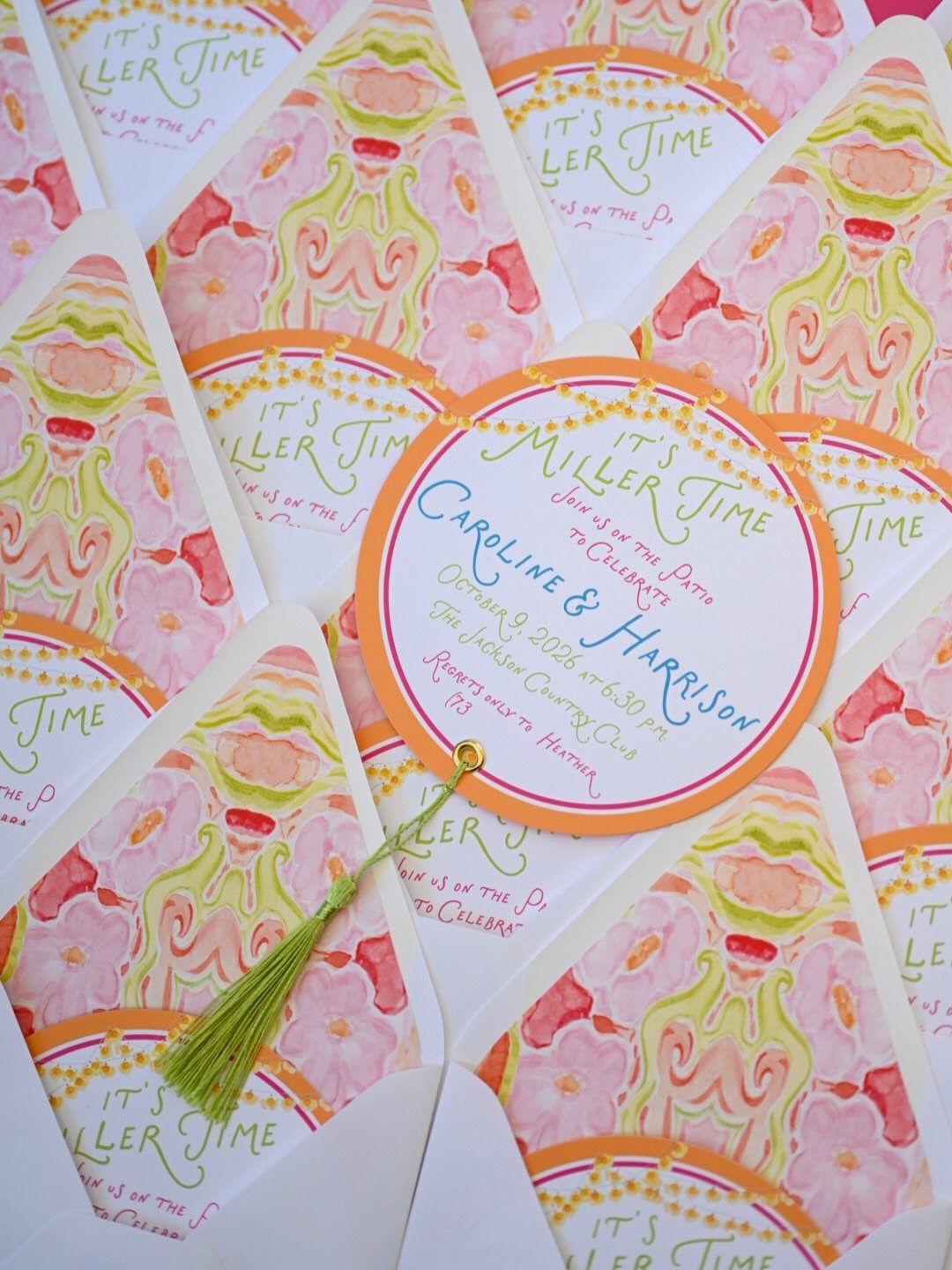
Fan and circular cards break the rectangle habit, and the floral print does the decorating for you. "It’s Miller Time" works as a playful title, with the couple’s names and "The Jackson Country Club" beneath it to anchor the details.
A green tassel is a good way to tie a mixed set together.
Odd shapes need custom printing or careful cutting, so I’d pick one shape for the main card and use the other for a smaller insert, like a reply or menu card.
Logistics for Dinner Parties
Send those details in the same message as the invitation itself.
Dietary questions matter most when I’m serving one shared braise with no alternate dish, because a surprise allergy mid-course is hard to fix.
Close neighbors or a crowd that lingers are good reasons to add a gentle end time, something like "dessert around 9." With that on the card, guests can book rides ahead and nobody has to guess when to leave at 10:40.
An unreliable elevator deserves a mention too. Mention a walk-up too: a guest hauling a hot casserole deserves to hear about 6 flights of stairs before saying yes.
Send invitations 3–5 weeks ahead so people have time to plan.
The basics come first: location, date, and time. Then add the dress code, RSVP details, and any theme.
Invitation Design Directions
Evening cards can run warmer and deeper than brunch ones, with candlelight, florals, vineyard tones, or clean modern type.
Here are the directions I’d choose from:
- An elegant floral table: romantic without reading as a wedding.
- Modern minimal: dark or cream grounds with strong typography.
If your table is small and candlelit, the minimal option wins. It stays quiet and lets the food carry the night.
A floral brunch template can still suit a seated dinner, so ignore the template’s name and judge the mood of the design.
Frequently Asked Questions
When should I send dinner party invitations?
Three to five weeks out is when I’d mail or text them, which gives people room to clear the date without the invitation getting buried.
Casual dinners can go out closer to the date, around 10 days to 2 weeks before, but holiday dates fill early, so I’d send those well in advance.
Do I need a dress code on a dinner party invitation?
If a card doesn’t make the formality clear, a line like "cocktail attire" or "dressy casual" saves guests a guess.
A formal invite can say "Black tie optional" below the date and hour, and a title like "The Little Black Dinner Party" hints at the dress before you spell it out.
How do I handle plus-ones on a dinner party invitation?
State your policy plainly on the invitation so nobody has to guess. A short line such as "Please reply with the names of everyone attending" works, or simply address the invite to the guests you mean.
Should I list both cocktail and seating times?
Yes, whenever the two differ. Guests then know when to arrive and when dinner is served.
What should I put on a dinner party invitation?
Start with the host line, the date, the start time, and the address, then add an RSVP date.
Dietary questions, a dress code, and notes such as a walk-up with 6 flights of stairs can go in the same message as the invitation.





