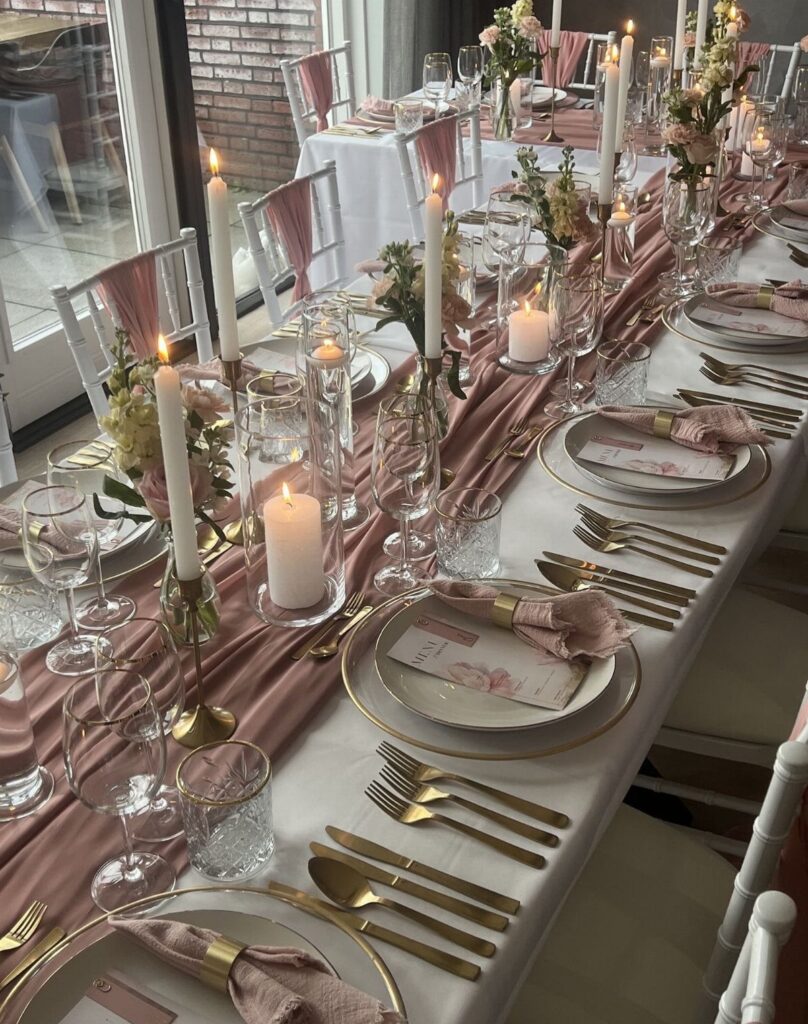
The settings run from handwritten name cards and woven placemats to tall candlesticks and futuristic neon decor, and the effort climbs with the drama.
Sightlines matter too: low and loose centerpieces keep a table of six or more able to see each other, while tall candlesticks belong where the flames sit above eye level or well clear of it.
1. Tall Candlesticks
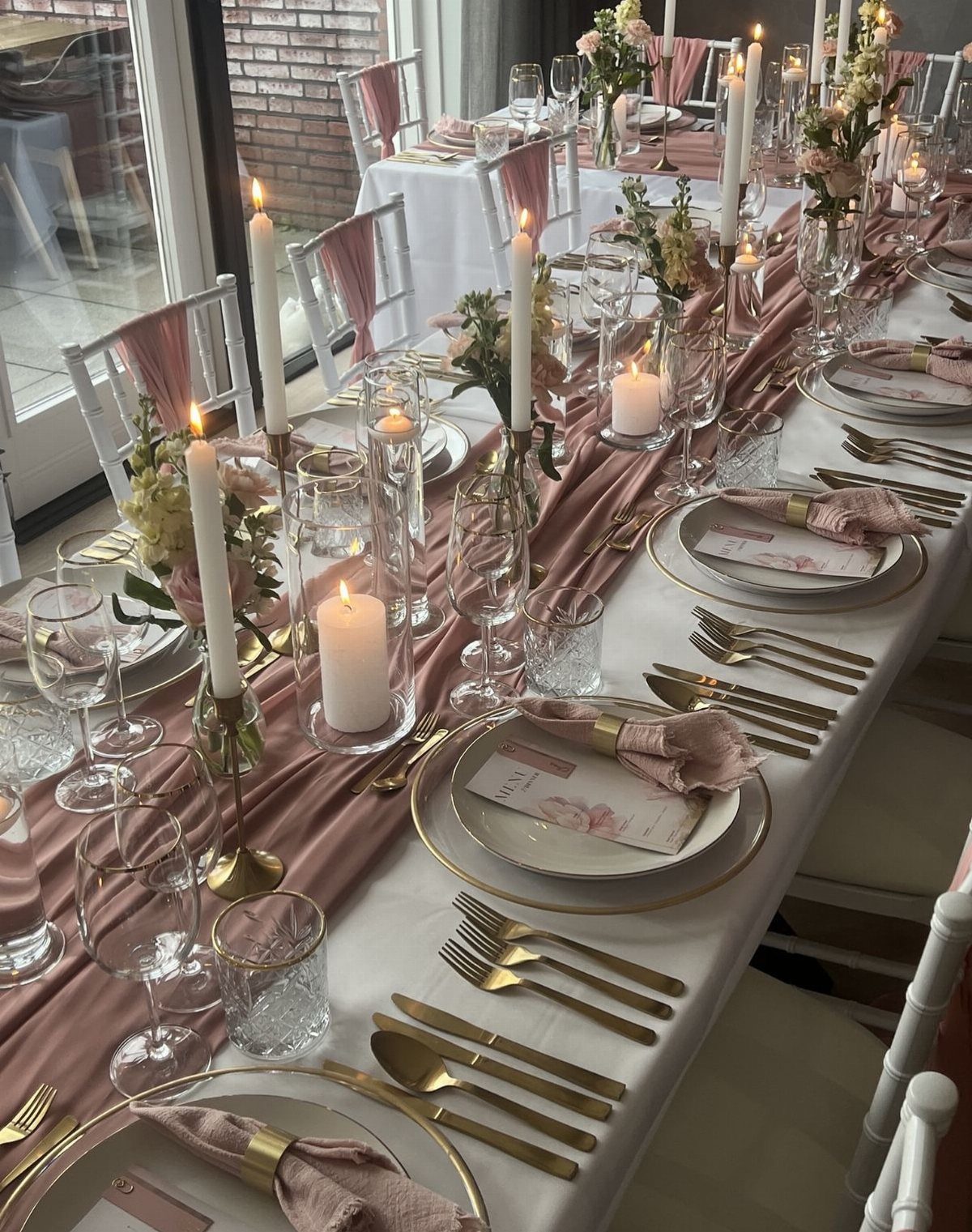
Height does the work here. Taper candles in mixed holders, some gold and some glass, make the eye travel up and down the table instead of settling on one flat line.
Vary the holder heights, but keep all the candles white so the mix reads as intentional. A mauve runner underneath gives the flames something soft to glow against.
Keep them tall enough that the flames clear everyone’s sightline when seated. Tall flames are lovely, but they shouldn’t block a conversation.
2. Luxe Look
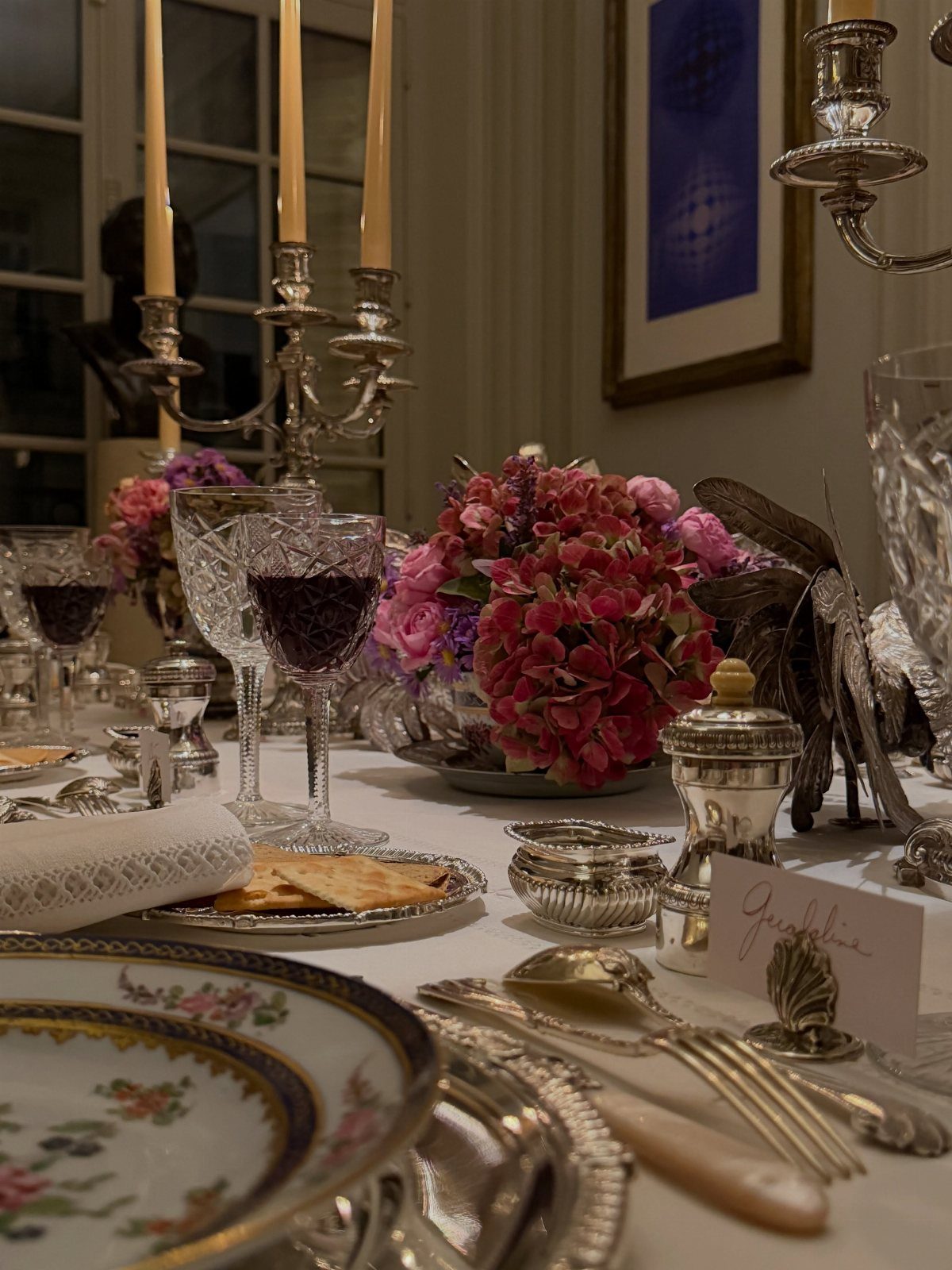
Silver candelabras, crystal and ornate china reward restraint in one place: pick a single flower and repeat it. Pink hydrangeas do that job well, because a few heads fill a lot of space.
Place cards like the "Georgina" one add to the formality, and they cost almost nothing.
I would use this look for a milestone dinner rather than a weeknight. It works best when every piece shares the same polished, traditional feel, so skip anything casual.
3. Low and Loose Centerpieces
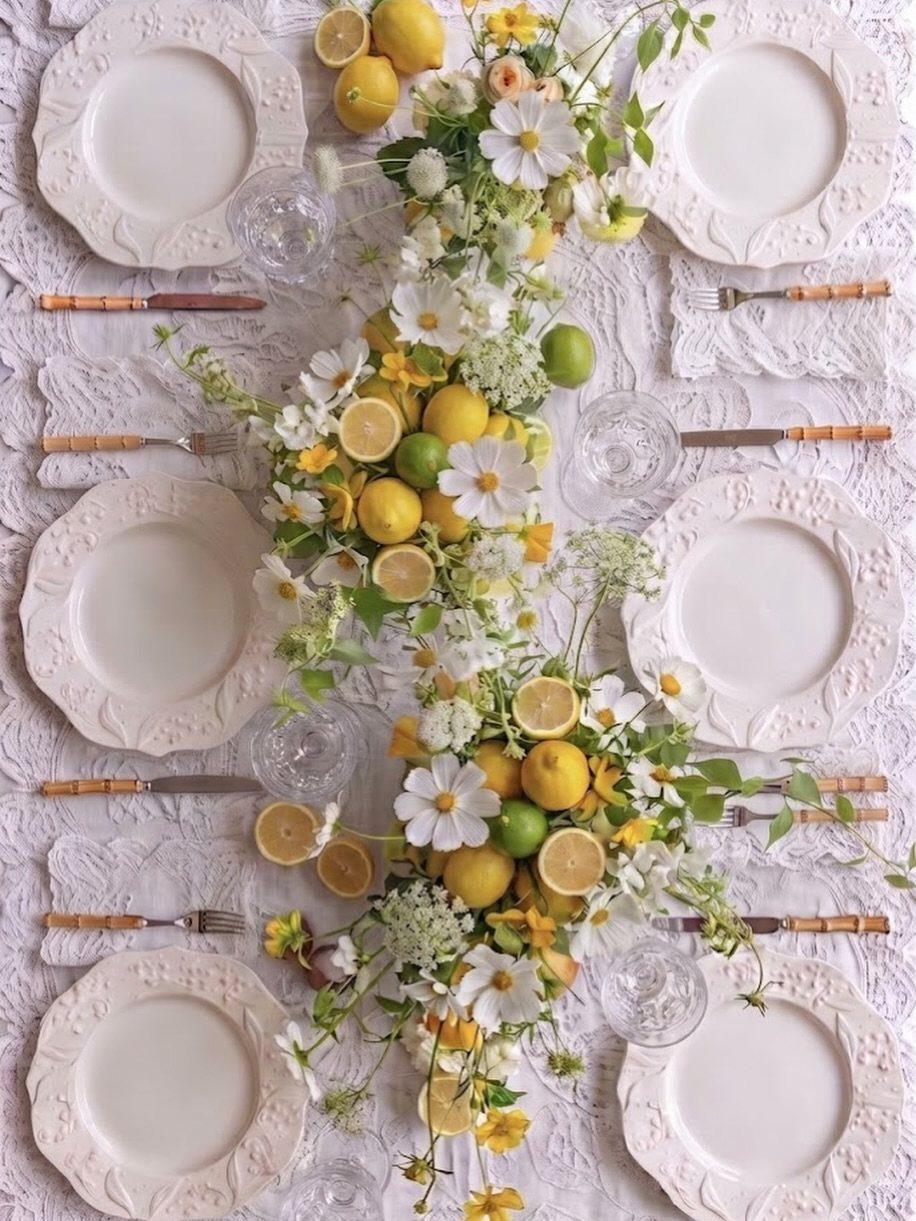
Long, low runs of flowers keep guests able to see each other, which is why I prefer them to a tall arrangement at a dinner for six or more.
Mix white blooms with loose greenery, then tuck in whole and sliced lemons for color and shape.
Build the run down the center in short sections instead of one big piece, and it stays flexible if you need room for platters.
Lemons are cheap, and a bag from the grocery store covers a lot of table.
4. Woven Placemats
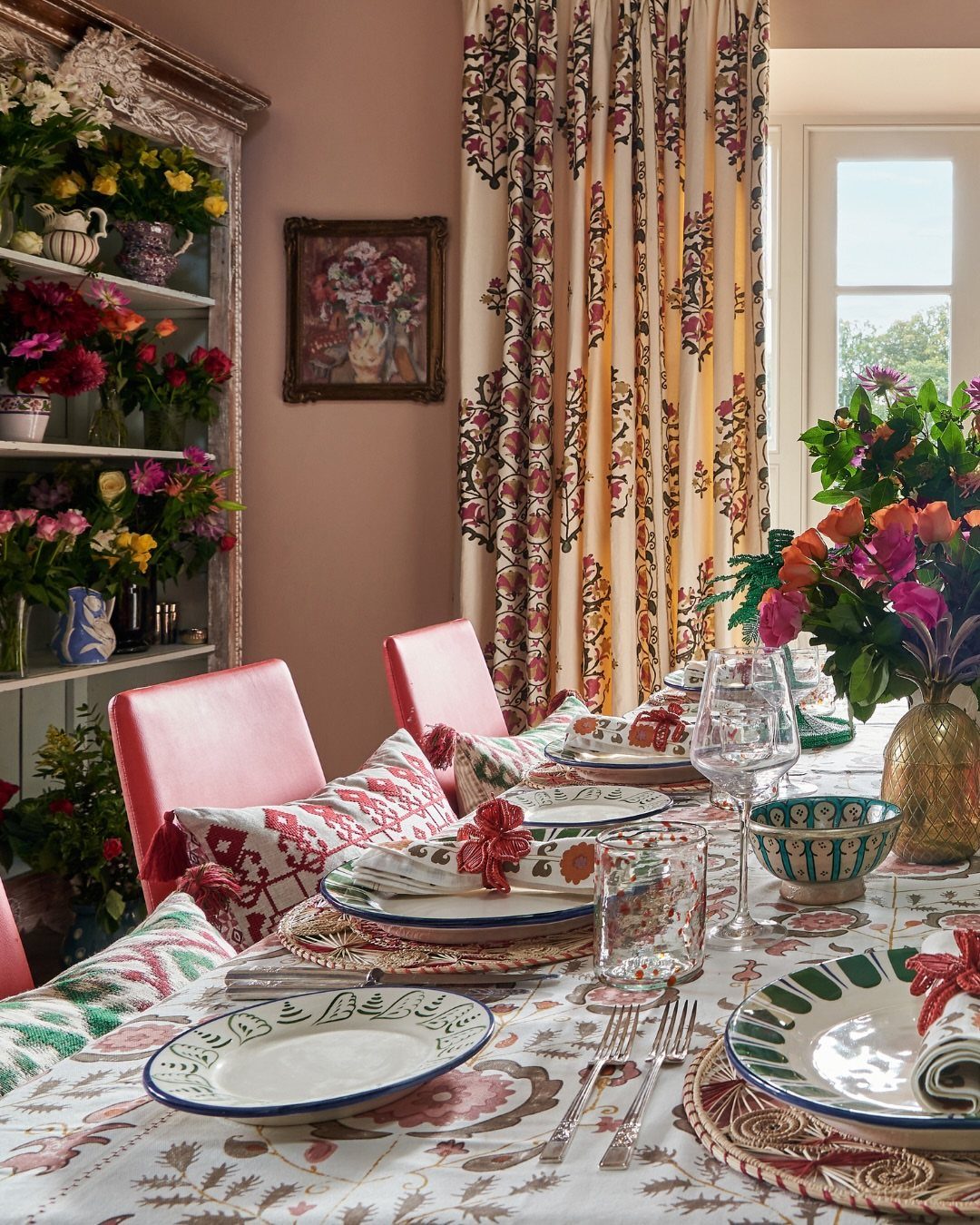
Woven chargers add texture under patterned plates, and they let you layer without buying a new dinnerware set. The natural fiber calms a busy mix of florals.
If the tablecloth and plates already carry pattern, keep the woven pieces plain in a neutral tone. Let the flowers supply the color.
I like this approach for a casual, cheerful dinner. Wipe-clean mats are easier to live with than cloth ones if guests are passing sauces.
5. Colorful Glassware
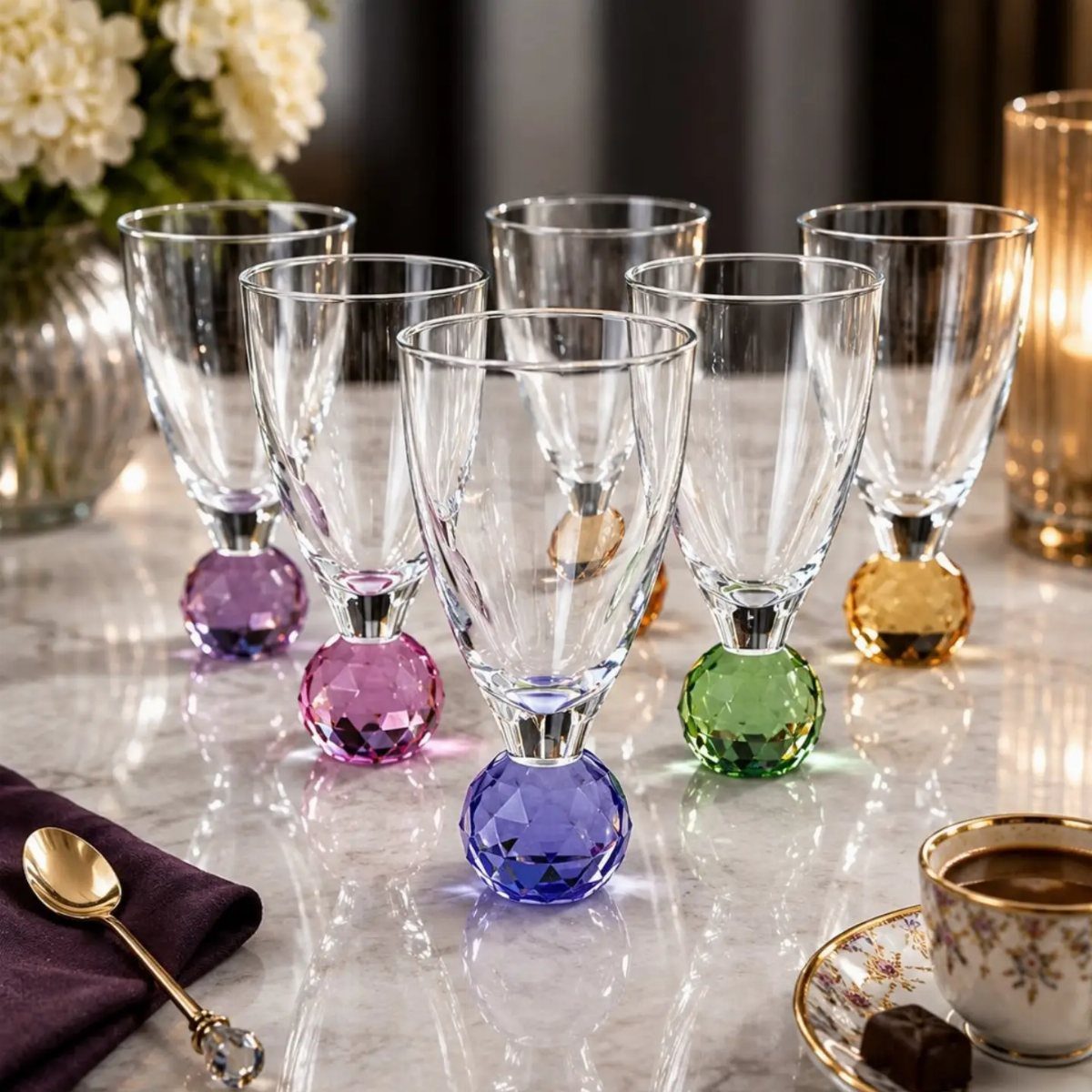
Glasses with colorful faceted bases turn a plain table into something playful, and they do it without any other decoration. Clear bowls keep the drink visible while the base carries the color.
Mix purple, pink, blue, green and yellow at each place so every guest gets a different one. It also doubles as a way to tell whose glass is whose.
Pair them with white plates and a marble or white surface, so the glassware is the only loud thing. Store-bought sets are fine here.
6. Seasonal Flowers
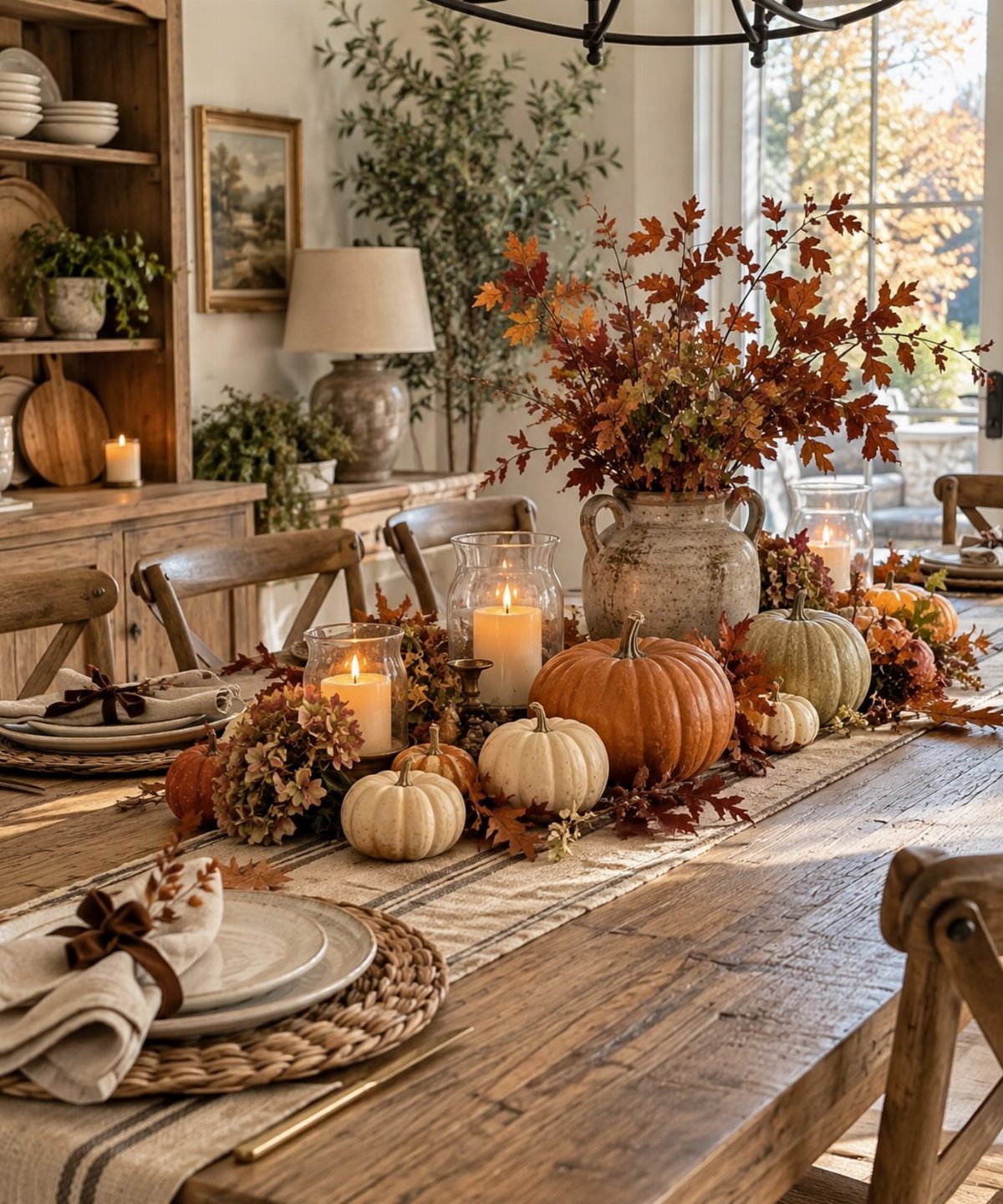
Autumn does half the styling for you.
Gather leaves and small pumpkins in varied sizes, group them in the center, and let the candlelight fill gaps. A bare wood surface keeps the whole thing relaxed.
For a different season, swap in whatever is blooming or cut easily outside with the same loose grouping.
7. Create a Cohesive Color Palette
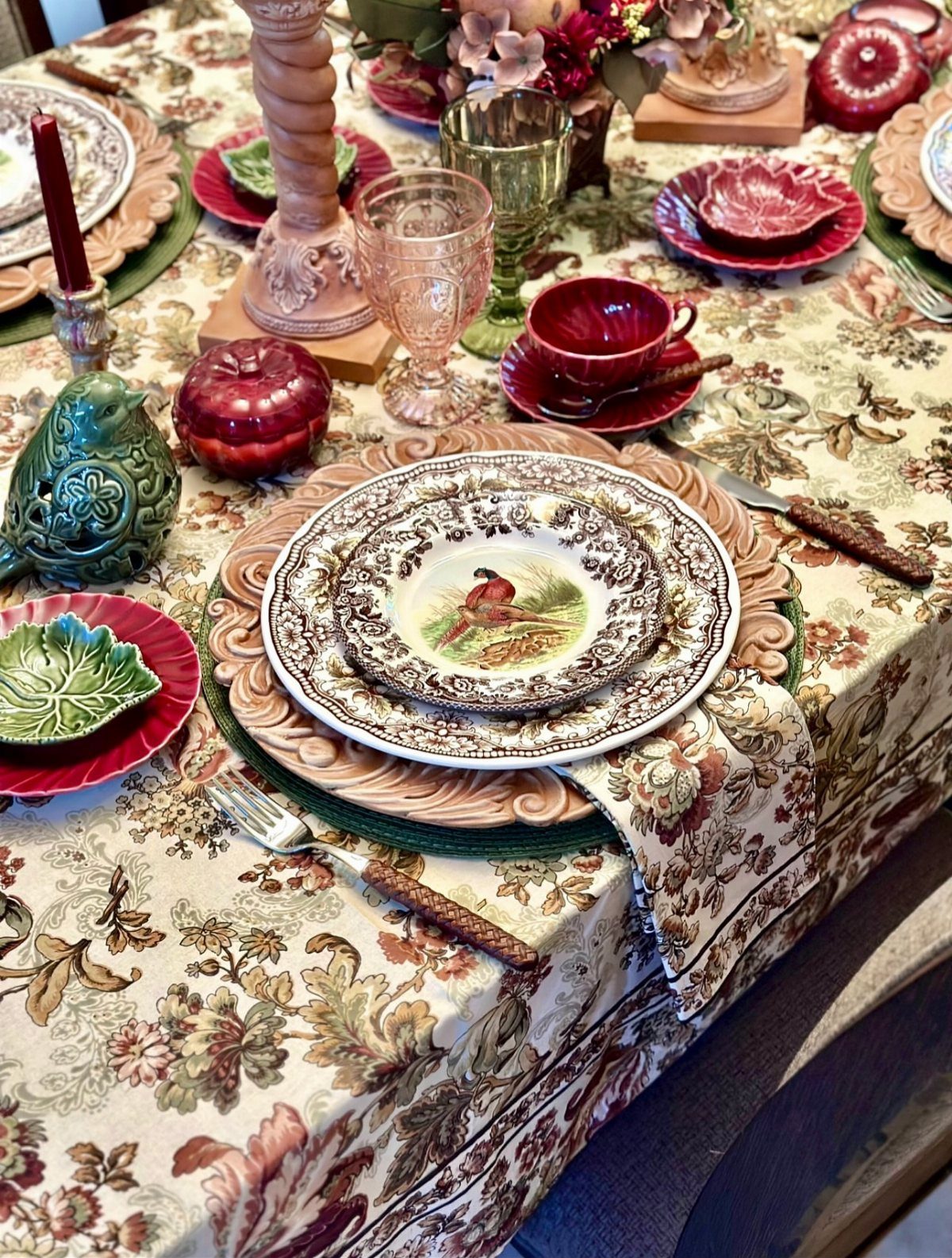
Red and green glassware against a floral cloth works because the 2 colors already appear in the pattern. Pull your palette from the tablecloth, then repeat those shades in glasses, a candle and fruit.
Pick two or three colors and stop there. Patterned plates can stay busy as long as they share those same shades.
A red candle is the cheapest way to tie it together, since one pillar costs a few dollars.
8. Handwritten Name Cards
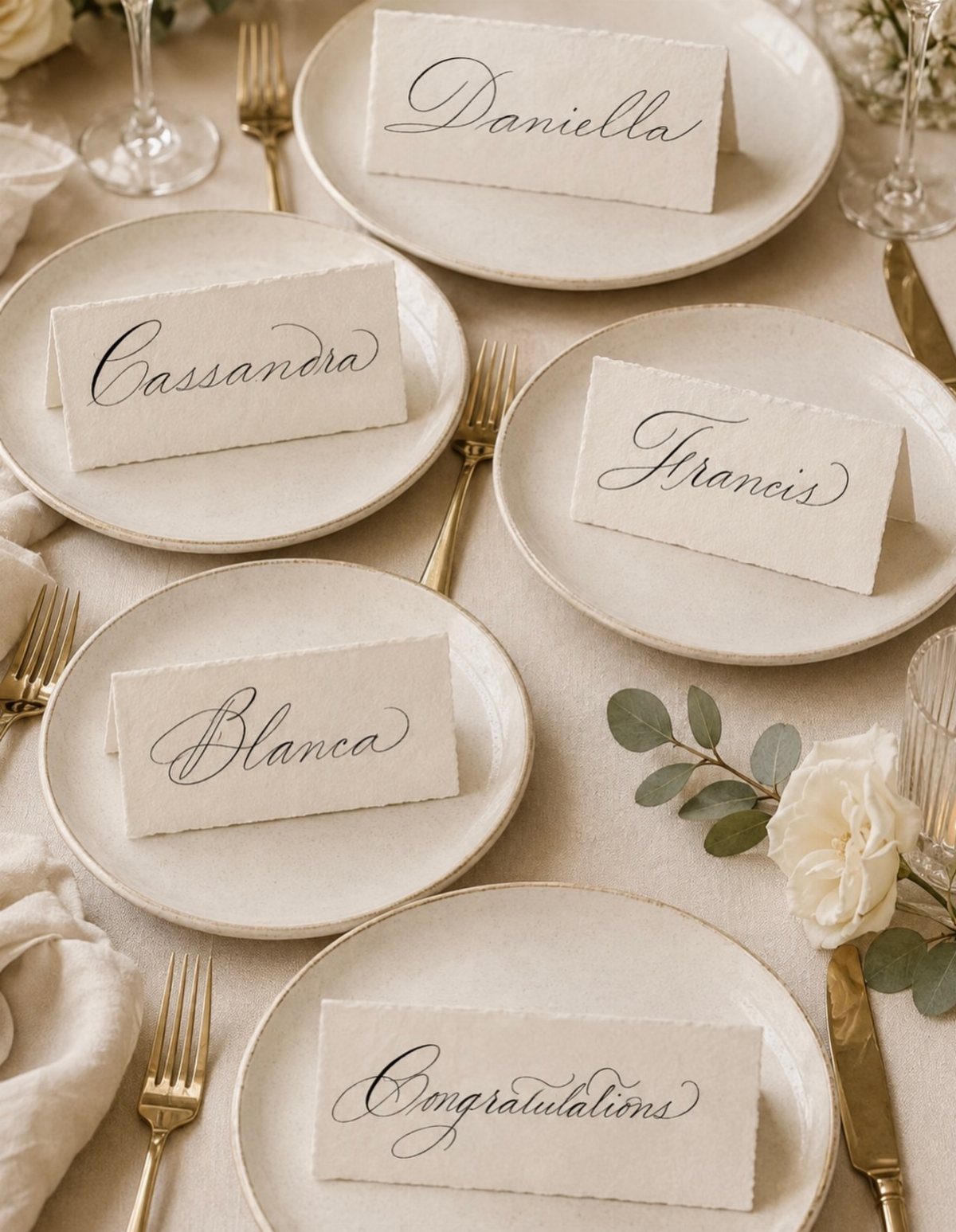
Gold cutlery and white plates leave a clean spot for a handwritten card, and a name in ink is the one detail that tells each guest the seat was chosen for them.
Use plain white cardstock folded or cut small, and write with a pen that dries fast so nothing smudges. Practice on scrap first, because a calligraphy-style hand shows every wobble.
A card can also carry a message. A "Congratulations" card works for a celebration dinner, and it costs next to nothing.
9. Define Place Settings
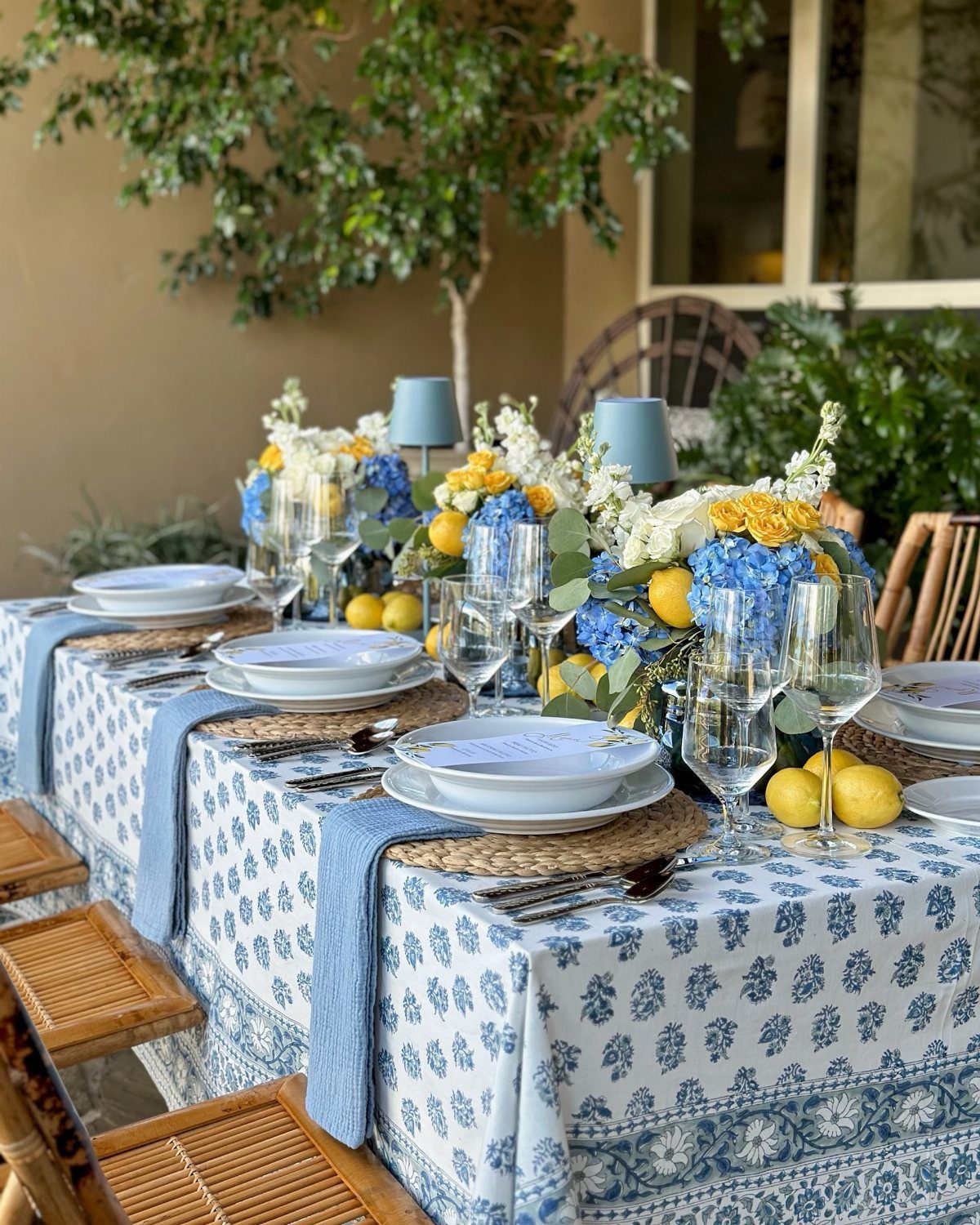
Every guest should have a clear patch of table that is theirs. A woven charger under a white plate draws that boundary, and a name card and a blue napkin finish it.
Keep the chargers identical so the row reads as a rhythm, even under a busy blue patterned cloth. Leave the same gap between settings; I would rather seat fewer people comfortably than squeeze in one more chair.
Let the centerpiece stay low and sit between the settings, not on them.
10. Botanical Print Tablecloth
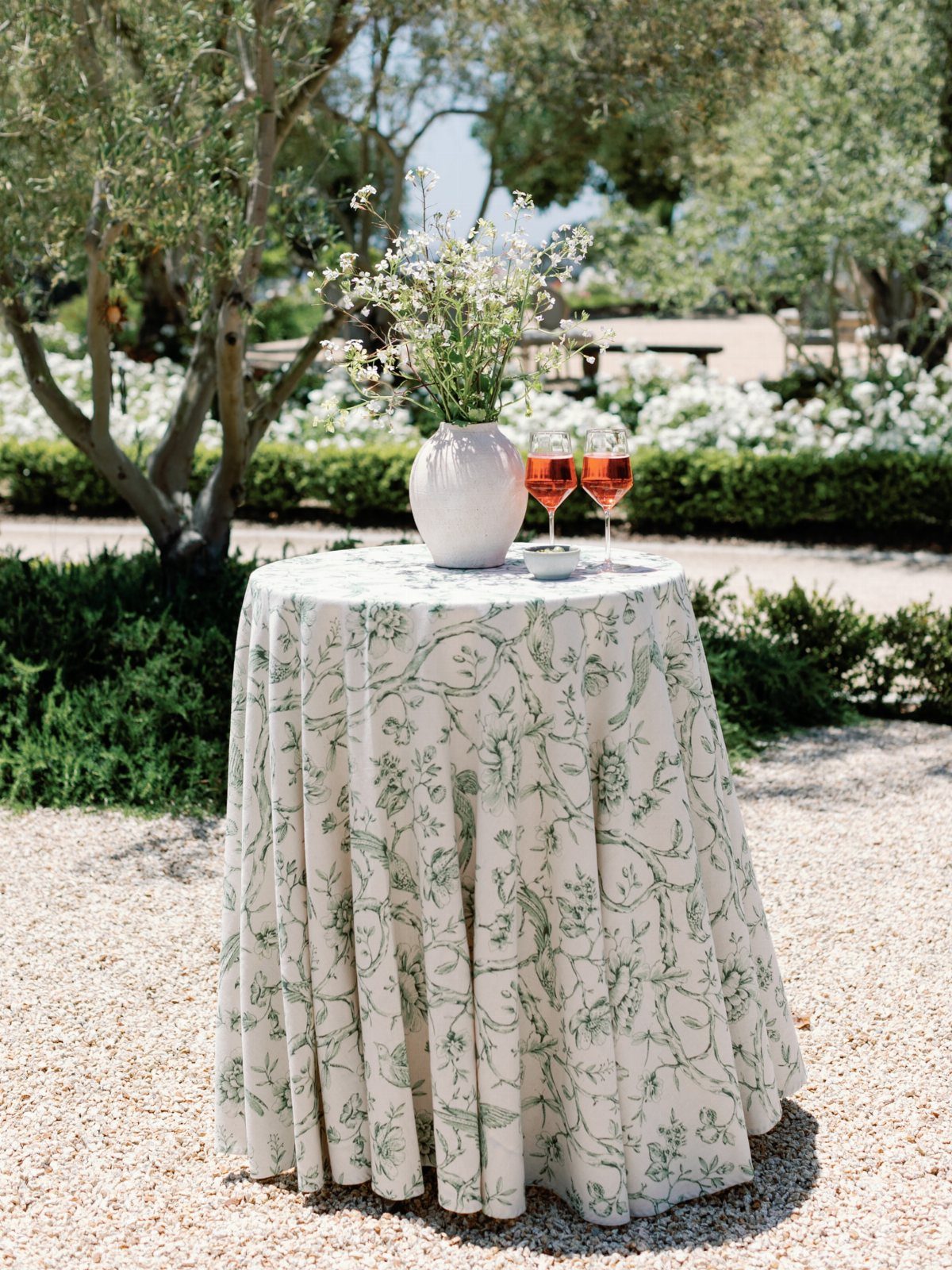
A green vine print does the decorating for a small round table, so the rest can stay simple: one white vase of flowers and two glasses of rosé.
Choose a cloth where the vines are fine and the background light, and let the flowers be loose and a little wild. A white vase keeps attention on the stems.
I like this one outdoors, where the botanical print can carry the table on its own. Gravel is uneven, so check that the table stands steady before you pour.
11. Futuristic Neon Table Decor
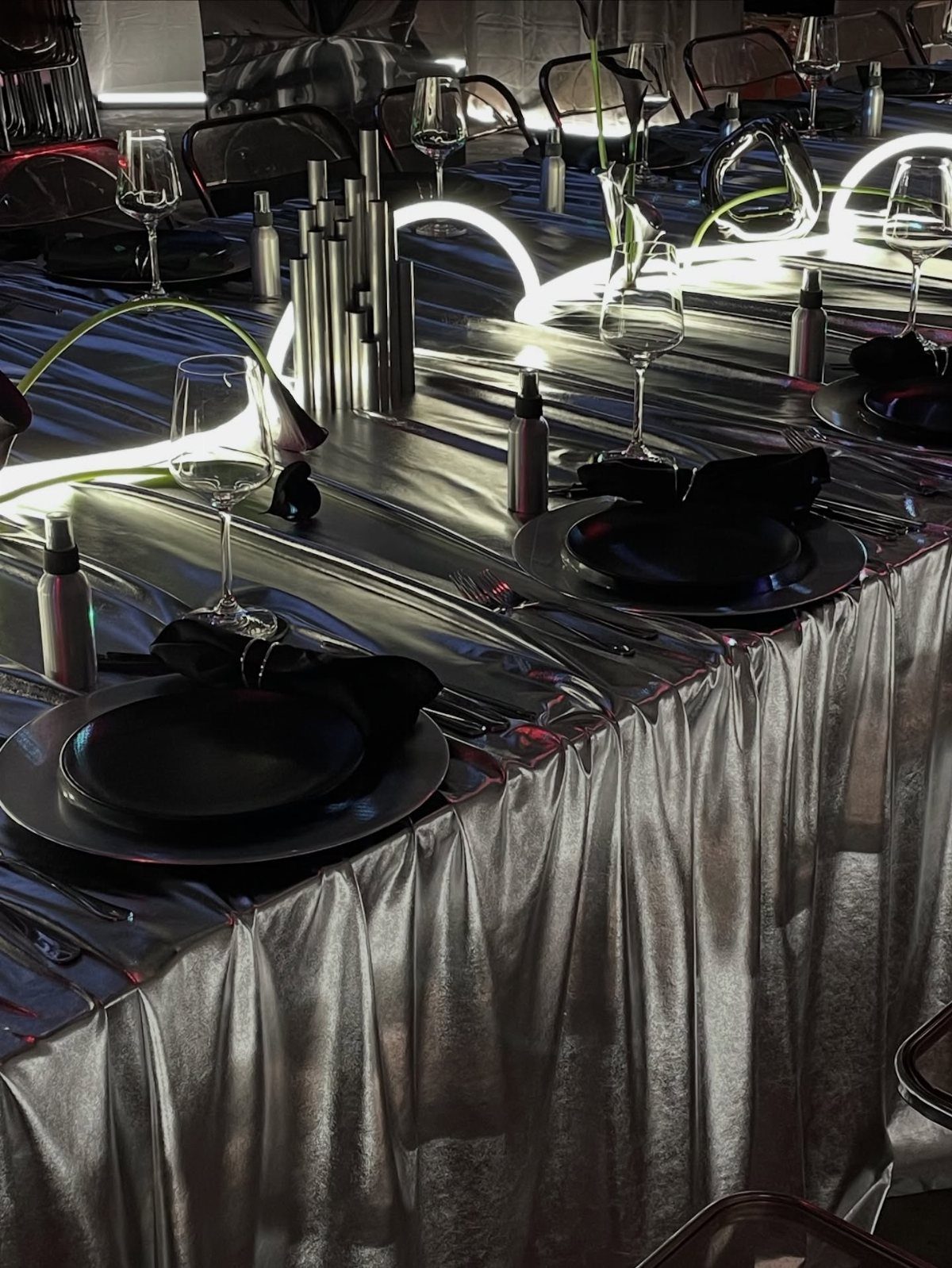
A silver metallic cloth with black plates gives a table a cool, mirrored look, and white neon ribbons winding down the middle supply the glow.
Dim the room so the lights read as the main event. Keep the glassware clear and the plates plain, since the cloth already reflects plenty.
Lay the ribbons in loose curves between the settings, not over the plates, and test the cords first so they reach an outlet without crossing a guest’s lap.
This look is bold and not cozy, so I would save it for a party built around the drama.
Importance of Table Setup
A table does a job before anyone sits down: it tells guests how formal the evening is, and it gives the meal a structure.
Plates, glasses and linens laid out in order show people where to start and where the food will land.
Match the effort to the occasion. Weeknight suppers get by on a plate, a fork and a napkin, but a shower or a formal dinner can handle a charger, a salad fork and a few extra touches.
Get the table set a full 24 hours ahead if you can, so the morning of the party belongs to the food. Check that the serving dishes you plan to use actually fit between the place settings.
Whether you’re gearing up for an intimate dinner party or planning a big holiday bash, tablescapes are a festive way to kick off any good celebration.
Choosing Table Linens
A soft cotton or linen cloth in cream, oatmeal or gray makes the best base, and everything else can be layered over it. Neutral gives you room to change everything else.
Next, add a runner down the center. On a long table, a runner often looks more polished than a cloth that covers everything, because the wood shows at the edges and your runner color gets some contrast.
Fabric lengths in stonewashed linen are a good stand-in for a runner or cloth on a very long table.
Napkins come last: a loose knot looks relaxed, while one tucked under the plate looks a bit more tailored. Outside, pick linens in shades that echo the yard and the flowers rather than fight them.
Creating a Personal Touch
A handwritten place card or a favorite serving dish tells guests someone planned this table for them, and people tend to relax and linger.
They don’t need to be expensive. They need to be specific to the people at your table.
One idea I like: skip the name card and write each guest’s name right on the plate in a clean calligraphy-style font. Practice the lettering first, and use a pen made for the plate surface.
A bowl of lemons, pears or plums in the middle plus napkins in a bold color gives the table a hit of color. The result looks modern and relaxed, and it takes very little time.
Frequently Asked Questions
What can I put on my table for decoration?
Candles, a low centerpiece and handwritten name cards cover most tables.
Mix the heights of your white taper holders so the flames stagger across the table, and keep the flowers low: white blooms, a little greenery and a few lemons leave sightlines open for conversation.
What are some good themes for decorating a table?
Seasonal, color-based and bold-statement themes all work. For fall, scatter leaves and small pumpkins in different sizes down a bare wood table, then let candles warm up whatever space is left.
How do I set a dining room table?
Start with a neutral cloth in cotton or linen, then add a runner, define each place setting and finish with napkins and a low centerpiece.
A charger under a plate, a name card and a napkin mark each guest’s patch, and keeping the same gap between settings makes the row look even.
Setting the table a day ahead gives you time to test the layout, and a quick check that each serving dish fits between the place settings saves a scramble later.





