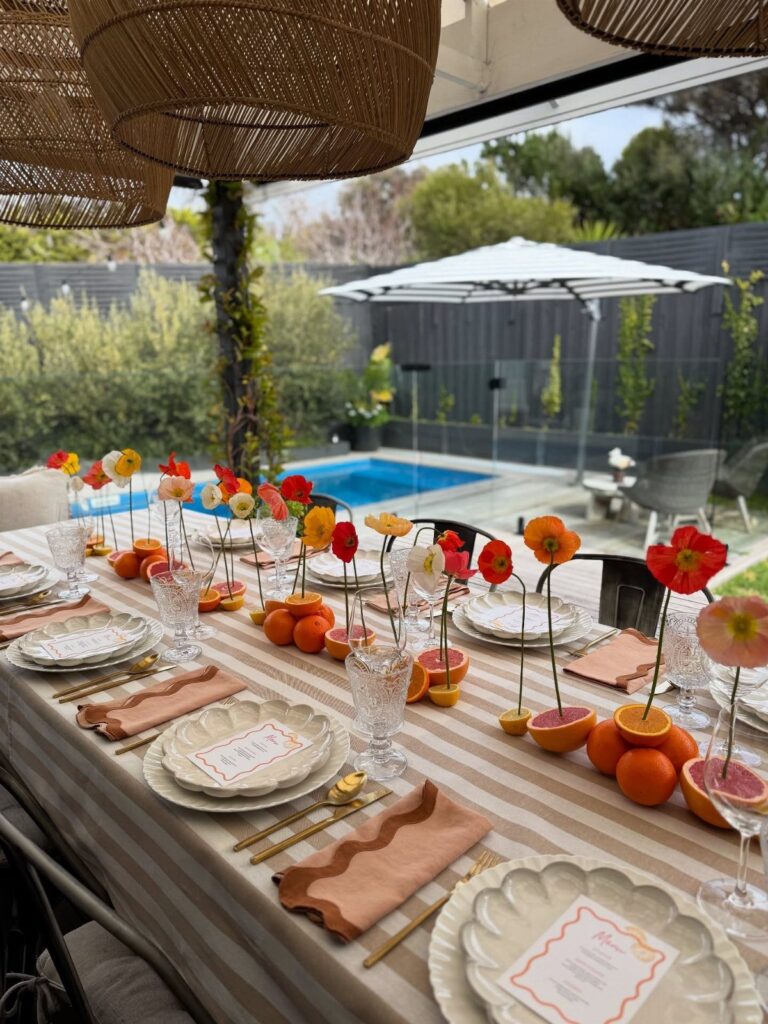
The dishes, linens and flatware in your cabinets decide which of these settings becomes yours, so start there before buying anything.
If your dinnerware leans neutral, patterned placemats or a striped cloth bring the color; if your plates are plain white, red chargers or a single bright napkin do the same job.
Costs run from almost nothing, like twine-tied napkin bundles and fresh fruit accents, to a real purchase, like modern matte cutlery. Nearly all of them hold to one rule: one color carries the table and everything else stays quiet.
1. Pick a Theme
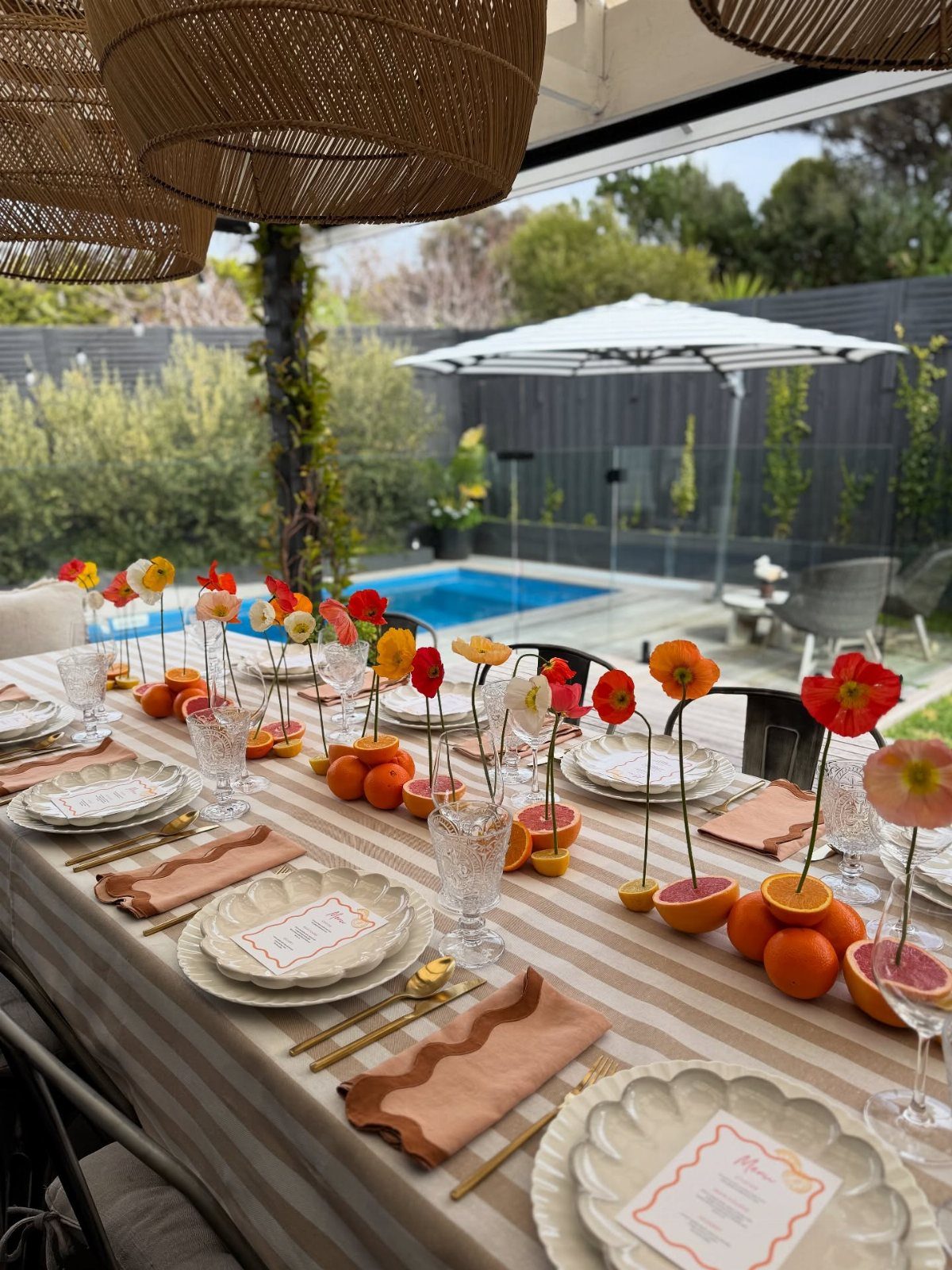
Pick one fruit and repeat it in three places: real citrus in the centerpiece, one orange accent on the menu cards, and a striped cloth underneath to tie it together.
White plates keep it from getting loud, which is why I would start there.
Pick one color family and let three things carry it: linen, menu, dinnerware. Everything else stays quiet.
2. Tablecloths and Runners
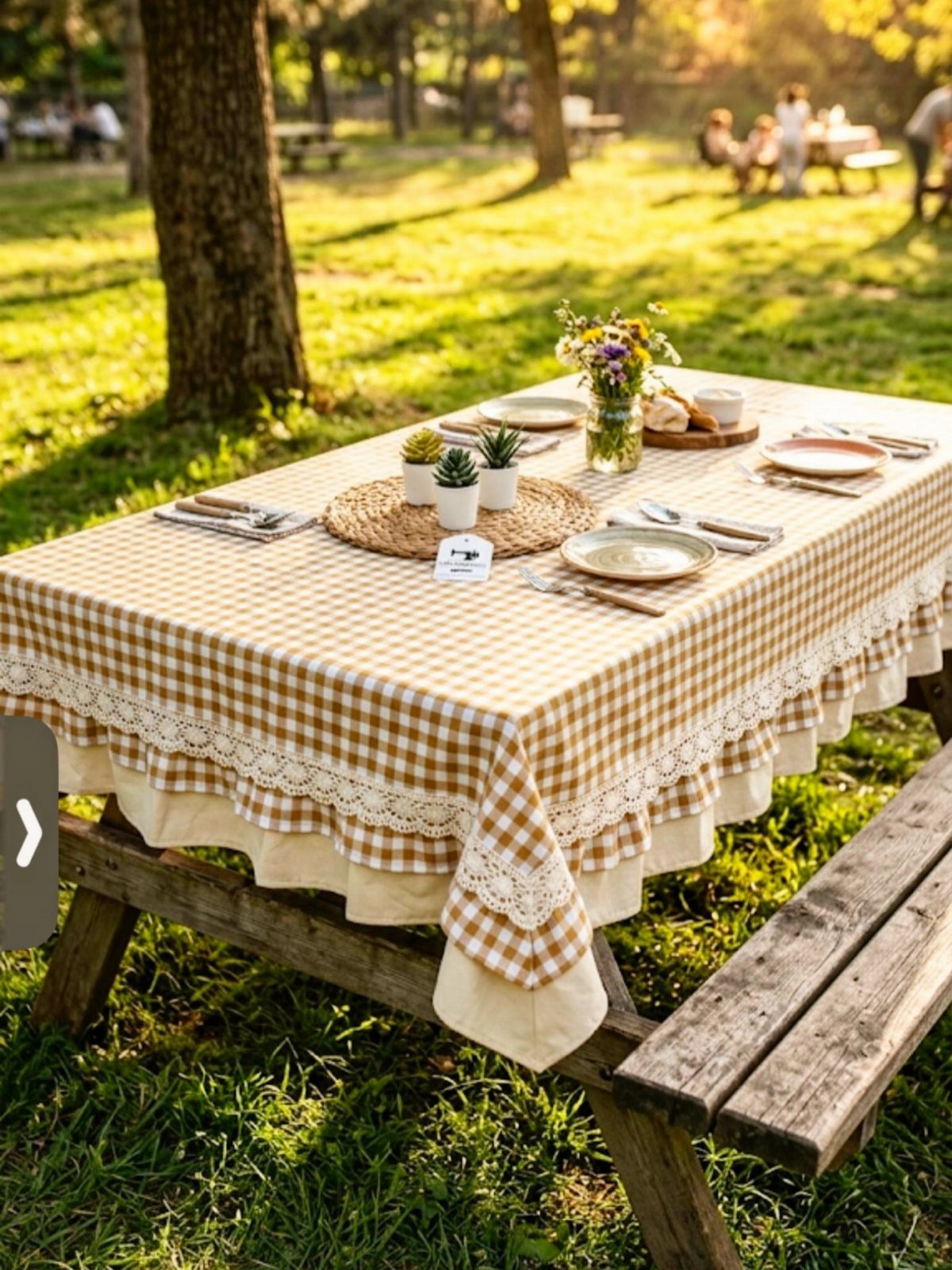
A cloth covers scratches and mismatched boards in one move, so a cheap table stops mattering.
Choose a cloth that hangs over the edge by several inches, and keep the rest simple. Small potted plants and a few flowers do the decorating, and the pattern does the rest.
A runner is the lighter option if the wood itself is worth showing.
3. Neutral Dinnerware
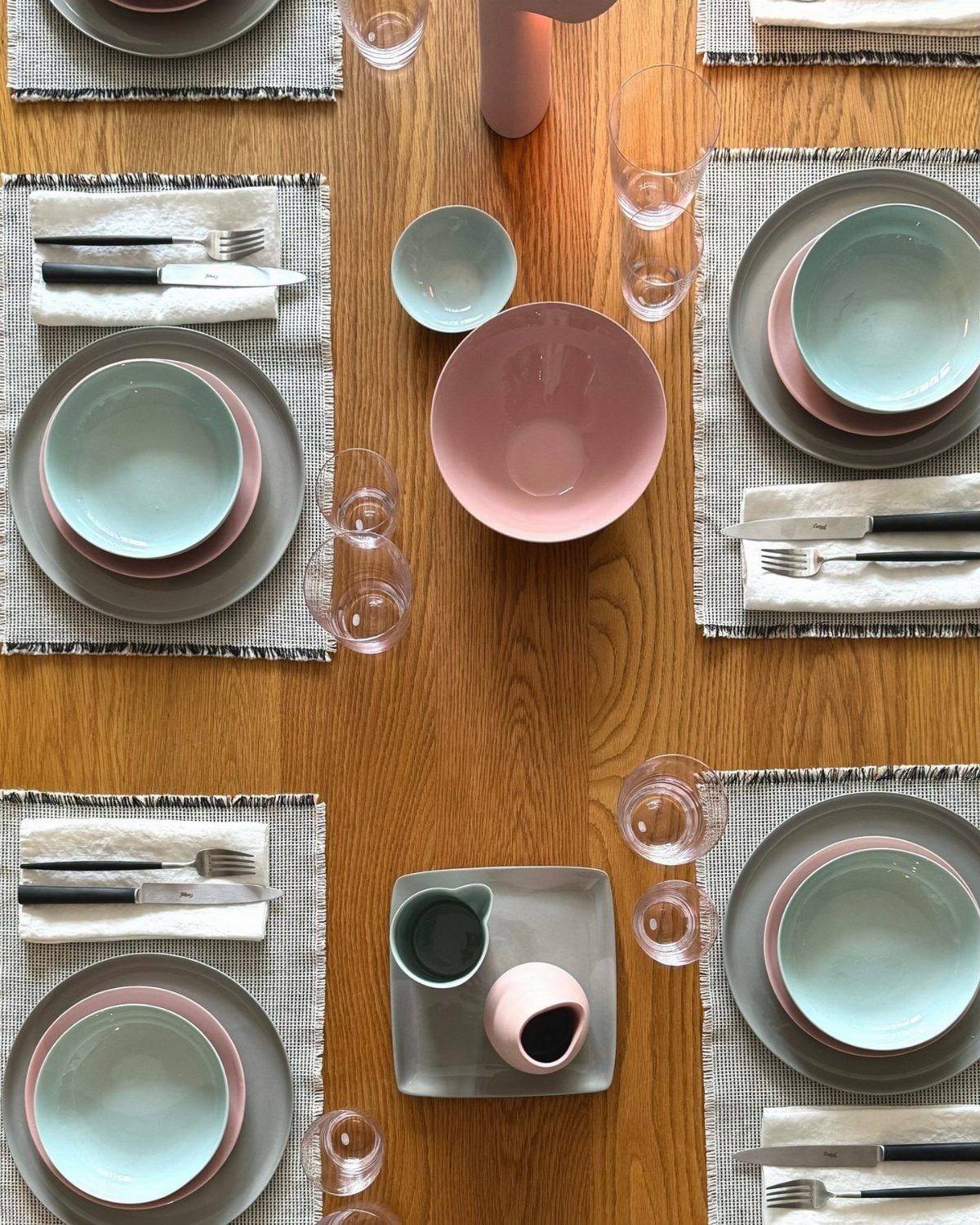
Grey plates with light blue bowls and a white napkin read calm without being plain. Soft colors like these mix easily, so a pink plate can join in without clashing.
Buy a base set in one quiet shade, then add a few accent pieces rather than a full second set. That keeps the cost down and lets you swap the mood for each gathering.
I like wood underneath: it warms up cool tones.
4. Placemats
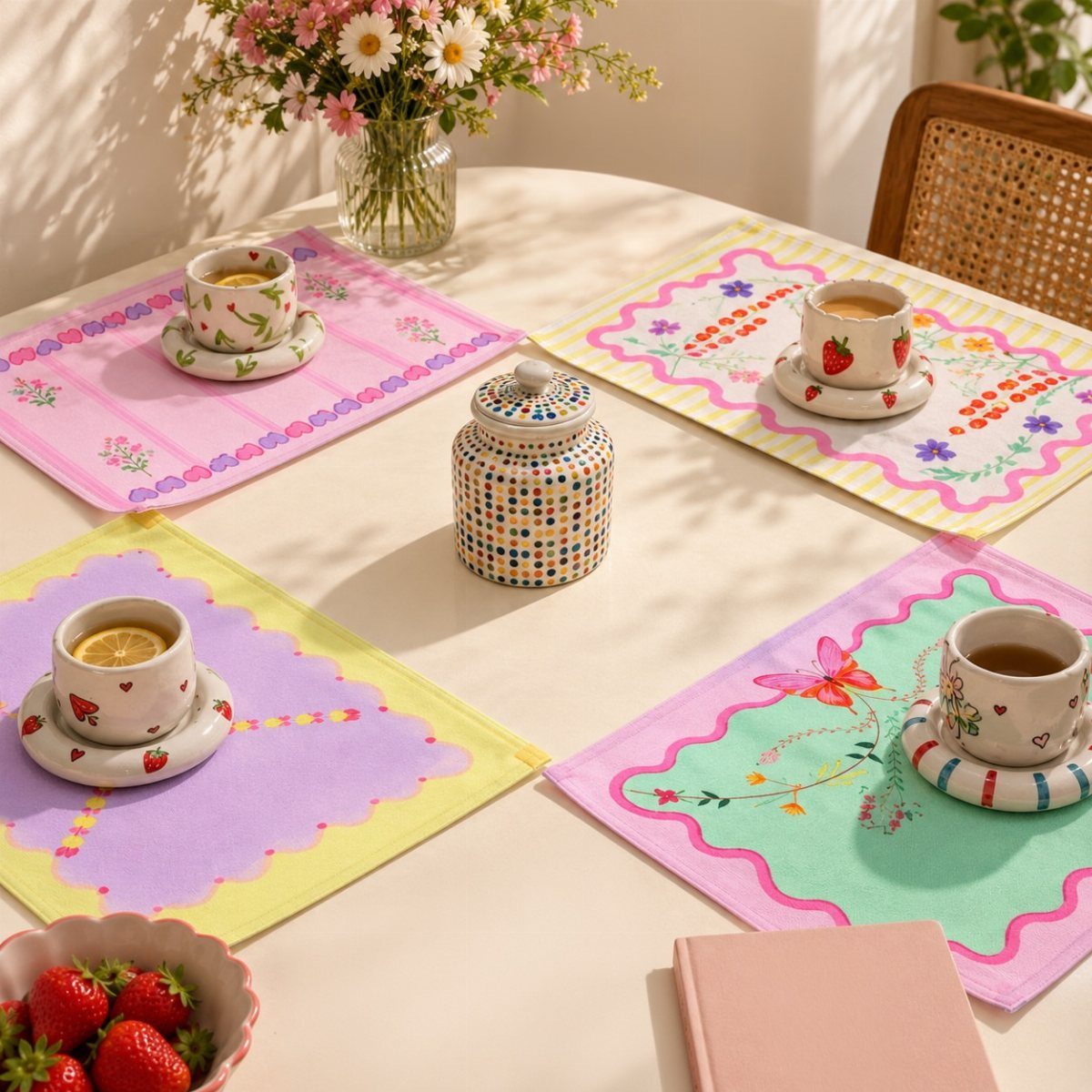
Placemats solve the color problem when the dishes lean neutral. Patterned ones in bright shades bring the color, and the cups and plates can stay simple.
Match the mats to each other, or let each one differ and repeat a color in the cups. I prefer the matching cups, since a pattern next to a pattern gets busy fast.
Mats are also the cheapest piece to replace when you want a new look.
5. Incorporate Seasonal Colors
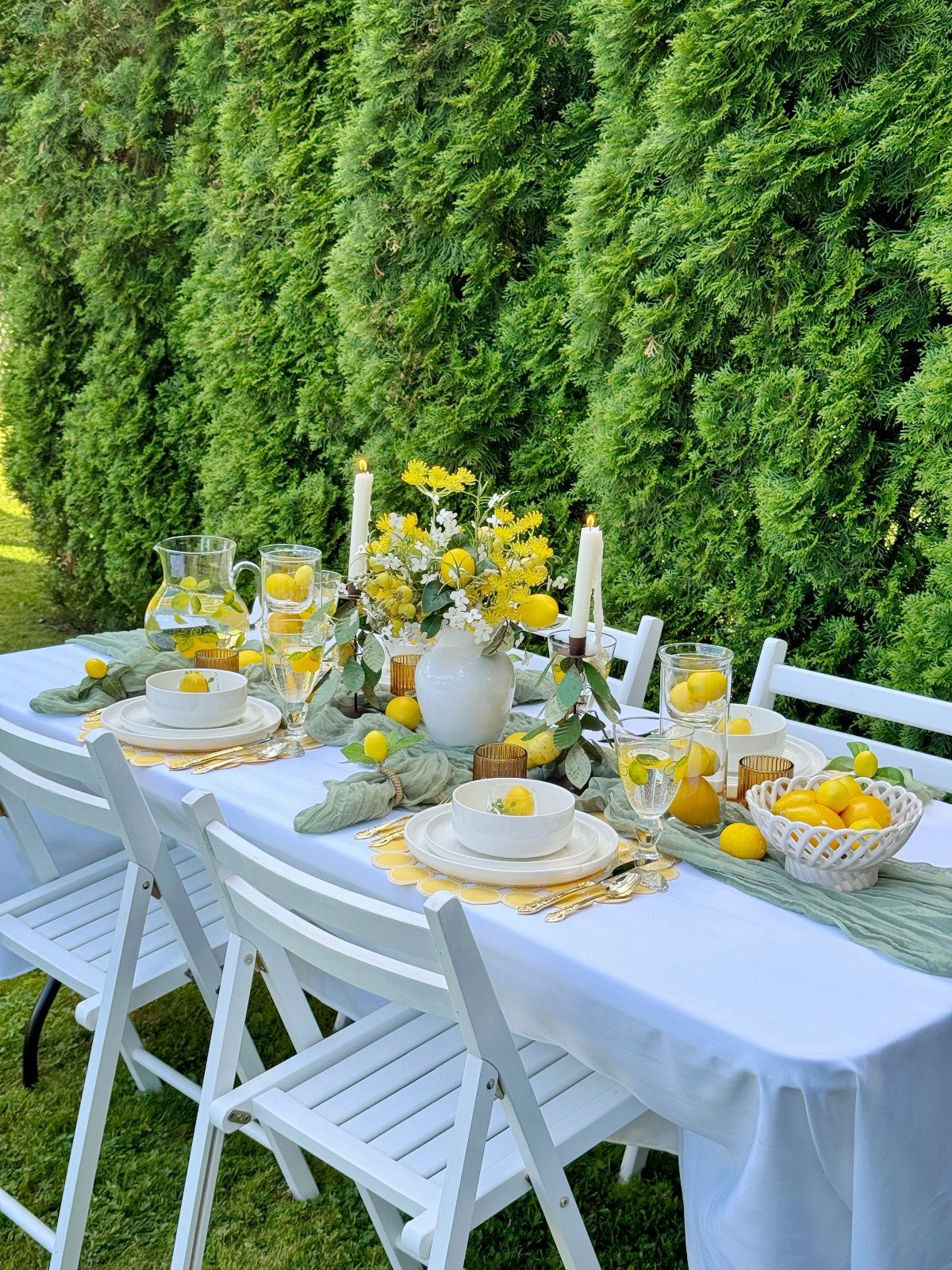
Lemons, yellow flowers and napkins in a light green work because they all come from one season’s palette. Against a tall green hedge, the whole table feels part of the yard.
Shop your own season: pick one bright color for napkins, then repeat it in fruit and flowers. White plates keep it fresh and let the color stand out.
Swap the napkins and produce, and the same table works next season.
6. Use Casual Materials
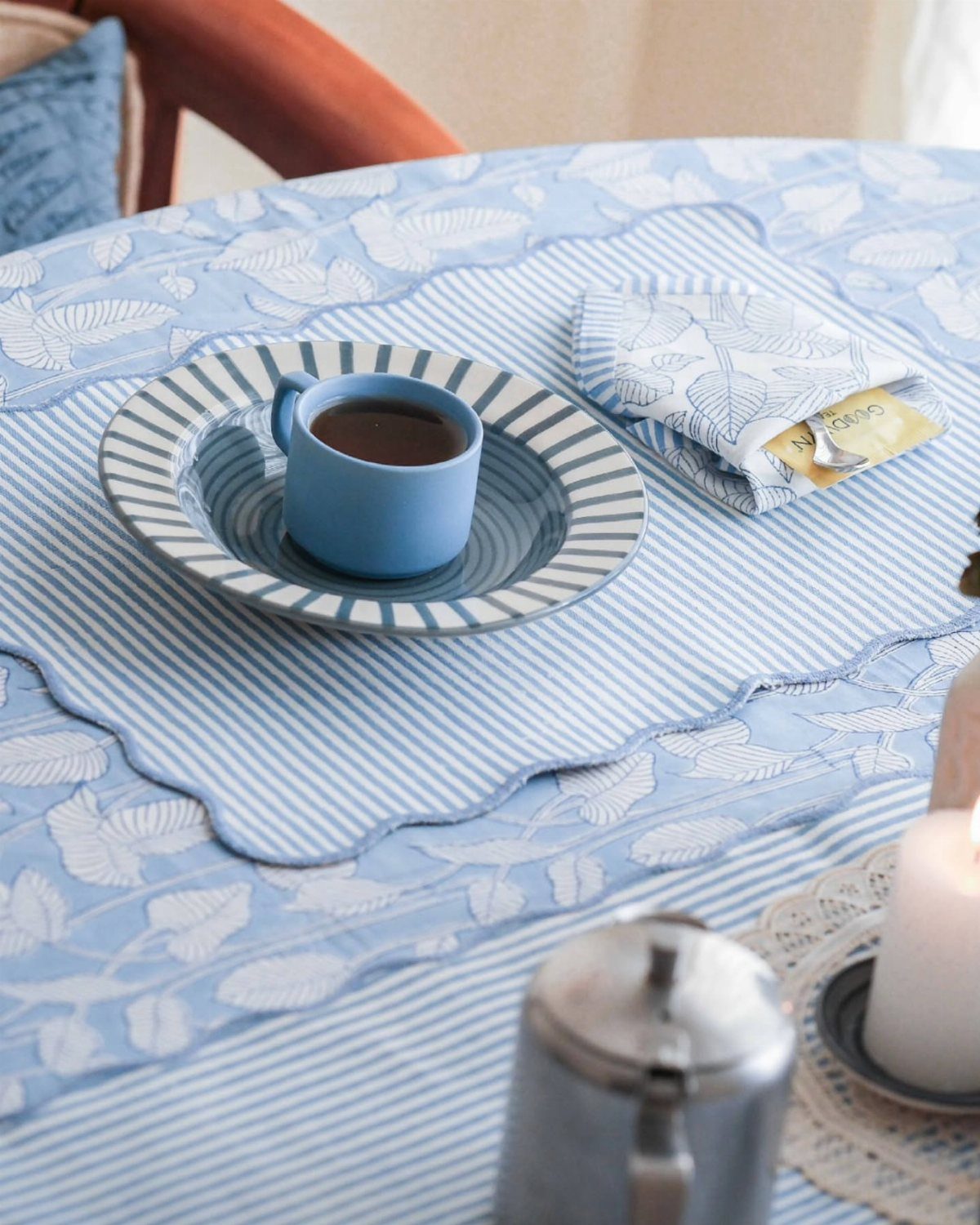
Blue and white stripes layered over a floral cloth look relaxed because nothing matches too exactly.
For everyday use, I would pick cotton or similar soft, washable fabric in muted tones, so spills are not a worry. Layering a striped runner over a floral cloth costs little and adds depth.
Keep one color, here blue, as the thread through everything.
7. Modern Matte Cutlery Accents
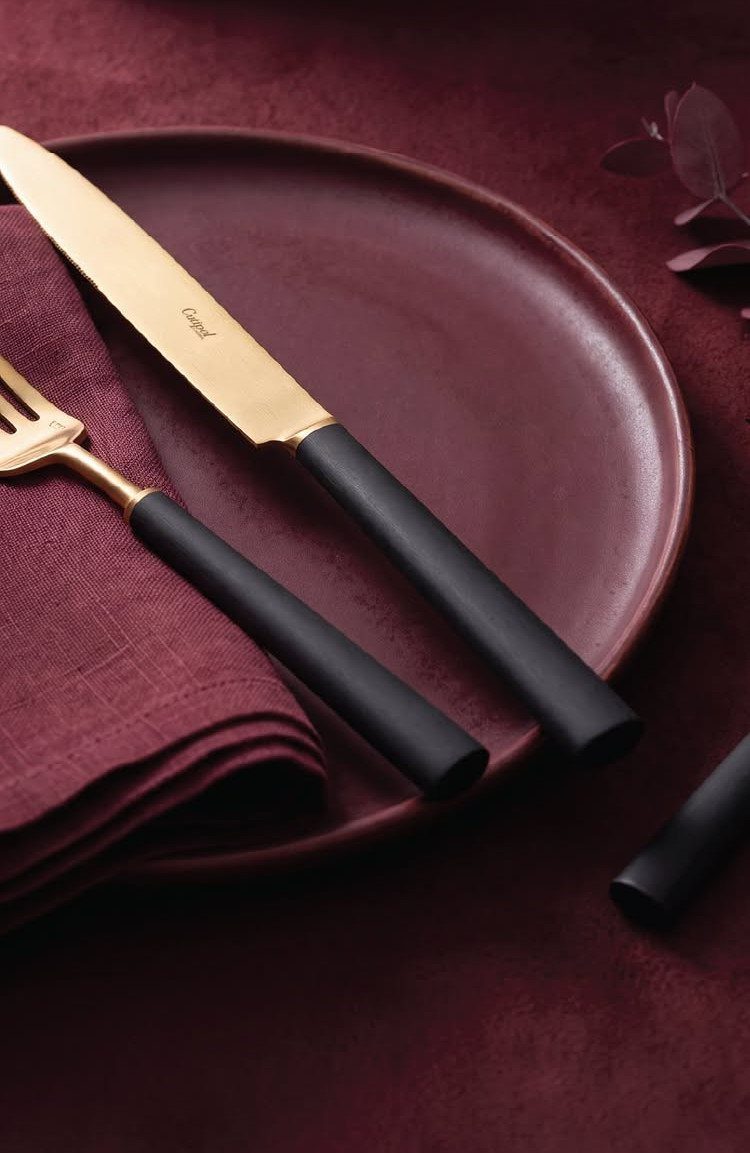
Gold flatware with matte black handles is a small swap that looks expensive, and it suits a deep burgundy plate and napkin because the metal catches light while the handles ground it.
Matte cutlery is the accent here, so keep the glasses simple and clear and let the burgundy plate and napkin do the supporting work. One strong color on the plate and napkin is plenty, so skip patterned mats here.
I would buy a single place setting first and test it on your own plates before committing to a full set.
8. Charger Plates with Napkin Rings
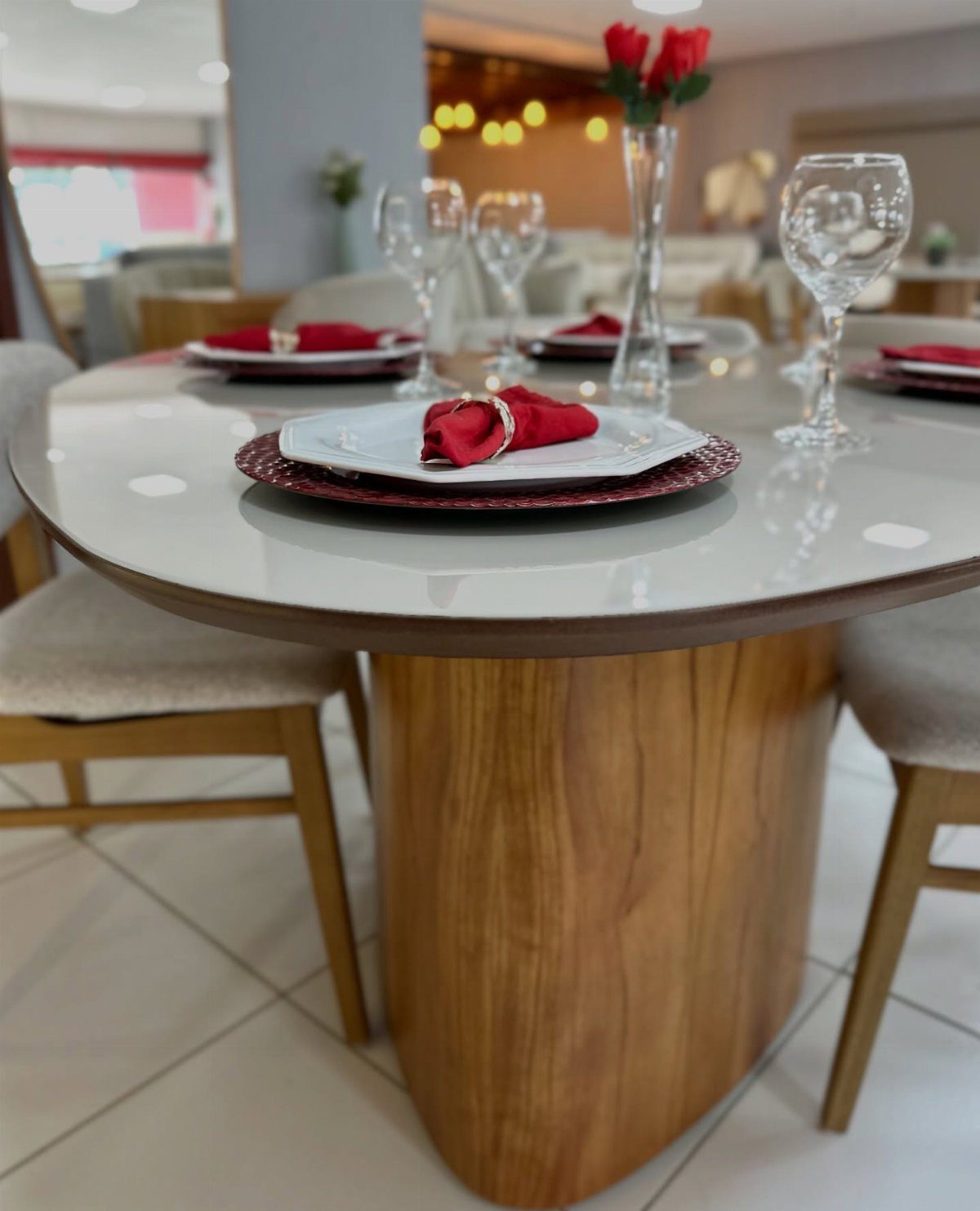
Stacking white plates on red chargers gives a table a frame without adding a single new dish to cook on.
Roll each napkin and slide it through a gold ring, then set it on the plate or beside it. Red napkins on red chargers read as one color, which keeps the look calm.
A vase of red roses repeats the color in the middle. Chargers are decoration only, so lift them off before the food goes out, or leave them if guests are eating from small plates.
9. Twine-tied Napkin Bundles
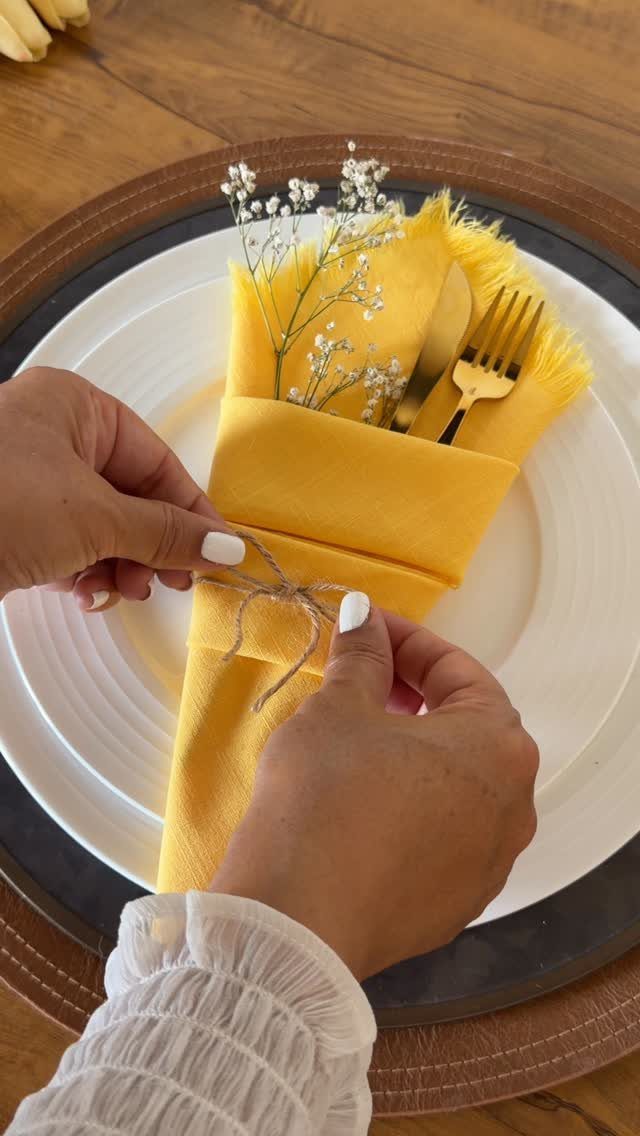
Wrap a napkin around a knife and fork, tie it with twine, and tuck a few sprigs of baby’s breath under the bow. That is the whole setting, and it costs very little.
A yellow napkin against a white plate on a dark charger gives you contrast without extra decor. Warm gold flatware sits well beside the natural tone of the twine and a linen napkin.
Tie the bundles an hour or so ahead and keep the flowers in water until then, since the blossoms are the part that droops.
10. Fresh Fruit Accents
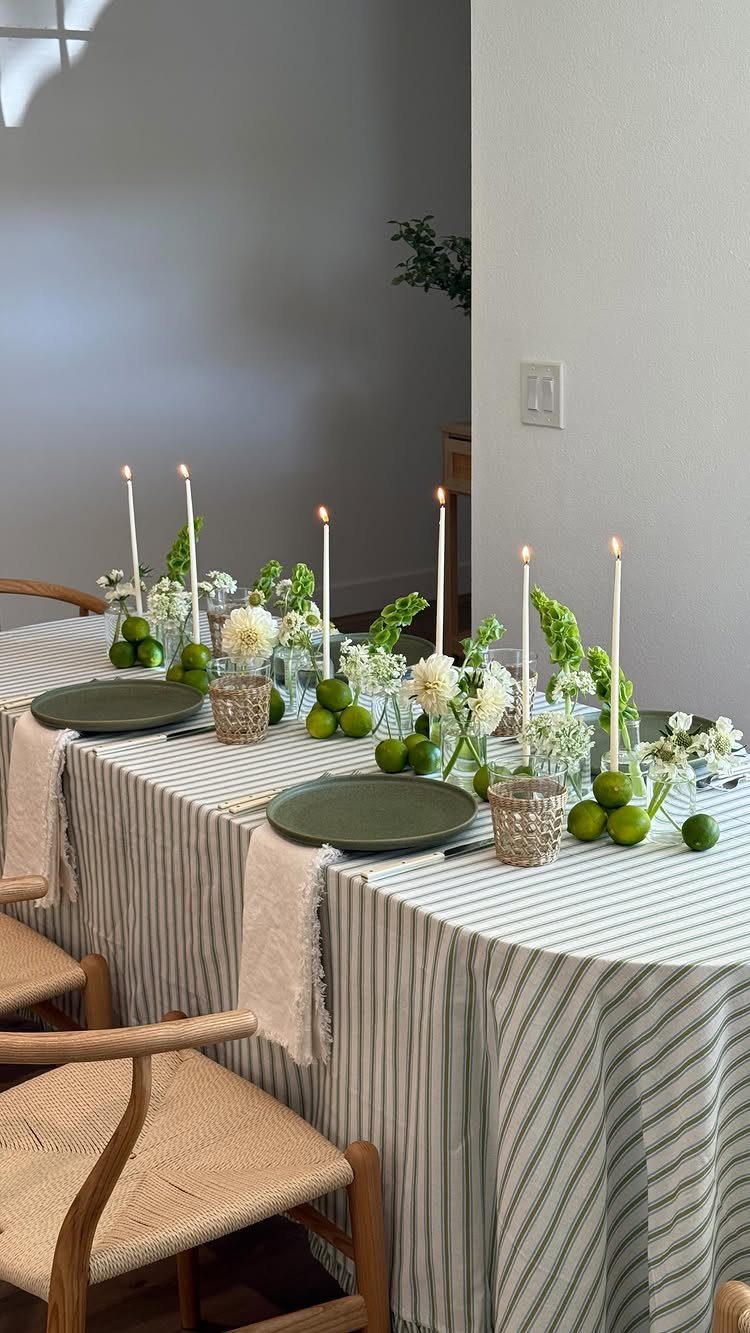
Whole limes scattered along the table do the work of a centerpiece, and you can return them to the fruit bowl afterward.
Small white vases of flowers keep the limes from taking over.
I prefer fruit left whole and uncut, since it stays tidy through a long dinner. Lemons or oranges would work the same way.
11. Wheat Stalk Place Cards
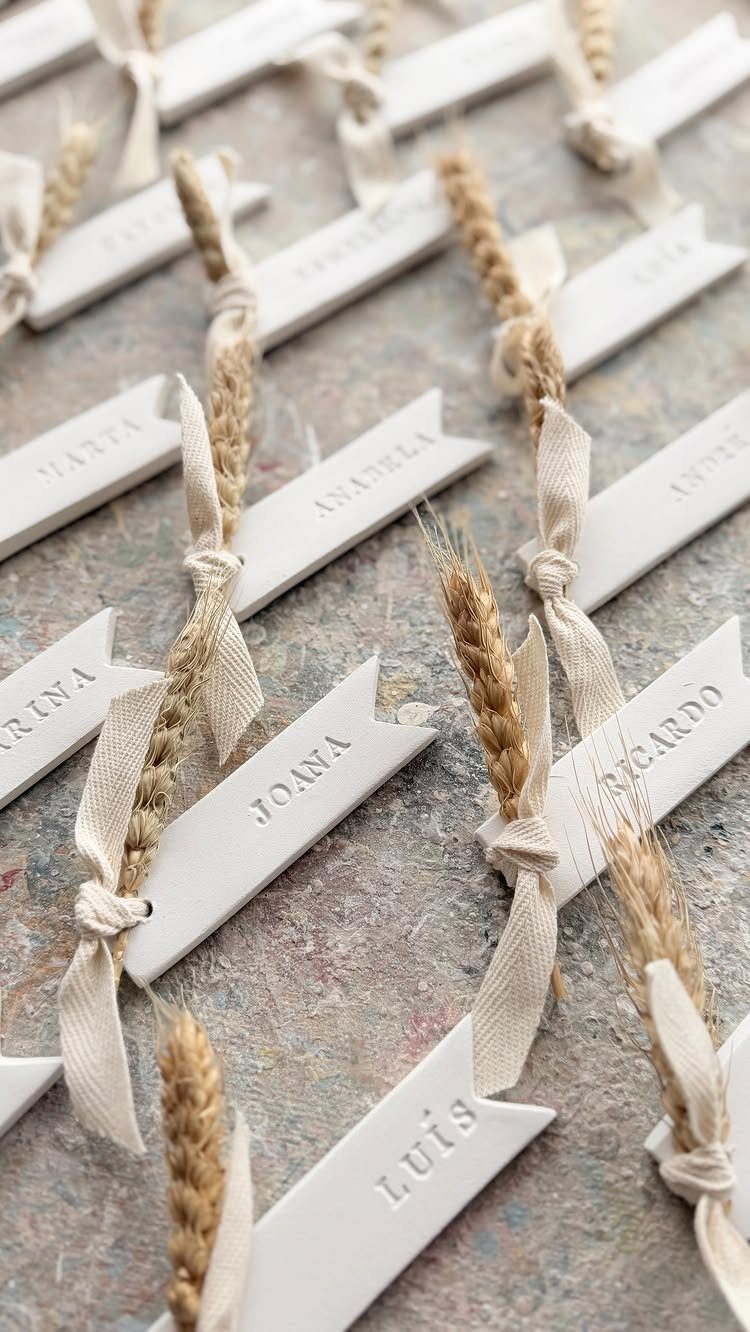
Notched cardstock tags tied with beige ribbon and a sprig of dried wheat make place cards that look handmade without much skill.
Write each guest’s name in dark ink, slip the tag into the notch, and tie the wheat on with ribbon. Dried stalks need no water, so you can finish the whole set days before the party.
Use a plain surface underneath so the neutral tones show. Clear handwriting matters more than fancy lettering.
Importance of Table Settings
A set table tells guests before they sit down that someone planned for them. Plates, glasses and napkins in the right places say "you were expected" more clearly than any greeting at the door.
It also helps the host. Once the table is done, one decision is made and checked off, and that takes some of the stress out of the hours before people arrive.
Treat the setting as a creative outlet, not a test. Your own taste is the point, so choose what you would enjoy sitting down to, and the table will feel like yours.
Creating a Welcoming Atmosphere
Warmth comes from a table that looks lived in and cared for, not one that looks untouchable. A salad plate, one wine glass and a couple of small details give you a table that feels intentional but not formal.
Guests linger at tables where they feel comfortable. Give everyone a glass and a plate within easy reach, and let one personal detail do the talking.
Aim for a table that suits the occasion, such as a weekend brunch, a family dinner or an informal get-together. Matching the mood of the meal matters more than adding more pieces.
Layering and Mixing Patterns
Only stack what the menu needs, because a bowl on top of a plate with no soup coming is just clutter.
For mixing patterns, pair one busy piece with one calm one. Polka dots pair well with solid-color napkins in strong colors, and floral pieces work over plain plates.
I would limit myself to one patterned layer per setting. If the glassware or ceramics already carry a pattern, keep the linens solid and calm, and don’t worry if the colors don’t match exactly.
Frequently Asked Questions
What is included in a place setting?
A basic place setting has a dinner plate, fork, knife, spoon, glass and napkin.
A salad plate or soup bowl only earns a spot when the menu actually serves that course, and then it stacks on top of the dinner plate.
For a casual table, one plate and one glass with a few small details is enough to look intentional.
Does the napkin go on the right or left?
Left is the usual spot, set beside or under the forks. If the left side feels crowded, I rest the napkin on the dinner plate instead, folded in thirds or slid through a ring, and it looks just as tidy.
Pick whichever keeps the plate looking tidy, and lift it off when the food arrives if the plate is needed.
How to set a table for a dinner party?
Start with one theme, such as a single fruit or color family, and repeat it in about three places, like the centerpiece, napkins and menu cards.
Add a cloth that hangs several inches over the edge, plain white or neutral plates, and a napkin in your accent color.
Plain plates, one simple napkin and a single small touch like a sprig of rosemary are plenty; the table reads as planned without turning fussy.





