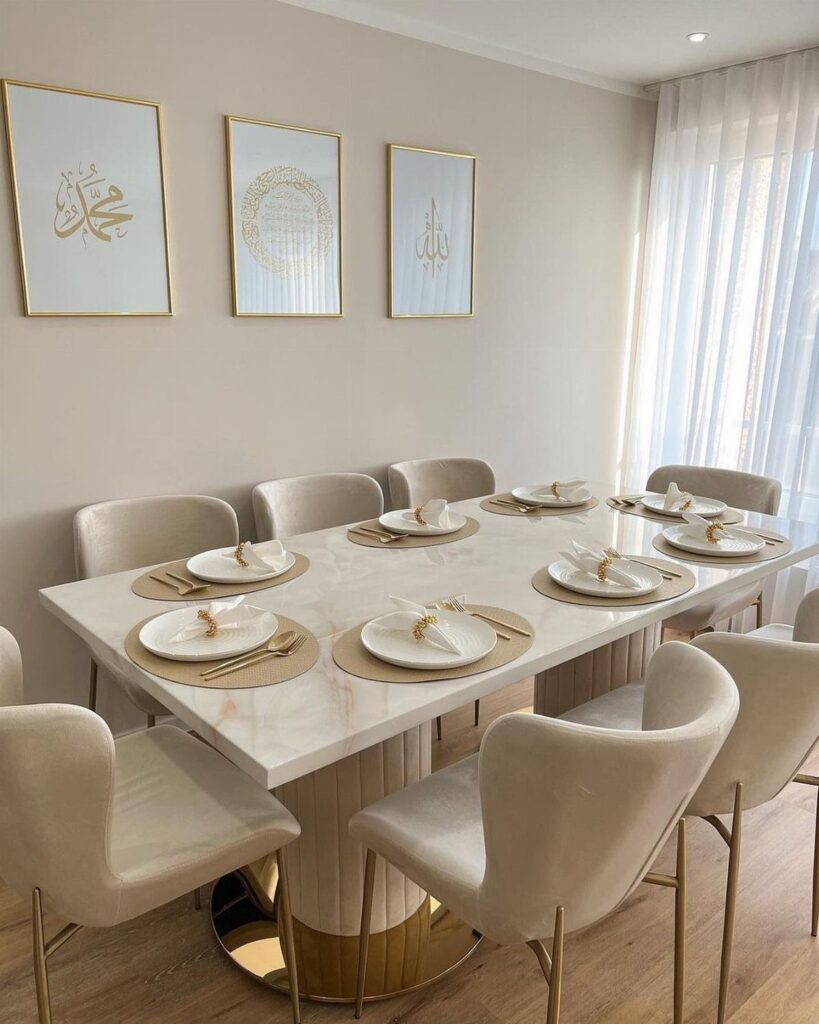
Pick the look by what your table already has: a wooden table wants plain white plates and clear glasses, a marble one wants matte black, and a bare cloth wants green placemats one step bolder.
The ideas range from nearly free, like stacking dishes you already own or lighting tapers in whatever holders are in the cupboard, to a full set of new flatware or a statement centerpiece.
Every one of them works by repeating a single material or color, so pick one and let everything else stay quiet.
1. Modern Table Setting Essentials
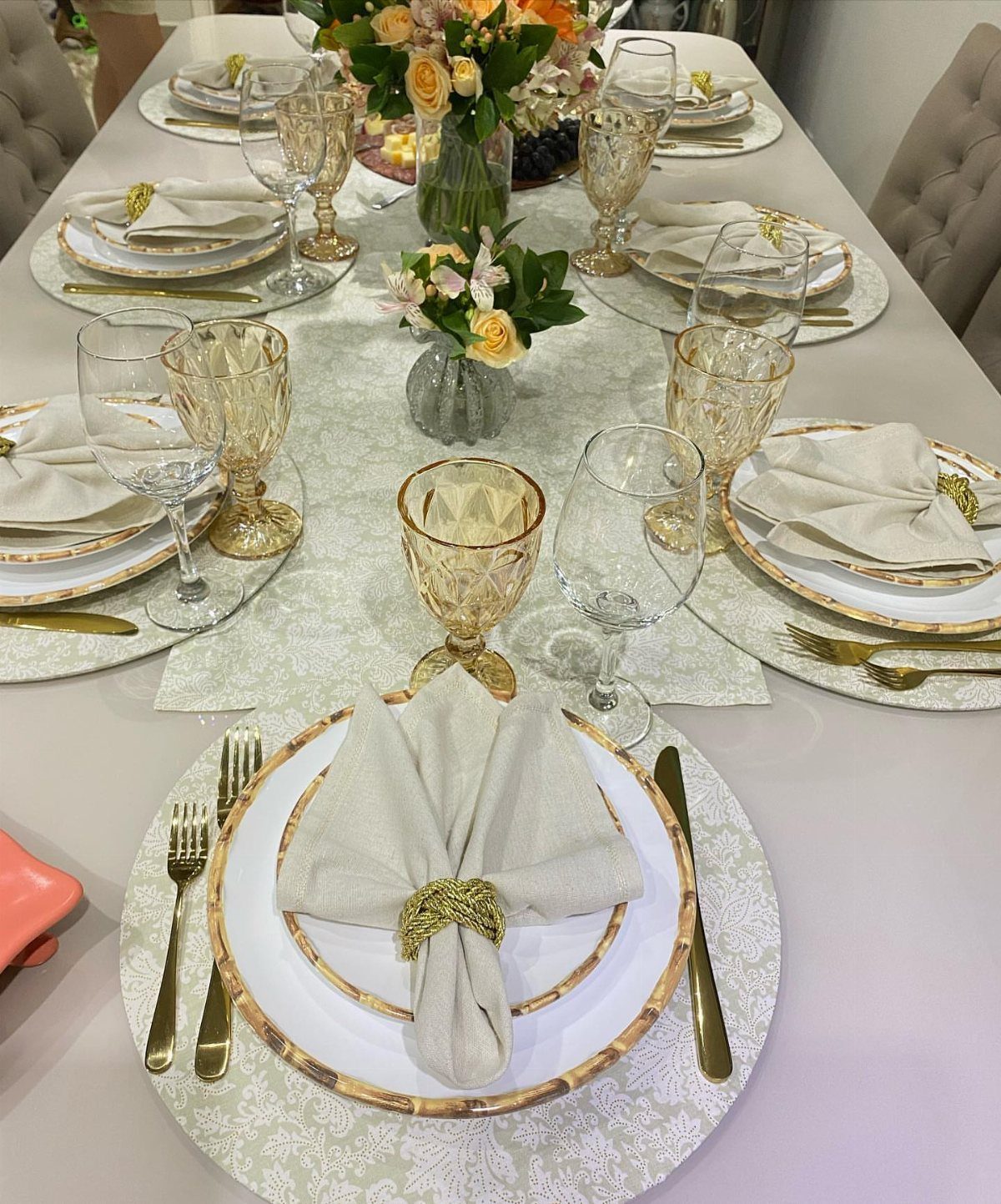
Gold works best as a system: rimmed plates, cutlery, napkin rings and amber glassware all repeat one warm metal, so it reads as a plan instead of an accent. Pick one metal and let everything else stay quiet.
If a full gold flatware set costs too much, I would buy the napkin rings first, since they carry the look at the lowest price.
2. Statement Centerpiece
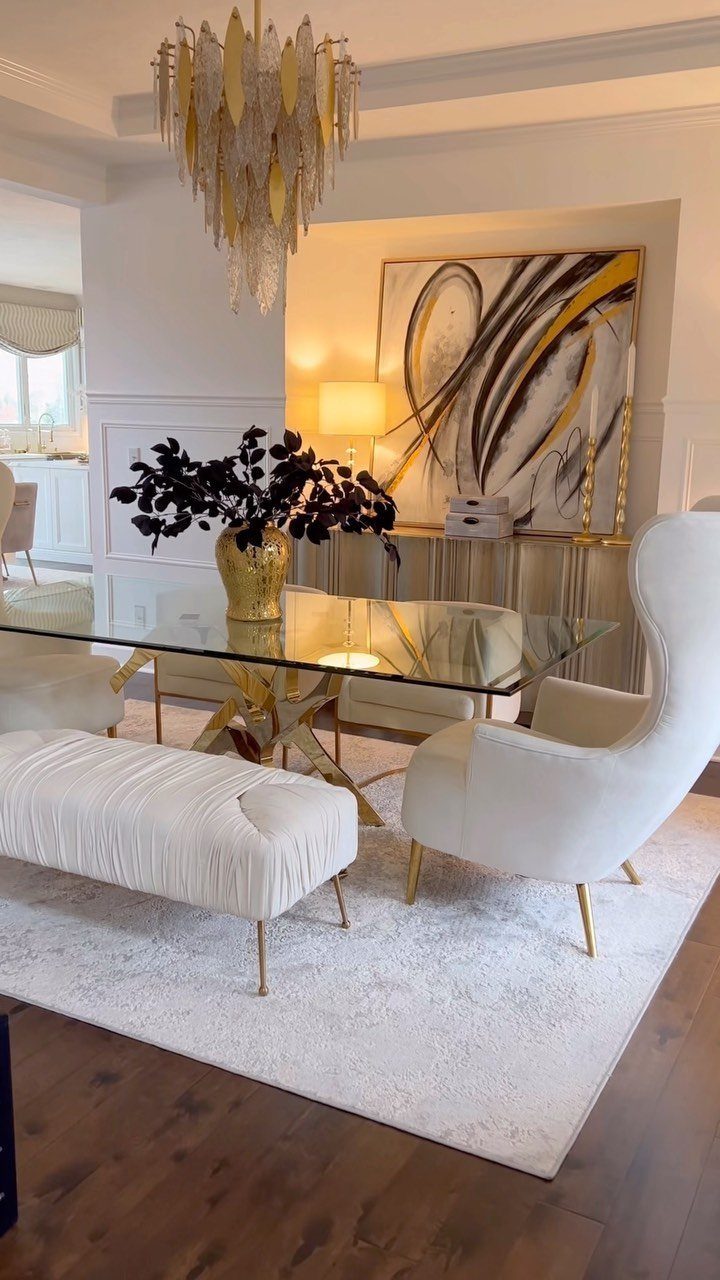
A single tall gold vase packed with dark leaves does the work of a whole floral arrangement, and I prefer it to a crowd of small pieces.
Pick one hero object and give it room. Everything else on the table should stay plain so the vase is the one thing guests look at.
Foliage is also cheaper to refill than flowers.
3. Scandinavian Design Elements
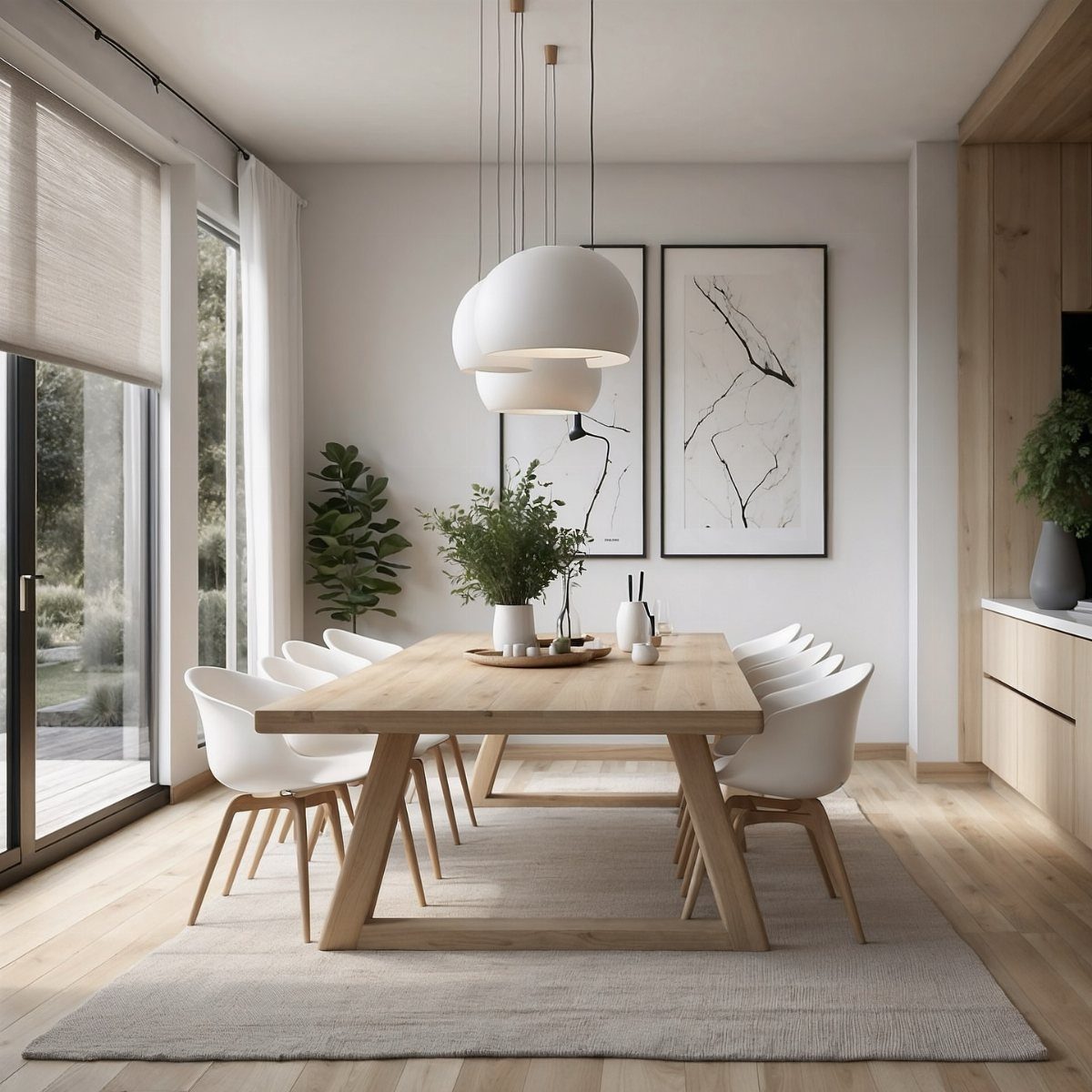
Light wood, white chairs and one potted plant: that is nearly the whole recipe, and it asks very little of your wallet.
A living plant in the center beats cut flowers because it stays put and needs no refreshing before each dinner.
Choose a pot low enough that guests can see across the table. Keep everything else pale and simple so the wood grain and the green carry the room.
4. Layered Dinner Plates and Bowls
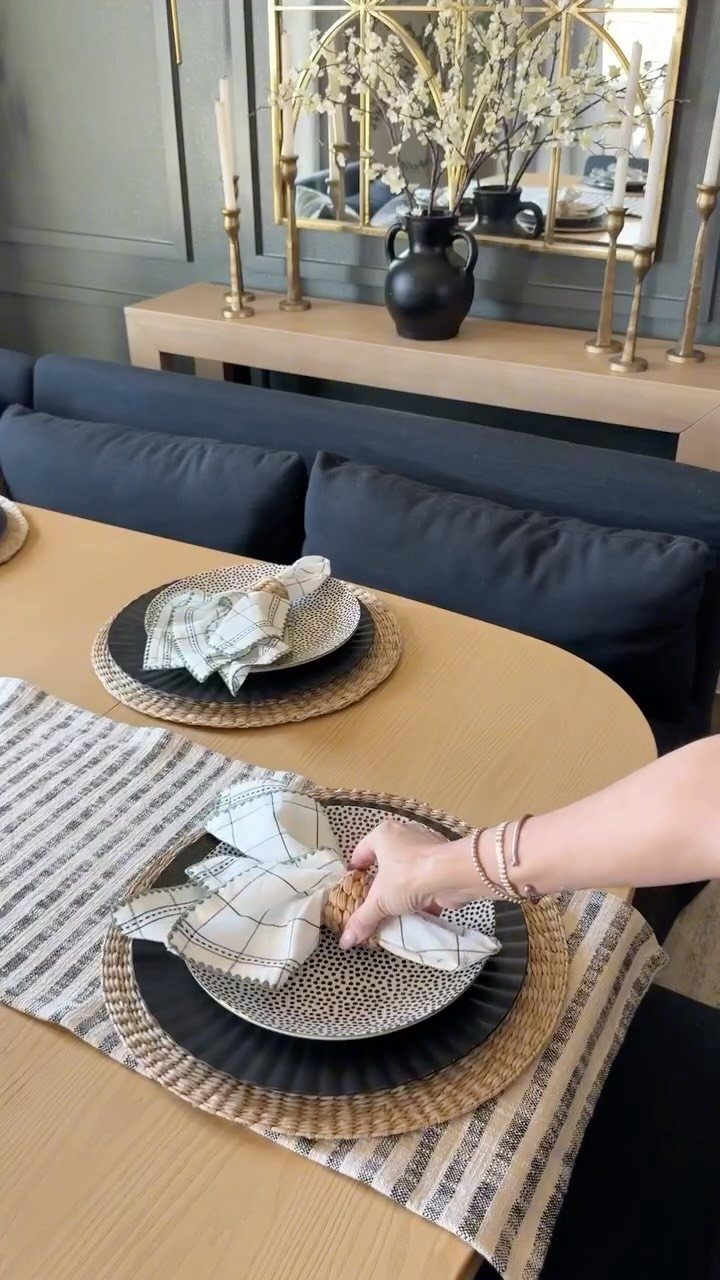
Stacking a bowl on a plate on a woven charger gives each seat 3 textures before any food arrives. I like a patterned plate on top because the woven base underneath keeps the pattern from feeling busy.
Set the napkin on top of the stack so the place looks finished without extra décor. A striped runner down the middle ties the layers together.
Use dishes you already own: the effect comes from the stacking, not from buying a new set.
5. Use of Candles
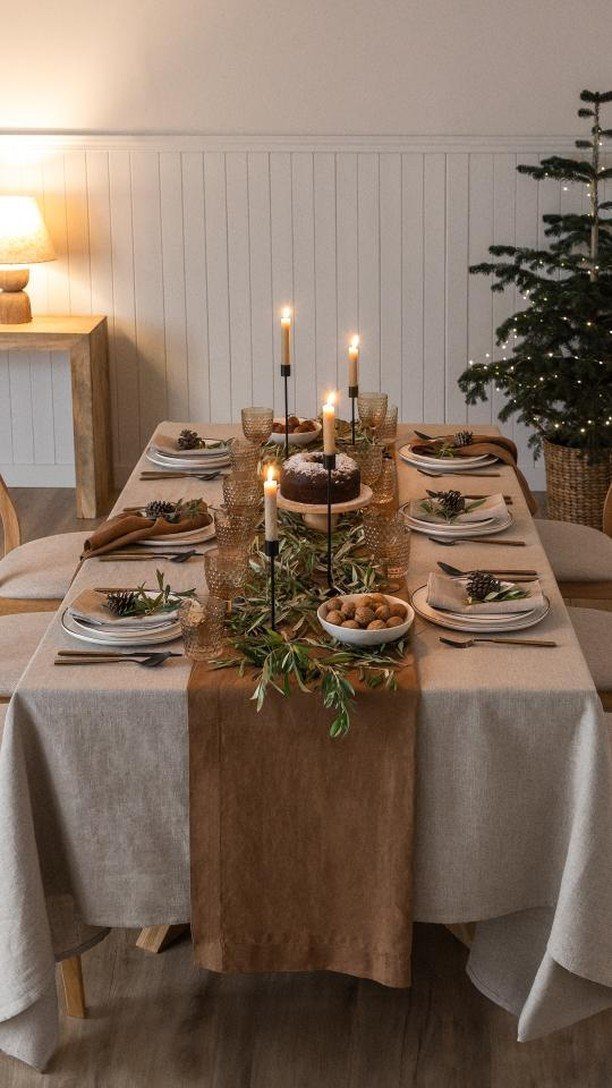
Several lit taper candles at different heights spread light along the table in a way one big candle never will. Cluster them among greenery rather than lining them up, which keeps the arrangement relaxed.
Light them just before guests sit, and keep them low enough in number that nobody has to lean around a flame to talk. Tapers cost little, so buy plenty and stand them in whatever holders you have.
6. Abstract-Shaped Boards and Trays
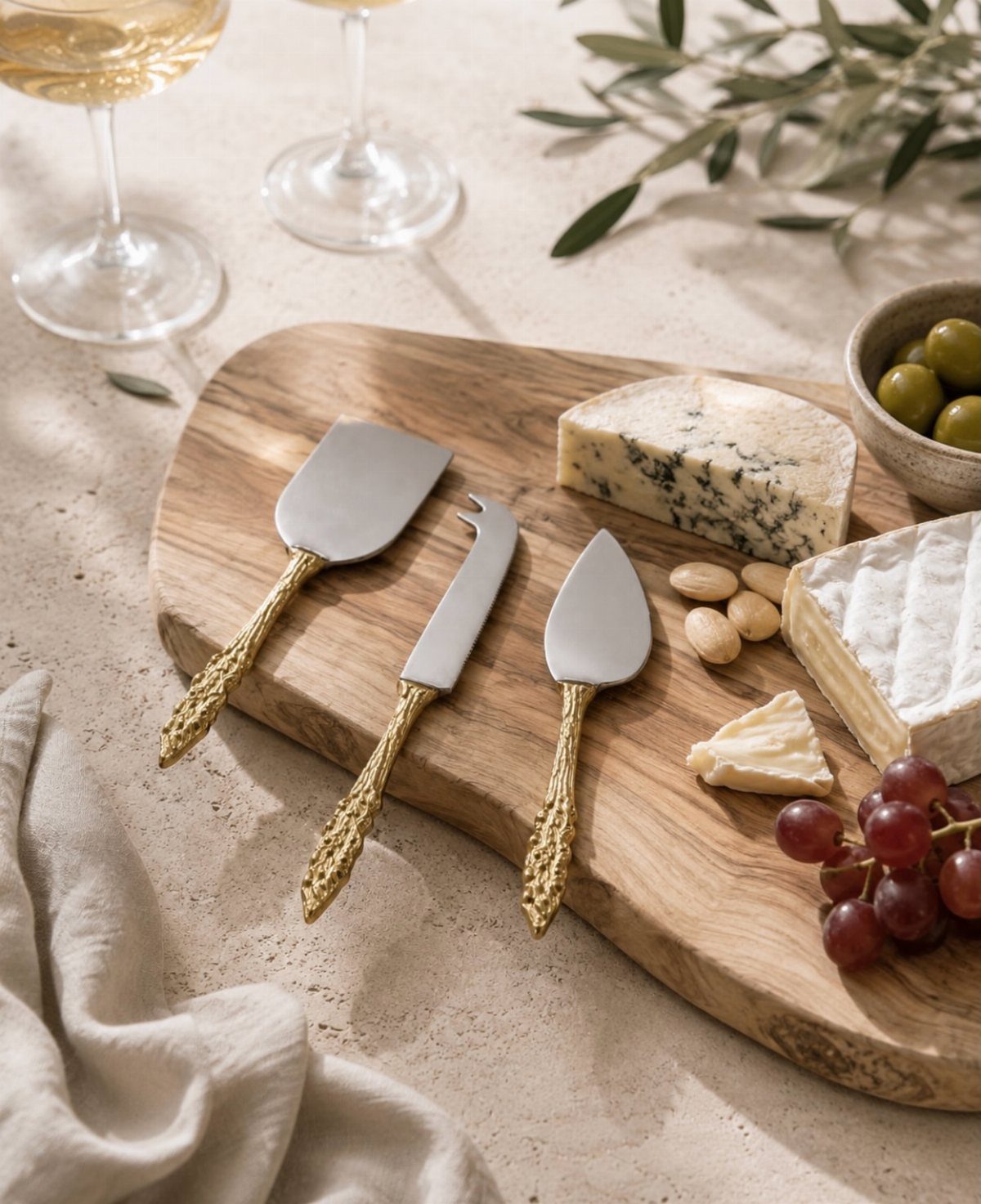
An organic, free-form wooden board makes a spread look deliberate before anyone slices a thing. I would pick one with a soft, irregular outline over a rectangle, because the curves let cheese, grapes and olives sit in loose clusters.
Put out gold-handled knives, one per cheese, so flavors stay separate. Tuck a few olive branches near the glasses and the board becomes part of the table, not just a platter.
One good board costs less than most serving sets.
7. Placemats and Table Runners
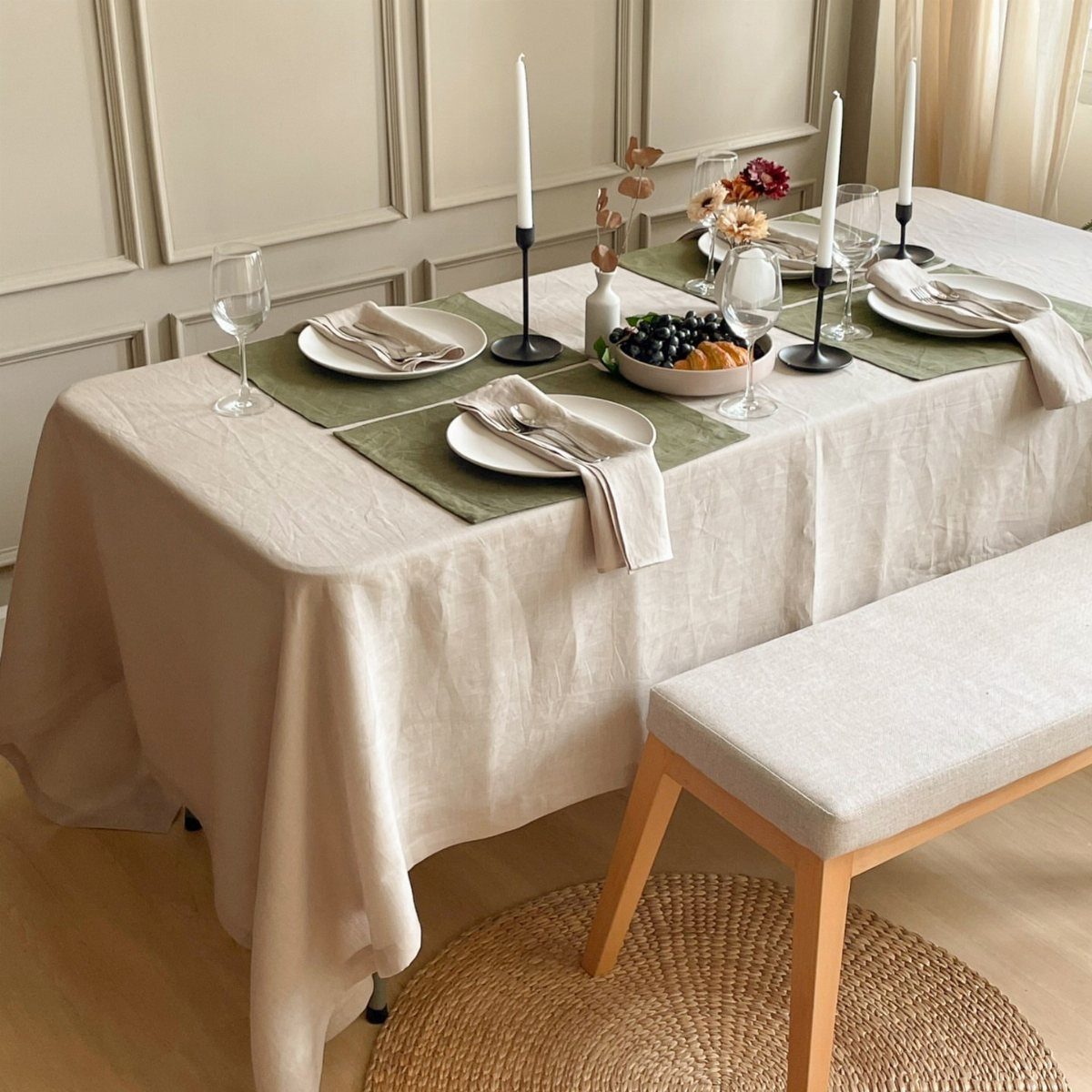
Green placemats on a beige tablecloth give each seat its own defined spot, and the contrast does more than any extra décor would.
I like this pairing because the 2 colors stay calm together and the white plates read crisp on top.
Pick a placemat shade one step bolder than the cloth, then keep plates, napkins and candles white or neutral. A table runner would work as a second layer if you want one more texture.
8. Contrast Black Tableware with Marble
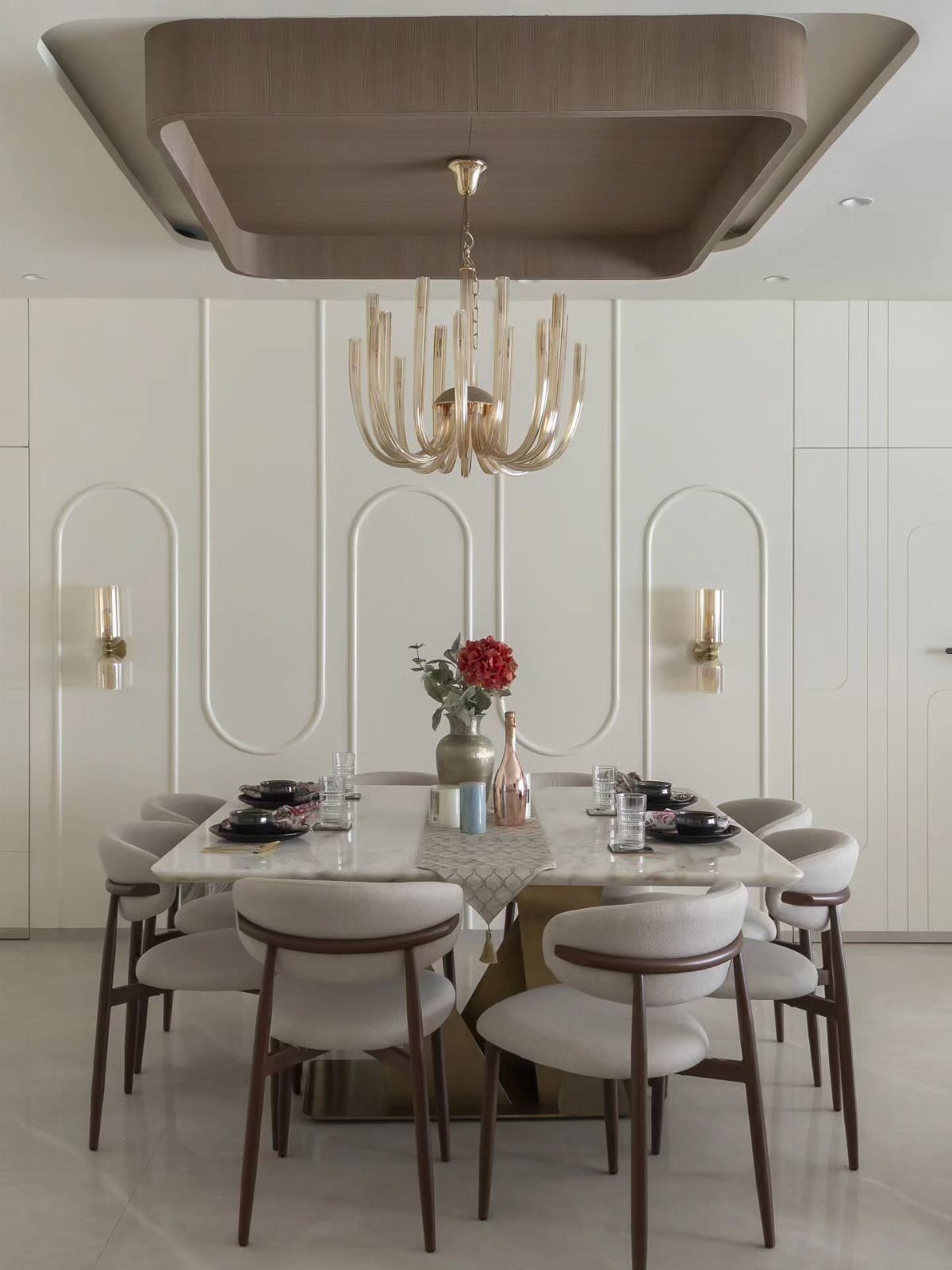
Matte black plates on white marble: the contrast is sharp enough that you can skip a tablecloth entirely.
I would choose this over an all-white set whenever the table itself is the star, since bare marble needs something dark to push against.
Keep the gold to a few small touches, like flatware or one fixture overhead, so the black stays the lead. Black glassware and a loose floral centerpiece soften the look.
Matte plates also hide the glare that glossy black throws back under a chandelier.
9. Industrial Kitchen Table Setting
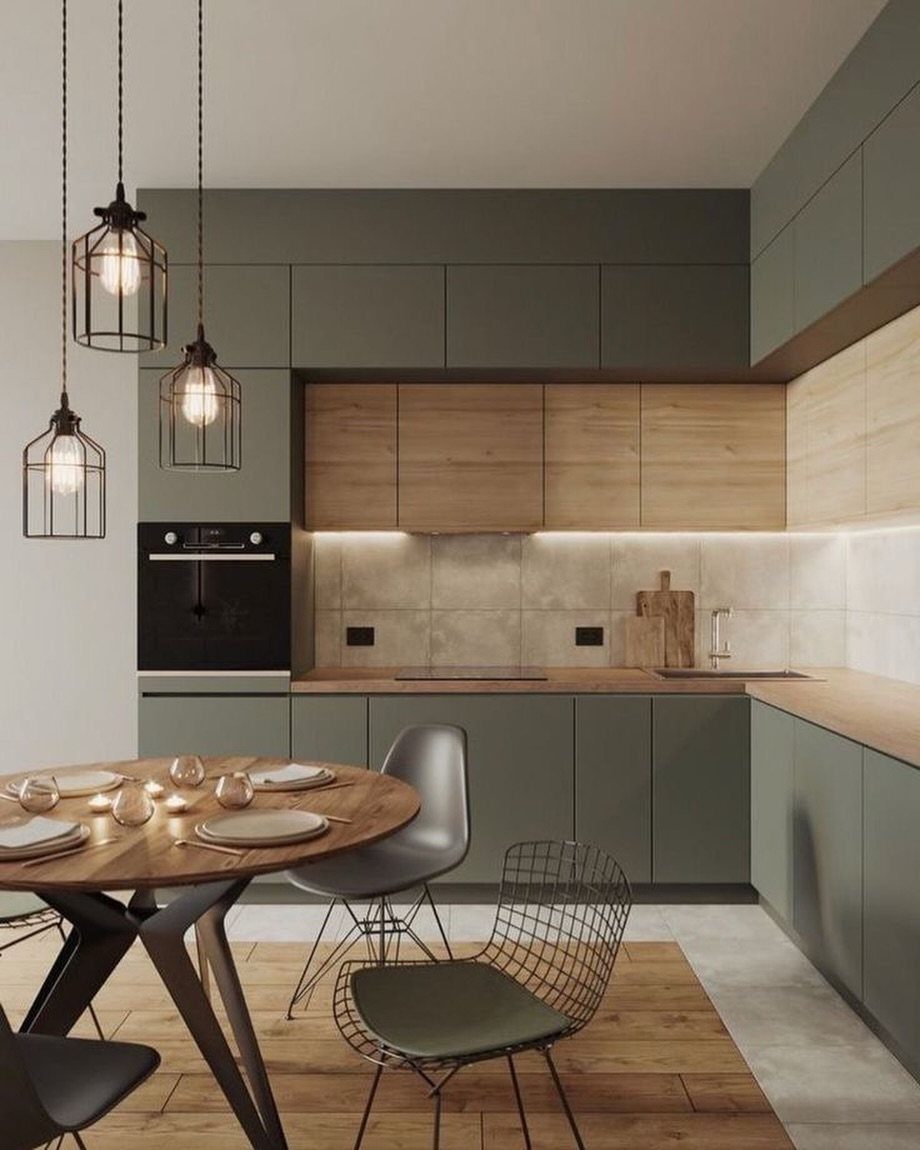
Plain white plates and clear glasses are the right call on a round wooden table, because the wood and the black pendant lights already supply the character. I would not add a runner or patterned dishes here.
A round table puts everyone within talking distance, which suits a kitchen setting better than a long rectangle.
Set each place with just a plate and a glass, and the lights overhead handle the styling. It costs almost nothing if your everyday dishes are white.
Frequently Asked Questions
What are the latest trends in dining table settings and decor?
Right now the look is a single warm metal, usually gold, repeated on plate rims, flatware, napkin rings and glassware, while everything else stays quiet.
Other current moves are a single tall vase of dark foliage as the centerpiece, stacked plates, bowls and woven chargers, and free-form wooden boards.
Modern tables also lean on clean lines and mixed materials, so one strong object with plain dishes around it works better than many small accents.
How do I care for and maintain my dining room set?
Use coasters or placemats, wipe up spills quickly and skip harsh chemicals. Wood tables need regular dusting with a soft cloth and an occasional wood cleaner, and hot dishes should never sit directly on the surface.
For a glass top, a microfiber cloth and a little glass cleaner keep streaks away; check the maker’s care card before using anything stronger.
What is the difference between modern and traditional dining room sets?
Modern sets stress simplicity, clean lines and minimal detail, often in glass, metal or engineered wood.
Traditional sets go for ornate carving, rich wood finishes and formal touches like clawfoot legs or upholstered chairs. Modern pieces also adapt more easily, fitting styles from industrial to Scandinavian.





