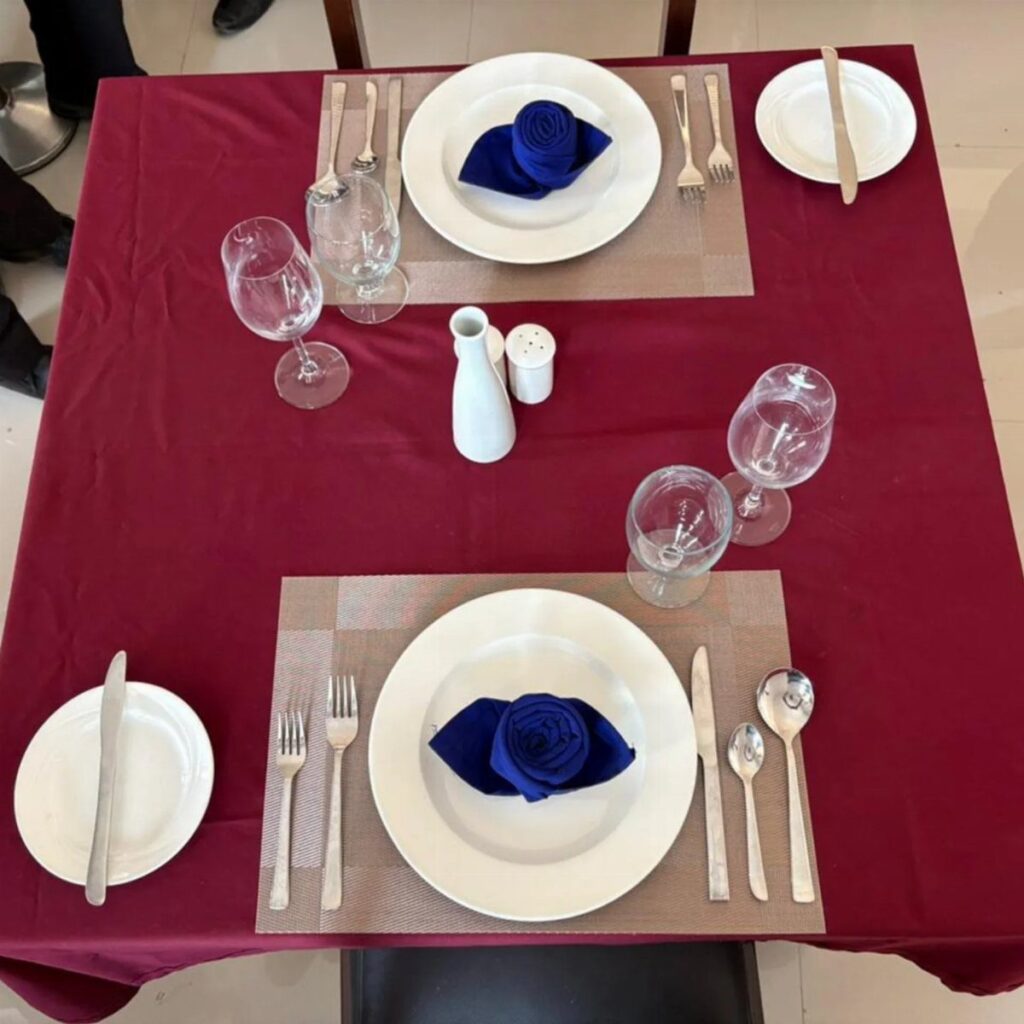
Head count and how much work you want finished before the doorbell rings will point you to your setup, whether that’s a casual table, a buffet, or a family style feast.
The range runs from a buffet where store-bought platters are fine and the effort goes into arranging, to a layered table with a cloth, runner and charger under every dinner plate.
1. Casual Table Setting
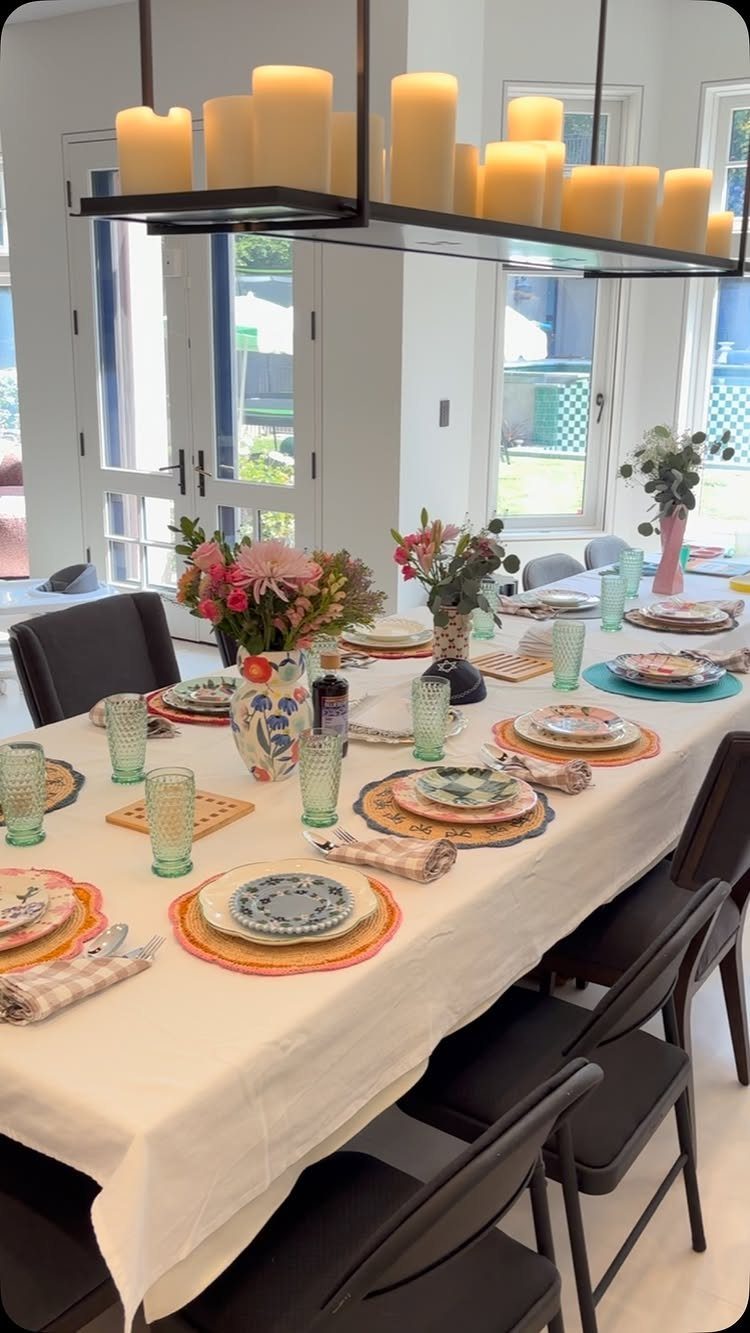
Informal settings suit the dinner where nobody should feel they need a rulebook. Colorful plates, patterned or solid placemats, and a napkin at each seat do the work that a formal layout usually does with extra pieces.
I like how the plates carry the color so the glassware can stay simple. Keep the flatware to what the menu actually needs, and the table stays easy to eat at.
A white cloth gives every color a clean ground. Low floral arrangements keep sightlines open, so conversation can run from one end of the table to the other.
“Think about the story you want to tell,” encourages Sara Raak, founder of Totable Tablescapes. “Life happens around the dinner table, and creating the perfect atmosphere can encourage beautiful conversation and community.”
2. Buffet Table Setup
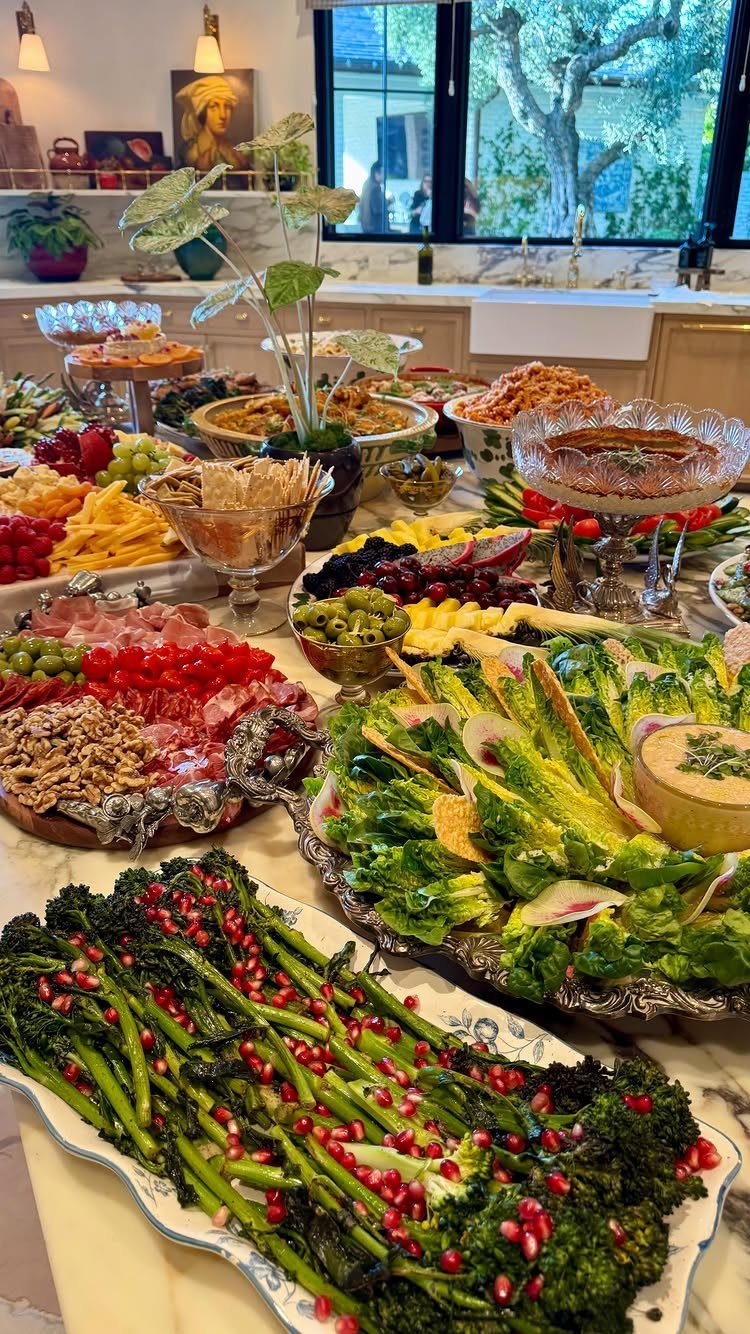
Marble or any clear counter becomes a serving line once the dishes are grouped by type: vegetables, fruit, charcuterie, salads. Guests then know where to start and what comes next.
Self-service works best when platters sit at different heights and nothing is crowded. Leave room at one end for plates and napkins so people load up before they reach the food, not after.
Store-bought platters work fine here. I would spend the effort on arranging, not on making everything from scratch.
3. Table Linens, Runners, and Charger Plates
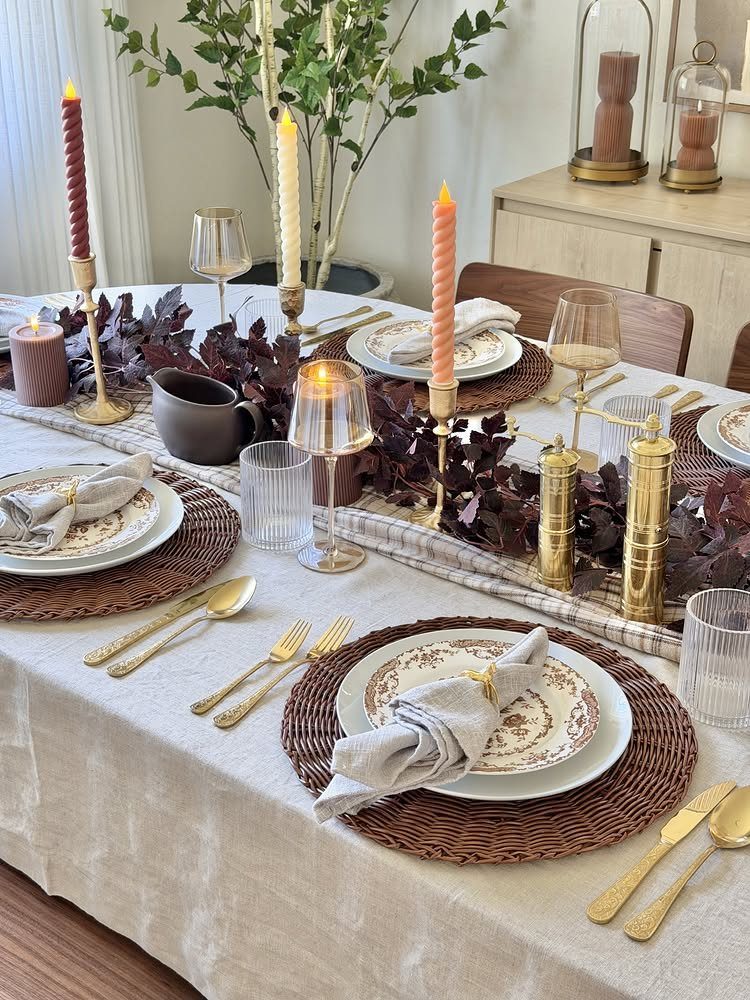
Layering is the point: a tablecloth first, then a runner down the center, then a charger under each dinner plate. Each piece adds texture without adding clutter.
Woven chargers bring warmth against beige linen, and a striped runner gives the eye a line to follow. I would pick one metal for the cutlery and stay with it, since gold flatware already stands out.
Candles and a few leaves along the runner finish it. Keep them low so guests can see each other across the table.
4. Laid Back Pastel Table Setting
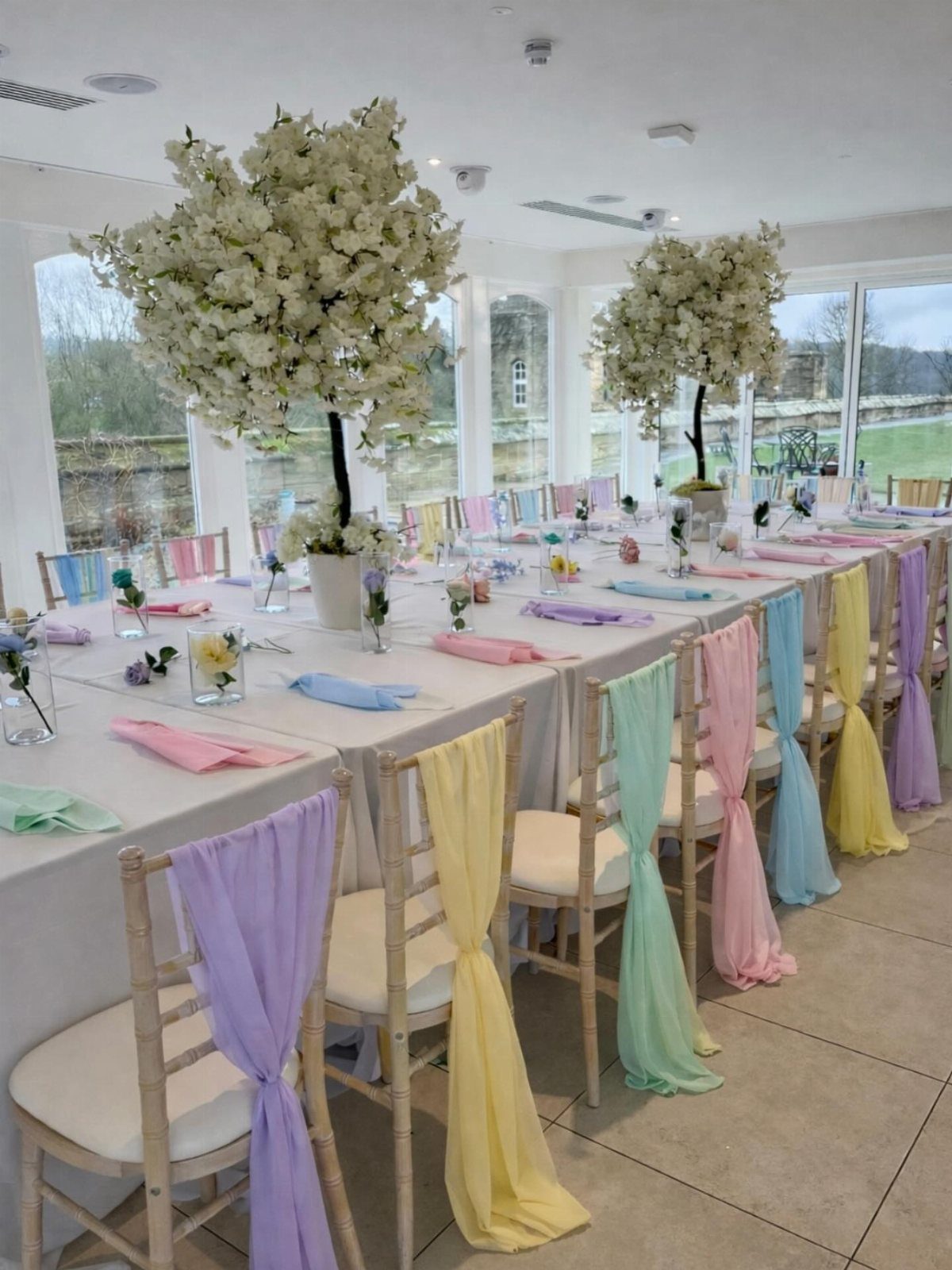
Pastels work best when the table stays white and the color lives in a few soft touches. Napkins and fabric chair sashes in pastel shades do most of the work, and they are cheap to swap out.
Tall blossom centerpieces can go on early, and artificial trees or stems never wilt, so there are no last-minute flowers to buy or fuss with. I like that for a host with a long to-do list.
Choose two or three pastel shades, not five, so the table looks calm and not candy-colored.
5. Decorative Table Setup
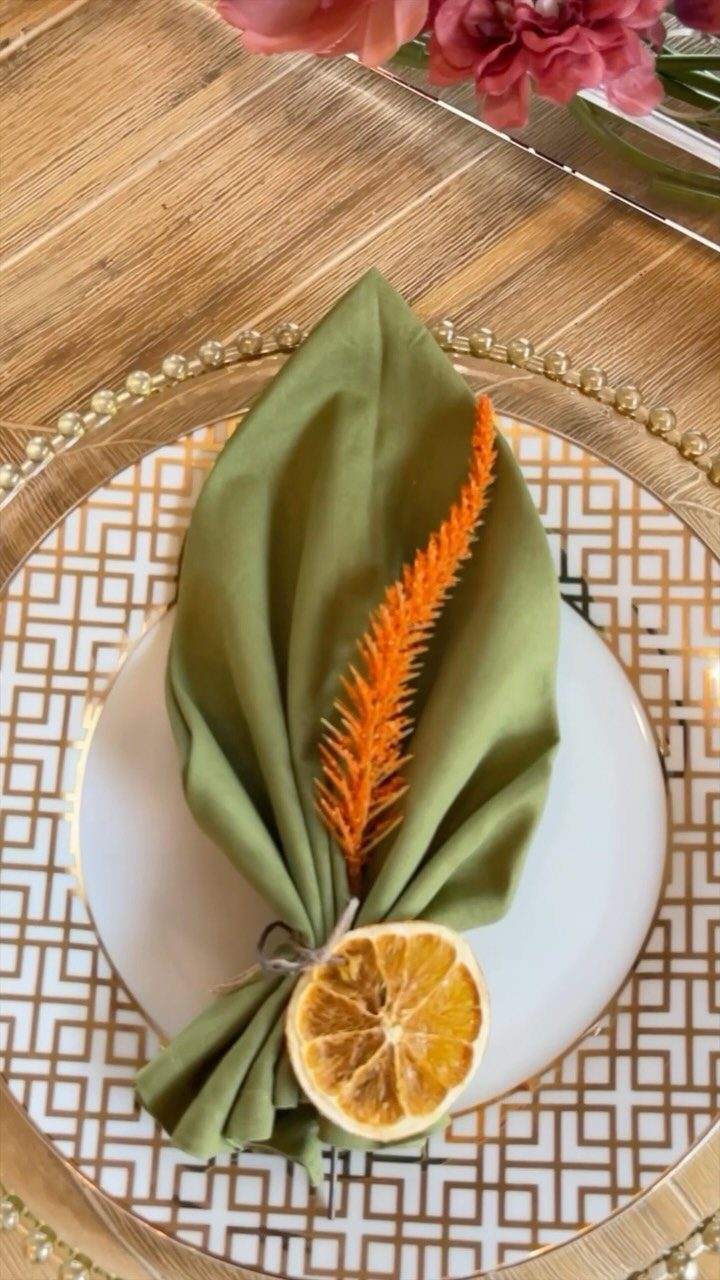
A tied napkin turns a plain plate into a small gift at each seat.
Stack a white dinner plate on a gold-patterned charger; the white gives the greens and orange a clean base to stand out against. Wood underneath adds warmth, so I would skip a cloth here.
Dried orange slices can be made days or even weeks ahead, which takes one job off party day. Make a couple extra in case some crack.
6. Outdoor Fresh Fruit and Wildflowers
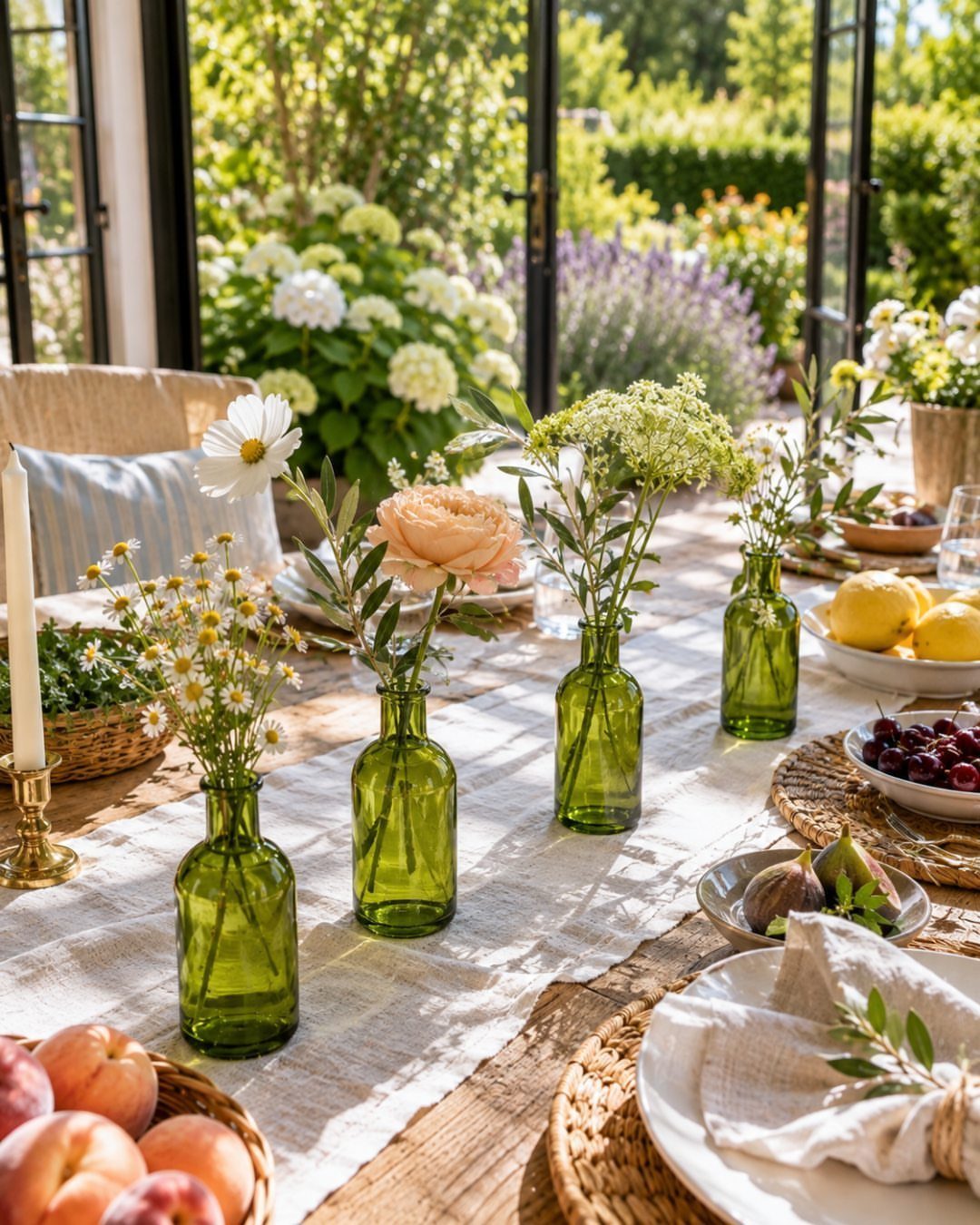
Green glass bottles holding wildflowers cost little and look better than a single large vase. Each stem sits in its own bottle, and a mix of heights keeps the table from looking staged.
Set bowls of fresh fruit between the bottles so the centerpiece doubles as dessert. Woven chargers under white plates keep the rustic look consistent with a garden backdrop.
Gather the flowers the same day, since wildflowers wilt fast once cut. Water in the bottles helps them last through dinner.
7. Family Style Feast Table
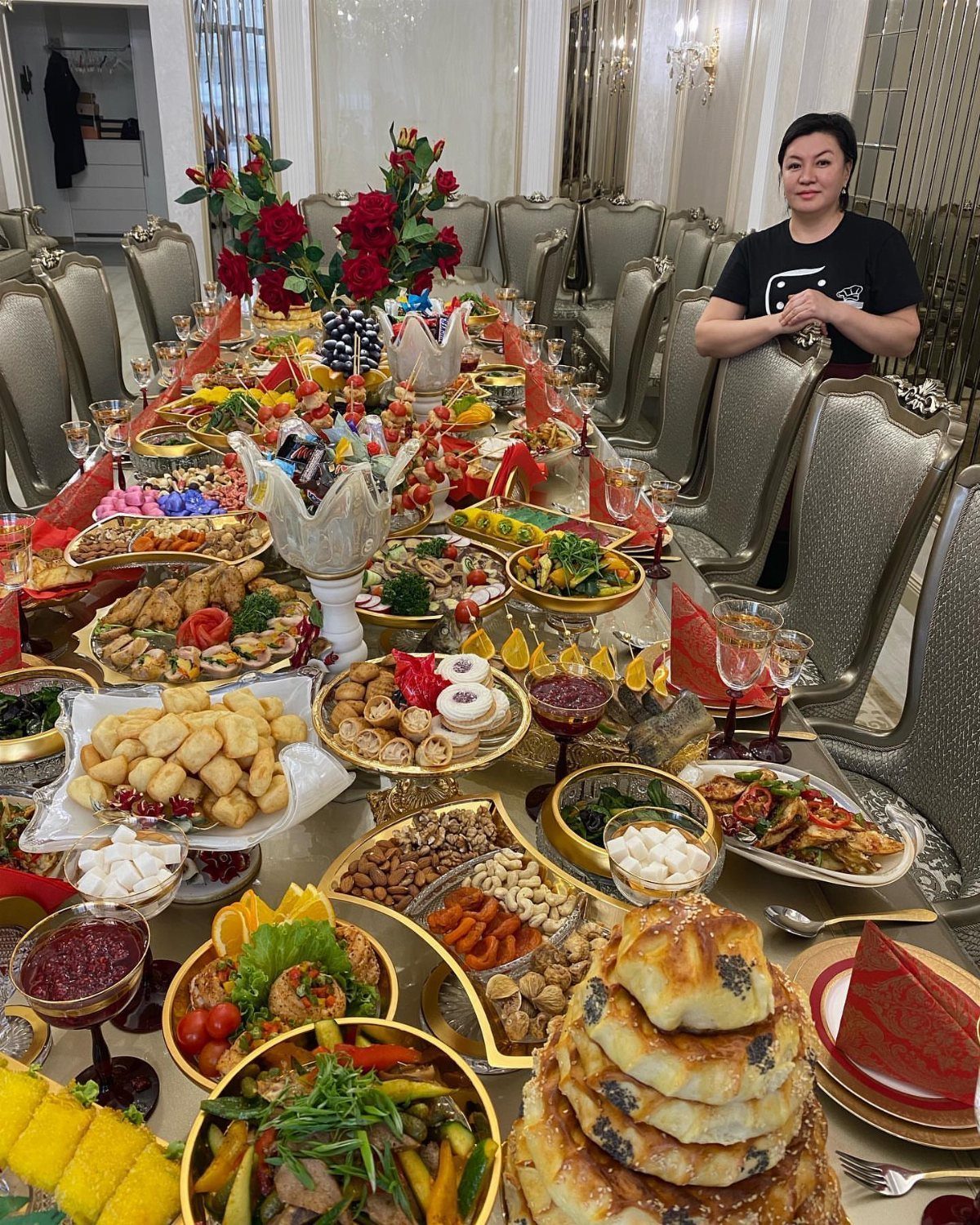
Shared platters set end to end down the center mean no one plates in the kitchen, and the host gets to sit down sooner. Red napkins and rose arrangements tie the spread together without adding more pieces.
I would keep the roses low and compact so guests can see over them and still pass dishes. Leave gaps between platters for serving spoons and a place to set a dish down.
Store-bought platters work here as well as homemade ones, so spend your effort on the mix of dishes.
Table Setting Etiquette
Forks line up to the left of the plate and knives to the right, which puts the starter utensils on the outer edges.
Angle each knife so the cutting edge faces the plate, not the guest next to it. A guest reaching for a knife should never grab the blade.
Line utensils up along the same invisible baseline, about 1 inch in from the table edge.
Only set out what might be used. Too much tableware crowds the table, and too little sends a guest hunting for a soup spoon or steak knife mid-meal.
Choosing Table Linens
A crisp white cloth with white porcelain and simple white linen napkins is the safest choice I know. White linen on every surface pulls the table together, and I have yet to see it look dated.
Fitted tablecloths stay put and save you from tugging at corners as guests sit down. For a casual meal, a crinkle runner adds texture with no ironing.
Check the size before you buy. Napkins at 47×47 cm are a good model for a dinner napkin, and a cloth of 147×250 cm gives you a sense of what fits a longer table.
Add flowers or one small personal detail, and the white setting looks finished.
Centerpiece Considerations
A centerpiece belongs in the middle of the table, as long as guests can still see one another over it. If it blocks faces, shrink it or move it.
Foliage, fruit, or vegetables make good filler and cost less than a large bouquet. Greenery with a few lemons in a bowl looks deliberate.
Scent matters. Choose unscented candles, and think about aroma before you pick flowers, since a strong bouquet competes with the food.
A distracting centerpiece is a more common mistake than a missing one. If a change matters to your meal, make it; guests at home rarely scrutinize the layout.
Frequently Asked Questions
What is a simple table setup for dinner?
For a no-fuss dinner, I set one dinner plate at each seat, a fork to its left, the knife and spoon to its right, a napkin, and a glass just above the knife.
Casual meals rarely need more, and colorful plates or a placemat can add personality without extra pieces. Only put out the utensils the menu uses; extra pieces just crowd the place setting.
What are the basic table setups?
I sort table setups into 5 types: basic, casual, formal, buffet, and decorative.
Buffets group dishes by type, with plates and napkins at the start of the line. Decorative tables add touches like tied napkins, chargers, or dried orange slices.
How do you set up a buffet table?
Group the dishes by type, such as vegetables, fruit, charcuterie, and salads, so guests know where to start.
Stagger the platters at different heights, give each one breathing room, and put plates and napkins at the start of the line so people grab them first.
How big should a centerpiece be on a dinner table?
Small enough that guests can see each other over it. A bowl of lemons, a few fruit pieces, or some greenery from the yard runs cheaper than a big bouquet, and unscented candles keep smells from clashing with dinner.





