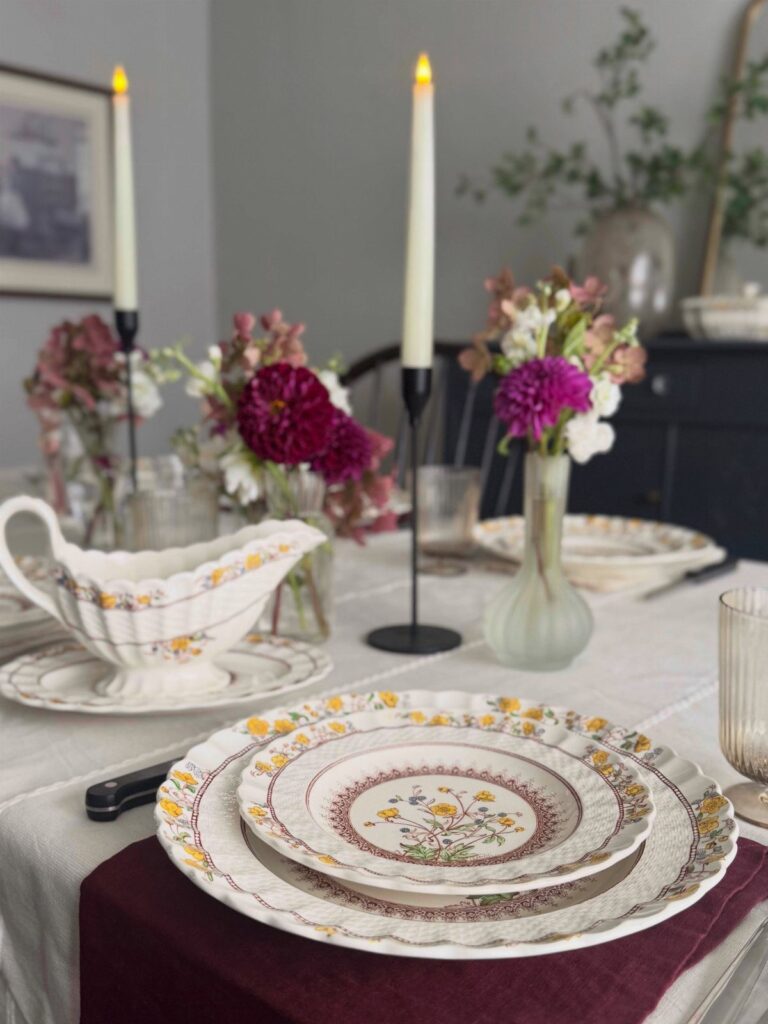
Plates set the direction for everything else here, since they are the piece you can least afford to swap, and napkins, runners and candles can all be chosen to suit them.
A patterned set wants quiet napkins and glassware, a plain white set can carry name cards and napkin rings, and a mismatched stack holds together once one color ties two pieces.
1. Beautiful Serveware
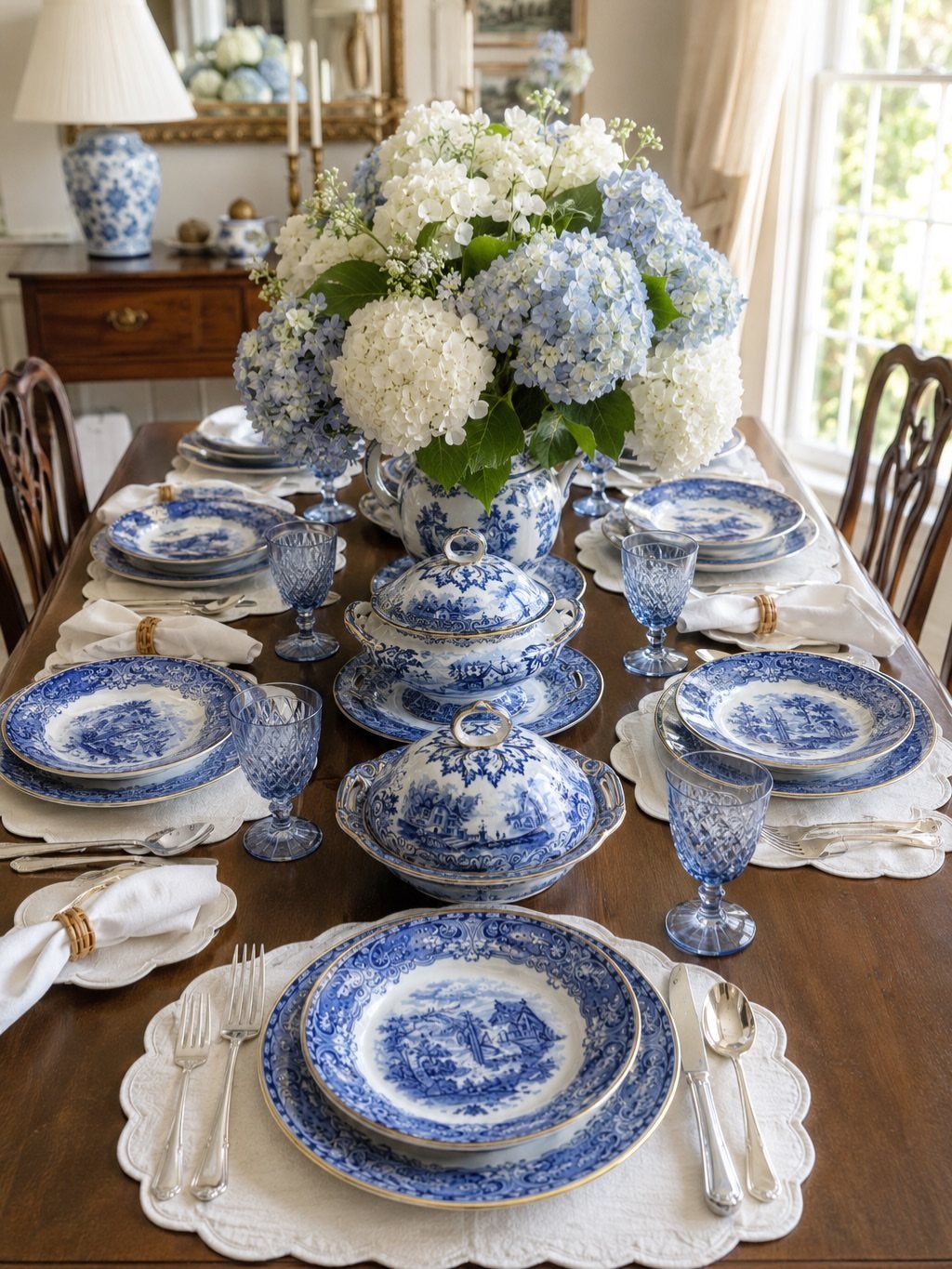
Blue and white china is a good argument for letting serveware do the decorating. A big ceramic vase of hydrangeas in the same pattern as the plates ties the whole table together with a single purchase.
I’d pick one anchor piece, such as a vase, a tureen or a platter, and let it match the dinnerware. Then keep everything else quiet: white napkins and simple blue glassware let the pattern lead.
Serve from the pieces too. A dish that goes from oven to table in a pretty bowl saves you one transfer and one more thing to wash.
2. Cohesive Color Palette Dinner Table Setting
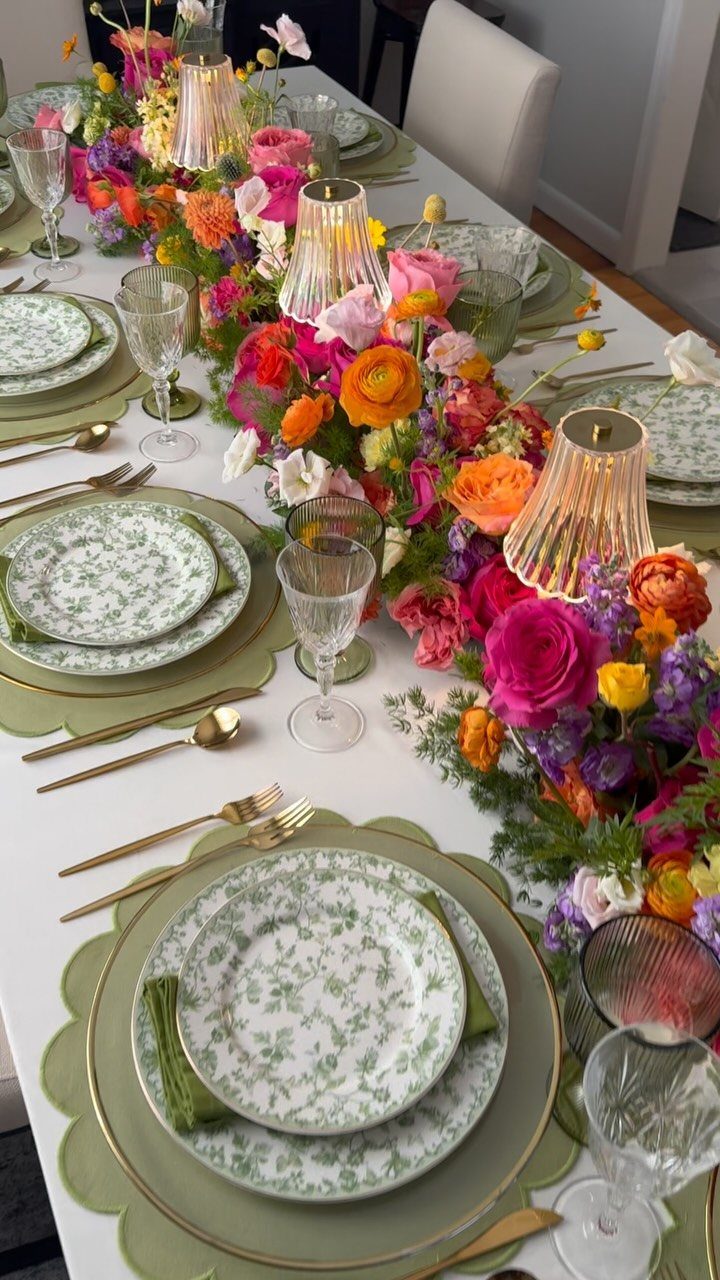
Green plates with gold cutlery and gold-trimmed lamps work because the metal and the color repeat across the table. Pick a pair of colors and repeat each one at least twice.
Florals are the easy place to bring in a third shade, since a mixed bouquet already carries several. Pull one bloom color that sits well beside the plates and let the rest play supporting roles.
A white tablecloth keeps all of it calm. I’d start with the plates, because they are the hardest piece to change, and build the palette around them.
3. Table Runner
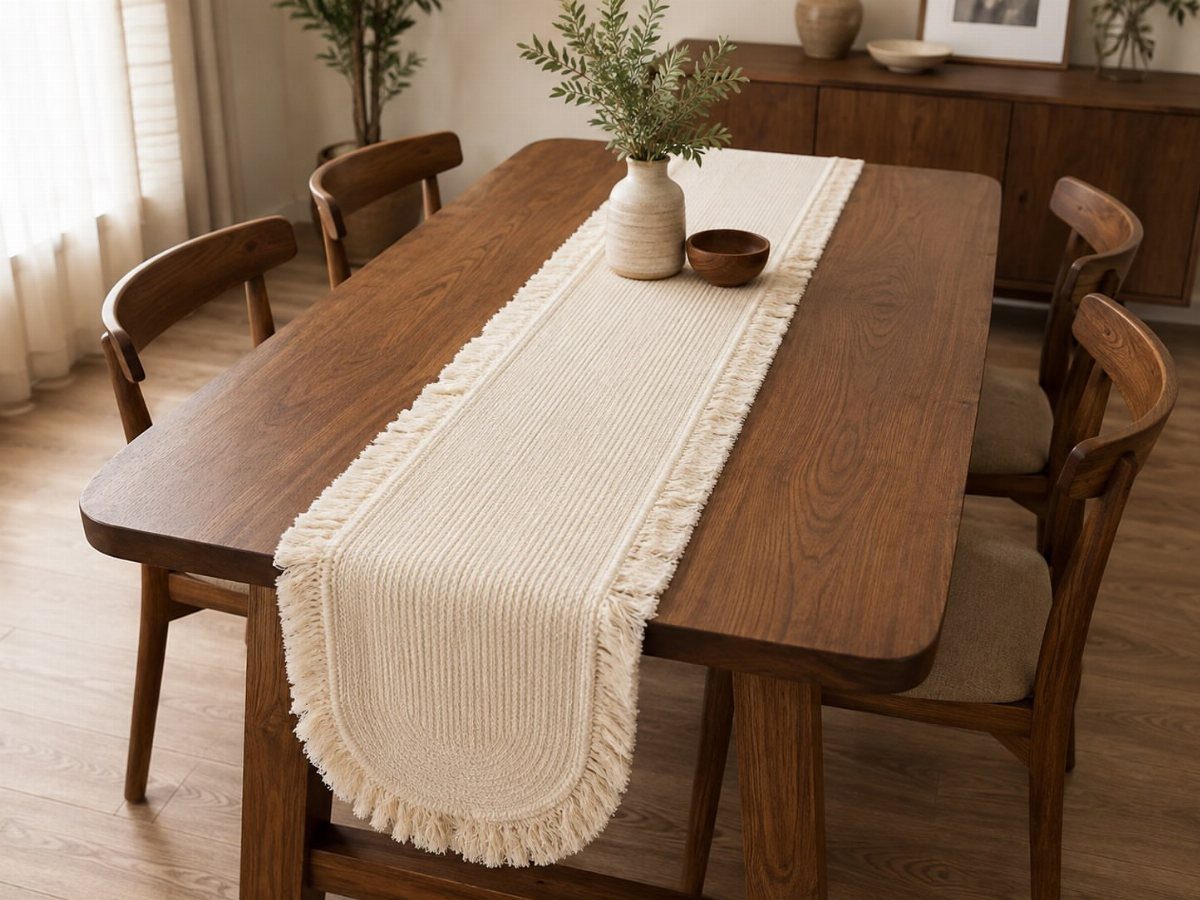
A runner down the center of a wood table does 2 jobs: it adds a band of color or pattern, and it gives the centerpieces a place to sit.
Choose a neutral if you swap decor often, and save bold prints for a table you set once or twice a year.
Keep the centerpieces low or narrow, like a vase of greenery and one ceramic dish, so guests can see each other across the table. Let the fringe hang just off each end.
4. Placemats
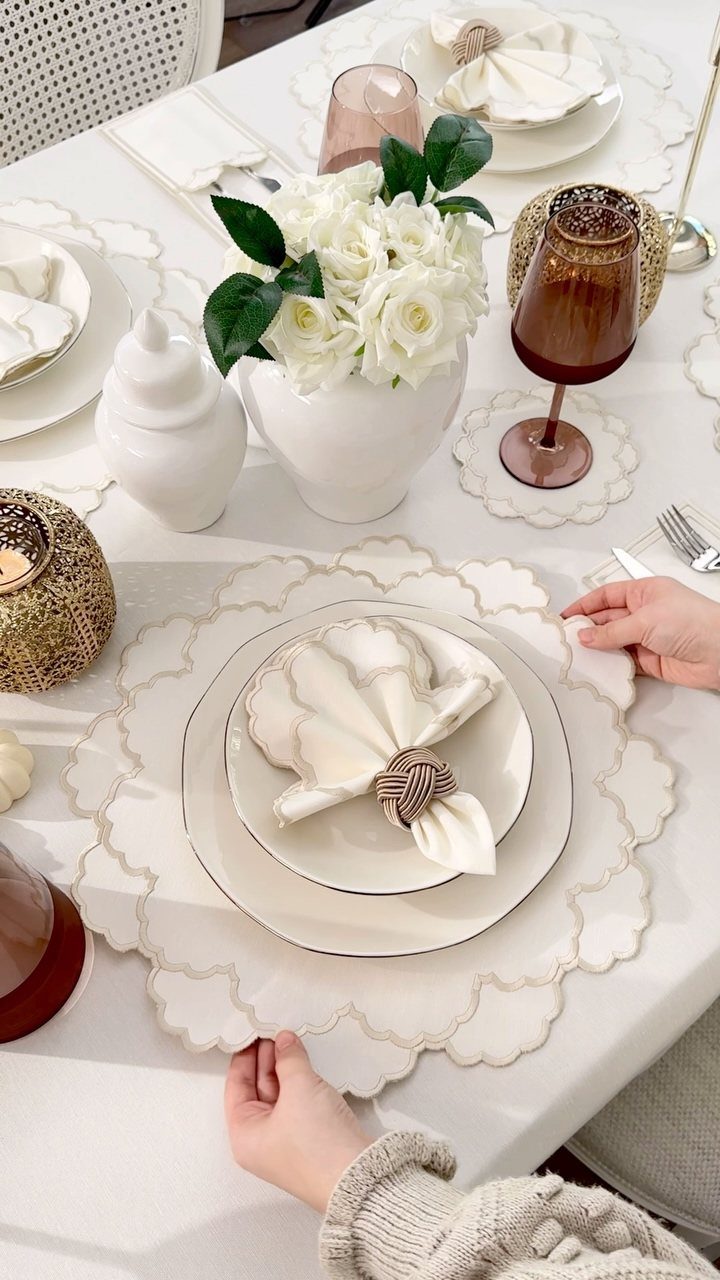
Scalloped edges give a plain white plate a softer outline, and that is the quiet strength of placemats. They add texture and a little color without covering the table, so the wood or cloth still shows around them.
I like placemats best for everyday dinners and casual gatherings, since they protect the table and cost far less than a full cloth set.
Pick a color close to your plates for a calm look, or a deeper shade for contrast.
Set each one square to the table edge, then place the plate in the center.
5. Accessorize Your Table
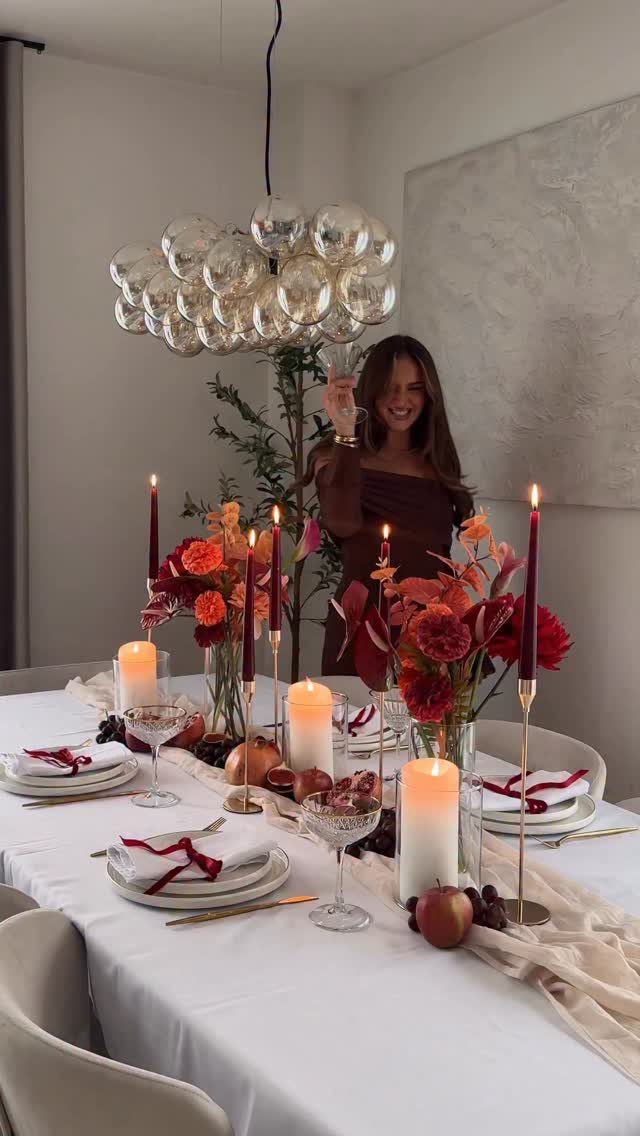
Accessories give a table its mood, and they are the cheapest layer to change from one dinner to the next.
Group items in odd numbers, and vary the heights: tall candles, a low bowl of fruit, flowers in between. Keep one color as the accent, red here, and let the rest stay neutral.
Edit while you can still move things around. If someone has to move a candle to reach the bread, it goes.
6. Outdoor Dinner Table Setting
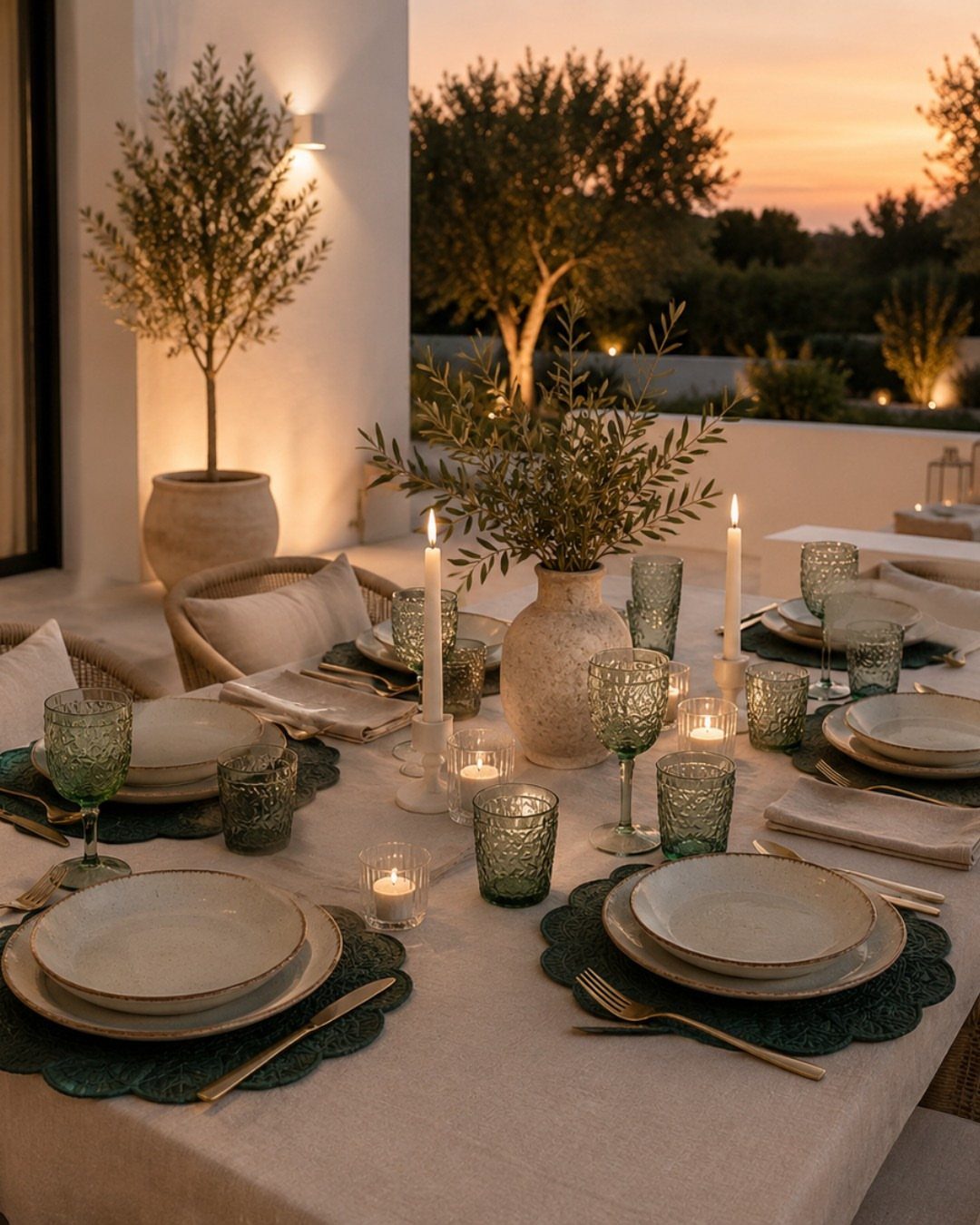
Green glassware looks especially good outdoors, where evening light passes through it. Pair it with plain white plates and a cutting of olive branches down the middle, and the table needs little else.
Candles carry an outdoor dinner as the light fades. I’d pick ones in glass holders so a breeze does not blow them out.
Skip anything light and loose on the table, like paper napkins or small decor, unless you weigh it down. Set the table close to dusk so nothing sits out longer than it has to.
7. Festive Fall Table
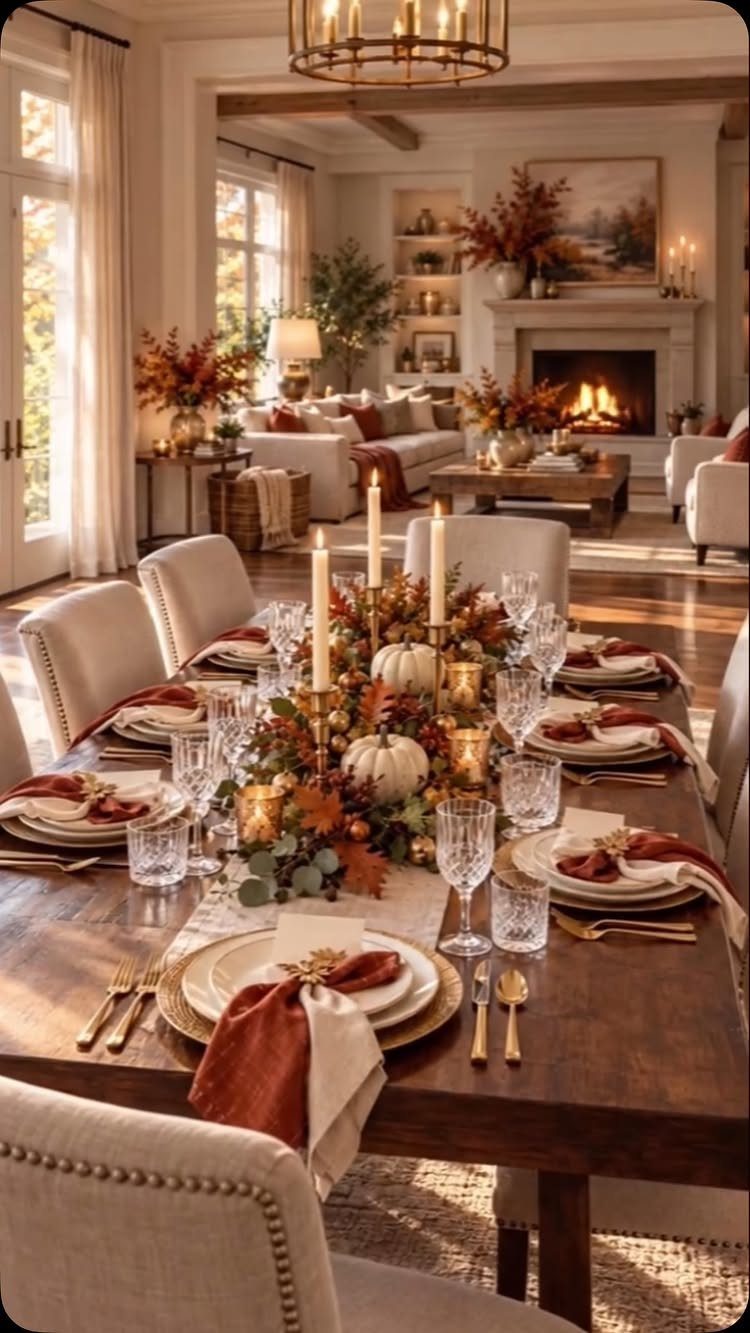
Pumpkins do most of the work on a fall table, so buy a few in different sizes and set them down the middle in place of a centerpiece.
Scatter a few leaves between the pumpkins and set candles at varied heights so the centerpiece has some rise and fall. I’d keep the plates plain so the table reads cozy rather than crowded.
8. Holiday Dinner Table Setting
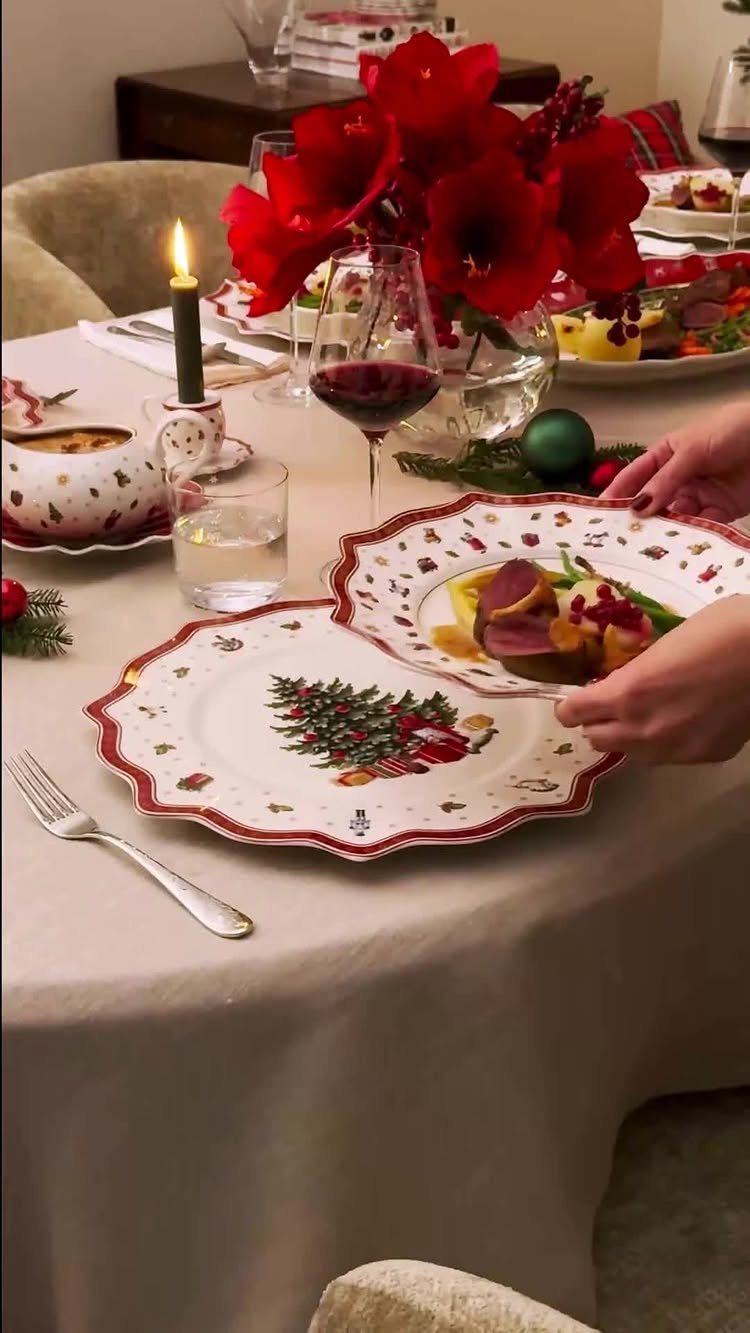
Patterned holiday plates are the one piece worth buying for this table, because they carry the theme without needing much else. Red flowers in a low vase echo the print, and a single lit candle adds the glow.
Keep the glassware and napkins simple. Busy plates look best with quiet company.
I’d set the table first, then light the candle last, right as people sit down.
9. Mix and Match Dinnerware
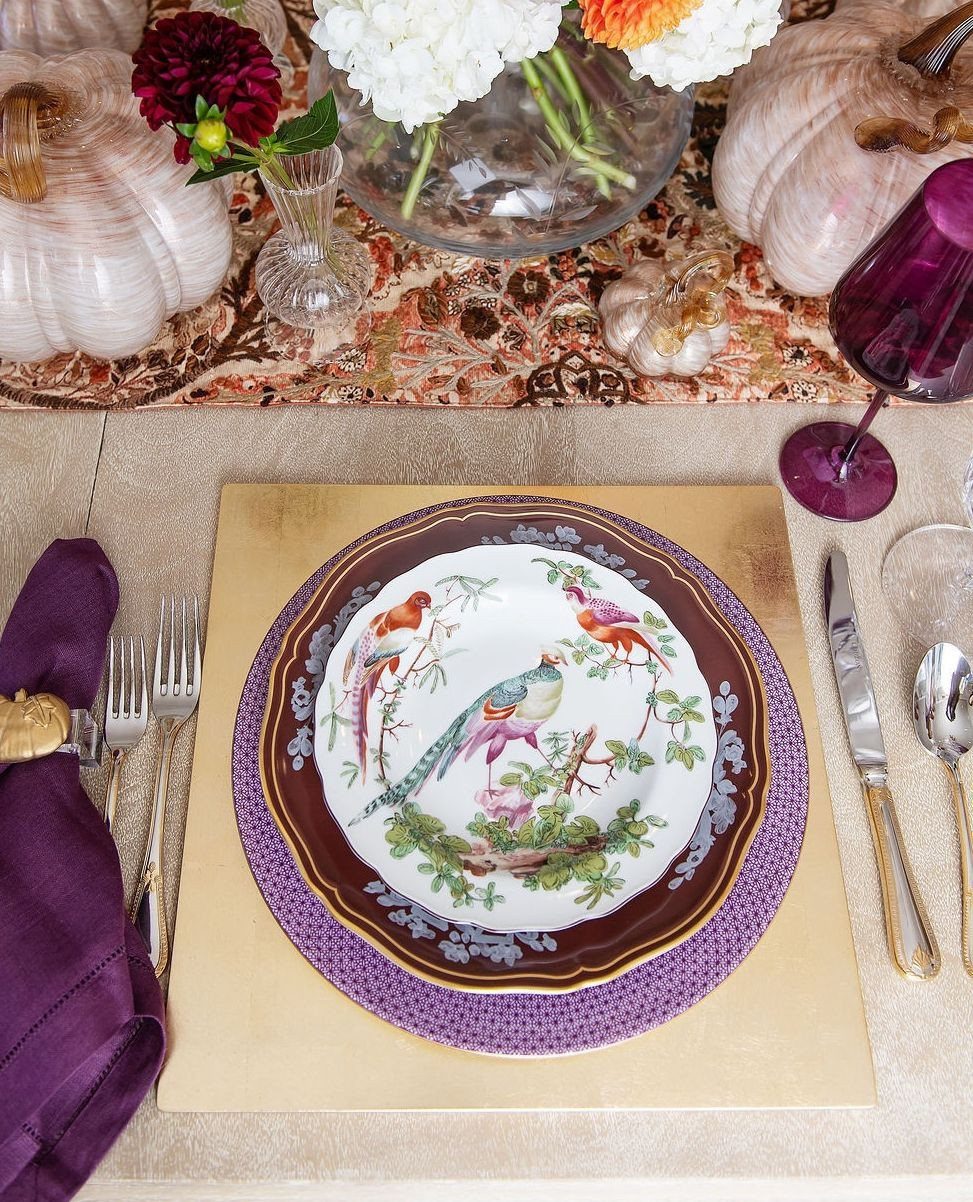
Mismatched plates look planned when one color links them. Here, purple shows up on the patterned plate and the napkin, so a bird-print dinner plate can sit on top without a fight.
Stack in order: charger at the bottom, patterned plate, then the plate you like best on top. Gold under purple is a pairing I’d copy.
Mix patterns freely, but keep the shared color in at least 2 pieces.
10. Name Cards and Unique Napkin Rings
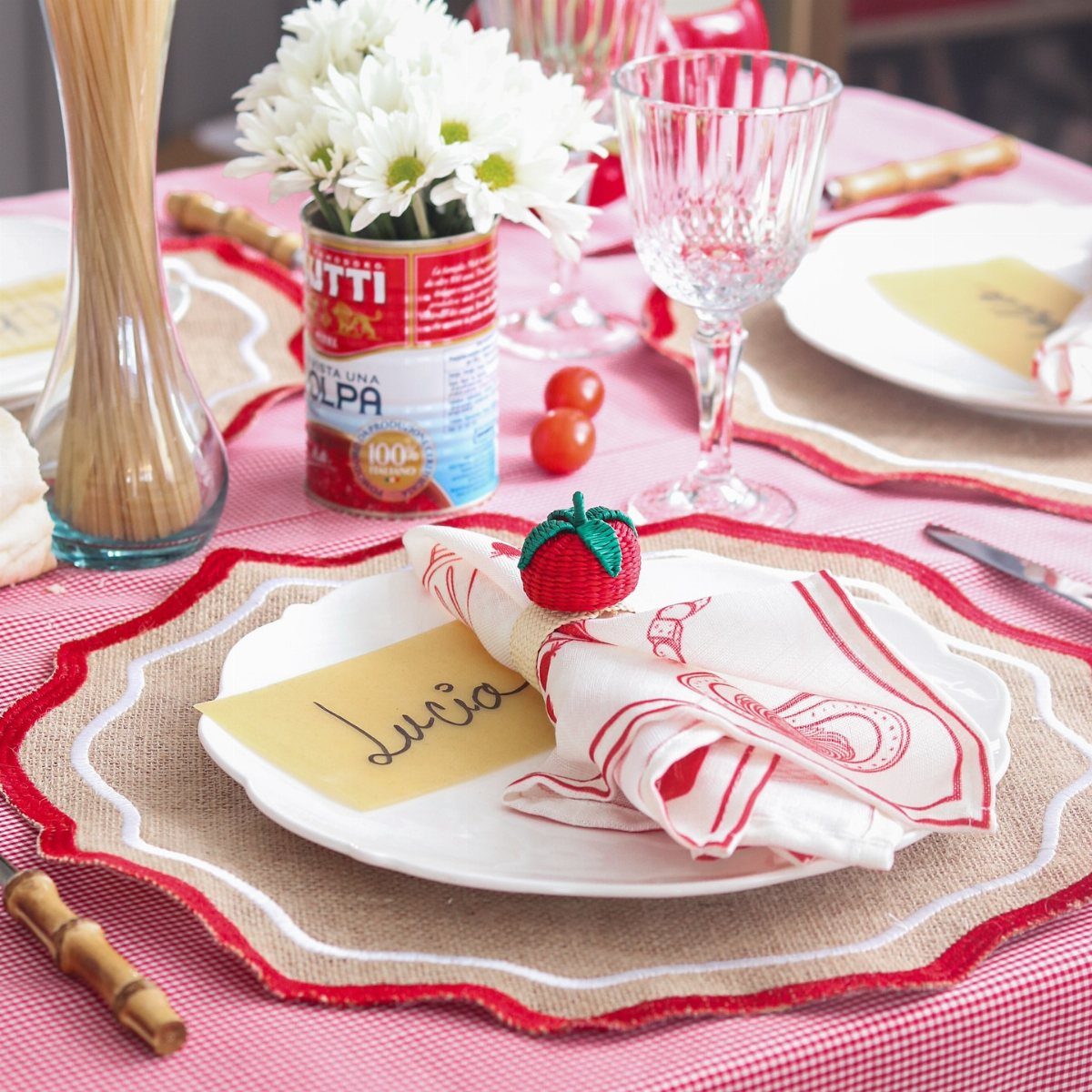
A name card and a napkin ring take almost no time per guest to set, and they make a plain white plate look chosen. A small tomato ring on a red checkered cloth is playful and costs little.
Pick one object that fits your menu, then write each name by hand so the card feels personal. Place the card above the plate or tucked into the napkin ring.
Seating cards also save you from the awkward "where do I sit?" shuffle.
11. Texture in Table Settings
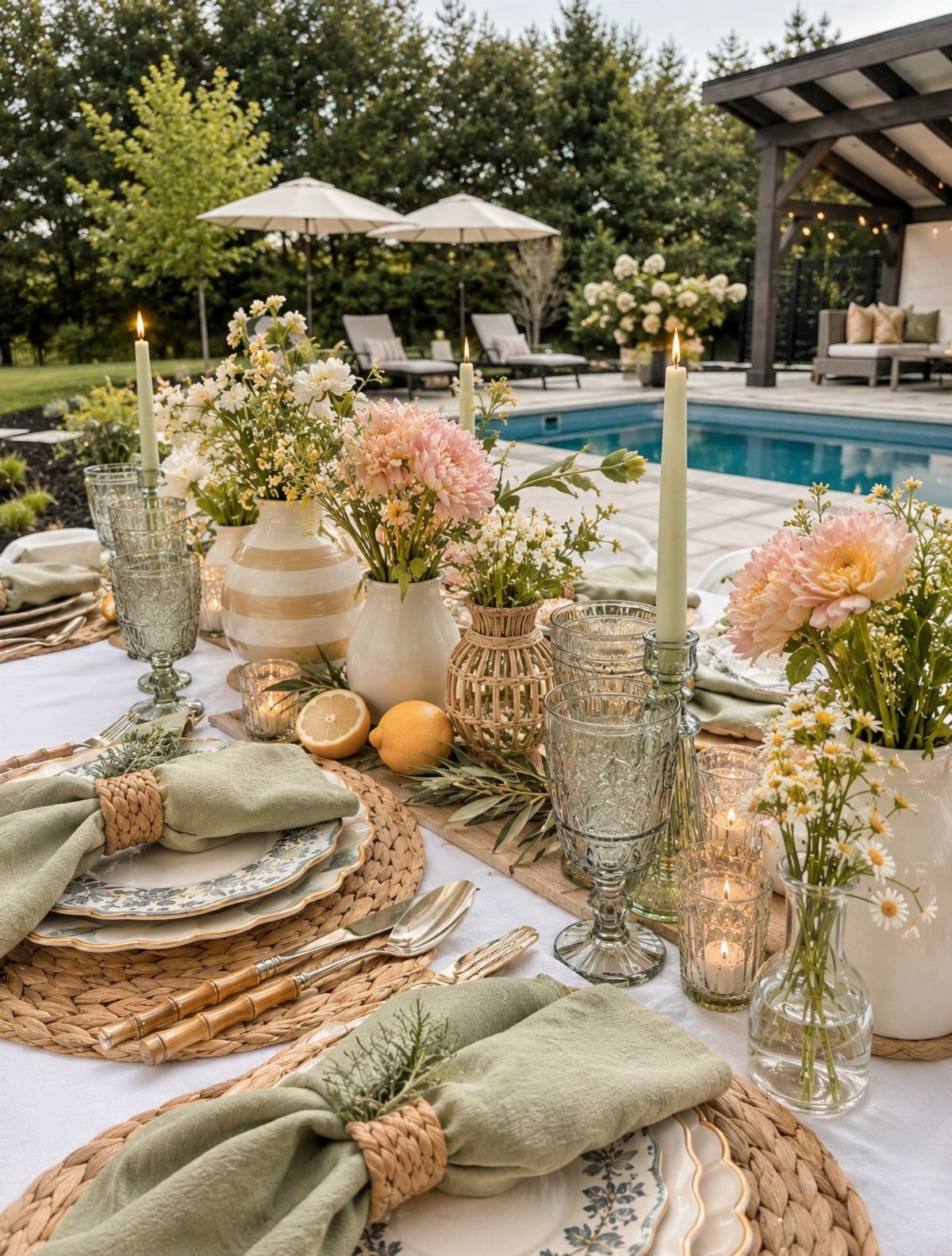
Woven placemats bring warmth to an outdoor table, and sage green napkins soften them further. Smooth glass and candles then give the surface a contrast to the rough weave.
Layer from rough to smooth: natural weave first, then cloth, then glass. I’d use several small vases of flowers in different shapes rather than one large arrangement, since they add depth without blocking the view.
Keep the colors muted so the textures do the talking.
Frequently Asked Questions
How to set a dining room table?
Build it in layers: plates first, then flatware, then glassware and decor. Plates come first, because they’re the piece you can’t swap out easily, and every other color on the table can be picked to match them.
Set each placemat square to the table edge with the plate centered, and keep centerpieces low or narrow so guests can see each other.
Does the napkin go on the right or left?
The napkin typically goes to the left of the plate. For a more personal touch, slip the napkin through a ring and rest it on the plate, or set a name card above the plate instead.
What are the types of table set up?
The main styles are a color-palette table, a runner table, a placemat table, an outdoor table, a fall table, a holiday table and a mix-and-match table.
A placemat setup suits everyday dinners, since it protects the wood and costs less than a full cloth set.
A runner down the center suits a table you dress often, and a neutral one saves you when you change decor every season.
Holiday and fall tables lean on one strong piece, like patterned plates or a few pumpkins in different sizes.





