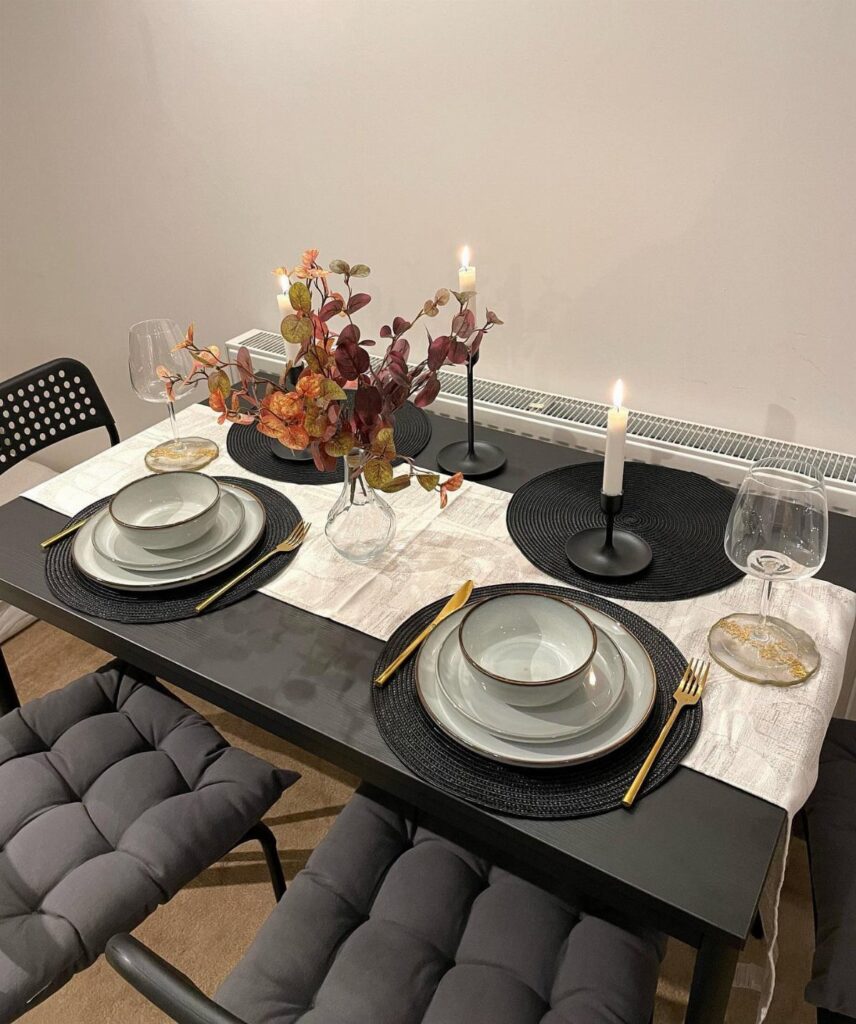
The setups below cover casual placemats, formal china, outdoor arrangements and single-color schemes. Whatever the size, I keep centerpieces below the height of a wine glass so guests can see each other across the table.
1. Casual Table Setting
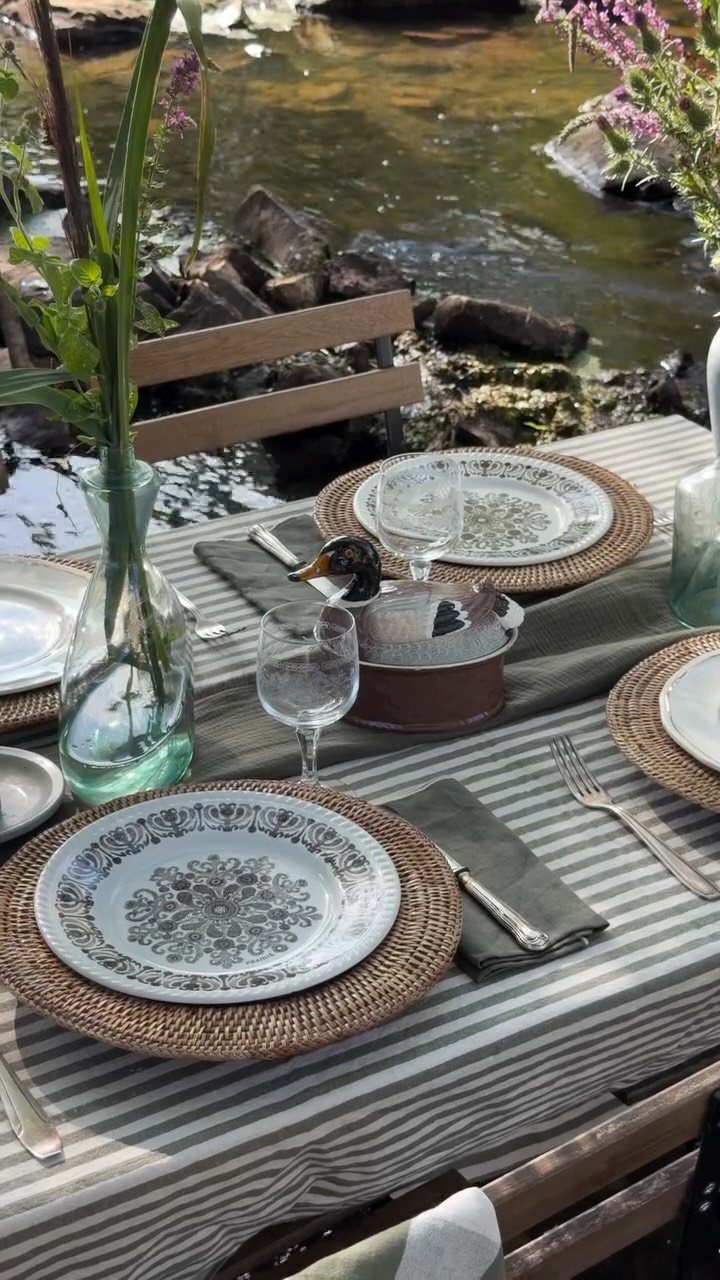
Woven placemats under patterned plates give a relaxed meal a little more structure without any fuss. Keep the pattern on one layer only: if the plates are busy, let the placemats and napkins stay plain, as they do here.
A small vase of greenery in the middle is enough. Anything taller than the glasses starts blocking the view across a table for two.
Wine glasses and cloth napkins are the 2 upgrades I would never skip. They cost little and make the setting look planned.
2. Informal Table Setting
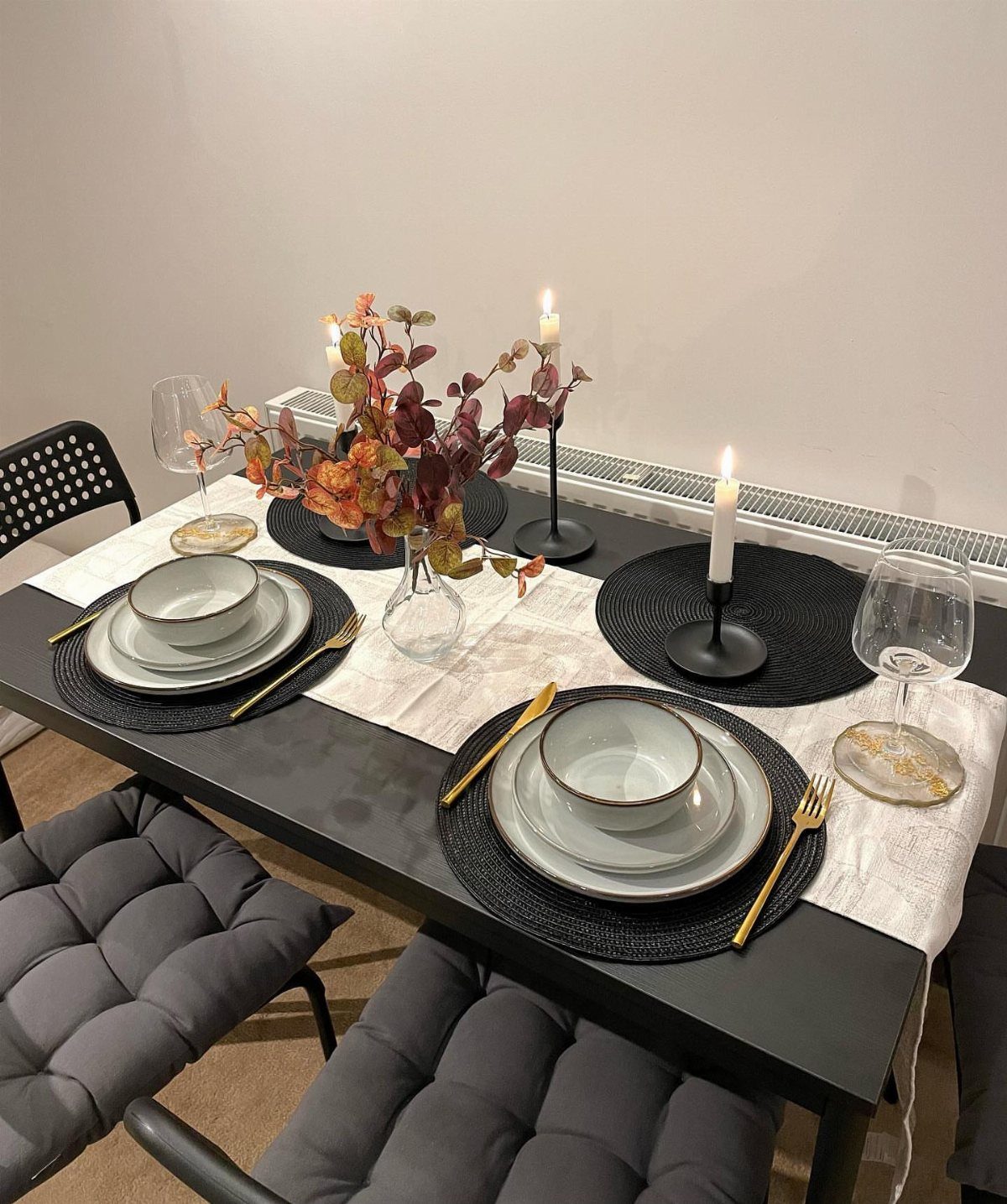
Candles on a white runner do most of the work at an informal dinner, and they cost almost nothing to set out.
Against a dark table, the runner gives the plates a clean base and lets the gold cutlery stand out.
I like a low floral or leaf arrangement for fall and holiday meals, set beside the candles rather than in front of them. Guests can then see each other and still have a centerpiece.
Light the candles just before everyone sits down. Unscented ones are the safer pick near food.
3. Use of Chargers
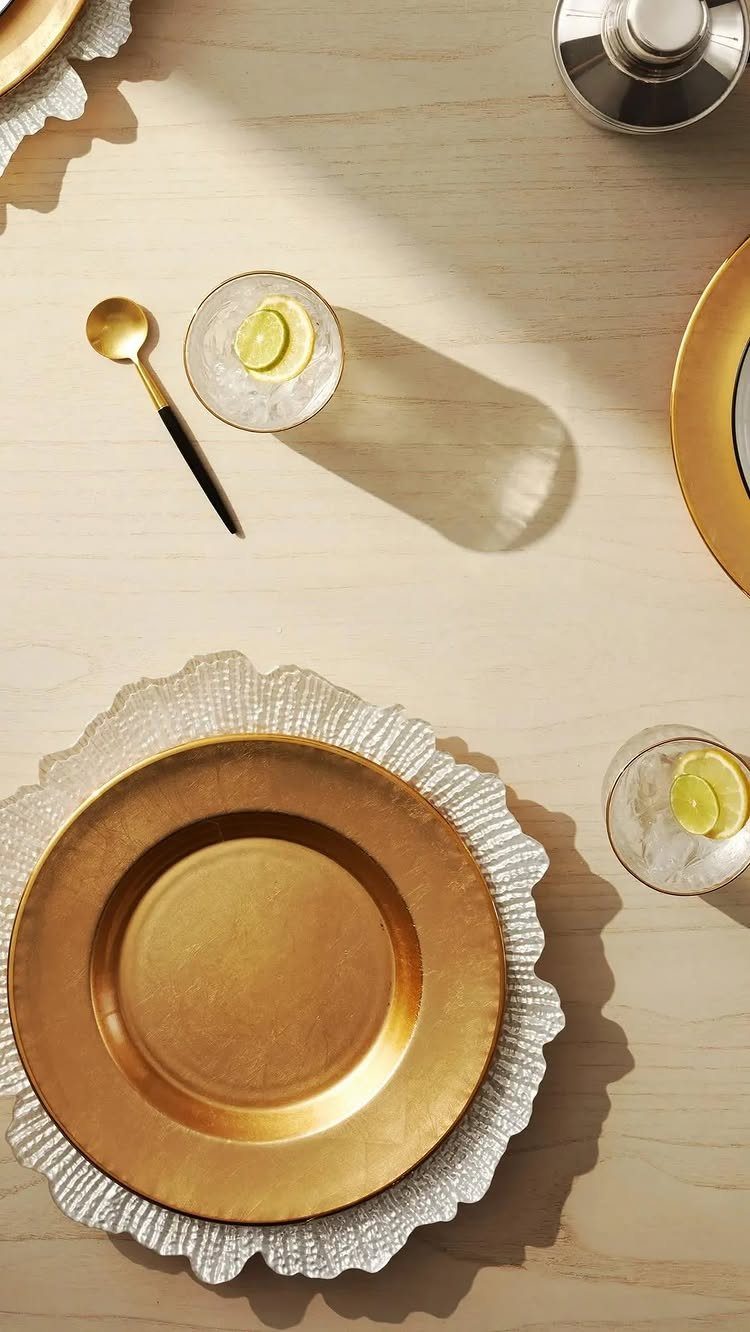
Chargers are the plates that sit under the dinner plate, and a clear textured one lets a gold plate show through while adding a ring of detail. Each setting gets one, and the dinner plate goes on top.
Chargers are decoration, not serving ware, so remove them before the food hits the table or once the main course is cleared, depending on how you want the flow to go.
Pair a busy charger with a plain plate. 2 patterns stacked together just compete.
4. Decorative Table Setup
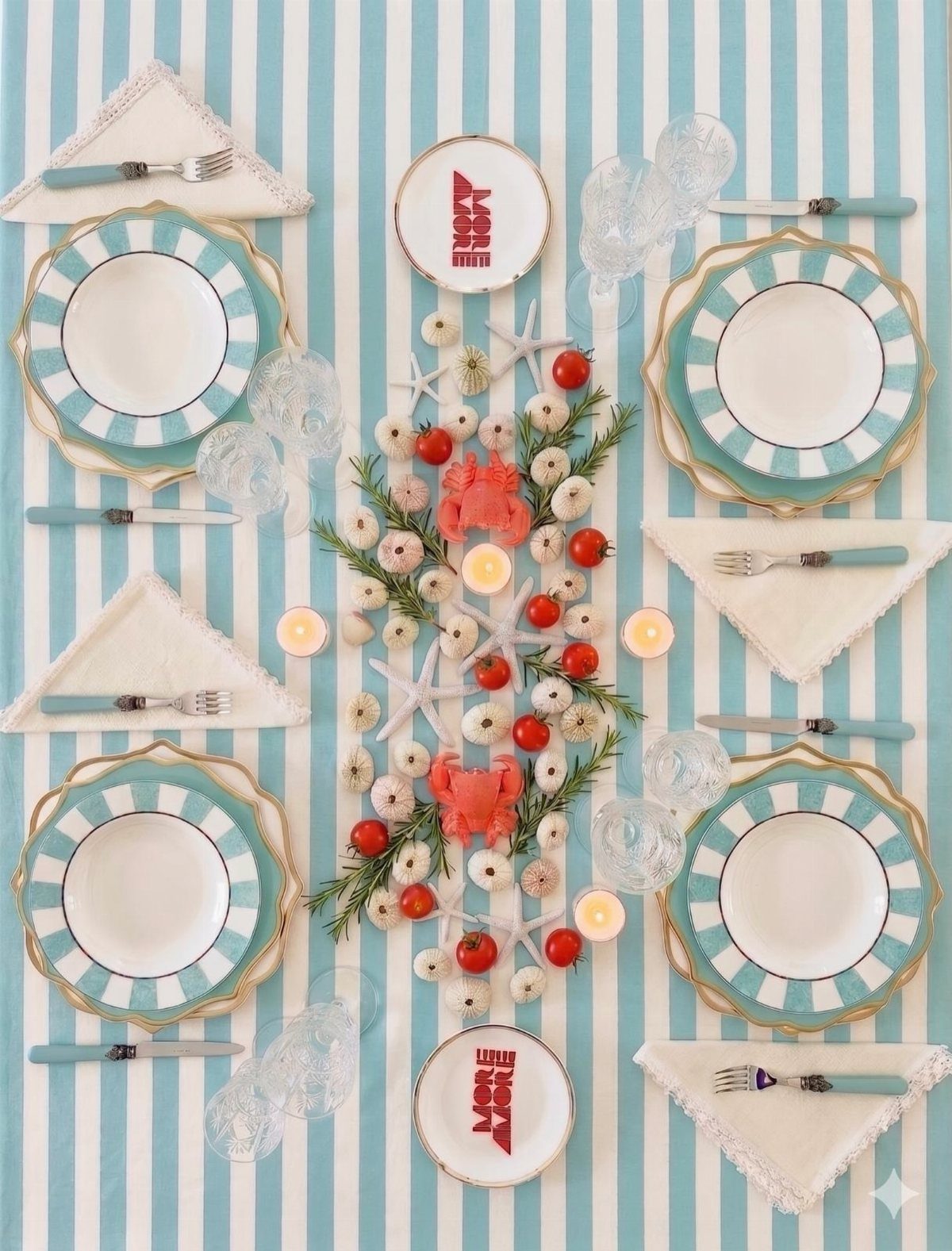
Pick one theme and let the linens carry it. Blue and white stripes set a nautical direction, and plain white plates underneath keep the focus on the starfish, shells, and crabs.
For a birthday, bridal shower, baby shower, or seasonal party, I would buy the small decor items cheaply and repeat them down the center of the table instead of scattering them everywhere.
Keep the plates plain and the cutlery simple. If every piece is themed, the table reads as costume.
5. Napkin Placement
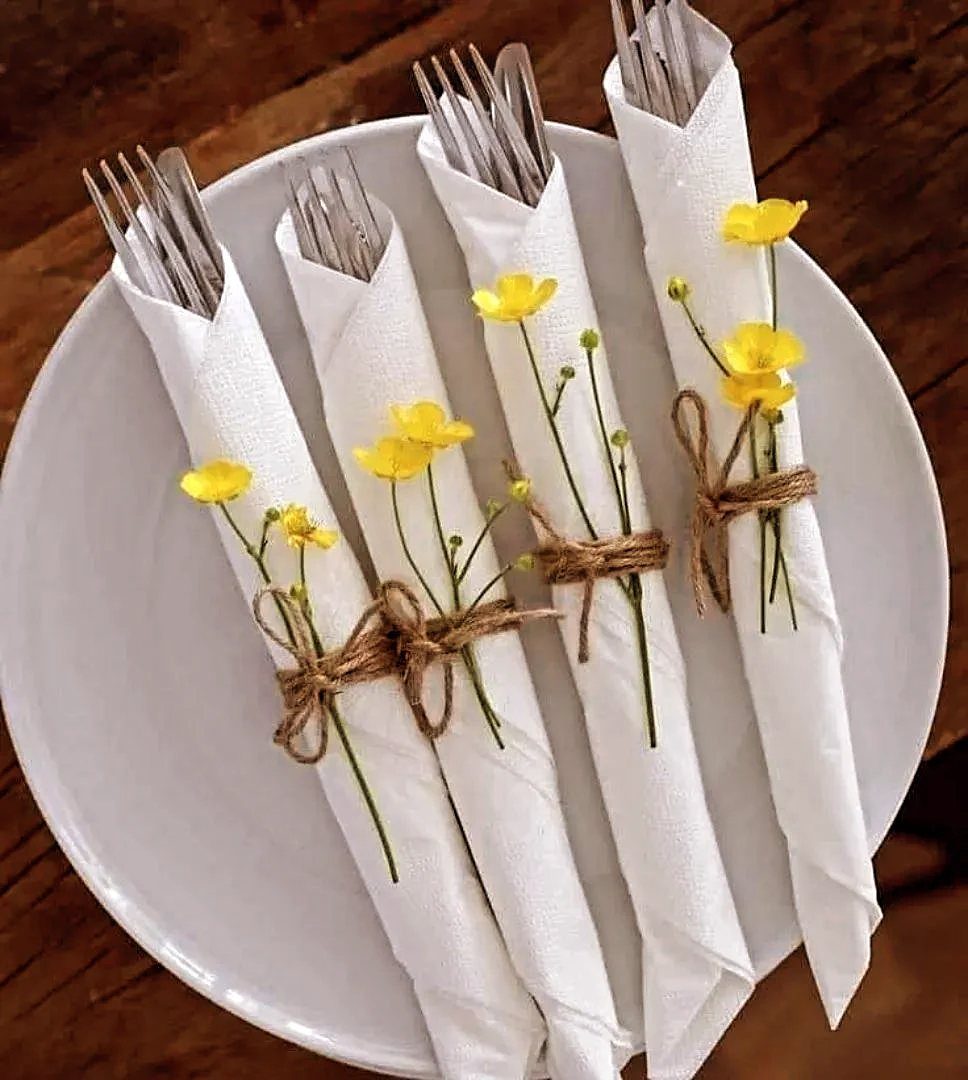
Wrapping a napkin around a fork and tying it with twine turns cutlery into a small bundle that guests can lift in one move. It also keeps the table neat whether you set a small dinner or a long one.
Tuck a small flower under the twine for a bit of color. Yellow stands out well against white linen, and fresh stems from a grocery store bunch will do.
Cloth works best for this because paper napkins get bulky and slip. Tie the knot loosely so the fork slides out easily.
6. Low Centerpieces
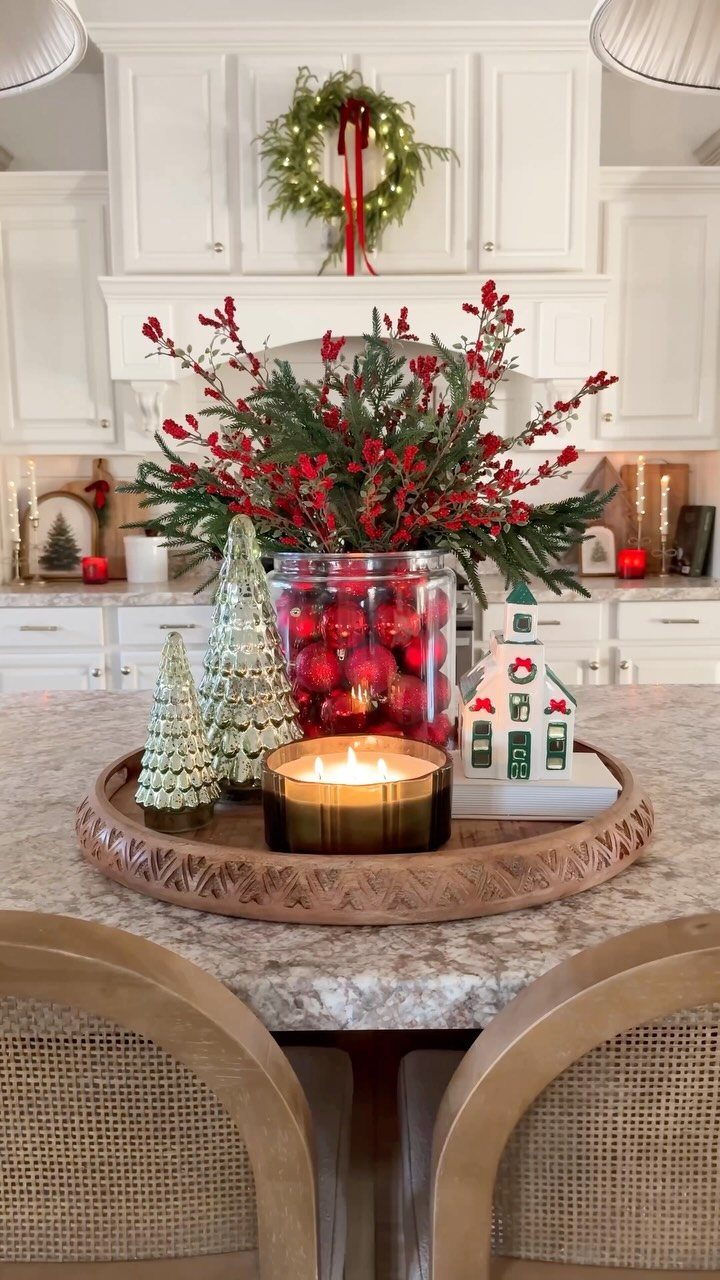
A low centerpiece keeps sightlines open, which matters most at a kitchen island or any table where people talk across it. A wooden tray gathers the pieces so they read as one arrangement.
Keep everything under about the height of a wine glass.
A tray also makes cleanup quick: lift it off and the table is clear for dinner.
7. Formal Table Setting
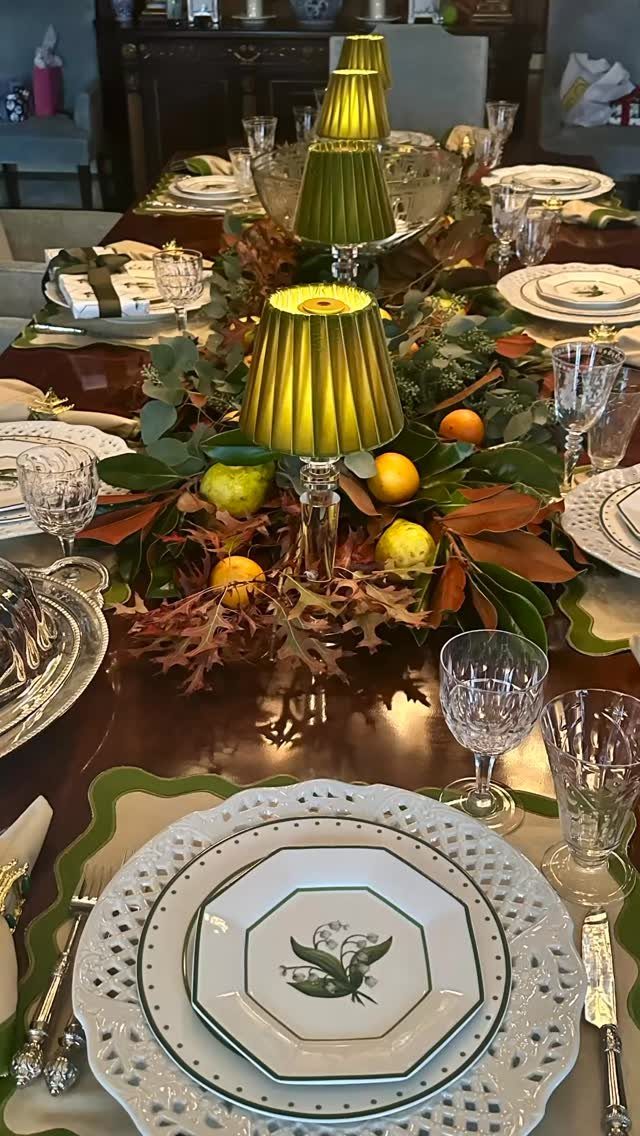
Crystal glasses and white patterned plates ask for a centerpiece that stays out of their way, and autumn leaves with yellow fruit do that well. Small lamps add warmth without the height or drip of tall candles.
Keep the color count low: white, clear, and one warm yellow. Cloth napkins and polished glasses matter more than extra decor, since a smudged glass shows up fast on a formal table.
8. Placemat Table Setting
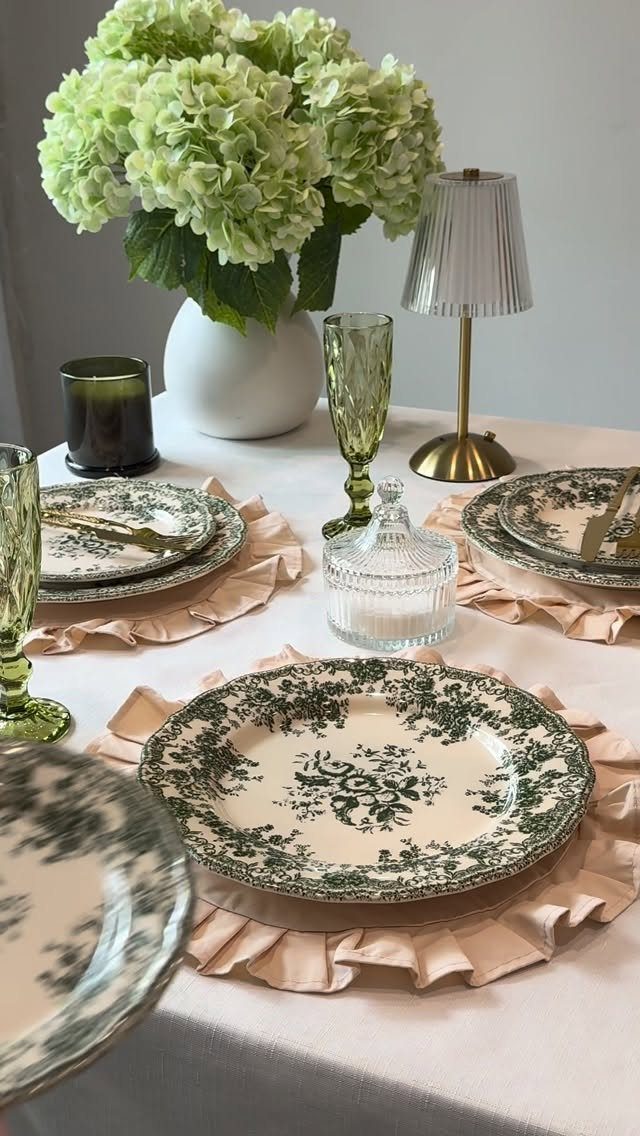
Ruffled peach placemats work best when the plates and glassware are allowed to be the busy part. Floral plates, green glasses, and gold cutlery already carry a lot, so a plain white tablecloth underneath gives the eye somewhere to rest.
A single-color centerpiece, like green hydrangeas in a white vase, picks up the glassware without adding a new color, so the placemat stays the focus.
I would keep the vase and lamp to one side of the center so each placemat stays fully visible.
9. Outdoor Table Setting
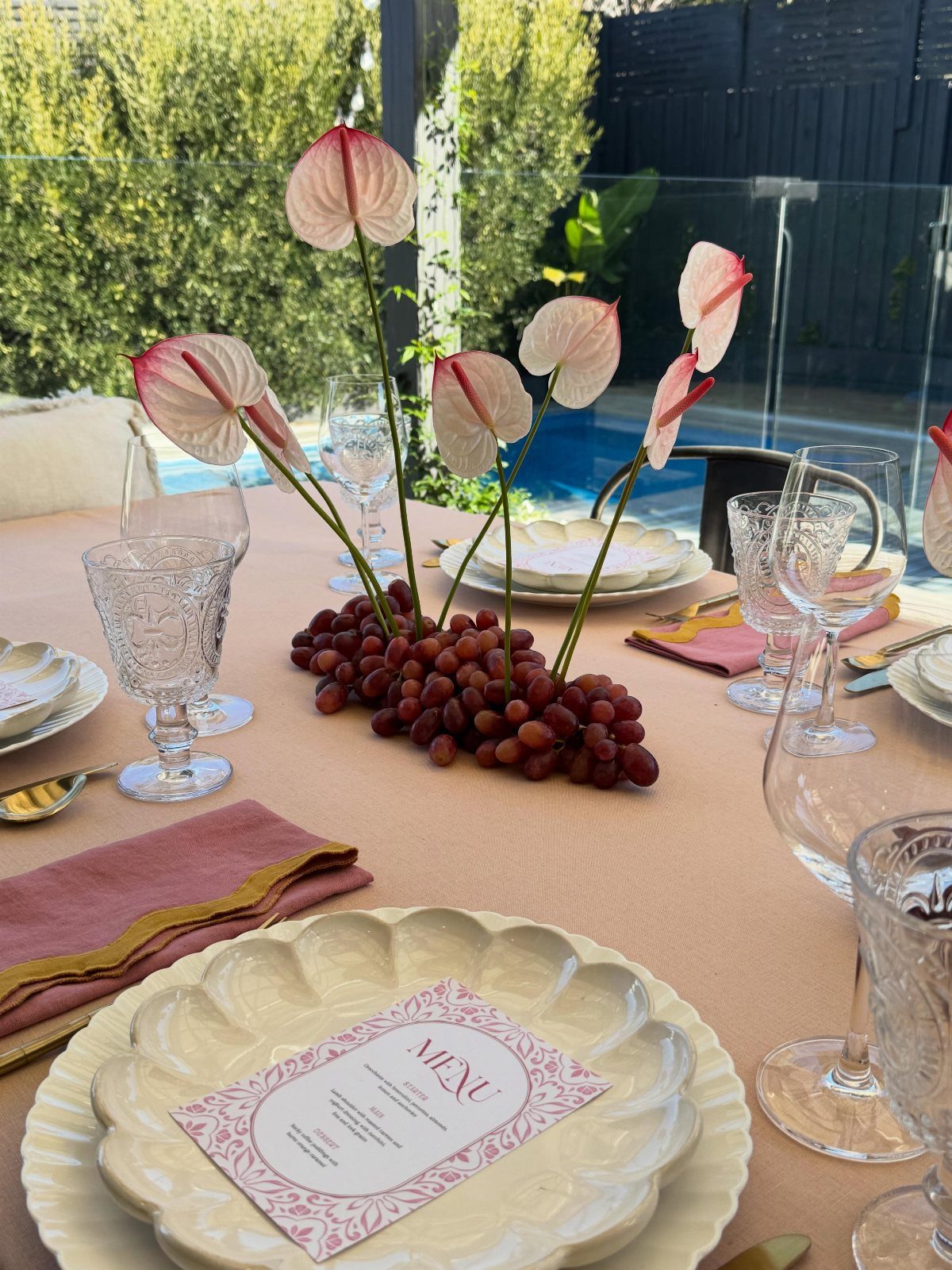
A long outdoor table looks best when one runner of fruit and flowers does the decorating. Red grapes and anthurium laid down the center fill the length with color, and you can add or trim pieces to match the table.
Setting a printed menu on each plate is a small touch I like: it tells guests what is coming and costs a few cents to print at home. Drape the tablecloth so it hangs evenly on both sides.
10. Monochromatic Table Setting
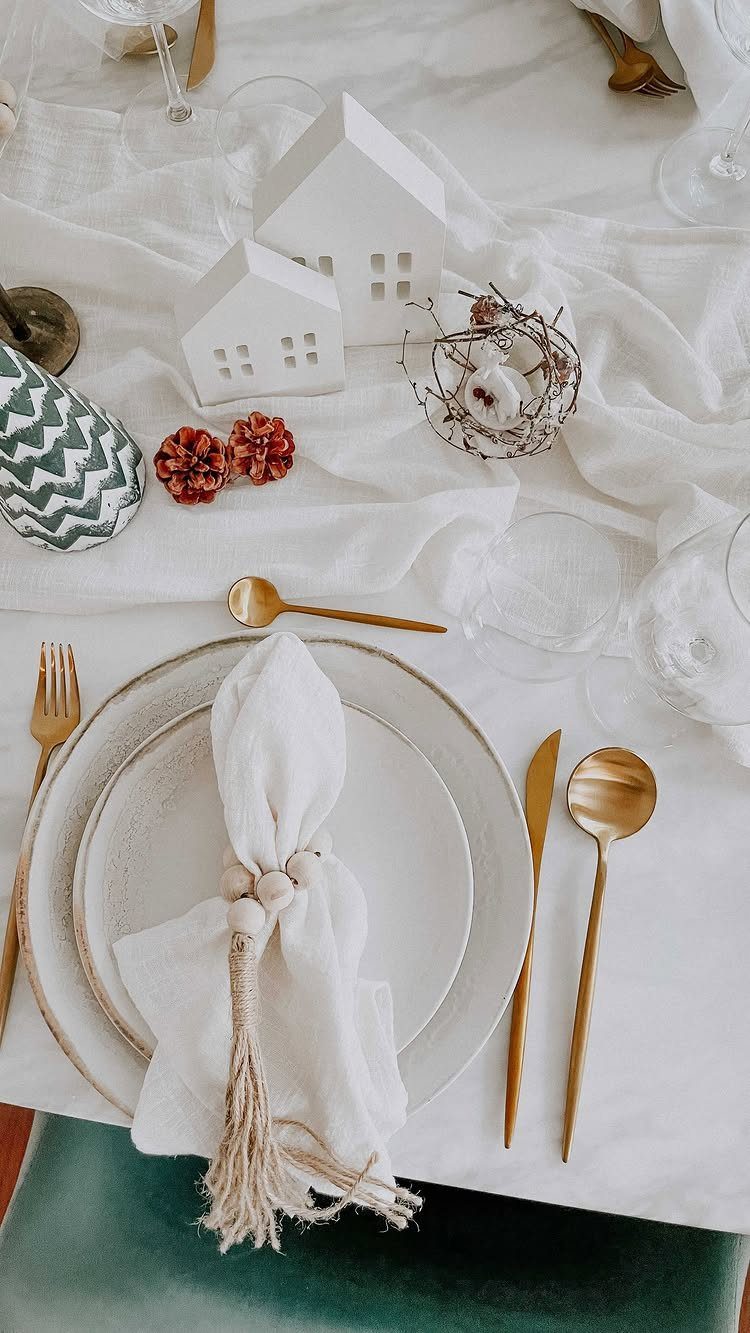
White on white only works if texture does the talking. A crisp linen cloth, matte plates, and a napkin held by a wooden bead ring give the eye small differences to read, while gold cutlery adds the one warm note.
Decor stays small here: miniature houses and a few pinecones are enough. Press the tablecloth first, because wrinkles show more on white than on any other color.
Importance of Table Setting
A set table tells guests they were expected. A real plate, a cloth napkin and a seat for everyone make a meal feel like an occasion, even when the food came from a carry-out container.
A set table also gives guests a quiet map of the meal, so nobody wonders what comes next or where to reach.
When plates, glasses and utensils are already in place, guests know where to sit and what comes next, and you spend less time fetching things mid-dinner.
The setup sets the mood before anyone sits down. Clean linens read as refined, layered place settings add formality, and a few accents tie the theme together.
Match the effort to the event. Weeknight dinners get by on a plate, fork, knife and glass, but a wedding or formal dinner earns tablecloths, cloth napkins, good china and a few types of stemware.
A well-appointed table—from linens and china to glassware and centerpieces—strengthens a chic setting. But the beautiful accessories are useless if you don’t know how to set a table properly.
Choosing Tableware
Start with the dinner plate, since everything else follows its tone. For formal dinners, choose ceramic plates with subtle designs or fine detailing; for casual meals, bright colors or rustic finishes bring warmth.
Then count the courses. More courses mean more forks and knives at each place; a one-course dinner needs just a fork, a knife and maybe a spoon.
No wine on the menu means the wine glasses stay in the cupboard, and a water glass does the job.
For formal tables, spend on elegant, high-quality pieces. For basic everyday settings, practical and economical tableware does the job, and I would not apologize for it.
Decorative Elements
Seasonal accents give a table its mood. Scattered blossoms, mirrors, fairy lights, garland and candles all work, and the choice depends on the occasion.
Pick two or three of those and stop. Each added accent makes the table feel crowded, so edit before guests arrive.
Check it from a seated position: if you can’t see the person across from you, it’s too tall.
Place cards are worth the few minutes they take. They show attention to detail and make each guest feel singled out, and they save the awkward shuffle of everyone choosing a seat.
Frequently Asked Questions
What is the correct way to set up a table?
Start with the dinner plate, then place utensils in the order they will be used, with forks on the left and knives on the right.
A Tuesday night calls for a plate, fork, knife and water glass; a formal dinner brings out the tablecloth, cloth napkins, your good plates and multiple wine glasses.
Add a course and you add a piece of silverware to each setting.
What are the basic table settings?
The main styles are basic, casual, informal and formal, plus a five-course setting for the most elaborate meals.
Casual and informal tables add things like cloth napkins, placemats, a runner and candles, and formal tables add a tablecloth, good china and multiple glasses.





