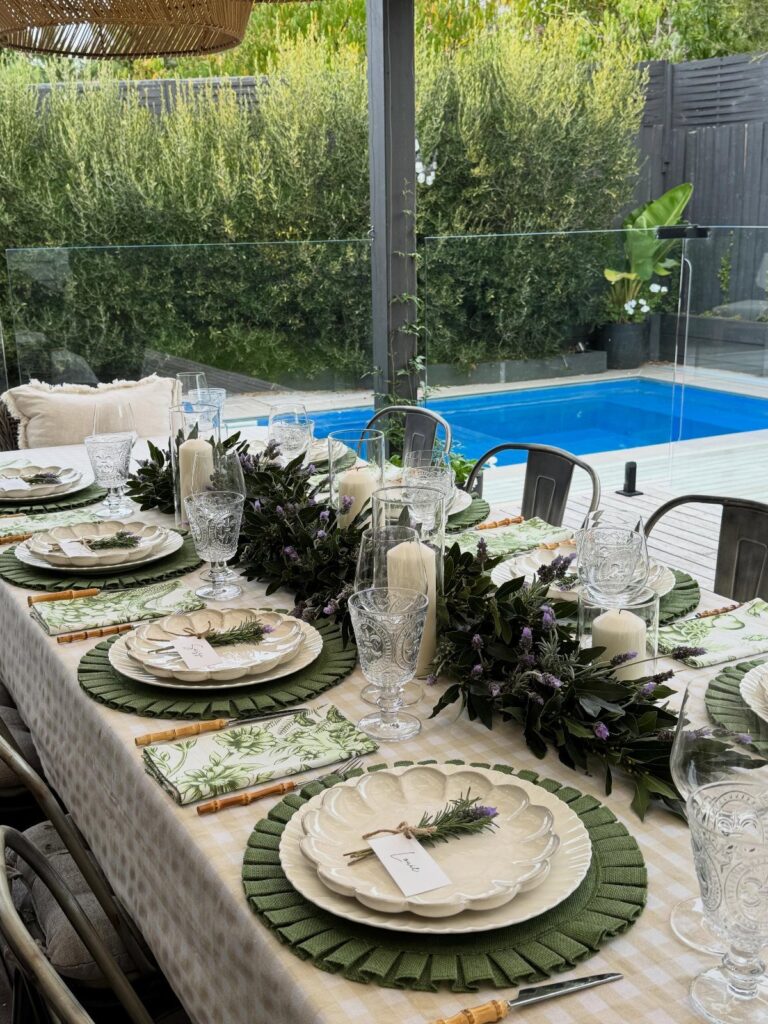
The list covers a wide range: casual place settings and seasonal plates and napkins for an easy night, then formal table settings, fine china, bow-tied napkins and place cards for the dressed-up end.
How formal the occasion is decides which one you set: a pool party or game-day crowd needs only stacks of plates and napkins, while a special dinner earns the extra half hour.
1. Decorative Napkin Rings
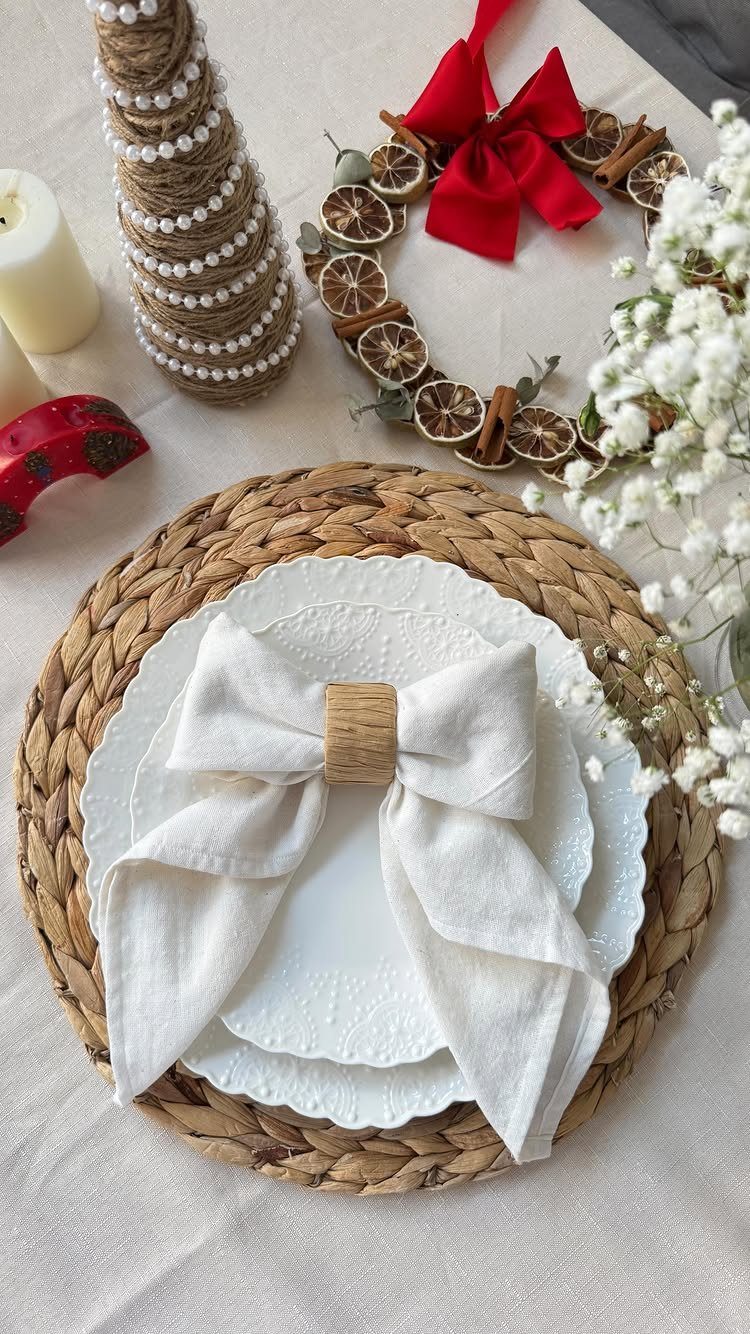
A wooden ring tied around a white linen napkin gives a plain plate a finished look for almost no effort.
Wood against a woven charger keeps the palette quiet, so the napkin ring does the talking without competing with the dishes.
I like a solid-color napkin with a textured ring, since the contrast reads as intentional. Slide the ring over a folded napkin, then rest it on the plate or charger.
If you’re buying rings, pick a set of one material rather than mixing styles.
2. Formal Table Settings
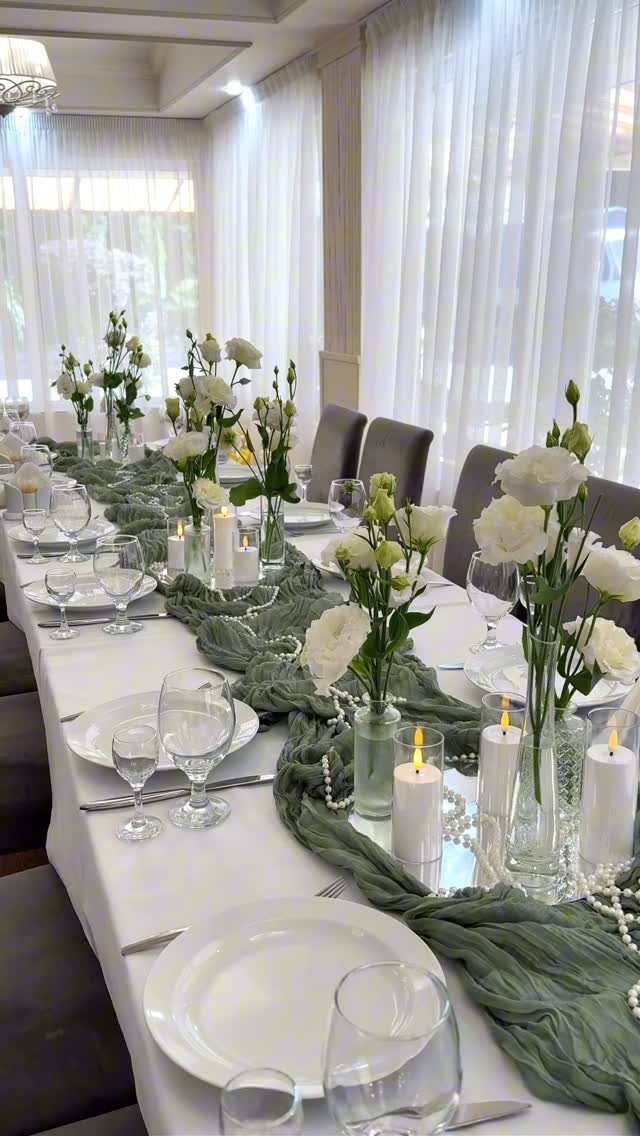
White plates and clear glassware let the greenery and flowers carry the color.
Keep the flowers in low vases so guests can see each other across the table. Candles belong between the vases, not in front of anyone’s plate.
For a special occasion, I’d choose this restrained approach over adding more decor.
3. Seasonal Themed Plates and Napkins
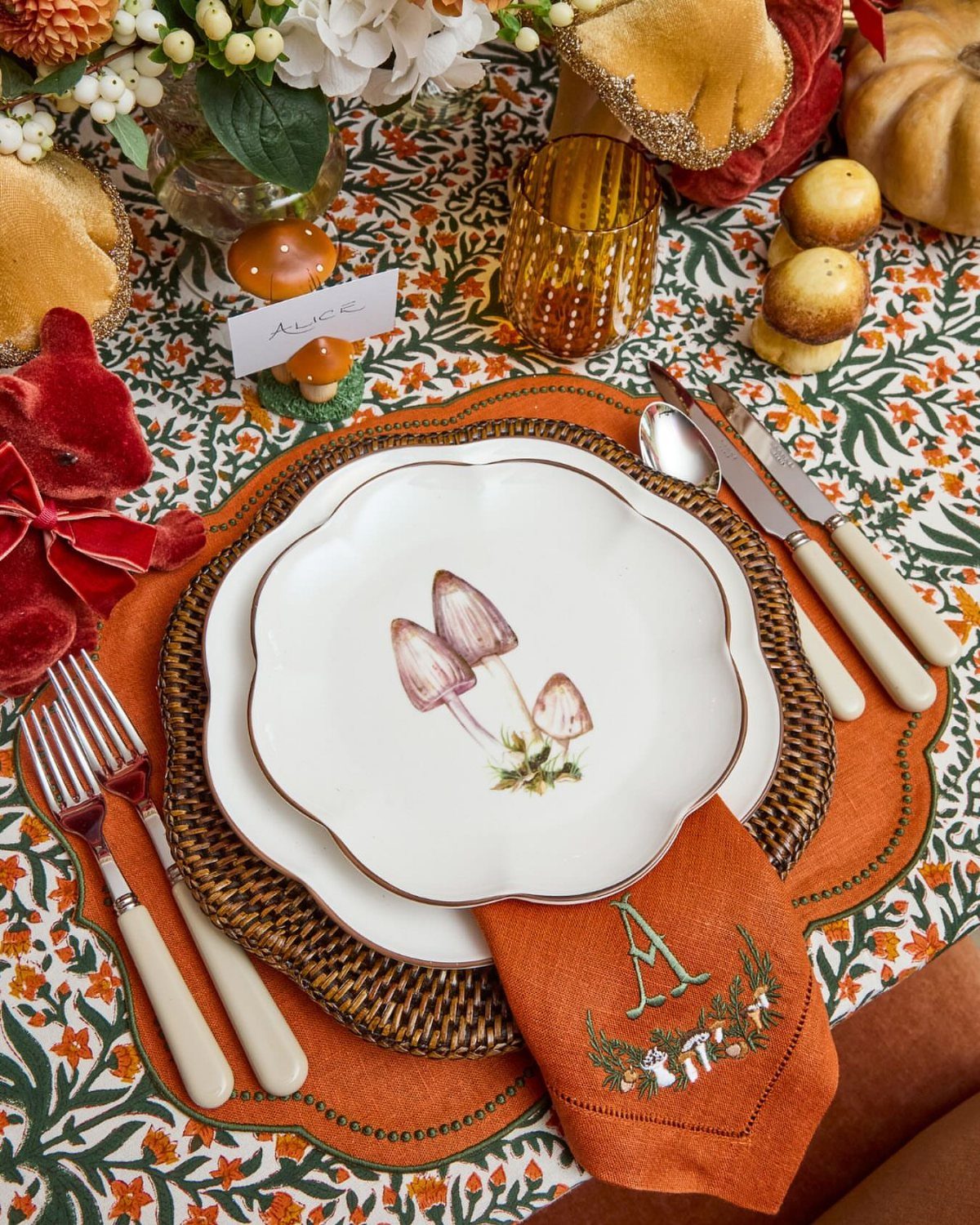
Swapping in plates and napkins that match the season is the quickest way to make a meal feel like an occasion.
Pick one bold piece, such as the plates, and choose a napkin that echoes its color. A pattern on the cloth is fine when the plates are the star, but I’d skip a third busy pattern.
4. Place Cards
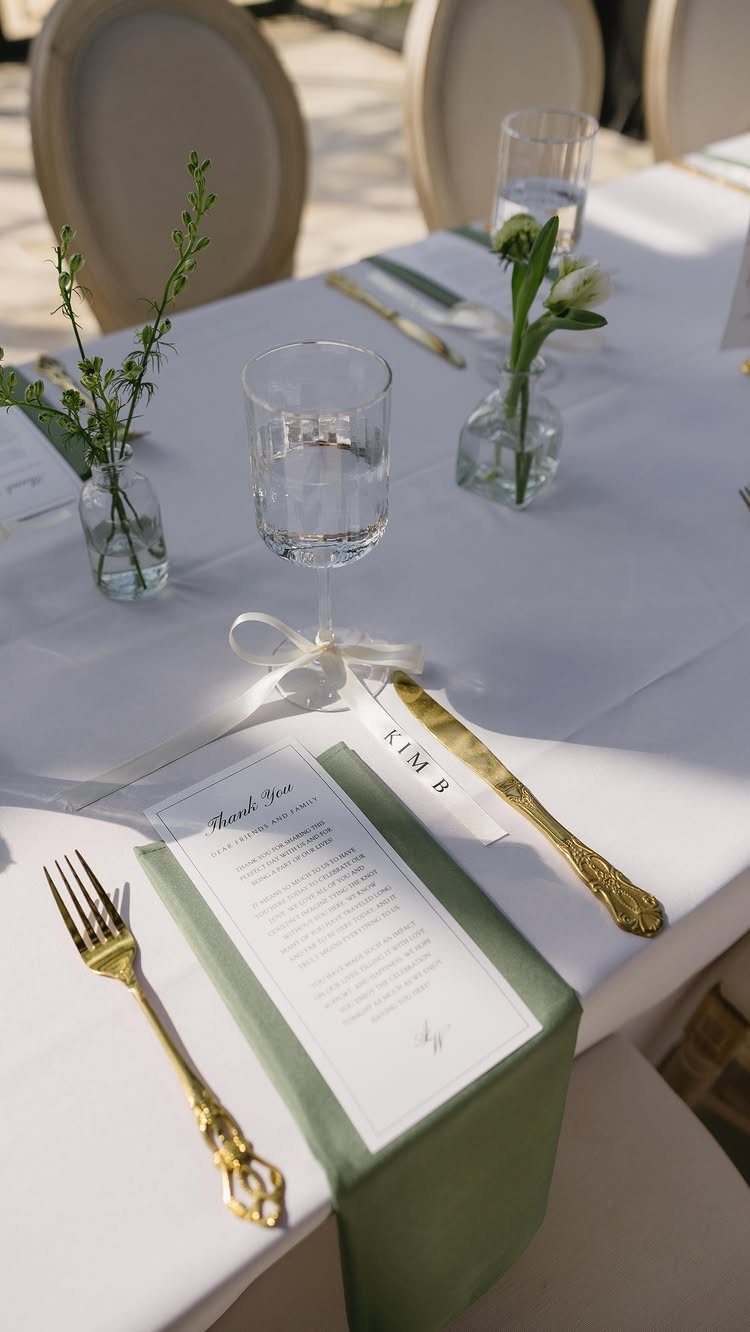
Setting a name at each seat takes about a minute per guest, and it settles the "where do I sit?" shuffle before it starts.
Most people think of place cards as a wedding or banquet detail, yet they work at a home dinner too, where they come across as a thoughtful gesture.
Write names clearly and rest each card above the plate or on the napkin. Seating guests yourself also lets you split up couples and put chatty people together.
For a casual dinner, handwritten cards on plain stock suit me best.
5. Fine China Tableware
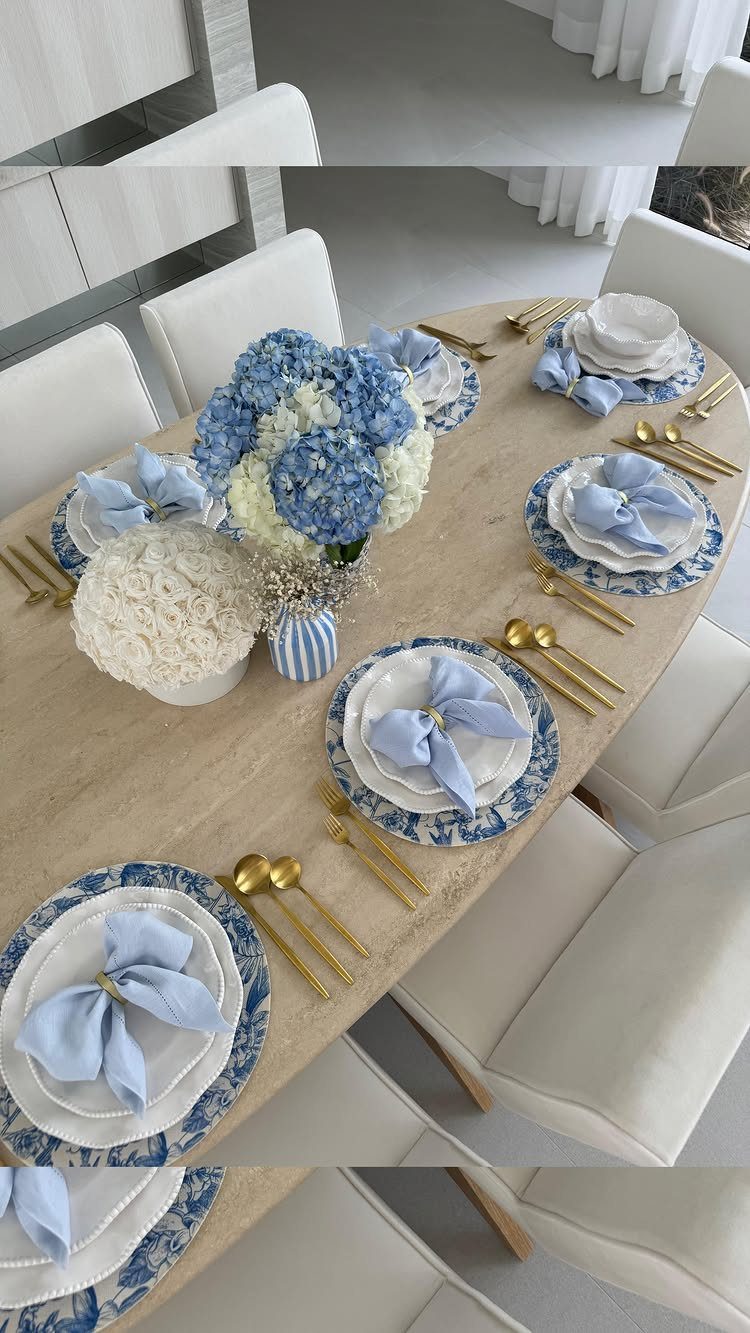
Choose the china by the occasion: patterned plates in blue and white suit a dressed-up lunch or holiday table, while everyday white stays in the cabinet’s front row.
Let the china be the one pattern on the table, and keep the napkins and flowers within its color family.
Fine china usually needs hand washing, so set aside time for that once the last guest leaves.
6. Casual Place Setting
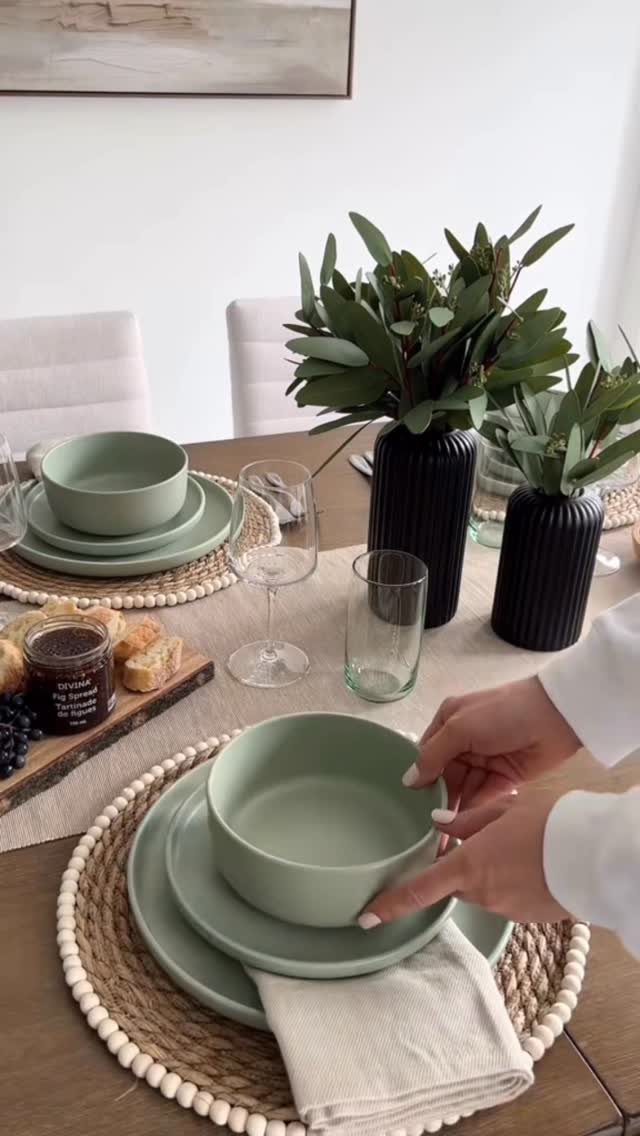
For everyday meals, a placemat, a plate, and a bowl are enough. Stack the bowl on the plate so each setting is one tidy unit, then choose a placemat with some texture to add interest.
Add wine glasses, and keep the centerpieces low and simple, like a few greenery stems in small vases. Skip the charger and extra cutlery sets unless the menu calls for them.
I prefer this setup for weeknights because it is fast to set and fast to clear.
7. Bow-Tied Napkin Place Setting
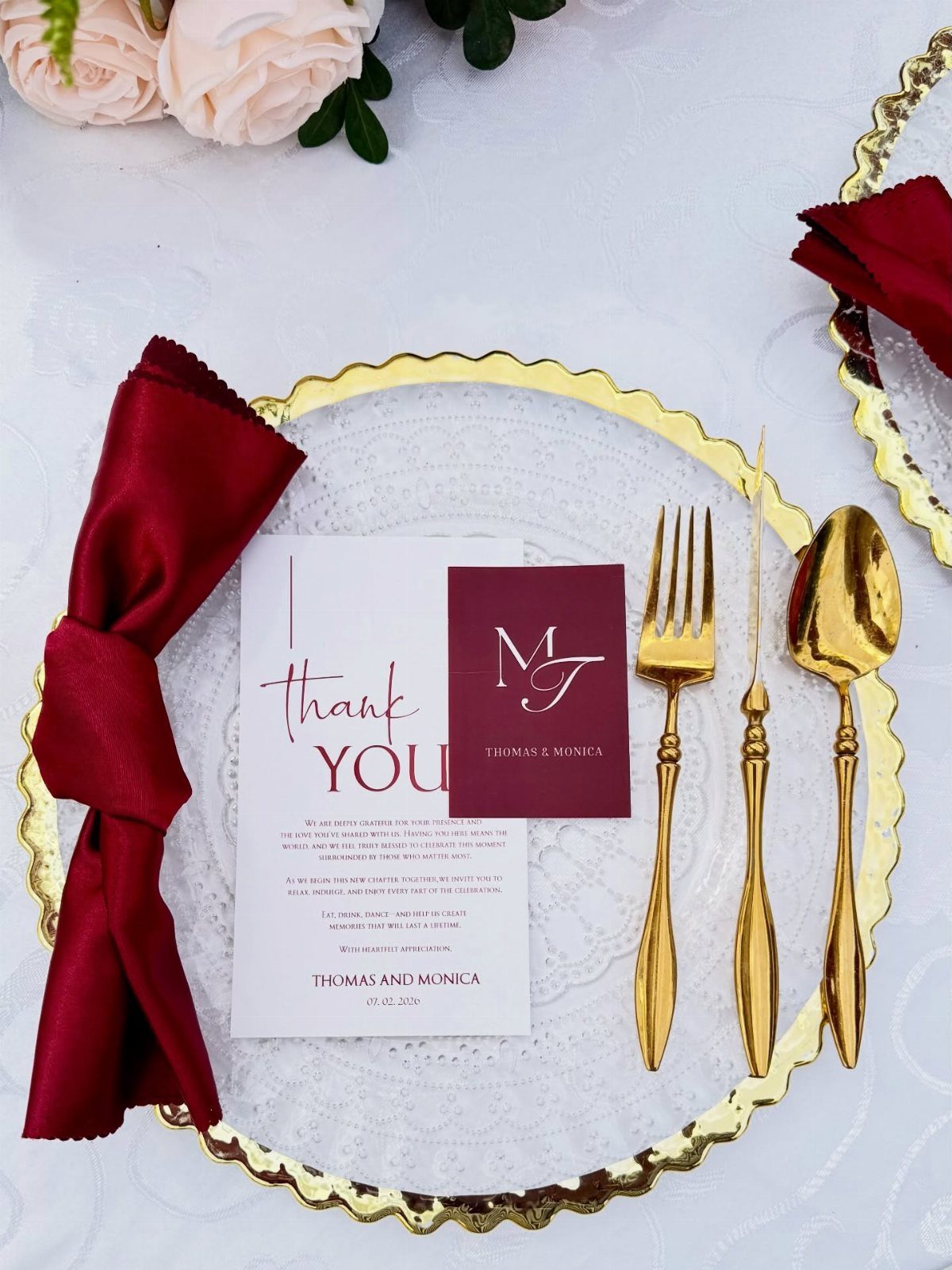
A satin napkin tied in a bow turns a plain napkin fold into a small gift at each seat.
Satin holds a crisp knot better than most cotton, and burgundy against clear glass and gold cutlery keeps the palette to 3 colors.
Tie the bow loosely around the napkin or rest it on the plate, and make every bow the same size so the row looks planned. A thank-you card tucked beside the plate adds a personal note without extra decor.
For a dressed-up dinner, I’d pick this over a folded napkin.
8. Beaded Plate with Fresh Florals
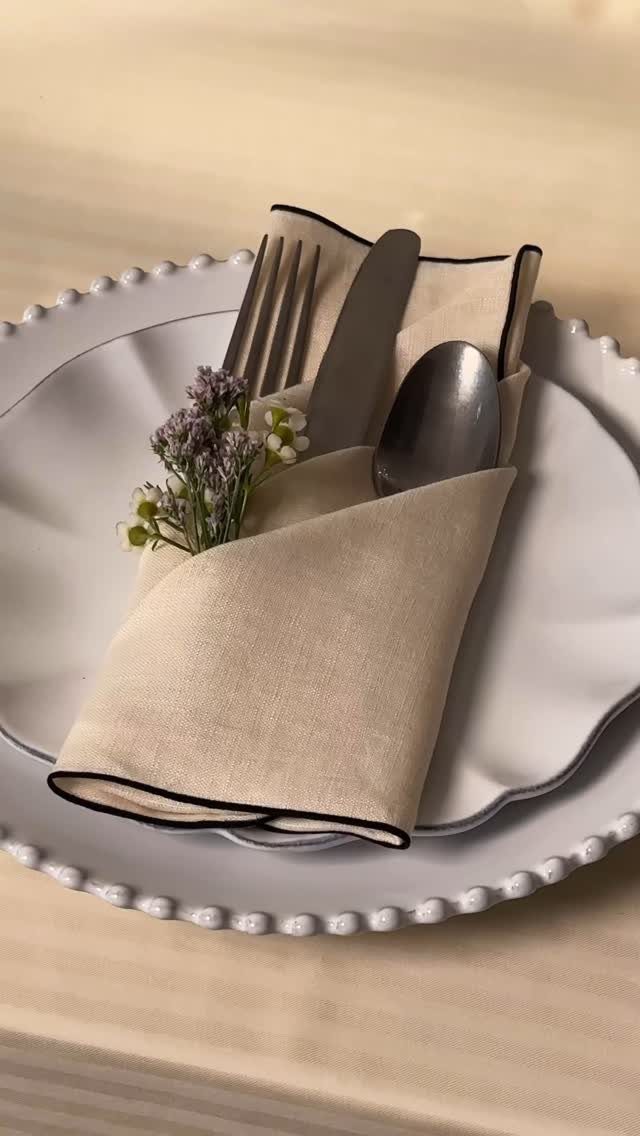
Wrapping the cutlery in a linen napkin keeps fork, knife, and spoon together as one bundle, and a small sprig of flowers tucked on top makes it look finished.
The beaded rim on a white plate adds detail, so the rest can stay plain.
Set the bundle in the center of the plate, then lay the sprig across it. Small blooms or a single sprig work best here, since the flowers share the plate with the beads and the food.
With a striped tablecloth already in play, I’d keep the napkin a solid, neutral color.
Importance of Table Settings
A table that’s been set tells guests the meal was planned for them, and that changes how people settle in. They linger longer, talk more, and treat the food as an occasion instead of a refuel.
Match the effort to the event. A full place setting is wasted on a pool party or a game-day crowd, since people there graze and stand instead of sitting down to eat.
A few stacks of plates, napkins, and a place to set a drink will serve you better.
For a formal gathering or a special occasion, the table decor carries real weight. Guests see it before they taste anything, so a fully laid table is worth the extra half hour.
Whichever way you lean, decide the level of formality first, then buy and set only what that level needs.
Frequently Asked Questions
How do you do a place setting on a table?
Start with the dinner plate at the center, with forks on the left and knives and spoons on the right, arranged in the order they get used from the outside in.
Set the glasses just above the knife, and put the napkin wherever suits the meal: on the plate, tucked beside the forks, or folded into a shape.
A bread plate and butter knife belong above the forks only for formal meals. A weeknight table is done once a placemat is down with a plate on it and a bowl stacked on top.
What do you put in the middle of your dining room table?
Low flowers or greenery stems in small vases work best, with candles set between them. Tuck candles in among the vases, and keep them well away from the space in front of any plate.
What are the types of table set up?
The 3 main types are basic, casual, and formal. Formal settings add a charger and extra cutlery, so I settle the level of formality first and only then set what it calls for.
How do you set a table for Christmas?
Use festive tableware and seasonal decorations in one cohesive color scheme. Patterned blue and white china also suits a holiday table, as long as the napkins and flowers stay in its color family.





